


How Your Yard Can Weather Any Storm (And Save You Money)

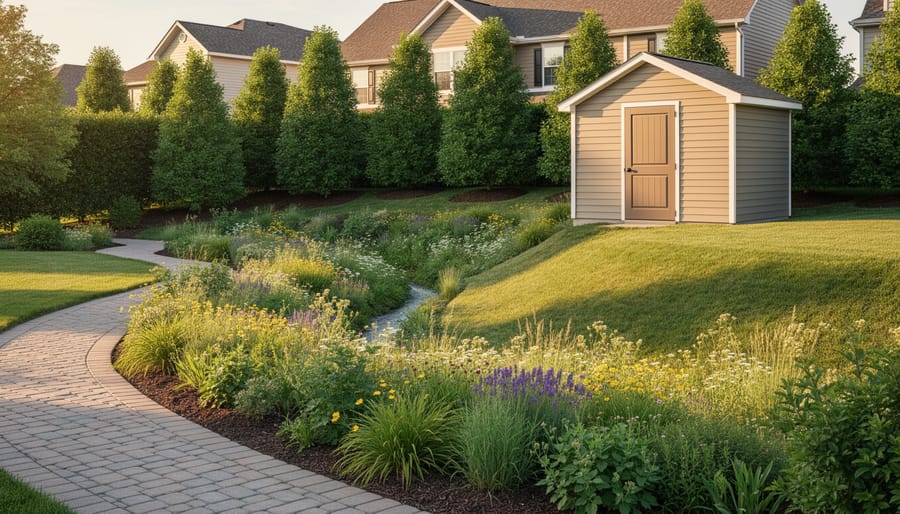
Plant native species that naturally withstand your region’s temperature extremes and rainfall patterns—they’ve spent millennia adapting to local conditions and require minimal intervention once established. Position storage sheds and outdoor structures on your property’s highest ground to prevent flood damage, ensuring water naturally flows away from these investments during heavy rains.
Create swales and rain gardens in low-lying areas to capture runoff before it erodes soil or damages foundations. These shallow, vegetated channels slow water movement during storms while filtering pollutants and recharging groundwater during dry spells. Install permeable hardscaping materials like gravel pathways and porous pavers instead of solid concrete—they reduce water pooling and prevent the soil compaction that kills tree roots and creates drainage problems.
Build windbreaks using tiered plantings of shrubs and trees on your property’s windward side, protecting vulnerable garden beds and preventing structural damage to sheds and fencing during severe weather events. Space these barriers 50 to 100 feet from structures you’re protecting for maximum effectiveness.
Your landscape faces mounting pressure from extreme heat waves, unexpected freezes, flash flooding, and prolonged droughts—often within the same year. The traditional approach of fighting these forces with constant maintenance and repairs drains both your wallet and energy. Smart climate resilience transforms this exhausting cycle into a self-sustaining system where your yard actually works harder while you work less. Homeowners who’ve implemented these strategies report spending 40% less time on emergency repairs and seeing their outdoor spaces thrive through conditions that previously devastated their gardens.
Why Your Yard Isn’t Ready for Tomorrow’s Weather
Remember when a good lawn mower and weekend watering schedule were enough? Those days are fading fast. Today’s weather patterns are throwing curveballs that traditional yards simply weren’t designed to handle, and homeowners everywhere are discovering this the hard way.
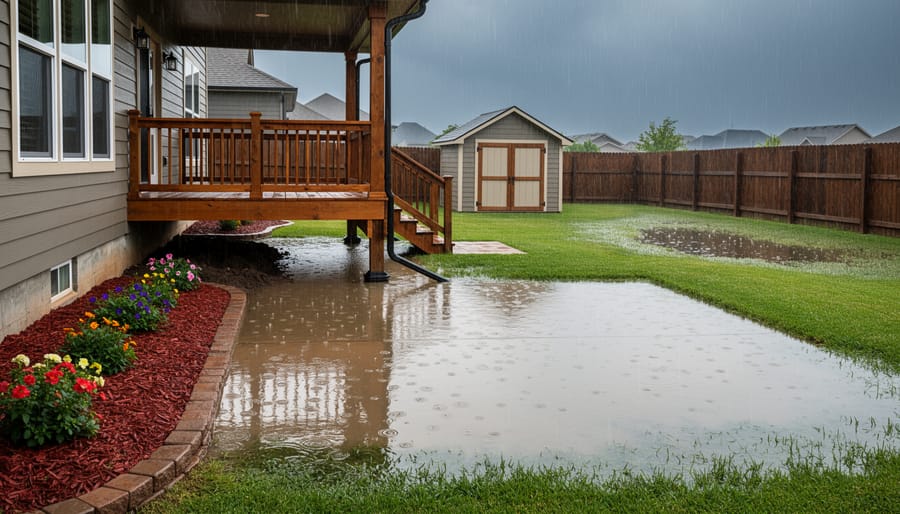
Take flooding, for instance. Sarah from Minnesota thought her new garden shed sat on perfectly level ground until last spring’s downpour turned her backyard into a temporary pond. Water pooled around the foundation, seeping underneath and warping the floor within hours. What she didn’t realize was that her conventional grading and lawn setup actually channeled water straight toward her structure rather than away from it.
Then there’s erosion, the silent destroyer. Mark in Georgia watched helplessly as three years of heavy storms gradually washed soil away from his deck’s support posts. Each rainfall carved deeper channels through his landscaping, creating dangerous instability he only noticed when the deck started shifting. His traditional grass and mulch beds offered virtually no protection against increasingly intense storms.
Drought presents its own headaches. Lisa invested thousands in beautiful ornamental plantings around her property, only to watch them wither during two consecutive dry summers. Her irrigation system couldn’t keep up with extended heat waves, and replacing those plants year after year became an expensive, frustrating cycle.
Even your outdoor structures face unprecedented stress. Extreme temperature swings cause materials to expand and contract more dramatically than before, leading to warped siding, cracked foundations, and damaged roofing. Winter freezes followed by sudden thaws create havoc with anything not specifically designed for climate volatility.
The truth is, most yards were designed for yesterday’s predictable seasons, not tomorrow’s weather extremes. Recognizing these vulnerabilities in your own landscape is the essential first step toward creating a truly resilient outdoor space that protects your investment and gives you peace of mind.
Smart Plant Selection That Actually Survives
Native Plants: Your Low-Maintenance Insurance Policy
Think of native plants as nature’s problem-solvers—they’ve already spent thousands of years adapting to your local weather extremes. While homeowners often struggle with plants that demand constant attention and still fail during heat waves or cold snaps, native species thrive because they’re designed for exactly the conditions you’re dealing with.
Here’s why they’re your insurance policy: Native plants have deep root systems that help them survive droughts without constant watering. They’re also naturally resistant to local pests and diseases, meaning less time spent treating problems and more time enjoying your yard. One homeowner in Colorado shared that switching to native grasses and wildflowers cut her water bill by 40% and eliminated the need for weekly watering during summer.
Getting started with native plant selection is easier than you might think. Contact your local cooperative extension office or native plant society for recommendations specific to your area. Look for plants that naturally grow in conditions similar to your yard—if you have a sunny, dry spot, choose prairie species; for shaded areas, consider woodland natives.
The real beauty? These plants protect the space around your shed and outdoor structures by stabilizing soil during heavy rains and requiring minimal intervention during temperature swings. They’re working for you even when you’re not working on them, creating a resilient landscape that handles whatever weather comes your way.
Creating Layers of Protection Around Your Shed and Storage Areas
Your shed, gazebo, or storage structure works hard for you year-round, but extreme weather can take a toll. The good news? The right plants placed strategically around these structures create natural barriers that reduce damage while adding beauty to your yard.
Start by thinking about your main climate challenges. For wind protection, plant evergreen shrubs or small trees 6-10 feet away from your structure on the side that receives prevailing winds. This spacing allows air to flow over and around rather than creating damaging turbulence. One homeowner in Kansas told us she planted a row of junipers on the northwest side of her shed, and it cut winter wind damage to her siding by half while reducing snow accumulation near the door.
Sun exposure is another concern, especially for structures with windows or valuable items inside. Deciduous trees planted 15-20 feet away provide summer shade that keeps interiors cooler while allowing winter sun to naturally warm the space. Consider maples or oaks that won’t drop excessive debris on your roof.
Water management deserves equal attention. Avoid planting directly against your structure’s foundation, which traps moisture. Instead, create a 2-3 foot buffer zone of gravel or mulch, then add water-loving plants like ornamental grasses or rain garden perennials further out to absorb excess runoff.
Combining these techniques with strategic shed landscaping creates multiple layers of protection that work together, keeping your storage areas safer through whatever weather comes your way.
Water Management Solutions That Protect Your Investment
Directing Water Away From Foundations and Storage Areas
One of the smartest moves you can make to protect your shed and everything inside it is ensuring water flows away from, not toward, your foundation. Think of it this way: even the sturdiest storage shed can develop problems when it’s sitting in a puddle after every rainstorm.
Start with proper grading around your shed. The ground should slope gently away from your foundation on all sides, dropping about six inches over the first ten feet. This simple fix prevents water from pooling against your shed’s base, which can lead to rot, rust, and compromised structural integrity. Many homeowners don’t realize this is an issue until they notice moisture damage to items stored near the floor.
French drains offer another effective solution, especially for properties with persistent drainage challenges. These underground trenches filled with gravel and perforated pipe redirect water away from problem areas. Installation is surprisingly manageable for DIY enthusiasts, and the system works invisibly beneath your landscape.
Rain gardens provide both function and beauty. Position these shallow, planted depressions strategically to capture runoff from your shed roof and surrounding areas. Native plants with deep root systems absorb excess water while creating an attractive landscape feature. One homeowner shared how her rain garden not only solved her muddy yard problem but became her favorite gardening project.
For immediate results, consider installing gutter extensions or splash blocks at downspout locations. These inexpensive additions direct roof runoff several feet away from your foundation. The key is thinking about water flow during heavy rains and creating paths that guide it safely away from your valuable storage areas and the items you’ve worked hard to protect.
Capturing and Using Rainfall When It Actually Comes
When rain finally arrives after a dry spell, capturing every drop becomes incredibly valuable. Rain barrels and collection systems offer a surprisingly effective way to build your water reserves without impacting your utility bills.
Start with your shed or garage roof—these structures already collect runoff, so why let it go to waste? A basic 55-gallon rain barrel connected to a downspout can fill up after just one moderate rainfall. For larger collection needs, consider linking multiple barrels together. Position them near garden beds or areas where you’ll actually use the water, saving yourself from hauling heavy buckets across the yard.
The stored water works perfectly for irrigation during dry periods, rinsing off garden tools, or cleaning equipment and outdoor furniture. One homeowner shared that her three-barrel system kept her vegetable garden thriving through a six-week drought last summer without touching the hose.
To maximize your collection strategy alongside other water-wise landscaping strategies, add a simple mesh screen over barrel openings to keep out debris and mosquitoes. During winter, remember to drain systems before freezing temperatures arrive. This straightforward approach turns unpredictable rainfall into a reliable resource you control.

Mulch and Ground Cover That Works Double Duty
Smart ground cover around your shed and outdoor structures acts like an insurance policy against extreme weather. A 3-4 inch layer of organic mulch helps soil absorb rainfall like a sponge during storms, reducing runoff that can undermine foundations or create muddy messes. During droughts, that same mulch layer keeps moisture in the ground, protecting plant roots and preventing the soil from pulling away from building foundations.
One homeowner in Texas shared how adding wood chip mulch around her storage shed stopped erosion problems after heavy rains, while also cutting her watering needs by nearly half during summer dry spells. For areas prone to flooding, consider river rock or pea gravel, which allows water to drain quickly while staying firmly in place. Avoid piling mulch directly against wooden structures though—leave a 6-inch gap to prevent moisture damage and discourage pests. This simple double-duty solution protects your investment while keeping your outdoor spaces looking neat year-round.
Building Your Landscape to Handle Temperature Extremes
Shade Strategies That Cool Your Whole Yard
Creating shade isn’t just about comfort—it’s one of the smartest climate resilience investments you can make. Strategic shade placement can drop temperatures in your yard by 10-20 degrees, protecting everything from delicate plantings to outdoor structures.
Start with trees as your foundation. Deciduous trees planted on the south and west sides of your property provide summer cooling while allowing winter sun through bare branches. They’re natural air conditioners that cost nothing to operate! Place them to shade patios, driveways, and the exterior walls of sheds or garages to prevent heat damage and extend structure lifespan.
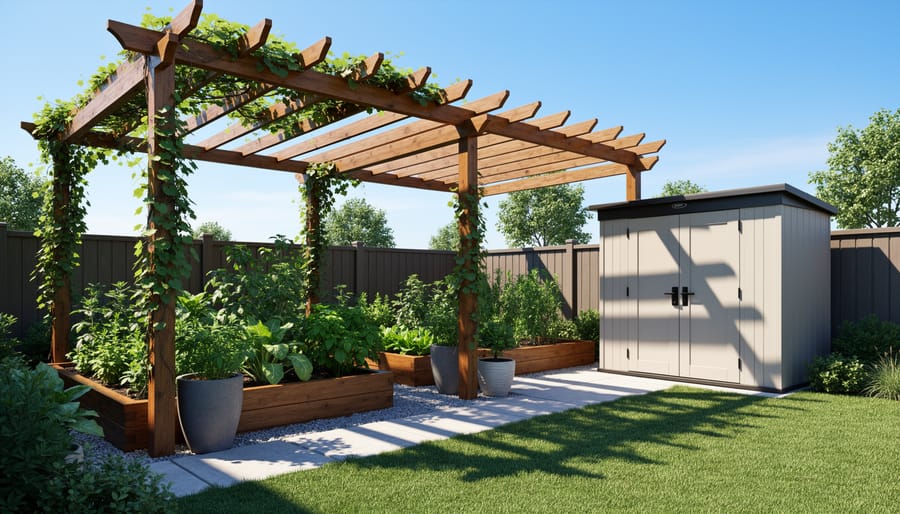
Pergolas and gazebos create instant cooling zones where trees take years to mature. Position them over seating areas or above heat-sensitive plantings like lettuce and spinach. One homeowner shared how adding a simple pergola over her herb garden reduced watering needs by half during summer months—the herbs thrived instead of bolting in the heat.
Don’t forget your storage structures benefit too. A well-placed shade tree can prevent a metal shed from becoming an oven, protecting stored items and reducing expansion-contraction cycles that cause wear. Think of shade as invisible infrastructure that works year-round, reducing maintenance costs and creating comfortable microclimates throughout your property.
Protecting Against Freeze Damage and Cold Snaps
When temperatures plummet unexpectedly, your outdoor investments face serious threats. Frozen pipes can burst, delicate plants can die overnight, and expensive equipment can suffer irreversible damage. The good news? A little preparation goes a long way in protecting what matters most.
Start by moving your most vulnerable items into protected spaces before the first freeze hits. Garden tools, irrigation equipment, and outdoor furniture all benefit from shelter during extreme cold. Your shed becomes a lifeline during these events, especially when you take the extra step of insulating your shed to maintain more stable temperatures inside.
For plants that can’t be moved, wrap burlap around tender shrubs and small trees. This breathable barrier traps warmth while allowing moisture to escape, preventing both freeze damage and rot. Apply a thick layer of mulch around root zones to insulate the soil and protect plant roots from temperature swings.
Don’t forget your outdoor water features and irrigation systems. Drain all hoses, fountains, and sprinkler lines completely before cold weather arrives. Even small amounts of trapped water can expand when frozen, cracking pipes and connections.
Keep emergency supplies like tarps, burlap, and frost blankets stored in your shed so they’re ready when weather forecasts turn worrisome. Quick action when cold snaps strike can mean the difference between minor inconvenience and costly replacements come spring.
Low-Maintenance Design That Stands Up to Anything
Hardscaping Choices That Last
Think of your hardscaping as the bones of your landscape—when done right, it stands strong through every season. Choosing climate-resilient materials now saves you from constant repairs and safety hazards down the road.
Permeable pavers are game-changers for pathways leading to your shed. Unlike solid concrete that cracks from freeze-thaw cycles and creates runoff, these allow water to drain through while staying firmly in place. One homeowner in Oregon shared how switching to permeable pavers ended her yearly battle with muddy shed access and standing water.
For borders and edging, consider materials like composite lumber or thick rubber edging instead of traditional wood or plastic that warps and splits. These materials flex with ground movement rather than fighting against it.
When planning pathways and access routes, create gentle slopes away from structures and use crushed stone or gravel as base layers. This simple foundation prevents erosion underneath your hardscaping, keeping everything level even during heavy downpours. Your shed stays accessible year-round, and you avoid the frustration of replacing cracked walkways every few years.
Organizing Your Storage for Quick Storm Prep
When severe weather strikes, every minute counts. The key to protecting your outdoor belongings isn’t just having storage—it’s having storage that works quickly under pressure. Start by creating a dedicated “storm prep zone” near your shed entrance where frequently-secured items like cushions, planters, and garden tools have designated spots. Label shelves clearly and keep pathways wide enough to move multiple items at once.
Consider wall-mounted hooks and pegboards for lightweight items that typically blow away first. Sarah, a homeowner in Florida, shares: “I mounted hooks at different heights for my garden hoses, wind chimes, and outdoor decorations. Now I can clear my patio in under ten minutes when a storm warning hits.” This approach to organizing your shed transforms it from simple storage into a climate-ready command center.
Keep weatherproofing supplies like bungee cords, tarps, and sandbags in a clearly marked bin near the door. Stack frequently-moved items on wheeled carts for easy transport, and avoid placing heavy seasonal items in front of storm-season essentials.
Real Homeowner Success Stories
When severe weather struck the Texas Gulf Coast last spring, the Martinez family’s yard fared remarkably well while neighbors faced flooding and erosion damage. “We installed rain gardens and switched to native plants two years ago,” shares homeowner Lisa Martinez. “Our water bill dropped by 40%, and during the storm, those rain gardens absorbed so much water that our foundation stayed completely dry. Best investment we’ve made.”
In drought-prone Arizona, Tom and Sarah Chen transformed their water-hungry lawn into a beautiful desert landscape with native succulents and gravel beds. “We were spending over $200 monthly just watering grass that looked awful,” Tom explains. “Now we spend maybe $30, and our yard actually looks better year-round. When our neighbors were dealing with dead lawns during last summer’s record heat, ours was thriving.”
After Hurricane Ian, Florida homeowner James Robinson credits his elevated storage shed and strategic tree trimming with saving thousands in potential damage. “I moved all my lawn equipment and tools into a properly anchored shed on higher ground. Everything stayed bone-dry while my neighbor’s garage flooded. The peace of mind alone was worth it.”
These homeowners discovered that climate-smart strategies don’t just protect property—they actually reduce maintenance costs and stress. Their experiences show that preparing your outdoor spaces for extreme weather pays dividends when storms, droughts, or heat waves inevitably arrive.
Creating a climate-resilient landscape doesn’t require a complete yard overhaul or a massive budget. The beauty of these strategies is that you can start small and build momentum as you see results. Maybe this weekend, you tackle that problem drainage spot with a simple rain garden. Next month, you add native plants that need less water. Before you know it, you’ve created a landscape that practically takes care of itself, even when weather throws curveballs your way.
Remember, climate-resilient landscaping isn’t about achieving perfection on day one. It’s about making thoughtful choices that protect your investment over time. Every mulched bed, every strategically placed shrub, and every well-protected outdoor structure adds up to a property that can weather storms, droughts, and temperature swings without constant intervention or costly repairs.
Here’s your practical first step: This weekend, walk around your property after a rainfall and note where water pools or runs off too quickly. Snap a few photos. These trouble spots are your roadmap for improvement. Once you know where water goes, you can start directing it where it belongs, protecting everything from your foundation to your outdoor storage areas from weather-related damage.