


How Close Can You Build a Shed to Your Property Line Without Starting a Fire?

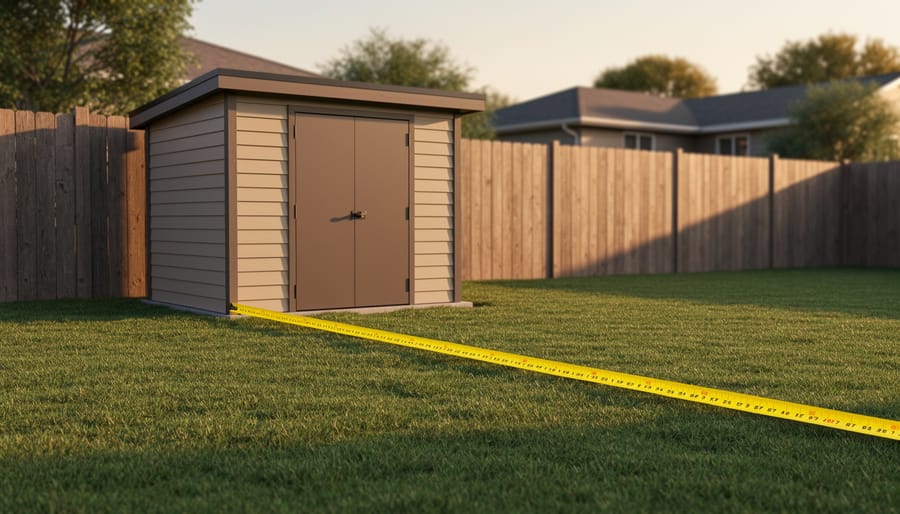
Planning to add a shed or outbuilding to your property? Before you make that purchase or pick up a hammer, understanding minimum fire separation distance could save you from costly mistakes, failed inspections, and potential safety hazards.\n\nFire separation distance refers to the required space between buildings on your property, designed to prevent flames from jumping from one structure to another during a fire. Most building codes mandate specific distances based on factors like building size, construction materials, and whether the structures have fire-rated walls. Violating these requirements isn’t just a technicality—it can result in removal orders, insurance claim denials, and serious liability if a fire occurs.\n\nHere’s the reality many homeowners discover too late: that perfect spot you’ve picked out for your new shed might not meet code requirements. The typical minimum separation ranges from 3 to 10 feet, though your local jurisdiction may have different rules. Some areas allow closer placement if you use fire-resistant materials or install fire-rated walls, while others maintain strict distance requirements regardless of construction type.\n\nThe good news? Understanding these regulations upfront takes just minutes but prevents months of headaches. You’ll learn exactly how to measure separation distance correctly, what your local code requires, when exceptions apply, and how to plan your shed placement for both compliance and functionality. Whether you’re buying a pre-built shed or constructing from scratch, knowing these rules ensures your project stays on track from day one.\n\n\n
What Is Minimum Fire Separation Distance (And Why Your Shed Needs It)
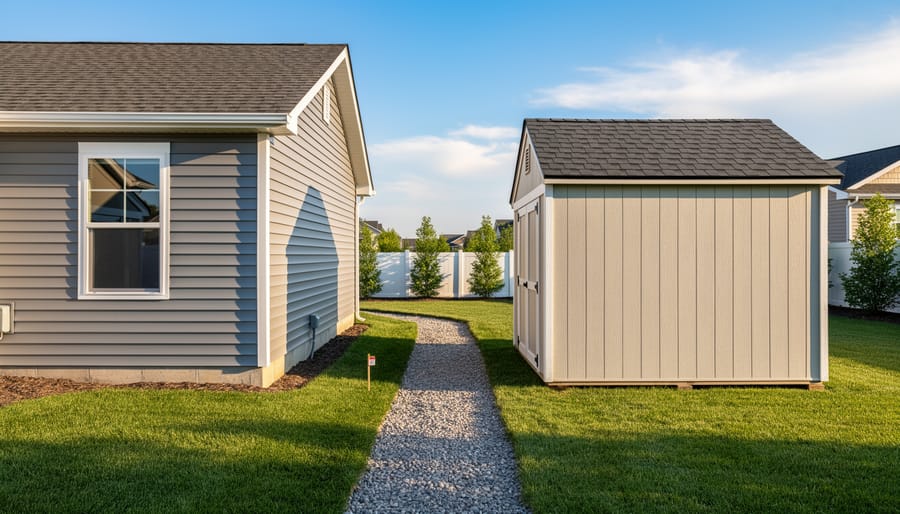
\n\nThink of fire separation distance as a safety buffer zone between structures on your property. It’s the minimum amount of space required between your shed, garage, gazebo, or other outdoor building and your home, property line, or neighboring structures. This breathing room exists for one crucial reason: to stop fire from spreading.\n\nHere’s how it works in practice. When a building catches fire, it radiates intense heat and can throw off burning embers. If another structure sits too close, that heat alone can ignite the neighboring building’s exterior, even without direct flames touching it. The required separation distance gives firefighters time to respond and keeps the fire contained to one structure instead of creating a domino effect across your property.\n\nFor backyard buildings like sheds, this typically means maintaining anywhere from three to ten feet of clearance, depending on your local building codes and the materials used in construction. A metal shed might have different requirements than a wooden one because materials burn at different rates and temperatures.\n\nMany homeowners discover these requirements only after they’ve already positioned their new shed in what seemed like the perfect spot. That’s why understanding fire separation distance before you purchase or build saves you from costly mistakes. You might find your dream location for that garden shed is actually too close to your fence line or house, requiring you to relocate it or even face fines from your local building department.\n\nThe good news? Planning for proper fire separation from the start is straightforward once you know what your local code requires. It’s simply about measuring twice and building once, ensuring your outdoor structures keep your property safe while staying compliant with regulations.\n\n
 \n
\n\n\n\n
The Rules That Actually Apply to Your Property
\n\n
Understanding WUI Zones and What They Mean for Your Shed
\n\nIf you live in an area where your neighborhood meets forests, grasslands, or other natural vegetation, you’re likely in what’s called a Wildland-Urban Interface zone, or WUI for short. Think of it as the meeting point between civilization and nature – where your backyard might blend into hillsides, wooded areas, or open fields.\n\nWUI zones matter because they face higher wildfire risks, and building codes reflect this reality with stricter requirements. When it comes to placing your shed, properties in WUI zones typically need larger separation distances between structures than homes in standard residential areas. These enhanced rules exist to prevent fire from jumping from one building to another during a wildfire event.\n\nSo how do you know if you’re in a WUI zone? Start by contacting your local building department or fire marshal’s office – they can tell you immediately. Many municipalities also have online maps showing designated WUI areas. Your homeowner’s insurance documents might reference it too, since properties in these zones often have different coverage requirements.\n\nReal-life example: Sarah from Colorado planned to place her 10×12 shed just 5 feet from her garage, which met standard residential codes. However, after checking with her county, she discovered her mountain property was in a WUI zone requiring 10 feet of separation. Catching this early saved her from having to relocate the shed after installation.\n\nIf you’re in a WUI zone, don’t worry – you can still have your shed. You’ll just need to plan for extra space and possibly incorporate fire-resistant features into your placement strategy.\n\n
How Local Building Codes Determine Your Minimum Distance
\n\nFinding your local building codes is easier than you might think, and it’s an essential first step before purchasing or placing your shed. Start by visiting your municipal building department’s website or calling their office directly. Most communities have their requirements clearly outlined, and staff members are typically happy to help homeowners navigate the rules.\n\nTypical minimum fire separation distances between structures range from 3 to 10 feet, though this varies significantly based on your location and specific circumstances. A small storage shed in a suburban neighborhood might only need 3-5 feet of clearance, while larger outbuildings or properties in high-density areas could require 10 feet or more.\n\nSeveral factors influence these distance requirements. The size of your shed matters—larger structures often need more separation. The materials used in construction play a role too, as some jurisdictions allow closer placement for fire-resistant materials. Your property’s zoning classification and lot size also factor into the equation, along with any setback requirements from property lines.\n\nDon’t forget to check HOA regulations if you live in a community with a homeowners association, as they may impose stricter requirements than municipal codes. When you contact your building department, ask specifically about fire separation requirements, and request everything in writing. This documentation will be invaluable as you plan your shed placement and can help avoid costly mistakes down the road.\n\n\n
What Happens When You Get the Distance Wrong
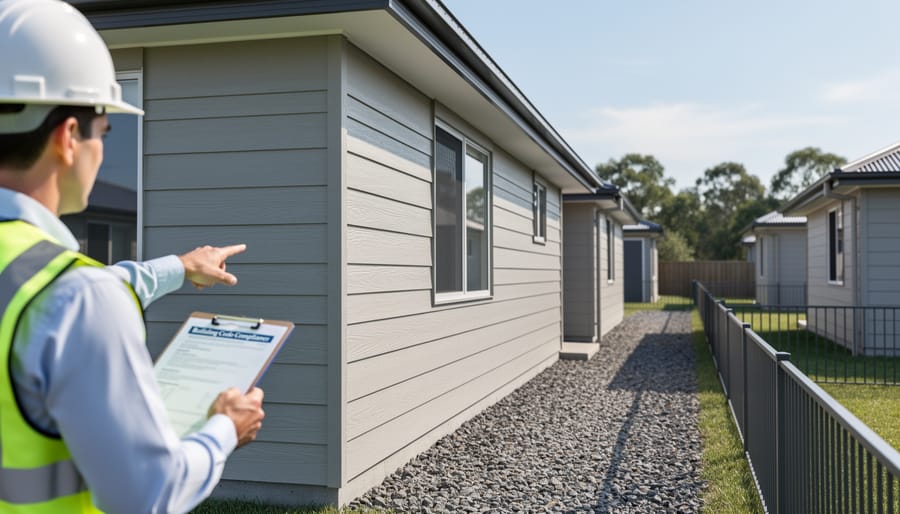
\n\nGetting the fire separation distance wrong isn’t just a technicality—it can create some genuine headaches down the road. Let’s talk about what really happens when that measurement falls short.\n\nFirst, there’s the inspection hurdle. If you’re getting permits (and you should), a building inspector will measure the distances during their site visit. If your shed is too close, they won’t sign off on the project. This means you’re looking at either moving the entire structure or, in some cases, tearing it down and starting over. One homeowner in Oregon shared how they had to completely relocate their beautiful custom shed just three feet back—after it was already built. The moving costs alone exceeded $2,000.\n\nInsurance complications are another reality worth considering. When you file a claim, insurance adjusters examine your property for code compliance. If they discover your shed violates fire separation requirements, they may reduce your payout or deny claims related to fire damage altogether. It’s not about being unfair—they calculate premiums based on standard risk assessments, and non-compliant structures change that equation.\n\nHere’s the more serious concern: actual fire risk. Those separation distances exist because fire can spread surprisingly fast between structures. A small fire in an improperly placed shed can quickly threaten your home, especially with wind involvement. While we don’t want to sound alarmist, understanding that these rules protect your family and investment helps put the measuring tape work into perspective.\n\nIf you’re buying a property with an existing shed, consider getting a professional survey during your home inspection. Discovering spacing issues before you close can save considerable trouble. And if you’re planning a new shed, take time to measure carefully and document everything. A few extra minutes with the tape measure now prevents months of frustration later. Think of proper fire separation as foundational—like a good insurance policy you hope never to need but are grateful to have.\n\n\n
Calculating Fire Separation Distance for Your Shed Project
\n\n
Measuring from Your House to Your New Shed
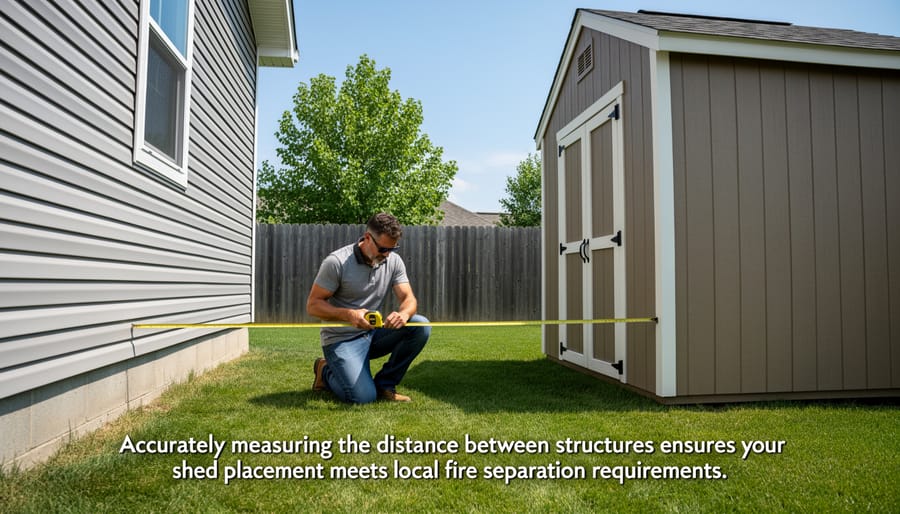
\n\nGetting accurate measurements is easier than you might think, but there’s one crucial detail many homeowners miss: always measure from wall to wall, not from roof overhangs or eaves. Those pretty roof extensions don’t count toward your separation distance, so ignore them completely when taking measurements.\n\nHere’s a simple approach that works every time. Start at the exterior wall of your house where your shed will be closest. Use a long measuring tape or create a straight line with stakes and string to mark where your shed’s nearest wall will sit. For longer distances, consider using a measuring wheel, which you can borrow from most tool rental shops.\n\nPro tip: Take photos of your measuring process and jot down the numbers. I learned this the hard way after measuring twice and somehow getting different results each time because I couldn’t remember which corner I’d started from.\n\nIf your property has slopes or uneven terrain, measure at ground level and keep your tape as straight as possible. When in doubt, add an extra foot or two of buffer space beyond the minimum requirement. It’s much easier to have a slightly further walk to your shed than to deal with code violations or insurance complications down the road. Many homeowners find that marking the proposed location with spray paint or stakes helps visualize the final placement before making any commitments.\n\n
 \n
\n\n\n
Considering Property Lines and Neighbor Structures
\n\nBefore you finalize your shed placement, take a moment to consider how it affects your neighbors. Fire separation distances aren’t just about following code requirements—they’re about creating a safe environment for everyone around you.\n\nStart by understanding your property boundaries. Many homeowners discover during their planning that they actually have less buildable space than they assumed. Pull out your property survey or order a new one if needed. Knowing exactly where your lot lines fall prevents awkward situations down the road.\n\nWhen your shed sits close to a property line, remember that any fire risk affects your neighbor’s property too. Even if local codes permit building right up to the boundary, maintaining adequate separation shows respect and builds goodwill. One homeowner shared how a simple conversation with her neighbor about shed placement led to a collaborative approach that worked better for both properties.\n\nTake stock of structures on neighboring lots as well. Is there a wooden fence, garage, or house nearby? The closer your shed sits to these features, the more important fire-resistant materials become. Consider upgrading to metal siding or treated materials if your placement brings you within a few feet of neighbor structures.\n\nA quick chat with your neighbors before installation can prevent misunderstandings and might even reveal helpful insights about drainage patterns or local wind conditions you hadn’t considered. Good neighbors make great communities, and thoughtful shed placement is one small way to contribute.\n\n\n
Fire-Resistant Features That Can Reduce Required Distance
\n\nHere’s some good news: you may have more flexibility with fire separation distances than you initially thought! Many building codes allow reduced distances when you incorporate specific fire-resistant features into your shed or outbuilding. This opens up possibilities for property owners working with tighter spaces.\n\nFire-resistant exterior siding is one of the most effective ways to potentially reduce required distances. Materials like cement board, stucco, and specially treated metal panels provide excellent protection against fire spread. When Sarah from Portland needed to place her garden shed closer to her fence line, her building inspector approved a reduced setback after she upgraded to fiber cement siding. It cost a bit more upfront, but it gave her the placement flexibility she needed without compromising safety.\n\nEmber-resistant vents are another valuable feature worth considering. During a fire, wind-blown embers can travel significant distances and enter structures through standard vents. Installing mesh screens or intumescent vents that close when exposed to heat can significantly improve your building’s fire resistance rating. This simple upgrade often makes a meaningful difference in code compliance discussions.\n\nYour roof material matters considerably too. Class A fire-rated roofing materials, including asphalt shingles, metal roofing, and clay tiles, offer the highest level of fire protection. In contrast, untreated wood shakes typically require greater separation distances. If you’re shopping for a pre-built shed, asking about the roof’s fire rating can help you understand your placement options from the start.\n\nBefore making any assumptions, always check with your local building department about which fire-resistant features they recognize for distance reductions. Some jurisdictions have specific lists of approved materials and features, while others evaluate situations case-by-case. Bringing product specifications and fire ratings to your pre-construction meeting shows you’re serious about compliance and safety. This proactive approach often leads to more productive conversations with inspectors and better outcomes for your project.\n\n
 \n
\n\n\n\n
Before You Buy: Planning Your Shed Placement the Right Way
\n\nBefore you fall in love with that perfect shed and hand over your credit card, take a deep breath and do some homework. A little planning now can save you from heartbreak and expensive fixes later. Trust me, moving a fully loaded shed because it’s three feet too close to your fence is nobody’s idea of a fun weekend.\n\nStart by calling your local building department. I know, it sounds tedious, but this five-minute conversation could save you thousands. Ask about minimum fire separation requirements in your area, whether you need a permit for your shed size, and what setback rules apply to your property. Every municipality has different regulations, and what worked for your neighbor might not work for you.\n\nNext comes site assessment. Walk your yard with a measuring tape and really look at the space. Measure distances from your house, fence lines, property boundaries, and any other structures. Check for underground utilities by calling 811 before you dig. Look at drainage patterns, sunlight, and access paths. Will you be able to get your lawn mower around it? Can delivery trucks reach the spot?\n\nDon’t skip the permit step. I’ve heard from homeowners who thought they could skip getting permits, only to face fines or forced removal later. Some even had trouble selling their homes because of unpermitted structures. Most building departments are helpful and want you to succeed.\n\nCreate a simple checklist: codes checked, measurements taken, permits secured. Once you’ve ticked all these boxes, you can shop with confidence knowing your dream shed will stay exactly where you want it.\n\n\nUnderstanding fire separation distance requirements might seem overwhelming at first, but here’s the good news: it’s absolutely manageable with a little planning and preparation. You’ve already taken the most important step by educating yourself about these regulations before making a purchase decision.\n\nThe key takeaway? Every property is unique, and your local building codes have the final say. While the general principles we’ve covered give you a solid foundation, taking 30 minutes to call your local building department or checking their website can save you from costly mistakes and headaches down the road.\n\nRemember, proper planning now means years of worry-free storage ahead. Whether you’re dreaming of a compact garden shed or a spacious workshop, finding the right placement is just as important as choosing the right structure. At Storage Sheds Outlet, we’re here to help you find the perfect shed that fits both your needs and your properly planned space.\n\nReady to move forward? Start by confirming your local fire separation requirements, measure your available space carefully, and then explore your options with confidence. Your ideal storage solution is closer than you think.
Looking for a permits and zoning guide?
Browse our full range of permits and zoning guide from authorized dealer brands. Free shipping to the continental US.