


Transform the Space Around Your Shed into a Wildlife Haven

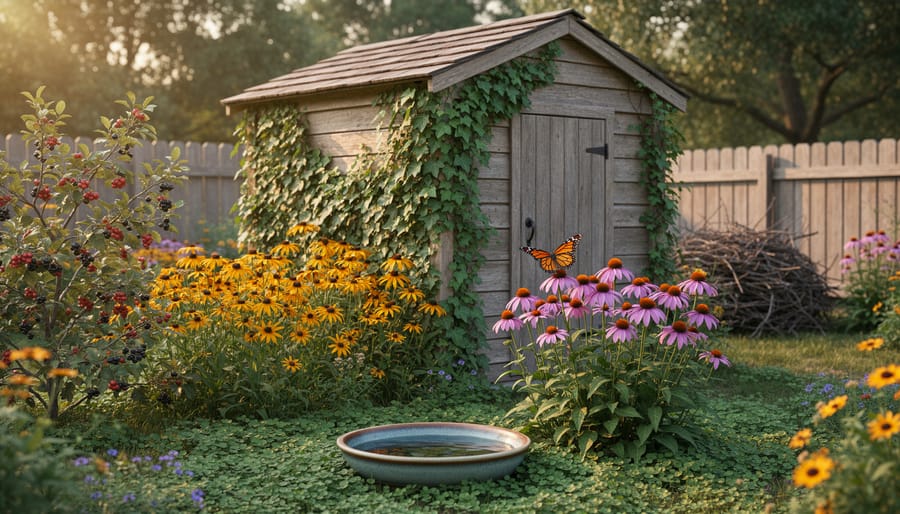
Transform that forgotten patch around your shed into a thriving wildlife haven by layering native wildflowers like coneflowers and black-eyed Susans at ground level, adding berry-producing shrubs mid-height, and letting climbing vines soften hard shed walls. Replace resource-hungry lawn grass with clover groundcovers that feed pollinators while requiring zero mowing, and leave a small brush pile tucked behind your shed where beneficial insects and small creatures can shelter year-round. Install a shallow water dish on a flat surface and keep it filled—this simple addition attracts butterflies, birds, and helpful predators that naturally control pest populations.
The space surrounding your storage shed offers untapped potential for supporting local ecosystems while solving common property challenges. Most homeowners struggle with bare patches, excessive shade, or awkward dead zones where traditional landscaping fails, but these same problem areas become biodiversity goldmines with strategic plant selection. By integrating eco-friendly shed solutions with purposeful planting, you create functional beauty that works harder than conventional landscaping—reducing maintenance time, eliminating chemical inputs, and providing critical habitat for declining pollinator populations.
This approach addresses practical concerns homeowners face daily: managing runoff, reducing mowing obligations, and creating visual interest in challenging spaces. Your shed’s microclimate—with its unique sun exposure, rain shadow, and sheltered corners—naturally supports diverse plant communities when you work with these conditions rather than against them, turning a utilitarian structure into an anchor for environmental stewardship.
Why Your Shed Area Is Perfect for Supporting Local Wildlife
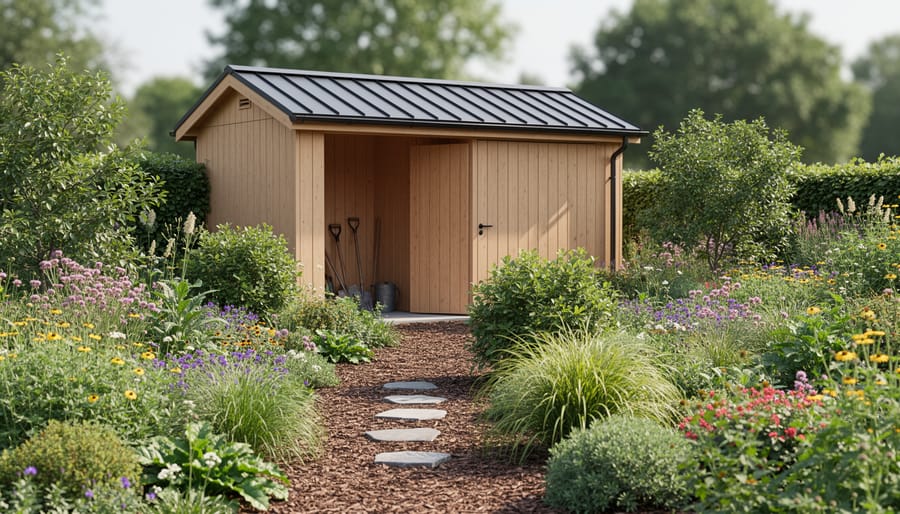
The Overlooked Potential Around Your Storage Shed
Take a walk around your storage shed right now, and you’ll probably notice what most homeowners see: bare ground, maybe some struggling grass, or at best, a few random plants that landed there by accident. It’s one of the most overlooked spaces in your yard, yet it holds incredible potential for supporting local wildlife while solving that awkward “what do I do with this area?” problem.
The perimeter around your shed is actually prime real estate for creating a mini wildlife haven. Think about it: sheds provide shelter from wind, create shade on one side and sun on another, and often collect rainwater runoff. These conditions are perfect for establishing diverse plantings that attract pollinators, beneficial insects, and birds.
Many homeowners leave these areas bare because they’re worried about maintenance or think the space is too small to matter. But here’s the truth: even a two-foot strip around your shed can become a thriving habitat corridor that connects different parts of your yard. You’re already mowing around it anyway, so why not transform that weekly chore into something that benefits your local ecosystem while adding genuine curb appeal to an otherwise utilitarian structure?
How Sheds Naturally Support Wildlife Shelter
Your shed isn’t just practical storage—it’s actually a hidden asset for supporting local wildlife when you landscape around it thoughtfully. The structure itself creates microclimates that various creatures find irresistible. The shaded north side naturally stays cooler and moister, perfect for amphibians like toads and beneficial insects. Meanwhile, the sunny south-facing wall provides warmth that attracts butterflies and lizards.
The key is enhancing what’s already there. Leave a small gap between ground plantings and your shed’s foundation—this creates protected corridors for hedgehogs, ground beetles, and other pest-controlling critters. The overhanging eaves offer natural rain shelter where birds might nest, especially if you add a simple nesting box nearby.
One homeowner in Oregon shared how planting native ferns along her shed’s shaded side attracted multiple salamander species, which helped control her slug problem naturally. Another discovered that climbing vines on his shed wall provided nesting sites for wrens three years running.
Consider stacking a few logs or stones near your shed’s base to create additional hiding spots. These simple additions transform your storage structure from a standalone building into an integrated wildlife hub that works year-round.
Planning Your Biodiversity-Friendly Shed Landscape
Assess Your Shed’s Surroundings
Before transforming the area around your shed into a thriving biodiversity haven, take time to understand what you’re working with. Start by observing sunlight patterns throughout the day. Does your shed cast shade for most of the afternoon, or does the space receive full sun? This knowledge will guide your plant selections and help you choose species that will actually thrive rather than struggle.
Next, check your drainage situation after a good rain. Walk around the perimeter and look for puddles or soggy spots. Poor drainage can be a blessing in disguise, as it’s perfect for native wetland plants that support pollinators and amphibians. Conversely, dry areas call for drought-tolerant species that require less maintenance.
Consider your practical needs too. Do you need a clear path to access the shed door? Are there utilities or downspouts to work around? One homeowner shared how she initially planted too close to her shed entrance, creating a daily obstacle course until she relocated those plants to the sides.
Finally, note what’s already growing there. Sometimes existing vegetation, even if it looks weedy, provides valuable habitat. You might discover native volunteers worth keeping as you plan your biodiverse landscape transformation.
Choosing the Right Approach for Your Space
The beauty of creating a biodiversity-friendly space around your shed is that it works at any scale. Got a compact 6×8 shed with limited surrounding space? A simple three-foot-wide pollinator strip along one side can make a real difference. Plant native wildflowers like black-eyed Susans and coneflowers, and you’ve created a vital refueling station for bees and butterflies.
For medium-sized sheds with 10-15 feet of clearance, consider layering your approach. Start with low-growing groundcovers near the foundation, add mid-height perennials a few feet out, and perhaps include a small native shrub or two at the corners. This creates multiple habitat zones that attract different wildlife species.
Lucky enough to have a larger shed with expansive yard space? Think bigger! Dedicate a corner area to a mini-meadow, incorporate a small brush pile for ground-dwelling creatures, or add a shallow birdbath. One homeowner transformed her 12×16 shed’s surroundings into a certified wildlife habitat by simply letting one side grow wilder while keeping the entrance pathway neat and accessible. The key is matching your ambitions to your available space and maintenance capacity.
Balancing Access and Wildlife Needs
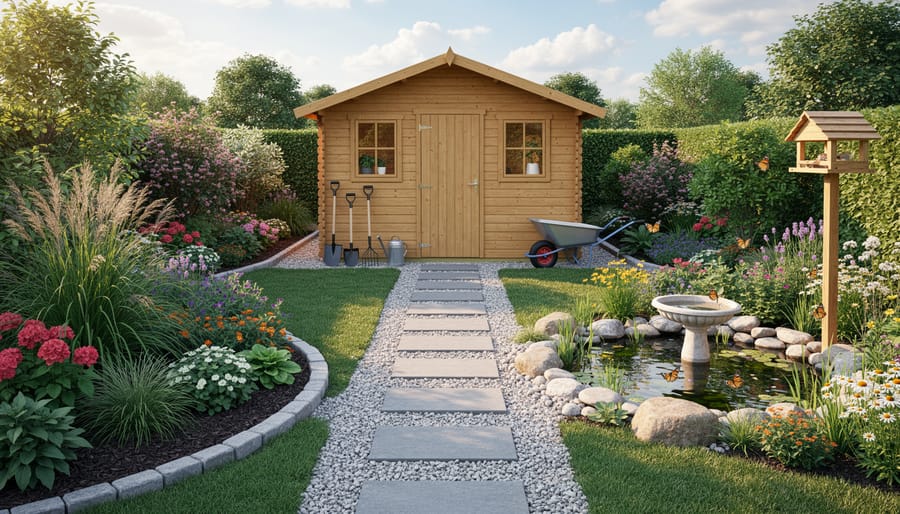
Creating a wildlife-friendly space around your shed doesn’t mean sacrificing practicality. The key is thoughtful zoning. Keep a clear, 3-foot pathway to your shed door using gravel or flat stepping stones—this ensures easy access for hauling equipment while providing excellent drainage. Position taller wildflower plantings and brush piles at least 4 feet from the shed walls to prevent moisture issues and maintain ventilation.
Consider creating designated wildlife zones on the sides or back of your shed where you rarely need access. These areas can host dense native plantings, log piles, or small water features without interfering with daily use. One homeowner I spoke with installed a simple hinged panel near their shed’s side wall, allowing occasional access to utilities while keeping the area naturalized most of the time. Remember, wildlife habitats work best when undisturbed, so placing them away from high-traffic areas benefits both you and your backyard visitors.
Native Plants That Thrive Around Sheds
Foundation Plantings That Feed Pollinators
The area right along your shed’s foundation is prime real estate for creating pollinator-friendly habitat. These low-growing native plants solve two common problems: they dress up the often-neglected shed perimeter while providing essential nectar and pollen sources for beneficial insects.
Consider planting creeping phlox, which blooms in early spring when bees desperately need food after winter. Wild strawberry makes an excellent ground cover that attracts over 40 species of native bees while adding charming white flowers. For shady shed sides, try wild ginger or native violets—both beloved by specialist pollinators.
Pennsylvania sedge works beautifully as a foundation “grass” that stays under 8 inches tall and supports numerous butterfly caterpillars. Pair it with native thyme or creeping sedum for year-round interest that requires minimal maintenance once established.
These foundation plantings align perfectly with sustainable gardening practices by eliminating the need for frequent mowing or trimming around your shed’s base. One homeowner reported seeing five times more butterflies after replacing mulch with native ground covers around her storage building. The bonus? These plants naturally suppress weeds while creating a softer, more inviting appearance than bare soil or wood chips.
Mid-Height Plants for Privacy and Habitat
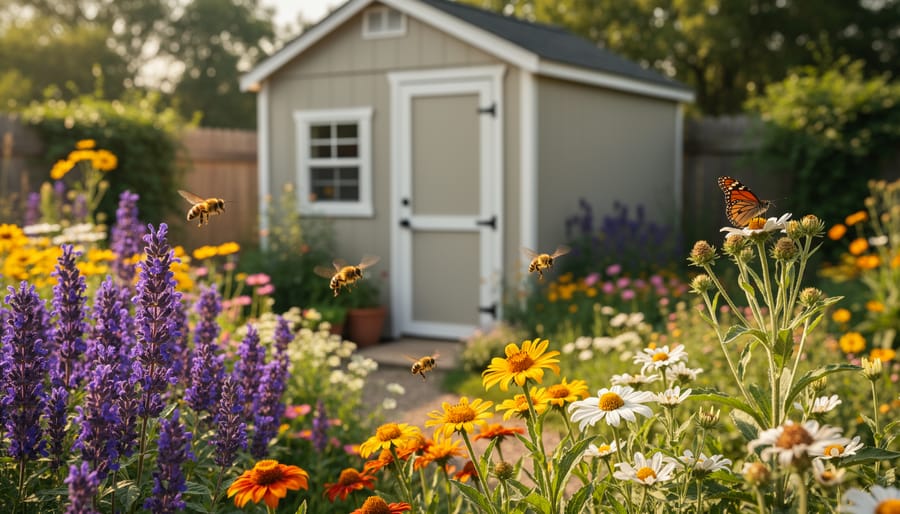
The space between your shed and fence line is perfect for mid-height plantings that solve two problems at once: they create visual interest while providing essential wildlife habitat. Think of these plants as nature’s answer to that awkward gap that collects weeds and looks forgotten.
Native shrubs like ninebark, viburnum, and spicebush work wonderfully in these zones, growing 3-6 feet tall to soften shed walls without overwhelming the space. Birds love nesting in their dense branches, while small mammals find shelter beneath. I’ve heard from homeowners who planted red twig dogwood along their shed line and were amazed when cardinals made it their year-round home.
Perennials offer another great option for filling middle layers. Black-eyed Susans, coneflowers, and bee balm create colorful screening while feeding pollinators throughout the growing season. These plants are forgiving for beginners and don’t require constant attention once established.
The key is layering different heights and bloom times. Place taller shrubs nearest the shed, with medium perennials in front, creating a graduated effect that looks intentional rather than haphazard. This arrangement gives wildlife multiple levels to explore while transforming that neglected strip into your yard’s most productive habitat zone. Within a season, you’ll notice increased bird activity and a more polished landscape.
Climbing Plants for Shed Walls and Trellises
Climbing plants transform bare shed walls into vibrant vertical gardens that attract pollinators and provide nesting spots for beneficial insects. The key is choosing species that won’t damage your structure while delivering maximum biodiversity benefits.
Clematis is an excellent choice for shed walls, offering spectacular blooms that bees adore without aggressive root systems. Train it along wire supports or a simple wooden trellis mounted a few inches from the wall to allow air circulation. Honeysuckle provides fragrant flowers and berries that birds love, though it needs occasional pruning to keep it manageable.
For shaded shed sides, climbing hydrangea works beautifully, clinging gently to surfaces while attracting numerous pollinators. Native trumpet vine is perfect if you want to create habitat for hummingbirds, but install sturdy support since it grows vigorously.
Here’s a practical tip from experienced gardeners: avoid ivy varieties on wooden sheds, as they can trap moisture and hide structural issues. Instead, opt for annual climbers like scarlet runner beans or morning glories in these spots. They provide seasonal color, die back in winter for easy inspection, and their flowers feed bees throughout summer.
Mount trellises at least two inches from shed walls to prevent moisture buildup and make maintenance easier while giving beneficial insects safe shelter behind the foliage.
Creating Specific Habitats Around Your Shed
Pollinator Gardens in Sunny Shed Corners
Those sunny, often-neglected spots beside your shed are actually prime real estate for pollinator gardens! These warm microclimates create ideal conditions for flowering plants that butterflies, bees, and hummingbirds absolutely love.
Start small with a 3-by-4-foot patch along the south-facing wall of your shed. The reflected heat creates perfect conditions for sun-loving natives like coneflowers, black-eyed Susans, and bee balm. These hardy perennials require minimal maintenance once established and bloom throughout the growing season.
Here’s a practical tip from experienced gardeners: layer your plantings by height. Place taller plants like Joe-Pye weed near the shed wall, medium-height flowers in the middle, and low-growing sedums or creeping thyme along the edges. This creates visual interest while maximizing the number of blooms in your compact space.
Don’t worry if your shed corner gets afternoon shade. Simply swap sun-lovers for partial-shade varieties like coral bells or wild geraniums. The key is matching plants to conditions rather than fighting them. Add a small saucer of water and some flat stones, and you’ve created a complete pollinator rest stop that transforms that forgotten corner into a buzzing hub of biodiversity.
Bird-Friendly Features and Nesting Opportunities
Transform the area around your shed into a haven for feathered friends with a few simple additions that create both beauty and purpose. Installing birdhouses near your shed provides safe nesting spots, especially when positioned 5-10 feet high and facing away from prevailing winds. Choose designs with proper drainage holes and appropriate entry sizes for species common to your region.
Native berry-producing shrubs like elderberry, serviceberry, or viburnum planted alongside your shed offer natural food sources while adding seasonal interest to your landscape. These plants require minimal maintenance once established and provide berries for birds while looking attractive year-round.
Consider adding a shallow birdbath within view of your shed’s window for enjoyable wildlife watching during garden tasks. Keep water fresh and position it near shrubs where birds can quickly retreat if threatened. Dense evergreen plantings create protective shelter during harsh weather, encouraging birds to make your property their permanent home. Many homeowners report increased bird activity within just weeks of implementing these features, turning previously overlooked shed areas into lively biodiversity hotspots.

Small Water Features for Wildlife
Water doesn’t need to be complicated to attract wildlife to your shed area. A simple shallow dish, no deeper than two inches, placed on the ground provides drinking water for birds, butterflies, and small mammals. Add a few flat stones to give insects safe landing spots. Change the water every few days to keep mosquitoes away.
Your shed’s downspouts offer a perfect opportunity to create a mini rain garden. Instead of directing water away from your property, let it collect in a shallow depression filled with native plants that tolerate both wet and dry conditions. This natural filtration system supports frogs, beneficial insects, and visiting birds while solving drainage issues many homeowners face.
If you’ve already installed a rainwater collection system, consider adding an overflow feature that creates a small puddle area during heavy rains. Even temporary water sources dramatically increase the variety of creatures visiting your yard, turning that forgotten space behind your shed into a thriving wildlife haven with minimal effort or expense.
Shelter Zones for Beneficial Insects and Small Animals
The often-overlooked space behind or beside your shed offers perfect real estate for wildlife shelters that boost biodiversity without compromising your yard’s usability. Consider creating a simple brush pile by loosely stacking fallen branches, twigs, and pruned material in layers. This provides safe havens for ground beetles, spiders, and small mammals like chipmunks who’ll help control garden pests naturally.
Rock stacks work beautifully too, especially if you’ve already got leftover stones from landscaping projects. Stack them with gaps and crevices where beneficial insects, lizards, and amphibians can nest and hibernate. Position these features where they won’t interfere with shed access or mowing patterns.
Another low-effort approach is designating a manageable wild patch in that awkward corner where your mower doesn’t quite reach anyway. Let native grasses and wildflowers grow naturally, creating shelter for butterflies, bees, and small birds. The beauty is that these zones actually solve common yard problems while supporting local wildlife. You’re not creating mess; you’re providing essential habitat that transforms underused shed areas into functional biodiversity hotspots that require virtually zero maintenance.
Maintenance Tips for Your Biodiversity Shed Landscape
Seasonal Care That Supports Wildlife
Timing your yard maintenance around wildlife needs makes a real difference for the creatures sharing your space. Instead of the traditional fall cleanup, leave seed heads, dried stems, and leaf litter in place until late spring. These provide essential food and shelter for overwintering insects, which in turn support birds and other wildlife. Many beneficial insects hibernate inside hollow plant stems, so wait until temperatures consistently reach 50°F before cutting back perennials.
When you do prune, cut stems about 12-18 inches above ground rather than at soil level, giving ground-nesting bees safe homes. Consider creating a brush pile near your shed with pruned branches for small mammals and amphibians. This approach naturally complements natural pest control by supporting predator insects year-round. Skip harsh chemicals when refreshing mulch or soil, and embrace a slightly messier aesthetic during winter months. Your neighbors might wonder initially, but once they see butterflies, songbirds, and fireflies thriving around your shed, they’ll likely follow your lead.
Managing Growth Without Compromising Shed Function
Creating a thriving biodiversity yard around your shed requires a thoughtful balance between nature and function. The key is strategic planning from the start. Position taller plants and trees at least 3-4 feet away from your shed walls to prevent root damage and allow proper air circulation. Keep the area within 12 inches of your shed’s foundation clear of dense plantings to discourage moisture buildup and pest problems.
Before planting, mark where your shed doors swing open and ensure you have clear pathways for access. Choose low-growing ground covers near entrances rather than shrubs that might obstruct doorways. Regularly trim back vines and climbing plants that could work their way under siding or block ventilation vents. Consider installing a small gravel border around your shed’s perimeter, which provides drainage while creating a natural barrier that limits aggressive plant growth near the structure.
Schedule seasonal maintenance checks to prune overgrown branches and remove any vegetation touching your shed’s exterior. This simple routine protects your investment while keeping your biodiverse garden flourishing beautifully.
Real-Life Success Stories: Biodiversity Yards Around Sheds
Real homeowners are discovering that the space around their sheds can be more than just an afterthought. Take Sarah from Portland, who tackled her weedy, forgotten shed corner last spring. “I planted native wildflowers and added a small birdbath,” she shares. “Within weeks, I had butterflies, bees, and birds visiting daily. My kids love watching from the kitchen window!” Sarah’s simple approach cost less than $75 and took just one weekend to implement.
Mark in Ohio faced a different challenge: a shaded north-facing shed wall where grass wouldn’t grow. After researching creative shed transformations, he installed native fern gardens and a small log pile for beneficial insects. “The transformation was incredible,” Mark explains. “What was once a muddy eyesore became this peaceful, green space. Plus, I’ve noticed fewer mosquitoes since the toads moved into the log pile!”
Linda from Texas turned her shed’s sunny side into a pollinator paradise using drought-tolerant native plants. “I was worried about maintenance, but these plants practically take care of themselves,” she notes. “My neighbors keep asking for advice now!” She estimates her water usage dropped by 30 percent compared to maintaining traditional grass in that area.
These success stories share common threads: starting small, choosing native plants suited to local conditions, and embracing imperfection. Each homeowner found that creating biodiversity around their shed was easier and more rewarding than expected, proving that anyone can turn overlooked spaces into thriving mini-ecosystems.
Creating a biodiversity yard around your shed is more achievable than you might think, and the rewards extend far beyond what you’d expect from such a manageable project. You don’t need to transform your entire property overnight or become a master gardener to make a real difference. Starting with just a few native plants, a simple water source, or a small brush pile near your shed creates immediate habitat value while enhancing your property’s visual appeal.
The beauty of this approach is that it actually simplifies maintenance over time. Native plants require less watering, fertilizing, and fussing than traditional landscaping once established. Meanwhile, you’ll enjoy watching butterflies, birds, and beneficial insects visit your shed area, knowing you’re supporting local wildlife populations that desperately need our help.
Begin with one or two elements that excite you most, whether that’s a pollinator garden along your shed’s sunny side or a cozy habitat pile tucked behind it. As you witness the life these simple additions attract, you’ll naturally want to expand your efforts. Every small action counts, and your shed’s surroundings offer the perfect low-pressure space to experiment with wildlife-friendly landscaping that benefits both you and nature.