


These Flowers Will Turn Your Vegetable Garden Into a Pollinator Paradise

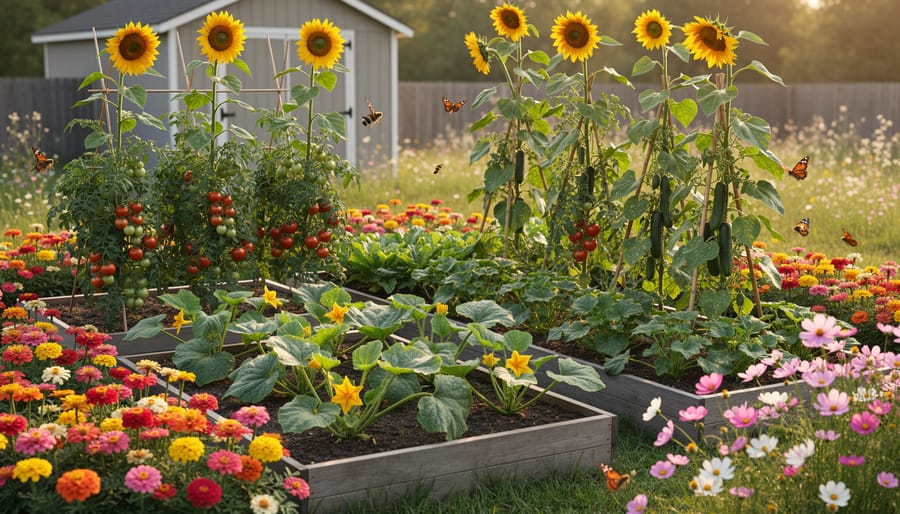
Plant zinnias, cosmos, and sunflowers in clusters at the edges of your vegetable beds to create pollinator highways that draw bees and butterflies directly to your tomatoes, squash, and cucumber blossoms. Position these flower stations every 10-15 feet around your garden perimeter, ensuring pollinators never travel more than a short flight between nectar sources and your crops.
Choose flowers that bloom throughout your entire growing season by combining early bloomers like sweet alyssum and calendula with mid-season coneflowers and late-season asters. This sequential blooming keeps beneficial insects actively patrolling your garden from spring through fall, rather than visiting once and moving on to more consistent food sources elsewhere.
Dedicate a small section near your garden shed or along fence lines for native wildflowers like black-eyed Susans and bee balm, which require minimal maintenance once established. These permanent pollinator patches become reliable hubs that support larger populations of beneficial insects throughout the year, significantly boosting your vegetable yields without demanding constant replanting.
The relationship between flowers and vegetables creates a mutually beneficial ecosystem in your backyard. While your vegetables provide some blooms, they often produce flowers briefly or inconsistently. Companion flowering plants fill the gaps, keeping pollinators present and active during critical pollination windows. The result is fuller bean pods, more abundant berry sets, and dramatically improved fruit development on crops like melons and peppers. Strategic flower placement transforms an average vegetable garden into a high-performing, naturally pollinated system that requires no special equipment or expertise.
Why Your Vegetable Garden Desperately Needs Pollinators
If you’ve ever wondered why your cucumber plants produced gorgeous vines but only a handful of actual cucumbers, you’re not alone. Many homeowners face this frustrating problem of poor fruit set, and here’s the truth: it’s usually not about sick plants or bad soil. It’s about missing pollinators.
Here’s what most gardeners don’t realize: many popular vegetables absolutely depend on pollinators to produce food. Without bees, butterflies, and other pollinating insects visiting your garden, you’ll see plenty of flowers but disappointingly few vegetables to harvest.
Let’s look at some common examples. Squash and zucchini need pollinators to transfer pollen from male flowers to female flowers. Without this happening, those baby squash will yellow and drop off before they ever reach harvestable size. Cucumbers face the same challenge. You might see dozens of blossoms, but without pollinator visits, you’ll end up with misshapen or underdeveloped fruits.
Tomatoes can self-pollinate, but they produce significantly more fruit and better-shaped tomatoes when bumblebees buzz around them, literally vibrating pollen loose. Peppers, eggplants, beans, and melons all benefit tremendously from pollinator activity too. Even crops like strawberries and blueberries produce larger, more uniform berries when pollinators do their work.
The solution isn’t complicated. By incorporating pollinator-friendly landscaping strategies and planting the right flowers near your vegetables, you create an irresistible destination for these helpful insects. More pollinators visiting your garden means more successful pollination, which directly translates to heavier harvests and better-quality vegetables. It’s that simple.
Planning Your Pollinator-Friendly Garden Layout
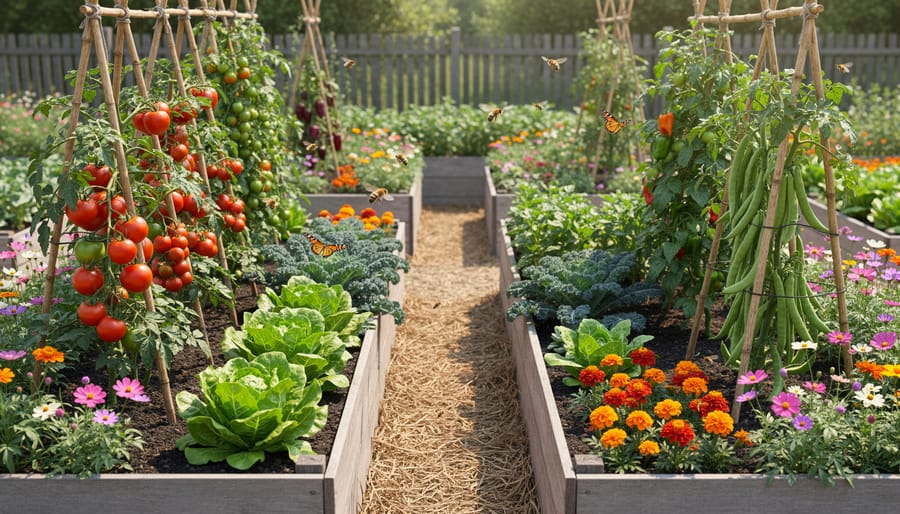
The Best Spots to Plant Pollinator Flowers
The smartest placement for pollinator flowers transforms your entire garden space into a productive ecosystem. Border edges around your vegetable beds create natural pollinator highways, drawing beneficial insects directly to where they’re needed most. This approach works beautifully with existing landscaping around sheds, since many storage structures sit near garden areas anyway.
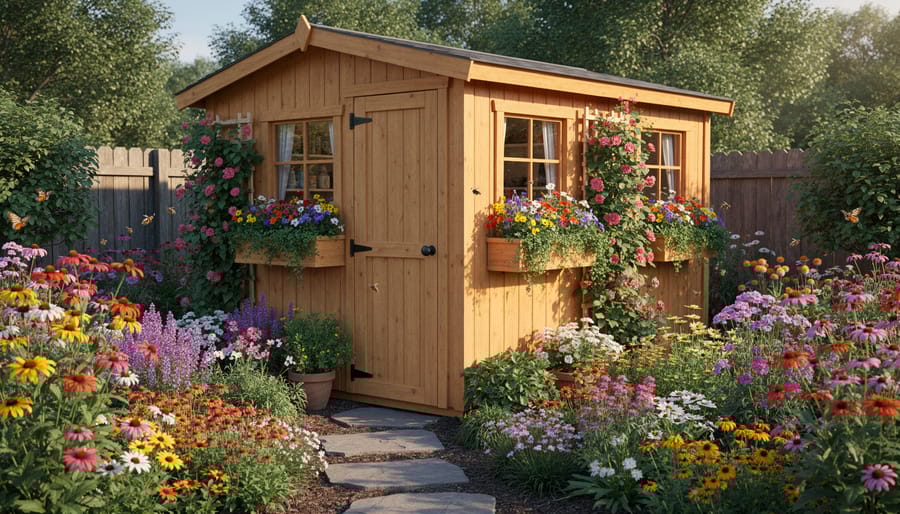
Storage shed walls offer surprisingly perfect microclimates for pollinator flowers. The south-facing side typically receives full sun, ideal for heat-loving blooms like zinnias and sunflowers. Plant these in containers or ground beds running along the foundation, and you’ll solve two problems at once: attracting pollinators while beautifying functional spaces.
Greenhouse entrances deserve special attention since pollinators need clear invitation points. Frame doorways with potted lavender or catmint to guide bees inside during ventilation periods.
Don’t overlook vertical opportunities. Shed roofs with shallow pitches accommodate lightweight containers filled with trailing nasturtiums or compact herbs. Sturdy shelving mounted on exterior walls creates tiered flower displays at various heights, accommodating different pollinator preferences. These creative placements maximize limited garden space while keeping blooms visible to passing butterflies and bees.
Creating Continuous Bloom Throughout the Growing Season
Think of succession planting like scheduling guests for a season-long garden party—you want someone blooming at all times to keep pollinators coming back. Start early spring with crocuses and snow drops near your cold-hardy vegetables like peas and lettuce. As temperatures warm, overlap these with sweet alyssum and calendula when you’re transplanting tomatoes and peppers that will need pollination later.
Here’s a simple problem-solving approach: plant quick-blooming flowers like bachelor’s buttons and cosmos in batches every two to three weeks from mid-spring through early summer. This creates waves of blooms that bridge the gap until your main summer flowers like zinnias and sunflowers take over. One gardener in Michigan shared that this staggered approach tripled her cucumber yield because pollinators kept visiting even during her squash’s critical flowering period.
For late summer through fall when winter squash and beans finish producing, plant asters and sedum near your garden storage area. These late bloomers support pollinators preparing for winter while adding color to your garden’s transition season. Keep a simple planting calendar on your shed door as a reminder of when to sow each successive batch.
Top Flowers That Bring Pollinators to Your Vegetables
Early Season Bloomers (Spring)
Getting pollinators to your vegetable garden early in the season sets the stage for a bountiful harvest all year long. When your spring vegetables start flowering, having established pollinator populations nearby makes all the difference.
Crocuses are among the first flowers to emerge, often pushing through snow to provide crucial early nectar for honeybees and bumblebees just coming out of dormancy. Plant bulbs in fall around the edges of your garden beds or near your garden shed for convenient viewing.
Sweet alyssum is a gardener’s best friend, attracting hoverflies, tiny bees, and parasitic wasps that control aphids while pollinating your crops. This low-growing annual works beautifully as edging along pathways or tucked between vegetable rows. It tolerates light shade and reseeds readily, giving you blooms year after year with minimal effort.
Borage brings in bumblebees like nothing else, and they absolutely love its star-shaped blue flowers. This self-seeding annual also improves soil with deep roots and makes an excellent companion near tomatoes and squash. Plant it where it has room to spread, as it can reach two feet tall.
Calendula attracts beneficial hoverflies, bees, and butterflies while its edible petals add color to salads. Direct sow seeds after the last frost near crops that need extra pollination support. Many gardeners plant calendula in containers near their storage areas for easy access and pest-deterring benefits.
Mid-Season Powerhouses (Summer)
Summer is when your vegetable garden hits full stride, and these mid-season powerhouses keep pollinators buzzing through the hottest months. The beauty of these flowers is that they handle heat beautifully while your tomatoes, peppers, and squash are doing their thing.
Sunflowers are the showstoppers that do double duty. Plant them along the north side of your garden so they don’t shade vegetables, and their towering blooms become pollinator magnets. Bees absolutely love the single-petal varieties, and as a bonus, you’ll have seeds for fall bird feeding. One gardener told me she plants a sunflower row behind her shed, creating a stunning backdrop while attracting dozens of pollinators daily.
Zinnias are workhorses that just keep blooming. Tuck them between vegetable rows or along garden edges, and they’ll flower nonstop until frost. They’re incredibly low-maintenance and come in every color imaginable, so you can match your garden aesthetic while feeding butterflies and bees.
Cosmos are the carefree companions every vegetable garden needs. These airy flowers don’t compete with vegetables for nutrients and actually help fill vertical space without crowding. Their open blooms make pollen easily accessible for all pollinator types.
Marigolds serve as both pest deterrents and pollinator attractants. French marigolds work best alongside vegetables, keeping aphids away while their golden blooms draw beneficial insects.
Lavender and bee balm planted near garden borders create permanent pollinator stations. They’re perfect for planting alongside permanent structures where you want consistent year-after-year performance. Bee balm especially attracts hummingbirds, which also pollinate while visiting your garden.

Late Season Heroes (Fall)
As summer winds down, don’t let your pollinator party end too soon. Late-season flowers are absolute game-changers for fall vegetables like squash, pumpkins, and pole beans that need those final pollination pushes to reach their full harvest potential.
Asters are the reliable workhorses of autumn gardens, producing clusters of purple, pink, or white daisy-like blooms that pollinators simply can’t resist. Plant them along fence lines or near your garden shed where they’ll catch afternoon sun. Sedum, often called stonecrop, offers thick succulent leaves and flat-topped flower clusters that serve as landing pads for butterflies and beneficial insects well into October.
Goldenrod often gets unfairly blamed for allergies, but it’s actually ragweed causing the problem. This native perennial creates bright yellow plumes that attract dozens of pollinator species right when your late squash blossoms need attention most. Annual salvias keep pumping out tubular flowers until frost, providing continuous nectar when little else is blooming.
Here’s a real-world tip from experienced gardeners: plant these fall bloomers in late spring alongside your vegetables. They’ll establish strong roots through summer and hit their stride exactly when your autumn crops need pollination help. Position them on the sunny side of taller vegetables so both plants get adequate light, and you’ll enjoy better yields on those prized winter squashes.
Herbs That Pull Double Duty
Here’s a garden secret many beginners overlook: your culinary herbs can work overtime as pollinator magnets while still providing plenty for your kitchen. Instead of cutting back every stem, let some of your herb plants flower strategically throughout the season.
Basil blooms with delicate white or purple flowers that bees absolutely adore. Allow a few plants to bolt while keeping others trimmed for cooking—you’ll maintain your harvest while drawing beneficial insects right into your vegetable beds. The same goes for oregano and thyme, whose tiny clustered flowers become buzzing hubs of activity in midsummer.
Cilantro and dill are particularly generous performers. Both produce umbrella-shaped flower clusters that attract a diverse crew of pollinators, including beneficial parasitic wasps that help control garden pests. One homeowner from Ohio shared that letting her dill flower near her cucumber patch doubled her cucumber yield while giving her plenty of dill for pickling earlier in the season.
The beauty of this approach is flexibility. Plant extras of your favorite herbs, harvest from some plants while letting others bloom. This staggered strategy keeps pollinators visiting your garden consistently, which means better pollination for your tomatoes, squash, and beans throughout the growing season.
Making Your Garden Shed Area Pollinator-Friendly
Your garden shed isn’t just a storage space—it’s prime real estate for creating pollinator habitat right where you need it most. By transforming the area around your shed into a pollinator-friendly zone, you’re essentially building a rest stop for bees, butterflies, and other beneficial insects as they move between your flowers and vegetable plants.
Start with the foundation perimeter. That narrow strip around your shed’s base is perfect for low-growing pollinator favorites like creeping thyme, alyssum, or sweet woodruff. These plants don’t require deep soil and create a living border that attracts small native bees. One gardener in Ohio shared that planting purple catmint along her shed foundation resulted in constant bee activity that noticeably improved her nearby squash and cucumber yields.
The sides of your shed offer vertical growing opportunities. Install simple wire mesh or trellises against the walls for climbing flowers like clematis, honeysuckle, or sweet peas. These vertical gardens don’t take up precious ground space while providing abundant nectar sources. South or west-facing shed walls work especially well since they receive plenty of sunshine.
When you organize your garden shed, consider dedicating a corner to pollinator-supporting materials. Store bundles of hollow bamboo stems or drilled wood blocks to create native bee houses. Keep a small pile of dry leaves or twigs nearby—many beneficial insects overwinter in these materials.
The roof area shouldn’t be overlooked either. If your shed has a shallow-pitched roof, consider adding window boxes along the eaves filled with trailing lobelia or verbena. This maximizes your flowering space without expanding your garden’s footprint, creating layers of habitat that pollinators naturally navigate throughout the growing season.
Simple Mistakes That Drive Pollinators Away
You might be doing everything right with your flower selections but accidentally creating an unwelcoming environment for pollinators. The good news? These common mistakes are easy to fix once you know what to look for.
Pesticide timing is one of the biggest culprits. Even organic sprays can harm beneficial insects if applied when flowers are blooming. The solution is simple: spray in the early morning or late evening when pollinators aren’t active, and avoid treating any plants in flower. Better yet, embrace integrated pest management techniques that work with nature rather than against it.
Many gardeners overlook water sources, which pollinators need just as much as nectar. Create a simple bee bath using a shallow dish filled with pebbles and water. The stones give insects a safe landing spot to drink without drowning. Place it near your flower plantings but away from high-traffic areas.
Excessive mulch, while great for suppressing weeds, can actually block ground-nesting bees from accessing soil. These native bees are incredible pollinators, yet they need bare patches of earth to create their homes. Leave some mulch-free zones in sunny spots throughout your garden.
Here’s something that might surprise you: not all weeds are your enemy. Dandelions and clover provide early-season food when little else is blooming. Rather than eliminating every single weed, consider tolerating a few beneficial ones in less visible areas near your shed or along fence lines.
Finally, think about nesting sites. Bundle hollow stems together, leave some dead wood in place, or install a simple bee house. These small touches transform your garden from a cafeteria into a true habitat where pollinators will thrive season after season.
Real Results: What to Expect After Adding Pollinator Flowers
During your first season with pollinator flowers, you’ll notice increased bee and butterfly activity within 2-3 weeks of blooming. While the full benefits develop over time, most gardeners report noticeable improvements in fruit set on tomatoes, squash, and cucumbers by mid-summer of year one.
Sarah from Ohio discovered this firsthand when she planted a small pollinator garden alongside her vegetable beds. “I was skeptical at first, but by July I had twice as many tomatoes as the previous year,” she shares. “The zucchini plants that usually struggled were suddenly producing consistently.”
Expect these measurable improvements in an established pollinator garden (years 2-3):
– 25-40% increase in yields for pollinator-dependent vegetables like squash, cucumbers, and melons
– Better fruit development with fewer misshapen vegetables
– Extended harvest periods as pollinators work throughout the day
– Natural pest control as beneficial insects like ladybugs and lacewings move in alongside pollinators
The secondary benefits often surprise gardeners most. You’ll likely see fewer aphids and caterpillar damage as predatory insects establish residence. Your garden becomes a balanced ecosystem rather than just a food production space.
Be patient during establishment. Perennial flowers need time to develop strong root systems, while annuals provide immediate results. By season two, you’ll have the perfect combination working together to boost your harvest naturally.