


Why A-Frame Sheds Solve Your Storage Problems Better Than Traditional Designs

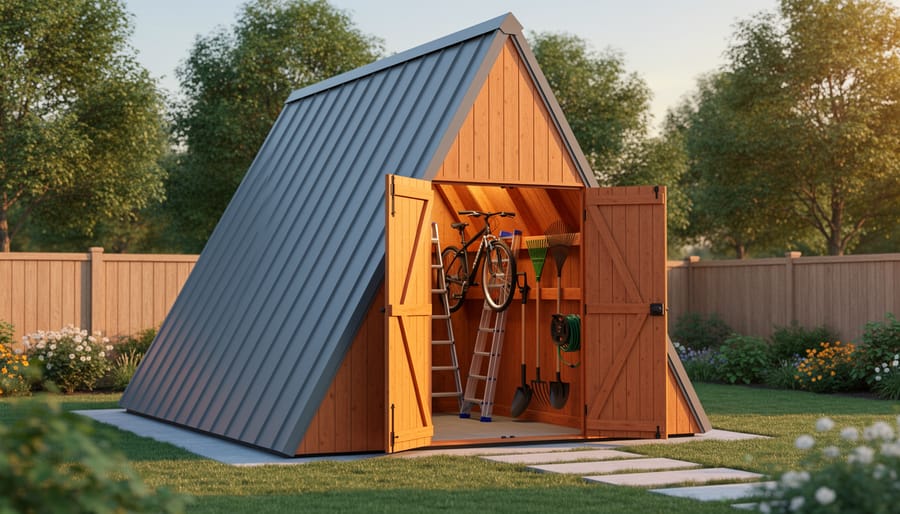
A-frame sheds are transforming backyard storage with their distinctive triangular silhouette that sheds snow and rain effortlessly while creating surprisingly functional interior space. Unlike traditional rectangular sheds that often feel boxy and utilitarian, these peaked structures blend seamlessly into gardens and landscapes, offering homeowners a storage solution that doesn’t compromise curb appeal.\n\nThe sloped roof design naturally prevents water accumulation and debris buildup, meaning less maintenance and longer-lasting protection for your tools, equipment, and outdoor gear. Inside, the cathedral-style ceiling opens up vertical storage possibilities that standard sheds can’t match, making them ideal for hanging bicycles, ladders, and seasonal decorations while keeping floor space clear for lawn mowers and workbenches.\n\nWhether you’re a weekend DIYer seeking an approachable building project or a homeowner tired of an eyesore storage structure, A-frame sheds deliver practical benefits wrapped in architectural charm. Their straightforward design requires fewer materials than complex shed styles, and the steep pitch means you’ll spend less time clearing gutters and more time enjoying a clutter-free yard. This guide walks you through everything from choosing the right size and materials to maximizing every inch of that unique triangular interior.\n\n\n
What Makes A-Frame Sheds Different from Standard Storage Sheds
\n\n
 \n
\n\n\n
The Structural Advantages You’ll Actually Notice
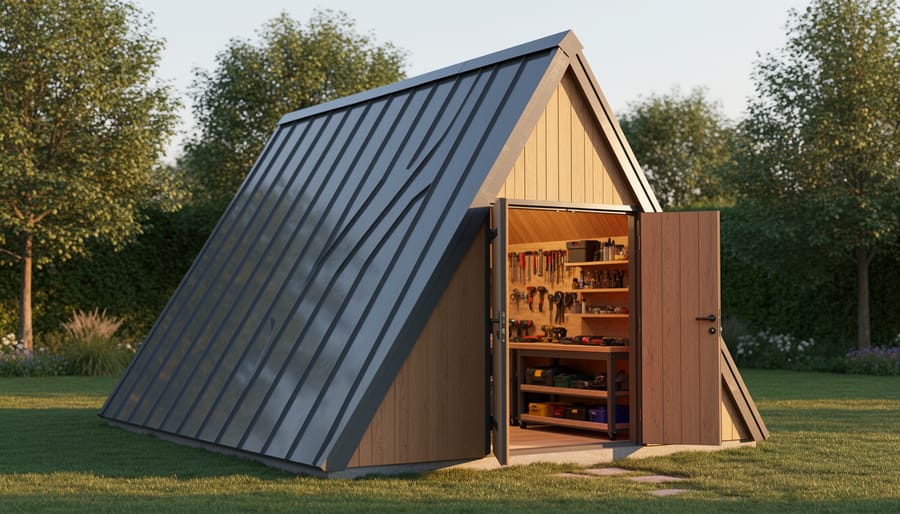
\n\nThe steep, triangular design of A-frame sheds isn’t just about looks—it delivers real-world benefits that make your life easier. If you live in an area with heavy snowfall or frequent rain, you’ll quickly appreciate how that peaked roof sheds precipitation like a champion. Snow slides off naturally instead of accumulating and adding stress to the structure, which means less worry during winter storms and fewer trips outside to clear your roof.\n\nThat same sloped design creates excellent natural drainage, directing water away from the walls and foundation. This simple feature helps prevent moisture buildup, rot, and the dreaded mildew smell that can plague flat-roofed structures. One homeowner in Oregon shared that her A-frame shed stayed dry through an exceptionally wet winter while her neighbor’s traditional shed developed water damage along the edges.\n\nThe triangular structure also provides impressive wind resistance. The aerodynamic shape allows strong winds to flow over and around the shed rather than pushing against flat surfaces. Whether you’re dealing with coastal breezes or prairie gusts, that stability matters.\n\nMaintenance becomes refreshingly straightforward too. The steep pitch means leaves and debris don’t collect on the roof, and the simple design has fewer seams and joints where problems typically develop. You’ll spend less time on upkeep and more time actually using your shed—which is exactly how it should be. This durability across different climates makes A-frame sheds a practical investment for the long haul.\n\n
Space Considerations: What to Expect Inside
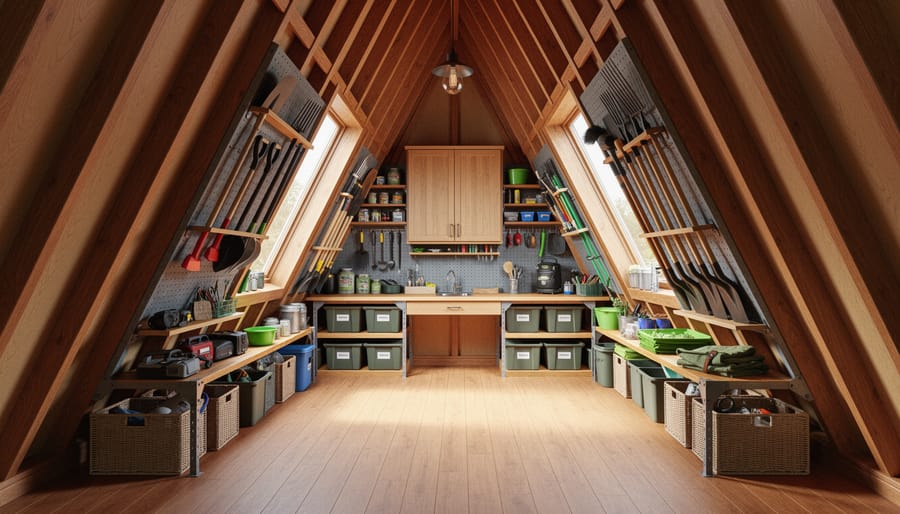
\n\nWalking into an A-frame shed feels different than entering a traditional rectangular structure, and understanding this layout helps you make the most of your space. The defining feature is that soaring central peak that gives you impressive headroom right down the middle, but here’s the trade-off: as you move toward the walls, the ceiling slopes downward, sometimes quite dramatically.\n\nThis unique geometry creates a natural storage hierarchy. The center aisle becomes your workhorse zone, perfect for frequently accessed items, workbenches, or anything you need to move around easily. Think of this as your primary access corridor where you can stand upright and maneuver comfortably. Meanwhile, those lower side areas become ideal spots for bins, seasonal decorations, or equipment you don’t reach for daily.\n\nThe sloped walls actually work in your favor if you plan strategically. One homeowner shared how she installed tiered shelving units that matched the roof angle, creating custom storage that would otherwise be wasted space in a traditional shed. Another built rolling carts that slide beneath the slopes, making everything accessible without cramping the center walkway.\n\nThis design particularly benefits people storing a mix of large equipment and smaller items. Lawnmowers, bikes, and tall garden tools claim the center space, while the perimeter handles everything else. However, if you’re planning to store exclusively bulky items or need consistent overhead clearance throughout, you might find the sloped walls limiting. The key is matching your storage style to the space’s natural strengths.\n\n\n
Creative Ways to Maximize Multi-Functional Storage in Your A-Frame Shed
\n\n
 \n
\n\n\n
Vertical Storage Solutions That Work with Sloped Walls
\n\nWorking with A-frame sheds means getting creative with those charming sloped walls. The key is choosing storage solutions that embrace the angle rather than fight against it.\n\nStart with adjustable shelving systems that can be customized to fit your specific wall pitch. Modular units with movable brackets let you create level shelves at various heights, maximizing usable space even as the walls narrow. Position your tallest shelves near the center where you have the most headroom, then gradually use shorter units as you move toward the lower sections.\n\nPegboards are your best friend in an A-frame. They conform beautifully to angled walls and offer incredible flexibility. Mount them on the lower portions of the sloped walls for easy-access tool storage. You can hang everything from garden implements to sports equipment, adjusting the peg configuration as your needs change. One homeowner shared that installing pegboards on both sides of her A-frame shed transformed how she could organize your shed, keeping frequently used items within arm’s reach.\n\nThink vertically with your organization strategy. Store lightweight, seasonal items up high where the walls meet the roof peak using overhead hooks or suspended baskets. Keep medium-weight items at shoulder height on your main shelving, and reserve the lower angled areas for bulky but easily accessible items like bags of soil or coolers.\n\nMagnetic strips work wonderfully on metal A-frame supports for small tools, while S-hooks on horizontal beams create instant hanging storage that adapts perfectly to your space.\n\n
Dual-Purpose Setups: Workshop, Garden Center, and More
\n\nHomeowners across the country are discovering that A-frame sheds excel as combination spaces, solving multiple storage challenges in one compact structure. These versatile buildings adapt beautifully to diverse needs, making them ideal for those seeking practical solutions without sacrificing style.\n\nMeet Sarah from Oregon, who transformed her 8×10 A-frame into a workshop and garden center hybrid. The lower level houses her power tools and workbench, while upper shelving holds seed trays, fertilizers, and potting supplies. She installed moisture-resistant flooring to protect your tools from damp conditions while nurturing seedlings nearby. A fold-down table serves double duty for woodworking projects and spring planting prep.\n\nThe Martinez family in Colorado uses their A-frame for bike storage and a dedicated workspace. Vertical wall hooks accommodate four bikes, while a corner desk with overhead lighting creates a quiet spot for remote work or homework. The sloped walls provide perfect angles for hanging gear without wasting floor space.\n\nThen there’s Tom in Michigan, who converted his A-frame into a seasonal storage hub and year-round hobby center. Winter sports equipment occupies one side during summer months, swapping places with camping gear when snow falls. His painting easel and supplies remain set up year-round in a dedicated corner with natural light from a gable window. The key to these successful dual-purpose setups? Thoughtful zoning, flexible storage solutions, and taking advantage of the A-frame’s unique vertical space to keep different activities organized and accessible.\n\n
Zone Planning for Maximum Efficiency
\n\nMaximize your A-frame shed’s unique architecture by dividing it into smart, functional zones. Start by using the tallest central area for items you access frequently, like lawn mowers, bikes, or gardening tools. This prime real estate is perfect for standing and moving around comfortably.\n\nThe mid-height zones along the sloped walls work beautifully for shelving units that follow the roofline. Install adjustable shelves here to store medium-sized items like paint cans, tool boxes, and seasonal decorations. One homeowner shared how she transformed this space into a potting station with cascading shelves that matched the shed’s natural angles.\n\nReserve the lowest areas near the floor edges for flat storage. Slide rarely-used items like camping gear, holiday decorations, or sports equipment into these nooks using rolling bins or flat containers. This keeps everything accessible without wasting precious vertical space.\n\nFor best results, create a floor plan before moving items in. Map out walkways down the center and dedicate specific wall sections to different categories. This simple planning step prevents the frustration of rearranging heavy items later and ensures your A-frame shed stays organized year-round.\n\n\n
Material Options and What They Mean for Your Storage Needs
\n\n
Wood A-Frame Sheds: Classic Look with Customization Potential
\n\nWood A-frame sheds bring timeless charm to your backyard while offering practical advantages that many homeowners appreciate. The natural insulation properties of wood help regulate interior temperatures, keeping your stored items protected from extreme heat and cold—a real benefit if you’re storing gardening supplies, tools, or seasonal decorations that might be sensitive to temperature swings.\n\nOne of the biggest draws is customization potential. Wood is incredibly forgiving when you want to add shelving, hooks, or windows. Sarah from Oregon shared how she easily installed custom-height shelves in her wood A-frame to accommodate her tall garden tools and still had room for smaller items below. You can paint, stain, or weather-treat wood to match your home’s exterior perfectly.\n\nThe trade-off? Wood requires regular maintenance. Plan to inspect for rot, repaint or restain every few years, and watch for pest issues. A quality sealant applied during initial setup helps minimize future headaches.\n\nWood A-frames work beautifully as garden sheds, potting stations, or backyard workshops where you appreciate natural aesthetics. They’re also excellent for properties with homeowner association guidelines favoring traditional materials. With proper care, your wood A-frame becomes a charming, functional fixture that ages gracefully alongside your home.\n\n
Metal and Vinyl Options: Low-Maintenance Alternatives
\n\nIf you’re looking for an A-frame shed that practically takes care of itself, metal and vinyl materials deserve serious consideration. These alternatives shine when it comes to durability and weather resistance, standing up beautifully to rain, snow, and intense sun without warping, rotting, or requiring regular staining like wood options.\n\nMetal A-frame sheds offer exceptional strength and fire resistance, making them ideal for storing equipment or seasonal items in harsh climates. They typically arrive as pre-fabricated kits with straightforward assembly instructions, though you’ll want to ensure proper foundation preparation to prevent moisture issues. One homeowner in Colorado shared how their metal A-frame has weathered five winters without a single maintenance task beyond occasional cleaning.\n\nVinyl presents another fantastic low-maintenance choice, combining the aesthetic appeal of traditional materials with modern resilience. These vinyl storage options resist fading, never need painting, and clean easily with just soap and water. They’re particularly well-suited for coastal areas where salt air can accelerate deterioration of other materials.\n\nInstallation for both materials requires attention to manufacturer guidelines, especially regarding anchoring systems to withstand wind. While initial costs may run slightly higher than wood, the long-term savings in maintenance time and materials make metal and vinyl A-frame sheds smart investments for busy homeowners prioritizing convenience without sacrificing quality.\n\n\n
Before You Buy: Sizing Your A-Frame for Your Actual Needs
\n\n
The Storage Inventory Exercise
\n\nBefore you fall in love with an A-frame shed, let’s figure out exactly what you need to store. Start by making a complete list of everything that’s currently cluttering your garage or backyard. Group items into categories: lawn equipment, garden tools, seasonal decorations, sports gear, and anything else taking up space.\n\nNext, measure your larger items like lawnmowers, bicycles, or yard equipment. This is where A-frame sheds require a bit of extra thought. Remember, the sloped walls mean you’ll have full height down the center, but reduced headroom along the sides. Sketch out a simple floor plan showing where tall items can stand upright versus where you’ll place lower-profile storage boxes.\n\nCalculate your square footage needs by adding up the footprint of your items, then add 30 percent extra for walkways and future purchases. When sizing your shed, consider vertical space too. The A-frame’s peak offers excellent overhead storage potential for rarely-used items.\n\nFinally, think seasonally. Will you need daily access to certain items, or can some things live in those harder-to-reach side spaces? This practical planning ensures your A-frame shed works beautifully from day one.\n\n
Yard Placement Considerations
\n\nFinding the perfect spot for your A-frame shed makes all the difference in its longevity and functionality. Start by checking for proper drainage—avoid low-lying areas where water pools after rain, as this can lead to foundation issues and premature wear. Consider how you’ll access your shed year-round; placing it near a pathway or driveway makes hauling equipment much easier, especially during winter months.\n\nSunlight matters too. While some sun exposure helps prevent moisture buildup and mildew, excessive southern exposure in hot climates can make metal roofs uncomfortably warm. Before finalizing your location, review any homeowners association rules or local zoning regulations regarding setback requirements from property lines and maximum structure sizes. Many homeowners discover these restrictions after purchasing, so a quick call to your local building department saves headaches later. Also consider future landscaping plans and utility line locations—you don’t want to accidentally build over underground cables or interfere with planned garden expansions.\n\n\n
Installation and Foundation Requirements for A-Frame Sheds
\n\n
Foundation Choices That Support the A-Frame Design
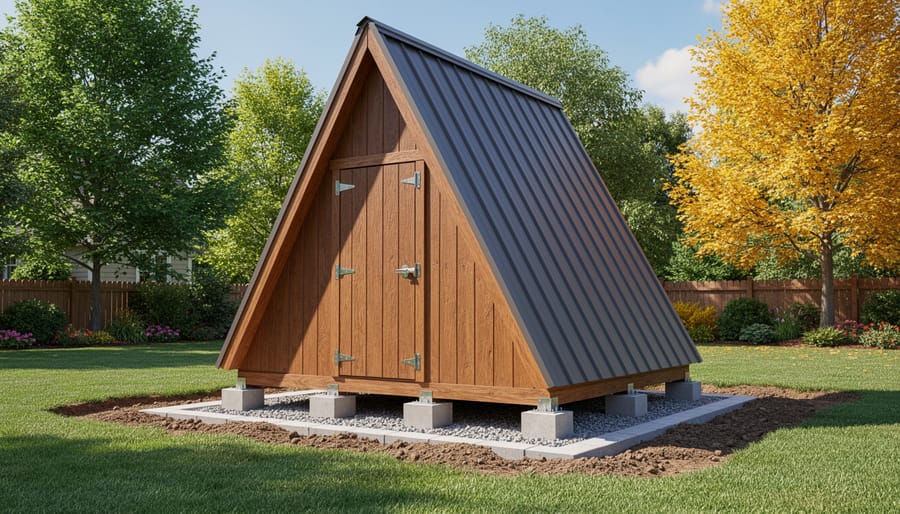
\n\nChoosing the right foundation is crucial for keeping your A-frame shed stable and level for years to come. Let’s look at three popular options that work beautifully with this design.\n\nGravel pads are budget-friendly and provide excellent drainage, making them perfect for smaller A-frame sheds (under 100 square feet) on relatively flat terrain. Simply excavate a few inches, add landscaping fabric, and fill with compacted gravel. This approach allows for natural ground movement without affecting your shed’s structure.\n\nConcrete slabs offer maximum durability and work wonderfully for larger A-frames or areas with softer soil. While they require more upfront investment, they create a perfectly level surface and prevent moisture issues. Many homeowners appreciate the clean, finished look, especially when using their shed as a workshop or hobby space.\n\nSkid foundations (pressure-treated runners) strike a nice balance between portability and stability. They’re ideal for medium-sized A-frames and uneven ground since you can adjust individual skids for leveling. Plus, they keep your shed floor elevated, promoting airflow underneath.\n\nFor wet climates or clay-heavy soil, go with concrete or elevated skids to prevent moisture damage. Sandy or well-draining soil? A gravel pad should serve you perfectly. Consider your local building codes too, as some areas require permanent foundations for structures over certain sizes.\n\n
 \n
\n\n\n
DIY vs. Professional Installation: Making the Right Call
\n\nDeciding between DIY and professional installation for your A-frame shed largely depends on your comfort level with construction and the kit you’ve chosen. Most A-frame sheds come as pre-cut kits with detailed instructions, making them surprisingly manageable for homeowners with basic carpentry skills.\n\nFor a successful DIY project, you’ll need standard tools like a drill, level, saw, and measuring tape. Plan for a weekend project with at least one helper, as positioning wall panels and roof sections goes much smoother with two sets of hands. The sloped design actually simplifies roofing compared to traditional sheds, since you’re essentially working with two large triangular sections.\n\nConsider hiring professionals if your site requires significant ground leveling, you’re uncomfortable working at heights, or local building codes mandate licensed contractors for structures over certain sizes. One homeowner shared that while she tackled assembly herself, hiring someone for foundation preparation saved hours of frustration and ensured proper drainage.\n\nThe sweet spot? Handle assembly yourself to save 40-60% on labor costs, but don’t hesitate to bring in help for site preparation or electrical work if needed. Your time, skill level, and project complexity should guide this decision.\n\n\n
Real Homeowner Stories: A-Frame Sheds in Action
\n\nWhen Sarah from Portland needed a solution for her overflowing garage, she turned to an A-frame shed and hasn’t looked back. “We had bikes, gardening tools, and camping gear taking over our two-car garage,” she explains. “The A-frame design was perfect because the steep roof sheds our heavy rain, and I can actually walk inside without hunching over like I did in our old storage box.” Sarah organized one side for sports equipment with wall-mounted hooks and dedicated the other to seasonal decorations, finally reclaiming her garage for actual parking.\n\nMeanwhile, Tom in Michigan faced a different challenge. His backyard art studio needed an adjacent storage space that wouldn’t look like an eyesore. “The A-frame shed has clean, modern lines that complement our mid-century home,” he shares. “I store canvases, supplies, and finished pieces waiting for delivery. The vertical design means I can stand my larger paintings upright instead of stacking them flat.”\n\nFor the Henderson family in Texas, their A-frame shed solved a seasonal dilemma. “We have pool equipment in summer and holiday decorations in winter, plus the kids’ outdoor toys year-round,” explains Jennifer Henderson. “The pitched roof keeps everything dry during our occasional heavy storms, and we installed simple shelving on both slanted walls to maximize every inch. It’s amazing how much fits inside what looks like a compact footprint from the outside.”\n\nThese homeowners discovered that A-frame sheds aren’t just functional—they’re problem-solvers that adapt to whatever life throws at them.\n\n\nA-frame sheds offer a winning combination of practicality, durability, and visual charm that makes them stand out in the world of outdoor storage. Their distinctive peaked design isn’t just eye-catching—it actively solves common storage challenges like water drainage, snow accumulation, and maximizing vertical space. Whether you need a cozy garden tool sanctuary, a creative workshop, or extra room for seasonal items, these versatile structures adapt beautifully to your lifestyle.\n\nTake a moment to think about your own storage struggles. Are you tired of cluttered garages or basement overflow? Do you dream of a dedicated space that doesn’t compromise your yard’s appearance? A-frame sheds might be exactly what you’re looking for. They blend seamlessly into various landscapes while providing reliable protection for your belongings year-round.\n\nThe best part? You’re now equipped with the knowledge to make a confident choice—from understanding material options to planning your interior layout. Don’t hesitate to measure your available space, list your storage priorities, and explore different A-frame configurations. Your perfect storage solution is closer than you think, and with an A-frame design, you’ll enjoy both function and beauty for years to come.