


Why Smart Small Business Owners Are Ditching Expensive Offices for Backyard Sheds

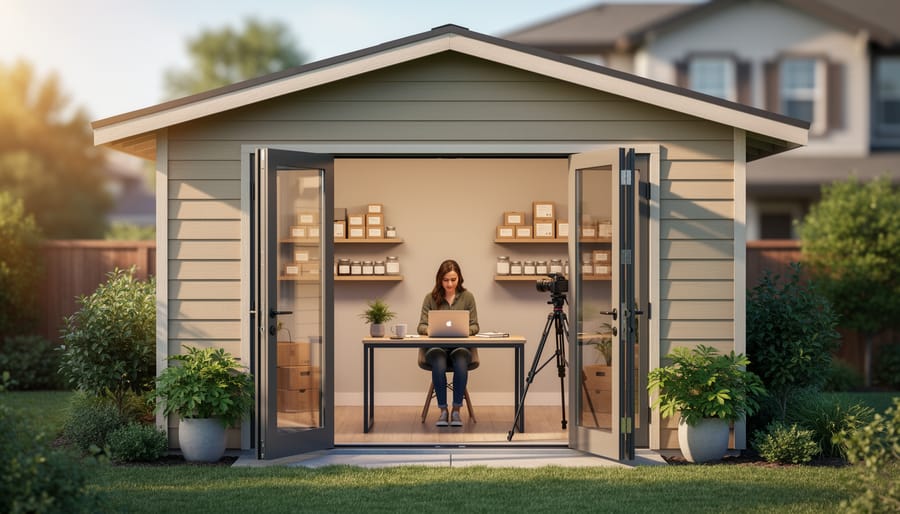
Transform an ordinary storage shed into a thriving business headquarters for a fraction of traditional commercial lease costs. Small business owners across the country are converting backyard sheds into professional workspaces, retail showrooms, creative studios, and service-based operations—saving thousands annually while maintaining the flexibility to scale on their own terms.\n\nConsider your business needs first: A photographer needs natural light and climate control, while a landscaper requires secure equipment storage with easy access. Your shed specifications should match your daily operations, from electrical requirements to insulation levels. A backyard home office setup differs significantly from a product fulfillment center, yet both start with the same foundation.\n\nCheck local zoning regulations before purchasing, as many municipalities permit accessory structures for business use with proper permits. Most residential areas allow sheds under 200 square feet without special approval, though running a customer-facing business may require additional licensing. Understanding these requirements upfront prevents costly mistakes and ensures your investment pays off.\n\nThe financial advantage is compelling: Instead of spending $1,500 monthly on commercial space, invest $5,000-$15,000 once in a quality shed that becomes a permanent asset. You’ll eliminate commute time, reduce overhead expenses, and create a customized environment that grows with your business. Whether you’re launching a side hustle or expanding an established operation, a well-planned shed offers the perfect blend of affordability, convenience, and professional functionality.\n\n\n
The Small Business Space Crisis Nobody’s Talking About
\n\nIf you’re running a small business from home or dreaming of launching one, you’ve probably hit a familiar wall. Maybe you’ve watched commercial rent prices climb to eye-watering levels in your area, making that storefront or office space feel completely out of reach. Or perhaps you’ve tried the home office route, only to find yourself battling constant interruptions, juggling client calls around family schedules, or storing inventory in every spare corner of your living space.\n\nThe struggle is real, and you’re not alone. According to recent surveys, nearly 60% of small business owners cite workspace costs as their biggest overhead challenge. Traditional commercial leases often require multi-year commitments, security deposits, and monthly payments that can easily exceed $2,000—before utilities and insurance. For startups and solo entrepreneurs, that’s simply not sustainable.\n\nWorking from your kitchen table might save money initially, but it comes with hidden costs. There’s the productivity drain from household distractions, the awkwardness of meeting clients in your living room, and the mental toll of never truly separating work from home life. Plus, many residential neighborhoods have zoning restrictions that limit business activities, especially if you’re receiving customers or storing commercial equipment.\n\nThen there’s the credibility factor. Whether you’re a dog groomer, pottery artist, consultant, or online retailer, having a dedicated professional space signals legitimacy to customers. It shows you’re serious about your business. But how do you achieve that without draining your startup capital or taking on crushing debt?\n\nThis is where an often-overlooked solution comes into play—one sitting right in backyards across the country, quietly transforming how entrepreneurs think about workspace.\n\n\n
What Makes a Shed Perfect for Business Operations
\n\n
 \n
\n\n\n
Size and Layout Considerations
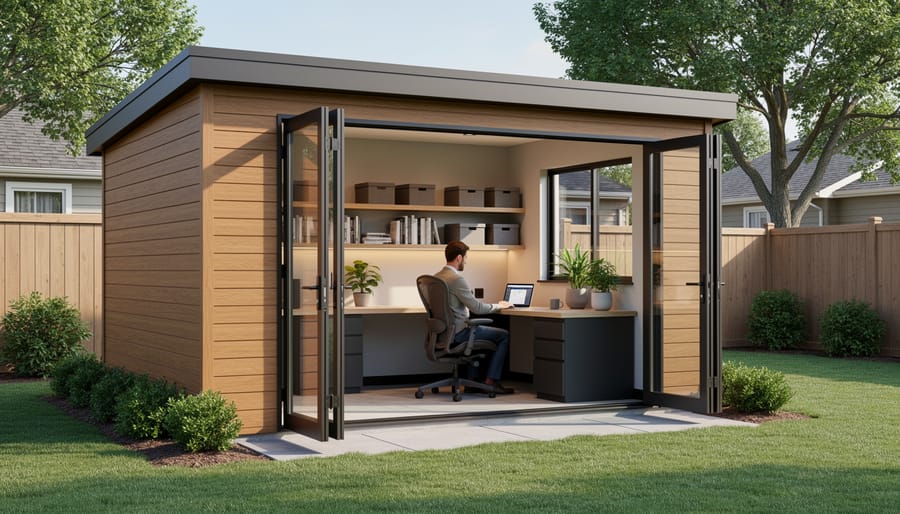
\n\nChoosing the right shed size starts with understanding your specific business needs and workflow. For example, a 9×12 shed for business works wonderfully for photographers needing studio space or crafters selling handmade goods online, providing approximately 108 square feet of usable area.\n\nThink about your daily operations when planning layout. A home-based bakery might need a 10×12 or 12×16 shed to accommodate workspace, commercial-grade appliances, and storage for ingredients and packaging materials. Alternatively, mobile pet groomers often find 8×10 sheds perfectly adequate for storing equipment and supplies between appointments.\n\nConsider vertical space too. Shelving units, pegboards, and overhead storage can maximize smaller footprints. Sarah, a freelance graphic designer, transformed her 8×12 shed into a productive office by installing floating shelves and a fold-down desk, proving you don’t always need massive square footage.\n\nBefore committing to dimensions, sketch your floor plan including workstations, storage areas, and customer spaces if applicable. Don’t forget to account for door swing clearance and comfortable movement room. Most small business owners find sheds between 100-200 square feet strike the perfect balance between affordability and functionality.\n\n
Essential Upgrades for Business Use
\n\nTransforming a basic storage shed into a functional business space requires several key upgrades to ensure comfort and productivity throughout the year. Let’s explore the essential modifications that will make your shed a professional workspace.\n\nElectrical wiring tops the list of priorities. You’ll need adequate power for lighting, computers, equipment, and other devices your business demands. Consider hiring a licensed electrician to install proper outlets, circuit breakers, and lighting fixtures that meet local building codes. Plan for more outlets than you think you’ll need to avoid relying on extension cords later.\n\nInternet connectivity is equally crucial in today’s digital world. Whether you opt for WiFi extension, ethernet cable installation, or a dedicated internet line, reliable connectivity keeps your business running smoothly. Some entrepreneurs find success with cellular hotspots or mesh network systems if running cables proves challenging.\n\nInsulation makes your shed comfortable year-round, reducing energy costs and protecting equipment from temperature extremes. Wall and ceiling insulation paired with proper ventilation prevents moisture buildup while maintaining consistent temperatures. Don’t forget about installing windows for natural light and airflow.\n\nHVAC options range from simple space heaters and portable air conditioners to mini-split systems for more permanent solutions. Your climate and budget will determine the best choice. Many small business owners start with portable units and upgrade as their business grows.\n\nThese foundational upgrades transform a simple shed into a legitimate workspace where you can focus on growing your business comfortably and efficiently.\n\n\n
Real Small Businesses Thriving in Backyard Sheds
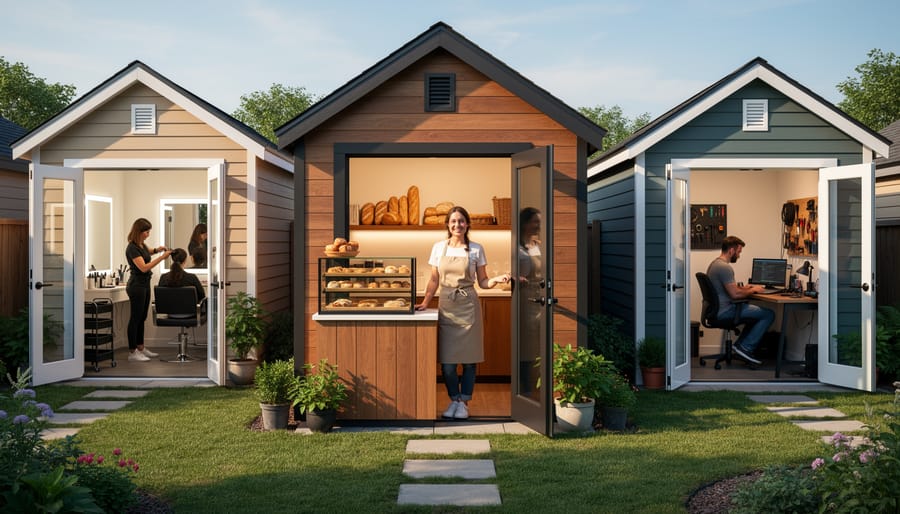
\n\nNothing proves the viability of shed-based businesses quite like seeing them in action. Across the country, entrepreneurs are transforming simple backyard structures into thriving enterprises, demonstrating that you don’t need expensive commercial real estate to build something remarkable.\n\nTake Sarah, a freelance graphic designer from Oregon, who converted a 10×12 shed into her creative studio. After years of working from her kitchen table, the dedicated space allowed her to separate work from home life while meeting with clients in a professional setting. Within six months of making the move, she reported a 40% increase in productivity and landed two major contracts she attributes directly to having a polished workspace for client presentations.\n\nMeanwhile, James and Maria turned their 12×16 shed into a successful e-commerce fulfillment center for their online candle business. What started as a hobby in their garage evolved into a full-time venture once they had dedicated space for inventory, packaging supplies, and a shipping station. The shed’s climate control keeps their products at optimal temperature, and the separate entrance means delivery drivers never disrupt their household.\n\nBeauty professionals have discovered the shed solution too. Licensed esthetician Nicole transformed her backyard shed into a private treatment room, complete with proper lighting, a treatment bed, and storage for supplies. Operating from home eliminated the overhead costs of renting salon space, allowing her to offer competitive rates while building a loyal client base. She even decorated the exterior with planters and a welcoming entrance, making clients feel they’re visiting a boutique spa.\n\nWoodworker David’s story showcases the shed’s versatility for hands-on trades. His custom-built 16×20 workshop houses all his equipment, lumber storage, and a dedicated finishing area. The separate structure means sawdust and noise stay far from his living space, and he’s built a thriving custom furniture business that ships nationwide.\n\nConsultant and coach Rebecca uses her shed as a peaceful retreat for virtual client sessions and course creation. With soundproofing and professional video setup, clients never guess she’s working from her backyard. The commute-free lifestyle gives her flexibility while maintaining clear boundaries between professional and personal time.\n\nThese real-world examples span different industries, but they share common threads: reduced overhead costs, work-life balance, professional presentation, and the freedom to customize their space exactly as needed. The shed-based business model isn’t just theoretical—it’s actively working for entrepreneurs who took the leap, proving that sometimes the best business location is right in your own backyard.\n\n
 \n
\n\n\n\n
Choosing the Right Shed Material for Your Business Needs
\n\nSelecting the right material for your business shed is one of the most important decisions you’ll make, as it directly impacts your bottom line, daily operations, and professional image. Let’s break down your options to help you make the smartest choice.\n\nMetal sheds offer exceptional security and durability, making them ideal for storing valuable equipment or inventory. They’re virtually maintenance-free and resist pests, rot, and fire. However, they can feel less inviting if you’re meeting clients in the space, and condensation can be an issue without proper ventilation. Many small business owners appreciate that metal sheds typically offer the best long-term value for purely functional storage needs.\n\nWood sheds provide a warm, professional appearance that works beautifully for client-facing businesses like art studios, consulting offices, or craft workshops. They’re customizable and can be painted or stained to match your brand. The tradeoff? Wood requires regular maintenance including sealing, painting, and pest inspections. One landscape designer shared that her wooden shed office became a conversation starter with clients, adding unexpected marketing value that offset the maintenance costs.\n\nVinyl sheds strike an attractive middle ground for many business owners. They require virtually no maintenance, resist weather damage, and maintain a clean, professional look year after year. While the initial investment is higher than some options, you’ll save time and money on upkeep, letting you focus on growing your business rather than maintaining your workspace.\n\nPlastic sheds work well for lightweight storage needs and temporary solutions but may not project the professional image or provide the security most businesses require.\n\nConsider your specific needs: Will clients visit? What security level do you need? How much time can you dedicate to maintenance? Your answers will guide you toward the material that best serves your business goals and budget realities.\n\n\n
The Hidden Costs You Need to Know Before You Buy
\n\nWhen you’re calculating the budget for your small business shed, the purchase price is just the beginning. Let’s walk through the additional expenses so you won’t face any surprises down the road.\n\nFirst up is site preparation and foundation work. Your shed needs a level, stable base to prevent structural issues. Depending on your site’s condition, you might need grading, gravel installation, or a concrete pad. Budget anywhere from $500 to $3,000 for this essential step. One small bakery owner shared with us that she initially skipped proper site prep to save money, only to spend twice as much fixing drainage problems six months later.\n\nPermits and zoning compliance often catch business owners off guard. Most municipalities require permits for structures used commercially, with fees ranging from $100 to $1,000. You’ll also want to verify that your property is zoned for business use. Taking shortcuts here can result in fines or even having to remove your shed entirely.\n\nUtility installation becomes necessary if you’re running equipment or need climate control. Electrical wiring typically costs $1,000 to $3,000, while HVAC installation adds another $2,000 to $5,000. Running water or internet connections brings additional expenses.\n\nInterior finishing transforms your basic shed into a functional workspace. Insulation, drywall, flooring, shelving, and lighting can collectively add $1,500 to $4,000 to your project.\n\nFinally, factor in ongoing maintenance costs like roof treatments, exterior staining every few years, and HVAC servicing. Setting aside $200 to $500 annually keeps your business space in top condition.\n\nBy anticipating these expenses upfront, you’ll create a realistic budget that supports your small business success from day one.\n\n\n
Setting Up Your Business Shed the Right Way
\n\n
Location and Foundation Basics
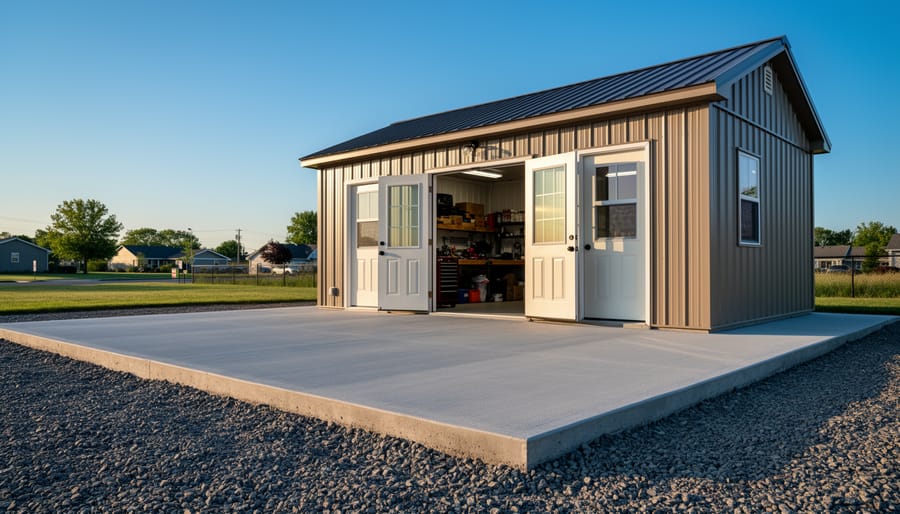
\n\nChoosing the right location for your business shed sets the stage for success. Look for level ground with good drainage to prevent water pooling around your foundation. Consider accessibility for both customers and deliveries, as well as proximity to utilities if you’ll need electricity or water. Check local setback requirements, which dictate how far structures must sit from property lines.\n\nOnce you’ve selected your spot, investing in proper site preparation is essential for long-term stability. A concrete slab offers the most durable foundation, supporting heavy equipment and providing a clean, professional workspace. Gravel pads work well for lighter applications and offer excellent drainage at a lower cost. Pier foundations suit sloped terrain and provide good ventilation underneath.\n\nReal-world tip from Sarah, a home baker who converted her shed into a commercial kitchen: “I spent extra on a concrete foundation with proper moisture barriers. Three years later, my equipment is perfectly level, and I’ve had zero issues with settling or moisture damage.”\n\nTake time to clear vegetation, compact the soil, and ensure proper grading away from your foundation. This upfront investment prevents costly repairs and keeps your business operations running smoothly for years to come.\n\n
 \n
\n\n\n
Interior Organization and Workflow Design
\n\nMaking the most of your shed’s square footage starts with smart planning before you move in a single piece of equipment. Begin by mapping out distinct work zones based on your business activities. For instance, Sarah, who runs a freelance graphic design business from her 10×12 shed, designated one corner for her computer workstation, another for client consultations, and installed floating shelves along the back wall for supplies.\n\nVertical storage is your best friend in a compact workspace. Wall-mounted pegboards, magnetic strips, and ceiling-mounted racks keep floors clear while keeping tools and materials within easy reach. Consider adjustable shelving systems that grow with your inventory needs.\n\nCreate an ergonomic layout by positioning your primary work area near natural light sources and ensuring you have at least three feet of clearance for comfortable movement. Keep frequently used items at arm’s reach and store seasonal or backup supplies higher up.\n\nUse clear storage containers labeled by category to eliminate time wasted searching for materials. Mobile storage carts offer flexibility, allowing you to reconfigure your space as projects change. Finally, designate a small landing zone near the entrance for incoming deliveries and outgoing shipments to maintain organized workflow from the moment you step through the door.\n\n\n
Permits, Zoning, and Legal Considerations Made Simple
\n\nBefore you transform that backyard shed into your business headquarters, let’s clear up the legal side of things. Don’t worry—it’s less complicated than you might think!\n\nFirst things first: check your local zoning laws. Most residential areas allow home-based businesses, but some neighborhoods have restrictions on commercial activities, customer visits, or signage. A quick call to your city’s planning department can answer these questions in minutes. Many entrepreneurs have been pleasantly surprised to find their plans already comply with existing regulations.\n\nPermits typically depend on what you’re doing inside the shed. Using it as a quiet office or craft studio? You’ll likely just need a standard home business license. Planning electrical work, plumbing additions, or significant structural changes? Those usually require building permits. The good news is that most basic shed-to-office conversions fall into the simpler category.\n\nHere’s a real-world tip from Jennifer, a graphic designer who runs her business from a converted shed: “I was nervous about the paperwork, but my township had a home occupation permit that covered everything. Cost me $50 and took one afternoon to complete.”\n\nRemember to notify your homeowners insurance about your business use—you may need a rider to cover equipment and liability. Also, if you’re expecting clients to visit, ensure you have adequate parking without disrupting neighbors.\n\nThe key is staying proactive. Document everything, keep copies of approvals, and maintain open communication with local authorities. Most communities support small businesses and want to help you succeed within the rules.\n\n\n
Your Investment: What It Really Costs vs. Traditional Office Space
\n\nLet’s look at the real numbers behind making a shed your business headquarters. The financial picture is often surprisingly favorable compared to traditional office leasing.\n\nA quality business shed typically ranges from $3,000 to $15,000 depending on size and features. Add electrical work, insulation, and interior finishing, and you might invest $5,000 to $25,000 total. Yes, that upfront cost feels substantial, but here’s where things get interesting.\n\nTraditional office space in most markets runs $15 to $35 per square foot annually. A modest 200-square-foot office could cost $3,000 to $7,000 yearly, plus utilities, internet, and often a share of common area maintenance. Over five years, that’s $15,000 to $35,000 with nothing to show for it when you leave.\n\nYour shed? It’s yours. That investment builds equity in your property. Most homeowners hit their break-even point within 2 to 4 years compared to renting office space. After that, you’re essentially working rent-free while renters keep paying indefinitely.\n\nSarah, a graphic designer from Ohio, shared her experience: “I spent $12,000 converting a shed into my studio. My previous office rental was $500 monthly. I broke even in two years, and now I’m saving $6,000 annually while my property value increased.”\n\nDon’t forget the ongoing savings beyond rent. You’ll eliminate commute costs, often reduce insurance compared to commercial space, and enjoy tax deductions for your home office space. The total cost of ownership becomes remarkably affordable when you calculate the complete financial picture over time, making shed offices one of the smartest investments for budget-conscious entrepreneurs.\n\n\nTransforming a shed into your small business space is more than just a practical solution—it’s an investment in your entrepreneurial dreams. Whether you’re looking to launch a home-based business, expand your existing operations, or finally create that dedicated workspace you’ve been craving, a quality shed offers the flexibility, affordability, and functionality to make it happen.\n\nThroughout this guide, we’ve explored how sheds can serve as workshops, studios, offices, retail spaces, and so much more. You’ve learned about the cost savings compared to traditional commercial real estate, the customization possibilities that let you design your perfect workspace, and the steps to ensure your setup meets local regulations. Real small business owners have already proven that with the right shed and thoughtful planning, you can create a professional environment that supports growth without breaking the bank.\n\nThe beauty of starting with a shed is that you’re not locked into a long-term lease or overwhelming financial commitment. You’re building equity right on your property while maintaining the work-life balance that matters most.\n\nReady to explore how a shed can transform your small business vision into reality? Storage Sheds Outlet is here to help you find the perfect structure that matches your needs, budget, and business goals. Browse our selection today and take that exciting first step toward creating your ideal workspace. Your entrepreneurial journey deserves a strong foundation—let’s build it together.