


Stop Drainage Problems Before They Wash Away Your Yard

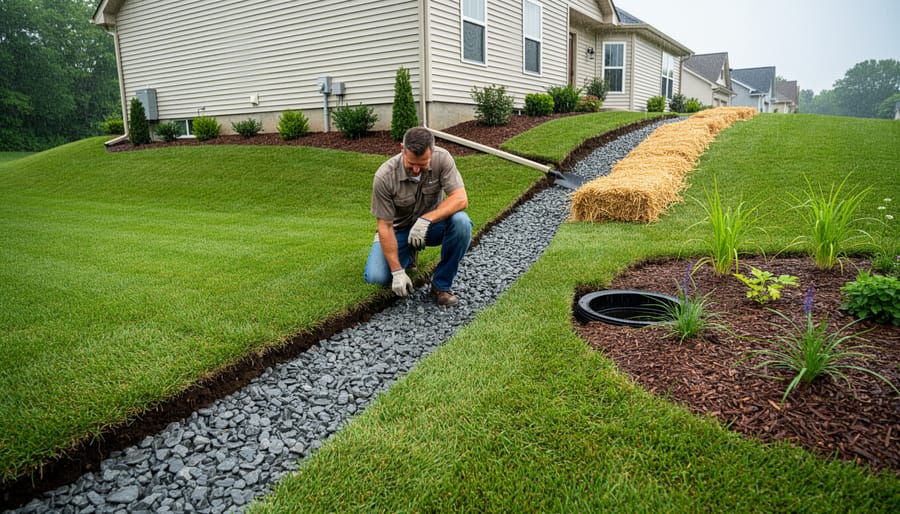
Inspect your property after heavy rain to identify problem areas where water channels form, soil washes away, or pooling occurs near foundations and structures. These telltale signs reveal where erosion threatens your landscape, hardscaping, and outdoor buildings like sheds before minor issues become costly repairs.
Install french drains or swales along natural water pathways to redirect runoff away from vulnerable areas. Position these drainage solutions at least 10 feet from building foundations, ensuring water flows toward designated collection points or storm drains rather than eroding your yard’s topsoil.
Apply erosion control blankets or mulch to exposed slopes and bare soil immediately after grading or landscaping work. These materials anchor loose dirt while vegetation establishes roots, preventing washouts during storm events that often occur before grass or ground cover fully matures.
Grade your property to create a minimum 2% slope away from structures, moving water naturally toward drainage points. Proper grading eliminates standing water that saturates soil, undermines foundations, and creates muddy conditions around storage buildings and walkways.
Most municipalities require stormwater permits for projects involving significant earth movement, impervious surface installation, or drainage modifications. Check local regulations before excavating or adding hardscaping, as unpermitted work may result in fines and mandatory restoration. The permit process typically involves submitting a simple site plan showing existing drainage patterns and proposed changes, ensuring your erosion control measures meet community standards while protecting neighboring properties from runoff issues.
Addressing drainage problems now prevents foundation damage, landscape loss, and premature deterioration of outdoor structures, saving thousands in future repairs.
What Drainage Erosion Actually Means for Your Property
Drainage erosion happens when water flows across your property and gradually wears away the soil, creating channels, ruts, and bare patches where you once had solid ground. Think of it like a mini version of how rivers carve through landscapes—except it’s happening in your backyard, often faster than you’d expect.
Here’s what’s really going on: when rain falls on your property, it needs somewhere to go. If your yard doesn’t have proper drainage, that water picks up speed as it flows downhill, gaining enough force to carry soil particles along with it. Each rainfall repeats this process, and over time, what started as a small trickle becomes a noticeable problem.
You might notice water pooling around your shed foundation after heavy storms, which can undermine the structure’s stability and lead to costly repairs. Many homeowners discover gullies forming along their driveways or fence lines—those unsightly trenches that seem to appear out of nowhere. Another telltale sign is exposed tree roots where soil has been washed away, leaving your landscaping vulnerable and looking rough around the edges.
The connection to stormwater runoff is straightforward: the more impervious surfaces you have (like roofs, patios, and driveways), the more water gets concentrated and directed to certain areas of your property. Instead of soaking gently into the ground, this concentrated flow becomes a force that carves away your soil.
One homeowner shared how a simple downspout was directing roof runoff directly onto their yard, creating a three-foot-deep channel within just two rainy seasons. That’s the power of unchecked drainage erosion—it’s persistent, progressive, and surprisingly destructive if left unaddressed.
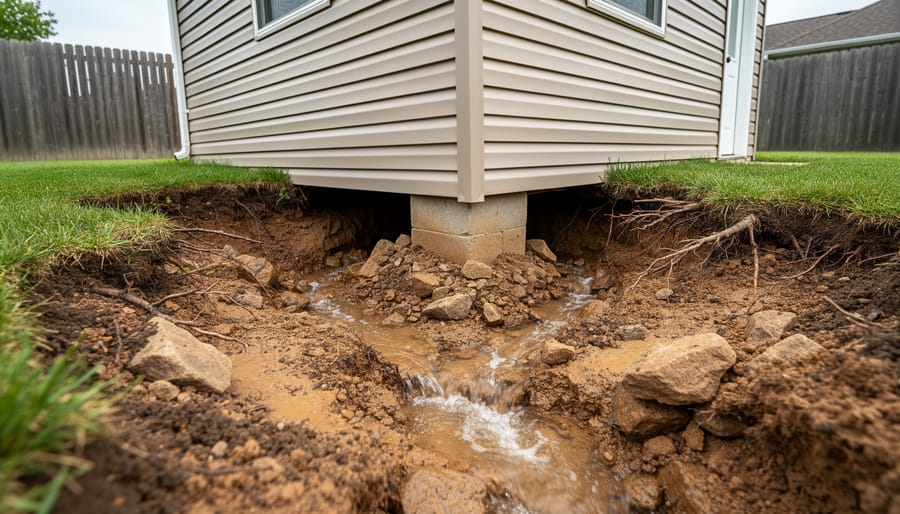
Warning Signs Your Property Has a Drainage Erosion Problem
Spotting drainage erosion problems early can save you from costly repairs down the road. The good news? Your property gives you plenty of clues when something’s not quite right with water flow.
Start by walking around your yard after a good rain. Look for small channels or gullies forming in your lawn or garden beds. These mini-rivers show exactly where water is carving away your soil. You might also notice bare patches where grass once grew, or areas where the ground looks sunken or uneven.
Pay special attention to your outdoor structures. If you have a shed, check its foundation. Soil washing away around the base is a red flag, as is any tilting or settling of the structure. The same goes for concrete patios, walkways, or retaining walls. Exposed foundations or visible gaps beneath these features mean erosion is actively working against you.
Watch where water goes during storms. Does it pool in certain spots? Do you see muddy water streaming across your driveway or into neighboring properties? These runoff patterns reveal drainage problems that need addressing.
Don’t ignore the subtler signs either. Clogged gutters or downspouts that dump water right next to your foundation, exposed tree roots, or sediment buildup in low-lying areas all point to erosion issues. Even small problems have a way of growing, especially during heavy weather. Catching these warning signs early means you can tackle drainage erosion before it threatens your property’s integrity or requires permitting for major corrective work.
When You Need a Permit (And When You Don’t)
Projects That Usually Need Permits
Most drainage and erosion control projects need permits when they significantly disturb your property’s natural water flow or soil. Understanding these thresholds helps you plan ahead and avoid costly violations, much like checking shed regulations before building.
You’ll typically need permits for major grading work that moves more than 50 cubic yards of soil (think about the size of several dump truck loads). Large-scale drainage installations like culverts, retention ponds, or systems that redirect water across property lines also require approval. Projects disturbing more than one acre of land usually trigger stormwater management permits, though many communities have lower thresholds of 5,000 square feet for residential properties.
Installing French drains near your foundation, creating swales that channel water to new areas, or building retaining walls over four feet tall generally need permits too. Even seemingly simple projects like adding significant amounts of fill dirt or changing the slope of your yard can require approval if they affect neighboring properties.
When in doubt, contact your local building department before starting work. A quick phone call can save you from expensive corrections later.
Simple Fixes You Can Handle Yourself
Good news: many effective erosion control solutions don’t require permits and can be tackled in a weekend. Installing splash blocks under your downspouts is one of the simplest fixes—these inexpensive concrete or plastic blocks direct water away from your foundation and prevent soil washout. You can find them at any home improvement store and install them in minutes.
Rain barrels offer another permit-free solution that actually saves you money. By collecting roof runoff, you reduce the volume of water hitting your property while creating a free water source for gardens. Most connect directly to existing downspouts with basic hardware.
For slightly larger projects, small French drains (typically under 100 feet) usually don’t trigger permit requirements in most areas. These gravel-filled trenches with perforated pipe redirect water away from problem spots. One homeowner shared that a simple 20-foot French drain completely eliminated the pooling water that was threatening her backyard shed’s foundation.
Landscaping solutions like adding mulch beds, planting ground cover, or creating shallow swales also work wonders without paperwork. The key is starting small and monitoring results—you can always scale up if needed. These straightforward fixes often solve erosion problems before they become serious issues requiring professional intervention.
Practical Erosion Control Solutions That Actually Work
Redirecting Water Flow Away From Problem Areas
Once you’ve identified where water is causing problems, the next step is redirecting that flow away from vulnerable spots like your shed foundation, pathways, or garden beds. The good news? Many of these solutions are surprisingly straightforward and don’t require professional installation.
Start with your gutters and downspouts—they’re your first line of defense. Make sure gutters are clean and properly pitched so water flows toward downspouts rather than pooling. Here’s a real-world tip from experienced homeowners: adding downspout extensions that carry water at least 6 to 10 feet away from your foundation can prevent 80% of water damage issues around sheds and homes. Simple plastic or flexible extensions work great and cost just a few dollars at any hardware store.
Next, take a look at your yard’s grading. Water naturally flows downhill, so you want the ground sloping gently away from structures at about a 2% grade (roughly 2 inches of drop per 10 feet). If you notice puddles forming near your shed after rain, you may need to add soil to create a proper slope. It’s a weekend project that pays dividends for years.
For areas where water naturally collects, consider installing a swale—essentially a shallow, grass-lined channel that guides water to a better drainage area. Think of it as creating a gentle stream bed that only activates during rainfall. Many homeowners combine swales with attractive landscaping, turning a functional solution into a beautiful yard feature that protects their investment while enhancing curb appeal.
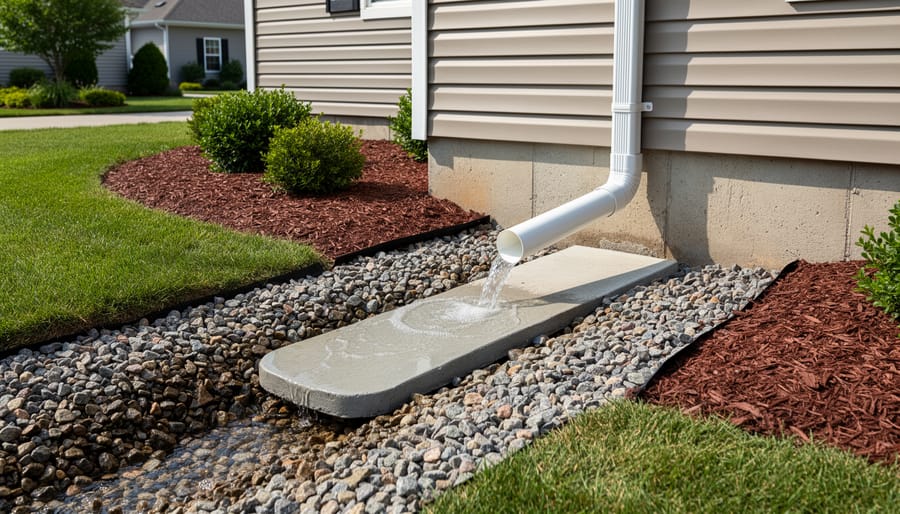
Ground Cover Solutions That Hold Soil in Place
Protecting your soil from erosion doesn’t mean sacrificing your yard’s appearance. Ground cover solutions offer natural, attractive ways to keep soil where it belongs while managing water flow effectively.
Grass remains one of the most accessible options for gentle slopes. Its root systems create an underground network that binds soil together, while the blades slow down water movement. For steeper areas or shady spots where grass struggles, consider low-growing plants like creeping thyme, clover, or periwinkle. These hardy ground covers establish quickly and require less maintenance than traditional lawns.
Mulch provides immediate protection for newly planted areas or garden beds. A 2-3 inch layer absorbs rainfall impact and gradually releases water into the soil rather than letting it rush across the surface. Organic mulches like shredded bark or wood chips work double duty by improving soil quality as they decompose.
Landscape fabric offers a practical solution for areas prone to heavy runoff. Install it before adding decorative rock or gravel to prevent erosion while maintaining a clean, finished look.
The right choice depends on your specific situation. Consider sunlight exposure, slope steepness, and how much foot traffic the area receives. Many homeowners find success combining approaches—perhaps grass on gentle slopes with mulched planting beds positioned to catch runoff before it gains momentum. These solutions protect not just your landscape but also nearby structures from water damage.
Hardscape Options for High-Traffic or Steep Areas
Sometimes soft solutions just won’t cut it, especially when you’re dealing with constant foot traffic, steep slopes, or areas where water rushes down with serious force. That’s when you need to bring in the heavy hitters—hardscape solutions that can stand up to the challenge while keeping your budget in check.
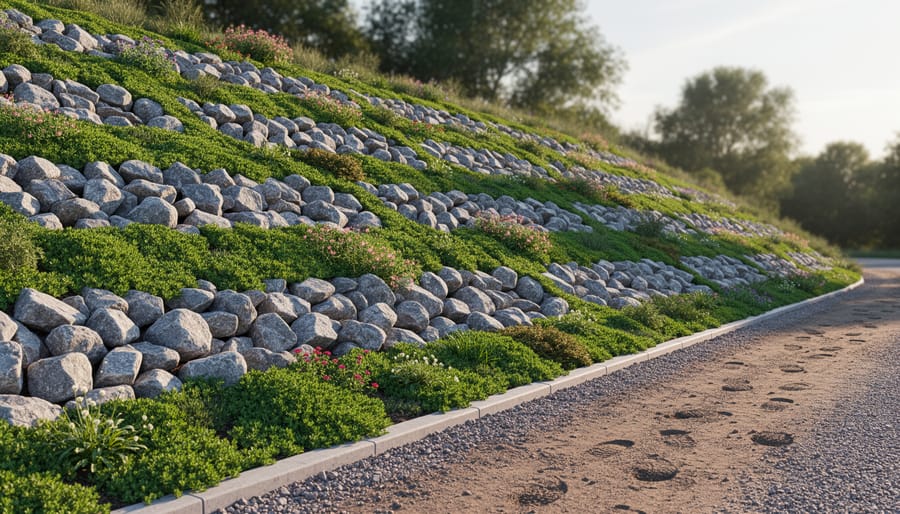
Retaining walls are your go-to for steep slopes where soil just won’t stay put. You can build them from various materials like concrete blocks, natural stone, or even treated timber. The key is ensuring proper drainage behind the wall—otherwise, water pressure builds up and can cause failure. Many homeowners find that stackable retaining wall blocks from home improvement stores offer a good balance of affordability and DIY-friendliness.
Riprap, which is basically large rocks or broken concrete strategically placed along slopes or drainage channels, works beautifully in high-flow areas. It dissipates water energy without washing away. One homeowner shared that lining her drainage swale with riprap stopped the gully that had been eating into her backyard for years.
Permeable pavers create stable surfaces while still allowing water to filter through, making them perfect for pathways or parking areas prone to puddling and erosion. They cost more upfront than gravel but last considerably longer.
Gravel beds remain a budget-friendly workhorse for many situations. A four-inch layer of crushed stone in a swale or around downspouts prevents soil displacement while directing water where you want it to go. Just remember to lay landscape fabric underneath to prevent the gravel from sinking into the soil over time.
Protecting Your Storage Shed From Erosion Damage
Your storage shed represents a valuable investment, but erosion can quickly undermine its foundation and shorten its lifespan. Understanding how water drainage affects your shed is essential for long-term protection.
The foundation of your shed faces the greatest risk from erosion. When rainwater pools around the base or flows directly underneath, it gradually washes away supporting soil, creating gaps and instability. Over time, this leads to structural settling, cracked floors, and misaligned doors. One homeowner in Tennessee discovered this the hard way when spring rains created a channel beneath his shed, causing a corner to sink several inches within a single season.
Prevention starts with proper shed placement. Choose elevated ground whenever possible, avoiding low-lying areas where water naturally collects. If you’re planning a new shed, consider site selection considerations carefully before installation.
Creating effective drainage around your shed perimeter makes a significant difference. Install a gravel border at least twelve inches wide around the entire structure to channel water away from the foundation. For extra protection, consider adding a shallow trench filled with gravel or a French drain system on the uphill side to intercept flowing water.
Regular maintenance keeps problems at bay. Walk around your shed after heavy rains to check for standing water or newly formed channels. Fill any depressions near the foundation promptly, and ensure gutters remain clear if your shed has them. Adding downspout extensions directs roof runoff several feet away from the base.
With these protective measures in place, your storage shed will remain stable and secure for years to come, regardless of weather challenges.
Managing drainage and erosion control doesn’t have to feel overwhelming. The key is catching problems early—those telltale signs like pooling water near your foundation or soil washing away after rain—and taking action before minor issues become major headaches. Remember, understanding your local permit requirements upfront saves time and stress down the road, and many simple solutions don’t require permits at all.
Whether you’re installing French drains, adjusting your landscape grading, or protecting valuable outdoor structures like your garden shed from water damage, the right approach makes all the difference. Start by walking your property after the next rainfall and really observe how water moves across your yard. Take photos, note problem areas, and don’t hesitate to reach out to your local stormwater management office with questions—they’re there to help homeowners like you.
Your outdoor investments deserve protection, and with the practical strategies we’ve covered, you’re equipped to create a healthier, more resilient property. Take that first step today, assess your drainage situation, and implement even one preventive measure. Your future self will thank you.