


Why Your HOA Might Reject Your New Shed (Covenants vs. Bylaws Explained)

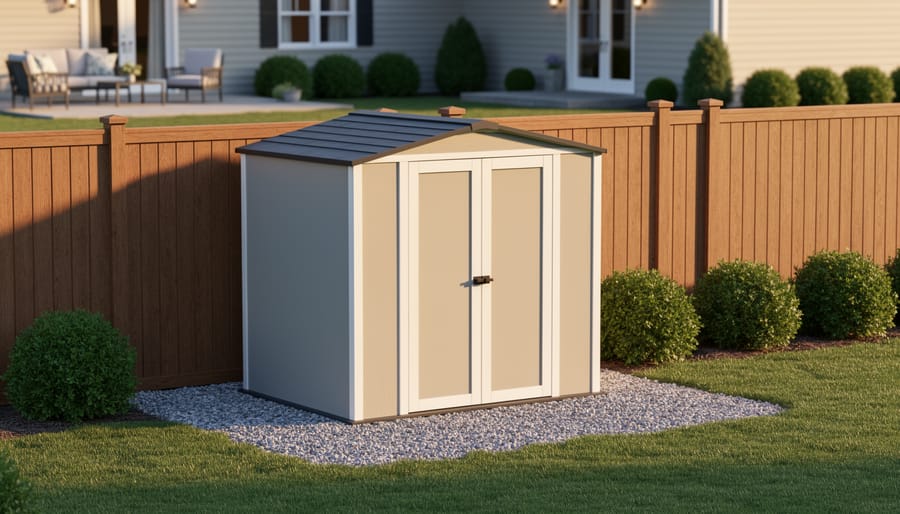
Check your HOA’s CC&Rs (Covenants, Conditions, and Restrictions) before shopping for any outdoor structure—these legally binding documents specify exactly what you can and cannot build on your property, including size limits, setback requirements, and prohibited materials. Your neighbor’s beautiful new shed might look perfect, but if it violates covenants recorded with your property deed, the HOA can demand its removal regardless of how long it’s been standing.
Review your HOA bylaws to understand the architectural review committee’s approval timeline and submission requirements. While covenants tell you what’s allowed, bylaws explain how to get permission. Most HOAs require detailed plans, measurements, and sometimes even color samples before you break ground. Missing a single form can delay your project by months.
Distinguish between the two documents this way: covenants are the rules about your property itself—what structures you can add, where they can sit, how tall they can be, and what they must look like. Bylaws govern how the HOA operates—meeting schedules, voting procedures, and the architectural review process. Think of covenants as “what” and bylaws as “how.”
Request copies of both documents from your property management company or HOA board if you don’t already have them. Many homeowners discover restrictions only after purchasing materials or hiring contractors, leading to expensive delays and frustration. Understanding these rules upfront means choosing outdoor storage solutions that sail through approval, letting you enjoy your new space without legal headaches or forced removals.
What HOA Covenants Actually Control (And Why They Matter for Your Shed)
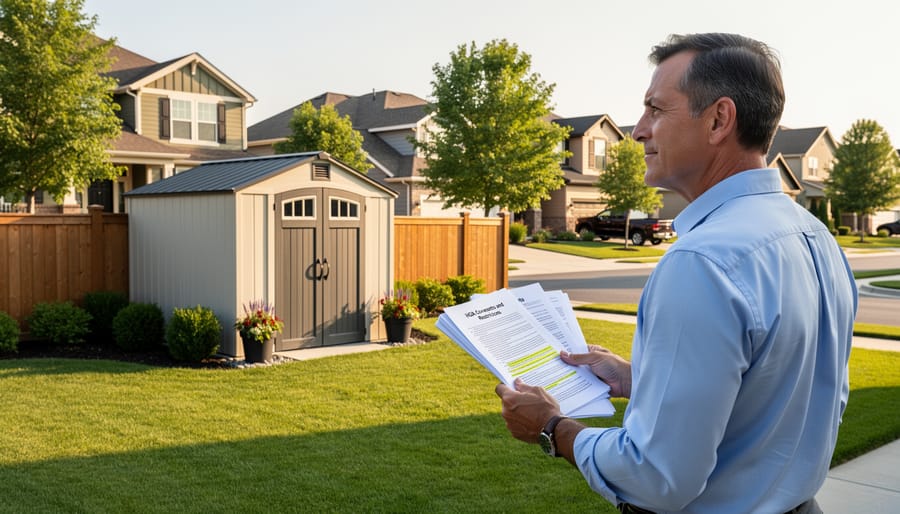
The Architectural Review Connection
When you’re planning to add a shed, gazebo, or other outdoor structure to your property, understanding how your HOA’s covenants connect to the architectural review process can save you time, money, and potential headaches down the road.
Think of covenants as the rulebook that determines what types of structures trigger architectural review in the first place. These covenants typically spell out specific requirements like maximum structure sizes, approved materials, color palettes, and placement guidelines. For example, your covenants might state that any structure over 100 square feet requires approval, or that all outdoor buildings must feature earth-tone colors that complement the neighborhood aesthetic.
Here’s where it gets practical: before you even start shopping for that perfect storage shed, pull out your covenants and look for the architectural review section. You’ll likely find a list of improvements that need approval. Most HOAs require review for sheds, gazebos, pergolas, playhouses, and even large planters or decorative walls.
One homeowner in a Georgia community learned this lesson the hard way. Sarah purchased a beautiful 10×12 shed online, only to discover her covenants required approval for anything over 64 square feet. She had to go through an expensive modification process to make it compliant. “I wish I’d read the covenants first,” she shared. “It would have guided my purchase from the start.”
The covenants also outline submission requirements for your architectural review application. You’ll typically need to provide property surveys showing placement, manufacturer specifications, color samples, and sometimes even neighbor signatures. Some communities require professional drawings for structures over certain dimensions.
Understanding these covenant-based triggers before you buy ensures you choose a structure that fits both your needs and your HOA’s requirements, making the approval process smooth and straightforward.
HOA Bylaws: The Operational Rules You Need to Know
How Bylaws Affect Your Approval Process
Here’s a practical example: You’ve read your CC&Rs and confirmed that a 10×12 shed is allowed on your property. Great! But the bylaws determine what happens next. They outline how many days the architectural review committee has to respond to your application—typically 30 to 60 days. They also specify what constitutes a complete application, which might include site plans, materials lists, and neighbor notifications.
If your shed application gets denied, the bylaws explain your appeal rights. Can you request a hearing before the full board? How many days do you have to file an appeal? What documentation can you submit? These procedural details can make or break your project timeline.
The bylaws also establish the fine structure if you proceed without approval. While the covenants say you can’t build non-conforming structures, the bylaws might specify a $50 daily fine or a one-time $500 penalty for violations. Understanding these consequences upfront helps you make informed decisions.
Think of it this way: Sarah wanted to install a storage shed but felt frustrated by the approval process. After reading her HOA bylaws, she discovered the committee met monthly and required 10-day advance notice for applications. By timing her submission correctly and including all required documents, she received approval at the next meeting—no delays or surprises.
Bottom line: Review your bylaws before submitting any application. Knowing the procedural roadmap saves time, reduces stress, and helps you plan your outdoor storage project with confidence.
The Key Differences That Impact Your Outdoor Projects
Understanding the practical differences between HOA covenants and bylaws can save you time, money, and frustration when planning outdoor projects. Think of covenants as the “what” rules and bylaws as the “how” rules. This distinction matters significantly when you’re ready to add a shed, pergola, or other structure to your property.
Covenants directly control what you can and cannot do with your property. These are the enforceable restrictions that dictate the size, height, materials, colors, and placement of structures. For example, your covenants might specify that storage sheds cannot exceed 120 square feet, must be positioned at least 10 feet from property lines, and should match your home’s exterior colors. These restrictions are typically binding and difficult to change since they usually require a supermajority of homeowners to vote for amendments.
Bylaws, on the other hand, outline how your HOA operates and makes decisions. They establish the architectural review committee’s authority, define how long you’ll wait for approval decisions, explain the application submission process, and detail what happens if you disagree with a ruling. Essentially, bylaws tell you who reviews your shed plans and how that review process works, but they won’t specify whether your shed can be white or brown.
Here’s a real-world scenario: Sarah wanted to install a storage shed for her gardening equipment. Her covenants specified the maximum dimensions and required wood or vinyl siding, while the bylaws explained that she needed to submit her plans 30 days before construction and attend a committee meeting if her application faced concerns. By understanding both documents, Sarah prepared a compliant application and avoided delays.
Before purchasing any outdoor structure, review your covenants first to understand what’s allowed, then check your bylaws to understand the approval timeline and process. This two-step approach helps you make informed decisions and sets realistic expectations for your project timeline.
Before You Buy: Reading Your HOA Documents the Smart Way

Real Homeowner Story: The $2,000 Shed That Had to Go
Meet Sarah from Portland, who learned an expensive lesson about HOA rules the hard way. “I found the perfect shed online for $2,000 and had it delivered and installed in my backyard,” she recalls. “Two weeks later, I got a letter from my HOA saying it violated our covenants because of its color and roof style. I thought I just needed to fill out a form, but the covenants were crystal clear about what wasn’t allowed.”
Sarah faced a tough choice: pay for modifications that cost nearly as much as the shed itself, or remove it entirely and lose her investment. She ended up removing it and starting over. “I wish I’d spent 30 minutes reading the covenants first,” she says. “Now I always check the rules before buying anything for my yard.”
Her advice to other homeowners? Take photos of approved sheds in your neighborhood, review your covenants carefully, and submit your plans before making any purchases. That simple approach could have saved Sarah thousands of dollars and weeks of frustration.
Navigating the Architectural Review Process Successfully

What to Include in Your Shed Application
Getting your shed application approved quickly starts with submitting a complete package the first time around. Most HOAs require similar documentation, and having everything ready saves you weeks of back-and-forth correspondence.
Your application checklist should include a detailed site plan showing exactly where your shed will sit on your property. Include measurements from property lines, existing structures, and any easements. Many homeowners make the mistake of eyeballing placement, only to discover their perfect spot violates setback requirements.
Product specifications are essential. Submit the manufacturer’s spec sheet that includes dimensions, construction materials, and weight. If you’re building from scratch, provide detailed construction plans with material lists. One homeowner in my neighborhood had their application delayed three weeks simply because they forgot to include roof pitch specifications.
Color and material samples help reviewers visualize how your shed will blend with your home’s exterior. Even if you’re matching existing colors, include paint chips or manufacturer color codes. Some HOAs maintain approved color palettes, so check those first.
Don’t forget photos of similar sheds in your neighborhood, especially if yours matches existing approved structures. This visual reference can fast-track approval since it demonstrates neighborhood consistency.
Finally, include any relevant covenant sections you’ve referenced in planning your project. This shows you’ve done your homework and understand the restrictions. Remember, architectural review committees appreciate thoroughness because it makes their job easier and demonstrates you’re a thoughtful neighbor invested in maintaining community standards.
When Your HOA Says No: Understanding Your Options
Receiving a denial from your HOA doesn’t mean your project is dead in the water. Most associations have formal appeal processes outlined in their bylaws, giving you a structured path forward. Start by requesting a written explanation for the denial, which helps you understand exactly which covenant requirements weren’t met.
The variance request process is your best friend when you need flexibility. Perhaps you want a shed that exceeds the height restriction by just a few inches, or your preferred location is slightly closer to the property line than allowed. Document why your situation deserves special consideration. Maybe your lot has unique drainage issues, or existing trees limit placement options. Architectural review committees often approve variances when homeowners present well-reasoned cases that don’t compromise the community’s overall appearance.
Working constructively with your review committee means approaching them as partners, not adversaries. Schedule a face-to-face meeting before formally appealing. Bring photos, sketches, and material samples showing how your project will complement the neighborhood aesthetic. One homeowner we spoke with initially faced rejection for a storage shed but gained approval by switching to a design that better matched her home’s siding and roof color.
Consider creative compromises that satisfy both parties. If your ideal 12×16 shed violates size restrictions, would a 10×14 work? Could landscaping or strategic placement address the committee’s concerns about visibility? Sometimes repositioning the structure by just a few feet makes all the difference.
If appeals fail, explore alternative solutions. Perhaps a smaller accessory structure meets covenant requirements while still solving your storage needs. Some homeowners successfully combine multiple compliant structures or use decorative screening to enhance approved designs. The goal is finding practical storage solutions that work within your community’s framework while maintaining positive neighbor relationships.
Choosing HOA-Friendly Storage Solutions
Once you understand the rules in your HOA covenants, the next step is choosing storage solutions that’ll sail through the approval process. The good news? Most HOAs appreciate structures that look polished and complement the neighborhood aesthetic.
Start with color selection. Neutral tones like beige, gray, taupe, and earth tones are your safest bet. These shades blend naturally with most home exteriors and landscaping. One homeowner in a strict HOA shared that her forest green shed matched her home’s shutters perfectly and got approved within two weeks, while her neighbor’s request for a bright red structure sat in review limbo for months.
Material quality matters tremendously. Wood, vinyl, and metal structures with clean lines and professional finishes typically meet covenant standards. Look for durable construction with weather-resistant features like sealed roofs and reinforced corners. Quality materials signal that you’re investing in your property rather than adding an eyesore.
Size appropriateness is crucial. Review your covenants for specific square footage limits. Generally, structures that don’t overwhelm your yard or obstruct sightlines stand a better chance. A good rule of thumb is keeping your shed or gazebo proportional to your lot size. If your covenant allows 120 square feet, don’t automatically max it out if your yard is modest.
Placement considerations can make or break your application. Position structures away from property lines unless your covenants specify otherwise. Backyard locations usually face fewer objections than front or side yard placements. Consider visibility from the street and neighboring properties. Sarah, a Florida homeowner, positioned her storage shed behind mature landscaping, which not only satisfied her HOA but enhanced her privacy.
Before purchasing, take photos of your proposed location and create a simple sketch showing dimensions and placement. This preparation demonstrates thoughtfulness and makes the approval process smoother for everyone involved.
Understanding the difference between HOA covenants and bylaws isn’t just about legal technicalities—it’s about protecting your investment and avoiding frustration down the road. Before you purchase that beautiful new shed or storage solution for your backyard, taking time to review both documents can save you from costly mistakes and potential conflicts with your HOA.
Think of it this way: covenants tell you what you can build, while bylaws explain how to get approval. Knowing which rules apply to your outdoor structure project puts you in control from the start. One homeowner we spoke with shared how a simple phone call to her HOA before buying a shed helped her choose the right size and color, getting approval in just two weeks instead of facing potential rejection.
The good news is that most HOA restrictions exist to maintain property values and community harmony—goals that align with your desire for attractive, functional storage. By communicating proactively with your architectural review committee, you’ll often find they’re willing to work with you to find solutions that meet everyone’s needs.
Don’t let confusion about covenants and bylaws stop you from creating the organized, beautiful outdoor space you deserve. Read your HOA documents carefully, ask questions early, and submit complete applications with clear plans. This simple preparation transforms what seems like a daunting approval process into a straightforward path toward the storage solution that works perfectly for your home and lifestyle.