


Transform Your Backyard Shed Into a Natural Workspace You’ll Actually Want to Use

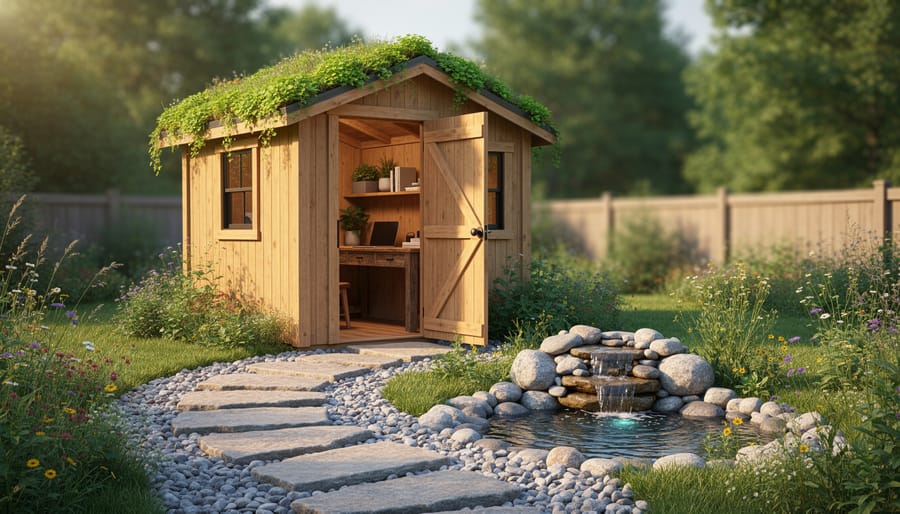
Transform your backyard shed workspace into a natural sanctuary by incorporating river rocks along the foundation perimeter, installing a living green roof with low-maintenance sedums, or adding reclaimed wood shelving that brings organic textures indoors. These biophilic design elements reduce stress by up to 15% during work hours while creating visual connections to nature that boost creativity and focus.\n\nNatural playground elements aren’t just for kids anymore. Remote workers are discovering that incorporating boulders as stepping stones, log rounds as outdoor seating, or a small water feature near the entrance creates the same calming, grounding effect in adult workspaces. The principle remains identical: natural materials trigger positive psychological responses that sterile office environments simply can’t match.\n\nYour shed workspace becomes more than functional storage when you blur the boundaries between structure and landscape. Plant native wildflowers around the perimeter, position bird feeders within view of your desk window, or create a small gravel garden with drought-resistant plants. These intentional touches require minimal maintenance while delivering maximum wellness benefits throughout your workday, proving that the best outdoor office isn’t separate from nature but thoughtfully embedded within it.\n\n\n
Why Natural Elements Make Your Shed Workspace Better
\n\nThere’s something magical about stepping into a workspace that doesn’t feel like work. When you transform your shed into an outdoor office, incorporating natural playground elements isn’t just about aesthetics—it’s about fundamentally changing how you feel and perform during your workday.\n\nResearch consistently shows that exposure to natural elements reduces cortisol levels, the hormone responsible for stress. When you add features like smooth river rocks, living plant walls, or weathered wood accents to your shed workspace, you’re creating an environment that actively calms your nervous system. One remote worker, Sarah from Portland, shared how adding a small indoor water feature and natural wood shelving to her backyard office reduced her afternoon anxiety significantly: “I used to dread the 2 p.m. slump, but now I actually look forward to my afternoons out here.”\n\nNatural elements also spark creativity in unexpected ways. The organic shapes, varied textures, and earthy colors found in playground-inspired design engage different parts of your brain than the rigid lines of traditional office furniture. This sensory diversity keeps your mind alert and open to new ideas—essential for problem-solving and innovative thinking.\n\nBeyond ergonomic workspace design, which addresses physical comfort, natural elements tackle your psychological wellbeing. The subtle imperfections in natural materials—the grain in wood, the variation in stone—provide visual interest without overwhelming your senses. This balanced stimulation helps maintain focus while preventing the mental fatigue that comes from sterile, uniform environments. When your workspace feels less like a cubicle and more like a thoughtfully designed retreat, you’ll naturally want to spend more time there, making productivity feel less like obligation and more like choice.\n\n
 \n
\n\n\n\n
Natural Playground Elements That Work for Adult Workspaces
\n\n
Natural Wood Features and Living Borders
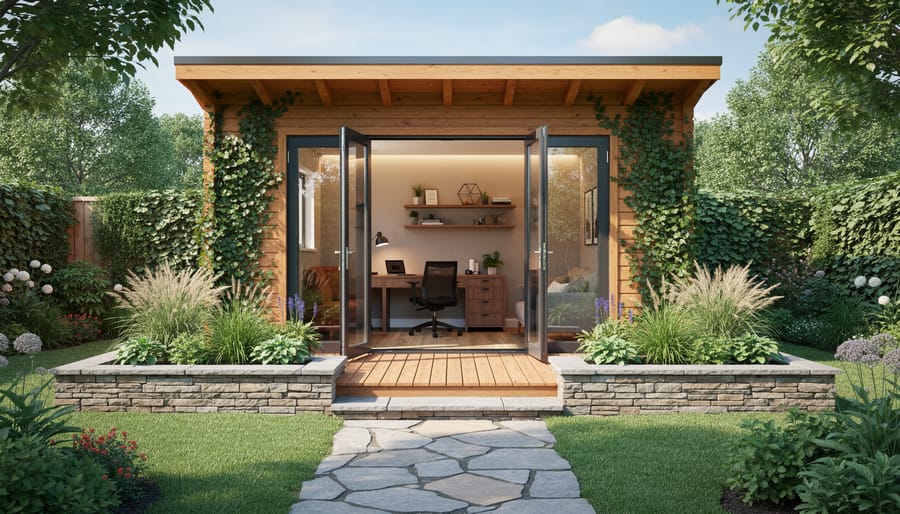
\n\nBringing nature directly into your shed workspace creates an inviting atmosphere while serving practical purposes. Log benches placed along one wall offer sturdy seating for brainstorming sessions or quick breaks, their organic texture adding warmth to the space. Tree stumps make perfect side tables beside your desk, providing surfaces for coffee mugs, notebooks, or small plants without taking up valuable floor space.\n\nConsider repurposing wooden climbing logs as unique shelving units. These rounded elements can be mounted horizontally on walls to hold books, supplies, or decorative items, introducing playful dimension while keeping essentials within reach. The natural grain and curves soften the typical office aesthetic, making your workspace feel less corporate and more personal.\n\nLiving plant borders around your shed’s exterior create a seamless transition between workspace and garden. Low-maintenance options like lavender, ornamental grasses, or native perennials frame your structure beautifully while attracting beneficial pollinators. Inside, incorporating natural workspace elements through potted herbs on windowsills or hanging planters adds greenery at eye level, improving air quality and mood.\n\nThese features require minimal maintenance beyond occasional sweeping and watering, making them ideal for busy homeowners seeking functional beauty without added stress.\n\n
Rock and Stone Integration
\n\nRocks and stones bring an earthy, grounding quality to your outdoor workspace that’s both practical and visually soothing. Start by creating a rock pathway leading to your shed entrance—this solves the muddy-feet problem while adding natural charm. Choose flat stones or crushed gravel that provide stable footing in all weather conditions.\n\nAround your workspace, arrange river rocks or decorative stones as borders for plant beds or to define different zones. These natural elements require zero maintenance and age beautifully over time. One remote worker shared how placing smooth stones around her shed’s foundation not only prevented erosion but created a Zen-like boundary that helped her mentally transition into work mode each morning.\n\nConsider positioning a small rock garden directly in your line of sight from your desk window. Layer different sized stones with drought-resistant succulents or alpine plants for year-round visual interest. This living focal point provides the perfect micro-break destination for your eyes during screen time.\n\nFor outdoor breaks, incorporate a large boulder as natural seating. Unlike manufactured furniture, boulders never need replacing and develop character with moss and weathering. Add a flat cushion on warmer days, and you’ve created the perfect spot for coffee breaks or brainstorming sessions surrounded by nature’s simplest elements.\n\n
Water Features and Sand Elements
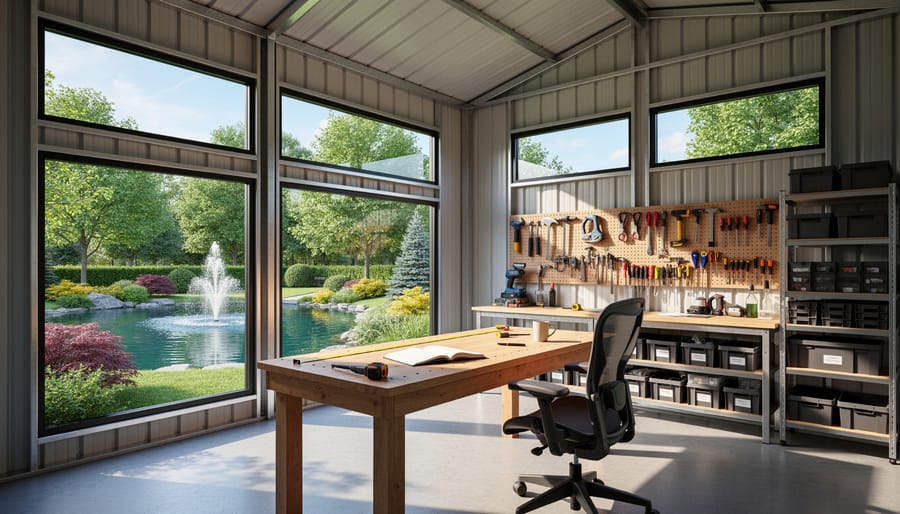
\n\nWater elements transform your outdoor workspace from ordinary to extraordinary without requiring elaborate installations. A simple tabletop fountain placed near your work area creates gentle ambient sound that masks neighborhood noise and promotes focus. These small fountains are surprisingly affordable, starting around $30, and many homeowners report they help signal the start and end of the workday with their calming presence.\n\nContainer water gardens offer another low-maintenance option. A glazed ceramic bowl with a water lily or floating plants sits perfectly on a corner table or window ledge, bringing living beauty within arm’s reach. One remote worker shared how tending her mini water garden during breaks became a mindful ritual that helped her decompress.\n\nGround surfaces deserve attention too. Consider adding a sand pathway leading to your shed workspace or creating a small pebble zone near the entrance. These textured surfaces provide sensory variety underfoot and help transition your mind from household mode to work mode. Sand also offers excellent drainage and stays cooler than concrete during summer months, making those midday walks to your workspace more pleasant.\n\n
 \n
\n\n\n
Natural Shade and Climbing Elements
\n\nCreating natural shade near your workspace doesn’t mean sacrificing style or function. Pergolas topped with fast-growing climbing vines like wisteria or clematis offer customizable coverage that evolves with the seasons, providing dappled light that reduces screen glare while keeping your outdoor office comfortable. If you’re blessed with mature trees, position your workspace to take advantage of existing canopy coverage during peak sun hours.\n\nConsider designing a natural shade tunnel using arched trellises covered in climbing roses or jasmine as a transitional pathway from your home to your shed workspace. This creates a gentle mental shift between domestic and work modes. Vertical gardens mounted on workspace walls serve double duty, offering living insulation that cools the structure while bringing nature into your peripheral vision. One remote worker shared how her vertical herb garden became both a productivity booster and a convenient addition to lunch breaks. These living elements require minimal maintenance once established but deliver maximum impact on your workspace environment and well-being.\n\n\n
Practical Integration: Making It Work With Your Shed
\n\n
Assessment: What You Already Have
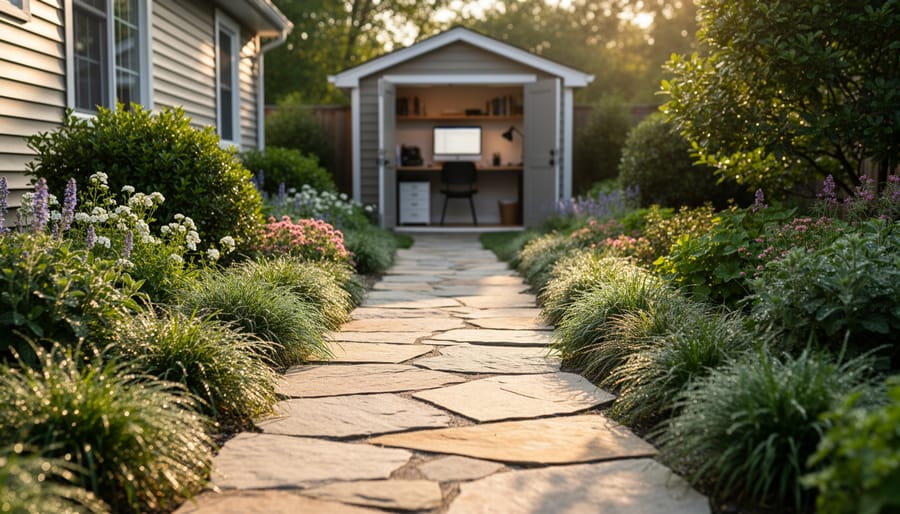
\n\nBefore introducing new natural playground elements to your workspace, take a thoughtful inventory of what you’re working with. Start by examining your existing shed or outdoor structure. Does it have good natural light through windows? Is there room to expand or add outdoor seating areas? These features will influence which natural elements work best for your setup.\n\nNext, walk your yard with fresh eyes. Look for existing trees that provide shade, natural slopes that could become seating areas, or rock formations that add character. Even a patch of wildflowers or an established shrub can become a focal point rather than something to remove. One homeowner discovered that the old stump she planned to extract made the perfect base for a standing desk once cleaned and sealed.\n\nConsider your climate carefully. If you live somewhere with intense summers, shade-providing elements become essential. Cold climates might require windbreaks or south-facing orientations to maximize warmth during work hours. Notice where water naturally drains, where morning light hits, and which areas stay comfortable throughout the day.\n\nThis assessment helps you work with nature rather than against it, saving money while creating a more authentic, functional workspace that feels naturally integrated into your environment.\n\n
Budget-Friendly Integration Methods
\n\nCreating a naturally-inspired workspace doesn’t require a hefty investment. Start by repurposing materials you already have or can source for free. Fallen branches and weathered wood make excellent decorative elements for shelving brackets or wall accents in your outdoor workspace. Many municipalities offer free mulch programs, perfect for creating natural pathways around your shed office.\n\nLocal parks and wooded areas often have abundant river rocks and interesting stones that work beautifully for simple arrangements near your workspace entrance. Just be sure to check local regulations before collecting. Consider reaching out to neighbors who are trimming trees or removing landscape elements—you’d be surprised how many people are happy to share materials headed for disposal.\n\nA phased approach keeps costs manageable while building your natural environment over time. Start with one focal element, like a simple rock garden or reclaimed wood feature wall, then gradually add plants and other natural touches as your budget allows. This method also gives you time to observe how sunlight moves through your space and which areas would benefit most from natural enhancements. DIY enthusiasts find this strategy particularly rewarding, as each completed phase brings new energy to the workspace without overwhelming your weekend schedule or wallet.\n\n
 \n
\n\n\n
Maintenance Realities
\n\nLet’s be real—natural elements require more attention than artificial alternatives, but don’t let that scare you away. The key is choosing wisely from the start.\n\nWooden features like log stools or branch accents need annual checks for rot and splinters, plus occasional sealing with weather-resistant materials to extend their life. One homeowner shared that treating her cedar stumps once a year takes just an afternoon but keeps them beautiful for seasons. Living elements like moss walls or potted plants demand weekly watering and seasonal pruning—plan for about 15 minutes of care per week.\n\nSmart choices minimize headaches. River rocks and stone elements are nearly maintenance-free, needing only occasional hosing down. Succulents and native plants thrive with minimal intervention compared to exotic varieties. Consider your climate too—bamboo screens work beautifully in humid areas but may dry out quickly in arid regions.\n\nBefore incorporating any natural element, ask yourself honestly: will I realistically maintain this? Starting with one or two low-maintenance pieces like driftwood shelving or stone accents lets you test your commitment before diving into higher-maintenance living walls or water features.\n\n\n
Real Homeowners, Real Results
\n\nWhen Sarah from Portland decided to convert her backyard shed into a home office, she knew she wanted something different from the sterile corporate environments she’d left behind. “I added a living wall of potted ferns and trailing pothos along one side, brought in a driftwood desk I found at a local salvage yard, and installed bamboo Roman shades,” she shares. “The transformation was incredible. Within a week, I noticed I was actually looking forward to my workday instead of dreading it.” Sarah spent roughly $400 on plants, containers, and natural fiber accessories, completing the makeover over two weekends. Her favorite addition? River rocks arranged around the base of her desk that she occasionally rearranges during brainstorming sessions.\n\nMark and Jenny in Austin took a different approach with their 10×12 storage shed conversion. “We have two young kids, so we wanted our workspace to feel connected to their play area while still being functional,” Jenny explains. They incorporated a horizontal branch mounted as a coat rack, used stumps as side tables, and created a small indoor herb garden on floating shelves. “The rosemary and mint not only smell amazing, but we actually use them for cooking,” Mark adds. The couple tackled the project gradually over three months, spending about $600 total. The wood elements came from a fallen oak on their property, making the space feel even more personal.\n\nLisa in Vermont went minimalist with her natural workspace, focusing on texture rather than quantity. She painted her shed walls in soft sage, added a jute rug, and positioned her desk to face a large window overlooking her garden. “I brought in one substantial fiddle leaf fig and some pressed botanical prints I made myself,” she says. “Sometimes less really is more. The simplicity helps me focus, and the natural light combined with that one beautiful plant creates the perfect atmosphere.” Her total investment was under $300, proving that natural elements don’t require a hefty budget to make a meaningful impact.\n\n\n
Getting Started This Weekend
\n\nReady to bring nature into your workspace this weekend? Let’s start with three simple additions that deliver immediate impact. First, bring in natural wood elements like a reclaimed branch pencil holder or driftwood desk organizer. These cost little to nothing and instantly soften the visual environment. Second, add living plants. Start with low-maintenance options like pothos, snake plants, or succulents that thrive in various light conditions. Third, introduce natural textures through a jute rug, linen curtains, or woven storage baskets. These foundational changes take just an afternoon but transform the energy of your space.\n\nFor a slightly bigger weekend project, consider creating a small herb garden outside your workspace door. Lavender, rosemary, and mint provide sensory benefits during work breaks and require minimal maintenance. You could also install a simple bird feeder visible from your desk window, bringing movement and life into your sightline.\n\nBefore converting your shed into a natural workspace, use this quick planning checklist: assess your natural light sources, measure spaces for plant placement, identify water access points for plant care, determine your maintenance commitment level, and set a realistic budget for phased improvements. Remember, Sarah from Portland started with just three plants and a wooden shelf. Within months, her naturally integrated workspace became her favorite place to work, proving that small steps create lasting transformation.\n\n\nCreating a nature-inspired workspace in your shed or outdoor structure doesn’t have to be overwhelming or expensive. The beauty of integrating natural playground elements is that it’s a journey, not a destination. Start small with one or two elements that resonate most with you, whether that’s a single potted plant on your desk or swapping out your standard chair for a balance ball seat. As you experience the benefits firsthand—better focus, reduced stress, or simply more joy during your workday—you’ll naturally want to expand.\n\nRemember, perfection isn’t the goal here. Your workspace should evolve with your needs and preferences. Maybe that climbing rope installation waits until next spring, or perhaps you begin with natural light adjustments before tackling bigger projects. The key is taking that first step toward a more playful, nature-connected environment.\n\nMany remote workers who’ve made this shift report feeling more energized and creative, finding that their outdoor workspace becomes their favorite spot to tackle challenging projects. Your shed can be more than just a home office—it can be a personal retreat that supports both productivity and wellbeing, one natural element at a time.