


Why Your Small Greenhouse Plants Are Struggling (And How Light Can Fix It)

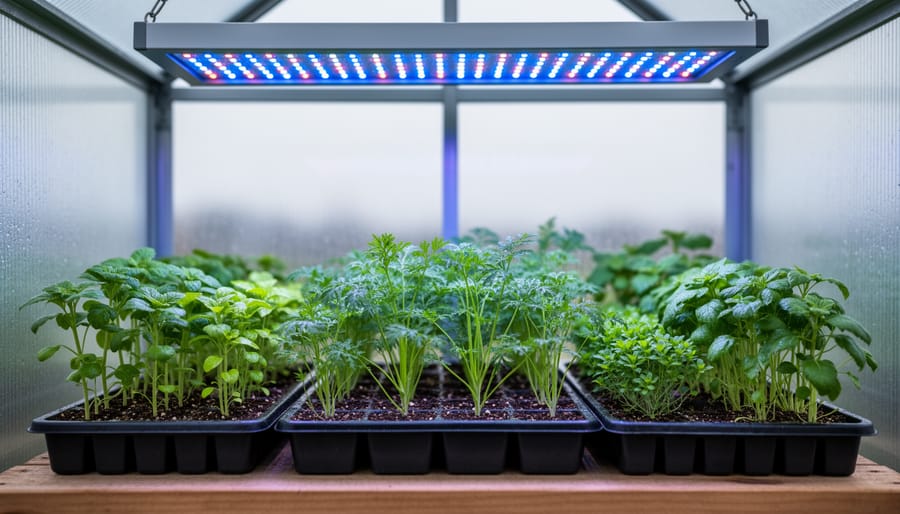
Your greenhouse plants stretch toward windows on cloudy winter days because they’re starving for light—and you can fix this problem yourself with supplemental lighting, even if you’ve never set up grow lights before. Most small greenhouse owners face the same challenge: seedlings grow leggy in February, herbs lose their flavor by December, and tomatoes refuse to ripen when daylight drops below 10 hours. The solution isn’t complicated or expensive.
Understanding whether you actually need supplemental lighting starts with observing your plants. Pale leaves, slow growth, and stems that lean dramatically toward light sources tell you it’s time to intervene. For compact greenhouses, you’re choosing between three main options: fluorescent tubes for budget-conscious seedling production, LED panels for energy efficiency and full-spectrum coverage, or high-intensity discharge lights if you’re serious about year-round fruiting crops.
Installation in a small greenhouse takes minutes, not hours. You’ll mount fixtures 6-12 inches above plant canopies, plug them into timers that mimic natural day length, and adjust height as plants grow. The real magic happens when you match your lighting strategy to what you’re actually growing—lettuce needs different intensity than peppers, and understanding these differences prevents both waste and disappointment.
This guide walks you through identifying your specific lighting needs, selecting equipment that fits your space and budget, and setting up a system that actually works. You’ll learn what experienced greenhouse gardeners wish they’d known before buying their first lights, complete with realistic expectations about energy costs and plant performance.
What Supplemental Lighting Actually Does for Your Greenhouse
Plants are essentially solar-powered, using light energy to fuel photosynthesis—the process that converts carbon dioxide and water into the sugars they need to grow, flower, and produce fruit. In nature, direct sunlight provides everything plants require, but your portable greenhouse presents some unique challenges that can leave your plants struggling.
During winter months, daylight hours shrink dramatically. Even when the sun is shining, it sits lower in the sky, reducing light intensity significantly. If you live in a cloudy climate or your greenhouse sits in a partially shaded yard, your plants might receive only a fraction of the light they need to thrive. Portable greenhouses, while excellent at protecting plants from cold and wind, can’t manufacture sunlight when Mother Nature isn’t cooperating.
This is where supplemental lighting makes a real difference. Think of grow lights as a reliable backup power source for your plants. They serve two primary purposes that directly impact your gardening success.
First, supplemental lights extend the photoperiod—simply put, the number of hours your plants experience light each day. Many vegetables and flowering plants need 12 to 16 hours of light daily to grow vigorously. On a dreary January day with only 8 hours of weak sunlight, supplemental lighting bridges that gap, keeping your plants on their growth schedule instead of going dormant or becoming leggy and weak.
Second, these lights boost overall light intensity. Even on days when some natural light filters through, it might not be strong enough for optimal photosynthesis. Supplemental lighting increases the total energy available to your plants, resulting in sturdier stems, healthier leaves, and better harvests.
You’re not trying to replace the sun entirely—you’re giving your plants the consistent light energy they need when natural conditions fall short. For greenhouse gardeners serious about year-round growing or simply wanting healthier seedlings, supplemental lighting transforms a seasonal hobby into a productive twelve-month endeavor.
Signs Your Portable Greenhouse Needs Extra Light
Wondering if your portable greenhouse could use a lighting boost? Your plants are usually the first to tell you. Here are the telltale signs that indicate your green friends need extra illumination.
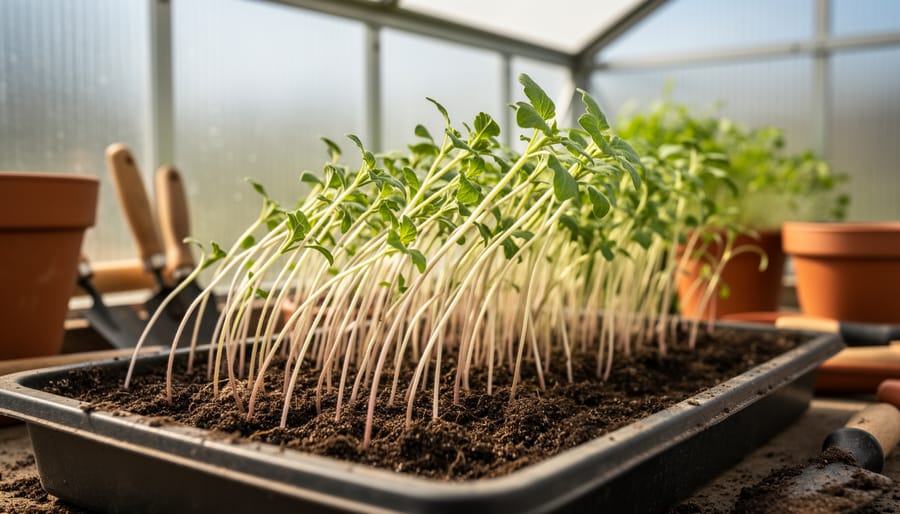
One of the clearest indicators is leggy seedlings. If your young plants are stretching dramatically upward with long, thin stems and large gaps between leaves, they’re literally reaching for more light. Sarah, a greenhouse owner from Oregon, noticed her tomato seedlings looked more like beansproles than sturdy plants—a classic cry for help.
Slow growth is another red flag. When your plants seem stuck in time, barely adding new leaves or height week after week, inadequate light is often the culprit. Compare your plants’ progress to the recommended growth timeline for their variety. If they’re lagging significantly behind, lighting could be the missing ingredient.
Pay attention to fruiting and flowering too. Plants that produce abundant foliage but few flowers or fruits are conserving energy due to insufficient light. Many greenhouse gardeners report sparse pepper harvests or tomatoes that never seem to ripen until they added supplemental lighting.
Pale or yellowish leaves, especially on upper growth, suggest your plants aren’t getting enough light to produce healthy chlorophyll. This differs from nutrient deficiencies, which typically show up on older, lower leaves first.
Finally, notice the lean. If all your plants consistently tilt toward your greenhouse windows or door like they’re trying to escape, they’re chasing the brightest light source available. This persistent directional growth means the ambient light inside isn’t sufficient.
Spotting even one or two of these symptoms means it’s time to consider adding supplemental lighting to keep your portable greenhouse thriving year-round.
Choosing the Right Lights for Small Spaces
LED Grow Lights: The Smart Choice for Most Homeowners
If you’re setting up a small portable greenhouse, LED grow lights are hands-down the best choice for most homeowners. Here’s why they make so much sense for compact spaces.
First, energy efficiency is a huge win. LEDs use significantly less electricity than older lighting technologies, which means you can keep your plants thriving without watching your power bill skyrocket. For a backyard greenhouse running lights several hours daily throughout winter, those savings really add up over the season.
Heat management is another major advantage. Unlike traditional bulbs that generate excessive warmth, LEDs stay remarkably cool. This is perfect for portable greenhouses where space is limited and ventilation can be tricky. You won’t need to worry about accidentally scorching your seedlings or creating uncomfortable temperature spikes that stress your plants.
Longevity is equally impressive. Quality LED fixtures typically last 50,000 hours or more, meaning you could use them for years without replacement. One homeowner shared that her LED setup has been running strong for five growing seasons without a single bulb change—quite different from her old fluorescent system that needed constant attention.
The compact size of LED panels fits beautifully in smaller structures. You can mount them close to plant canopies without the bulky fixtures and reflectors that other lights require, maximizing every inch of your greenhouse space.
For DIY enthusiasts, LED systems are remarkably user-friendly. Most plug right in without complicated wiring, and modern models often include timers and dimming features that make customization simple. You’re getting professional-grade growing power in a package that’s actually manageable for weekend gardeners.
Fluorescent Lights: Budget-Friendly and Reliable
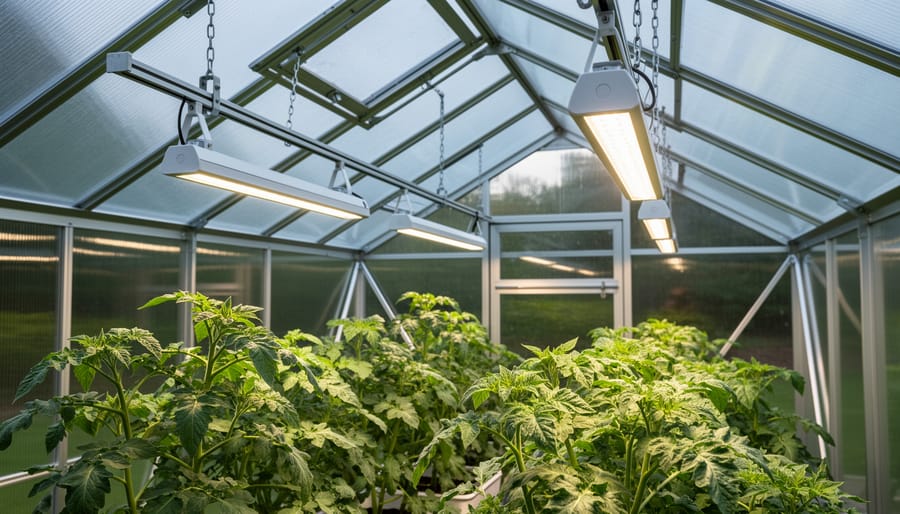
If you’re just getting started with greenhouse lighting or working with a tight budget, fluorescent tubes deserve serious consideration. T5 and T8 fluorescent fixtures have been trusted by gardeners for decades, and for good reason—they’re affordable, widely available at hardware stores, and remarkably effective for specific applications.
Fluorescent lights truly shine when it comes to seedlings, leafy greens, and herbs. These plants don’t demand the intense light output that fruiting crops like tomatoes require, making fluorescents perfectly adequate. Many home gardeners successfully grow lettuce, spinach, basil, and parsley under fluorescent fixtures year-round. The cool operating temperature is another bonus, especially in smaller greenhouses where heat buildup can be problematic.
From a practical standpoint, fluorescent tubes are beginner-friendly. Installation is straightforward—most fixtures simply plug into standard outlets and can hang from chains or hooks. Replacement bulbs are inexpensive and easy to find, so you won’t feel locked into specialty suppliers.
One greenhouse owner shared that her T5 setup cost under seventy dollars and has kept her herb garden thriving through three winters. While fluorescents may not offer the longevity or efficiency of LEDs, they provide an accessible entry point that won’t break the bank. If you’re testing the waters with supplemental lighting or focusing on low-light crops, fluorescents remain a sensible, reliable choice.
What to Skip (And Why)
While shopping for greenhouse lights, you’ll want to steer clear of traditional incandescent bulbs. They might seem budget-friendly at first glance, but they’re incredibly inefficient—converting most of their energy into heat rather than usable light for your plants. In a small portable greenhouse, that excess heat can quickly create uncomfortable conditions and even damage tender seedlings.
Older high-intensity discharge (HID) lights, including metal halide and high-pressure sodium bulbs, present similar challenges. They generate significant heat, require bulky ballasts that eat up precious space, and consume far more electricity than modern alternatives. For compact greenhouses where every square inch matters, these older technologies simply aren’t practical. They’re better suited for large commercial operations with proper ventilation systems and ample room. Instead, focus your energy and budget on LED or compact fluorescent options that deliver the light your plants need without the headaches.
Key Features to Look For
When shopping for supplemental lighting for your compact greenhouse, focusing on a few key features will help you find lights that actually work for your setup without overcomplicating things.
Start with light spectrum. Full spectrum LEDs mimic natural sunlight and work beautifully for most plants, from seedlings to flowering vegetables. If you’re growing specific crops like leafy greens or herbs, targeted blue and red spectrum lights can be more energy-efficient, though they often cast that distinctive purple glow. For beginners, full spectrum is your safest bet.
Wattage matters, but bigger isn’t always better in small spaces. For compact greenhouses, look for fixtures between 20-45 watts that cover your actual growing area. A general rule: aim for about 20-40 watts per square foot for most vegetables and herbs. Too much light wastes energy and can actually stress plants.
Adjustability is your friend when working with limited space. Lights with dimming features or adjustable height mounting let you customize intensity as plants grow. This flexibility prevents burning tender seedlings while still providing enough light for mature plants.
Don’t overlook waterproof ratings. Greenhouses are naturally humid environments, so choose lights rated at least IP65 or higher. This protects your investment from moisture damage and keeps everything safe.
Finally, consider mounting options that work with portable structures. Clip-on fixtures, hanging chains, or tension rods offer installation flexibility without permanent modifications, perfect for seasonal setups or future greenhouse rearrangements.
Setting Up Your Supplemental Lighting System
Positioning Your Lights for Best Results
Getting the placement right makes all the difference in how well your plants respond to supplemental lighting. For most seedlings and leafy greens, hang your lights 6 to 12 inches above the plant canopy. This sweet spot delivers adequate intensity without creating heat stress. Fruiting plants like tomatoes or peppers can handle lights positioned 12 to 18 inches away once they’re established.
In compact greenhouses, coverage area becomes crucial. Most LED panels effectively light a 2 to 4 square foot area, so plan accordingly and consider using multiple smaller fixtures rather than one large light to eliminate shadows in corners. Position lights directly over benches or shelving rather than angling them, which creates uneven coverage and wasted energy.
Watch for hot spots by checking leaf temperature regularly. If foliage feels warm to the touch, raise your lights a few inches. Similarly, plants stretching toward the light signal they’re too far away. Many growers find adjustable hanging chains incredibly helpful, letting you modify height as plants grow throughout the season. In tight spaces, stagger your lighting schedule if using multiple fixtures to manage heat buildup and keep your greenhouse comfortable for both you and your plants.
Power Solutions for Portable Greenhouses
Getting power to your portable greenhouse doesn’t have to be complicated, but safety should always come first. If you’re using extension cords, choose outdoor-rated models with adequate gauge wire—14-gauge for runs up to 50 feet, 12-gauge for longer distances. Keep connections off the ground using cord protectors or hooks, and never run cords through puddles or standing water. Consider using a weatherproof outdoor outlet box at the connection point for extra protection.
Solar-powered lighting offers an appealing cord-free solution, especially for greenhouses far from your home’s electrical outlets. Small solar panel kits with LED grow lights work well for seedlings and low-light plants, though they may not provide enough intensity for fruiting vegetables during winter months. Battery-powered LED strips are another portable option, perfect for temporary setups or supplementing natural light on cloudy days.
In humid greenhouse environments, always use GFCI (ground fault circuit interrupter) protection to prevent electrical shocks. Install lights and electrical components away from watering areas when possible, and regularly inspect cords for wear or damage. A simple timer switch helps automate your lighting schedule while reducing fire risk from lights accidentally left on overnight.
Mounting Ideas That Won’t Damage Your Structure
The good news? You don’t need to drill holes or permanently alter your greenhouse structure to mount grow lights. Most portable greenhouses use lightweight materials like plastic sheeting or vinyl covers stretched over metal or PVC frames, and there are plenty of damage-free mounting options that work beautifully.
Adjustable chain hangers are your best friend here. These inexpensive hangers let you suspend lights from the top frame bars and easily raise or lower them as your plants grow. Simply loop the chain around your greenhouse’s horizontal support bars and clip your light fixture to the bottom hooks. No tools required, and you can reposition everything in seconds.
Spring-loaded clamp lights offer another versatile solution. These clip directly onto frame poles and can angle in any direction you need. They’re perfect for targeting specific plant shelves or corners that need extra brightness.
For lighter LED strip lights, adhesive cable clips work wonderfully along frame bars without leaving residue. Velcro plant ties also provide flexible, reusable attachment points that won’t scratch or damage plastic surfaces.
One greenhouse owner shared how she uses simple S-hooks looped through her frame’s crossbars to hang multiple light fixtures at varying heights, creating custom lighting zones for seedlings and mature plants. The setup took ten minutes and cost less than five dollars in hardware. Remember, the key is working with your greenhouse’s existing structure rather than fighting against it.
Getting the Timing Right
Understanding how long to run your lights is just as important as choosing the right bulbs. Different plants have different needs, and getting the timing wrong can mean disappointing results despite your best efforts.
Most plants fall into categories based on what growers call photoperiod, which is simply how many hours of light versus darkness they need to grow and flower properly. Think of it as your plants’ internal clock. Lettuce, herbs, and most seedlings are day-neutral, meaning they’re not picky about light duration. These do well with 12-16 hours of total light daily. Tomatoes, peppers, and cucumbers thrive with 14-18 hours. On the other hand, some plants like poinsettias and chrysanthemums need specific periods of darkness to trigger flowering, though these are less common in most home greenhouses.
The key question is whether you’re supplementing natural daylight or replacing it entirely. During late fall and winter when days are short and often cloudy, you might run your lights from dawn until evening to reach those target hours. Sarah from Vermont shares her approach: “I run my lights from 6 AM to 8 PM in January, giving my tomato starts a solid 14 hours. On sunny days, the natural light does most of the work, and the supplemental lights just fill in the gaps.”
For spring and fall, you might only need lights early morning or evening to extend the natural day. A simple plug-in timer from any hardware store makes this effortless. Set it once, and your plants get consistent light without you remembering to flip switches daily.
Here’s a practical tip: start conservative with 12-14 hours and observe your plants. Leggy, stretched growth means they need more light. Leaf burn or wilting despite adequate water suggests too much intensity or duration. Most greenhouse gardeners find success keeping lights on a consistent schedule rather than changing daily, as plants respond well to predictability.
Common Mistakes to Avoid
Even experienced greenhouse gardeners can stumble into a few lighting pitfalls, but the good news is they’re easy to fix once you know what to watch for.
One of the biggest mistakes is running your lights around the clock. Plants need darkness too—it’s when they process the energy they’ve absorbed during the day. Most plants thrive with 12-16 hours of light, so using a simple timer prevents you from accidentally exhausting your plants. Think of it like sleep for humans; without it, things start to go downhill quickly.
Another common issue is placing lights too close to your plants. While you want adequate coverage, positioning LEDs or fluorescents just inches from your seedlings can cause heat stress or leaf bleaching—those telltale white or yellow patches on leaves. Start with the manufacturer’s recommended distance, usually 12-24 inches depending on the light type, and adjust based on how your plants respond.
Insufficient coverage is equally problematic. If you’re lighting a 6-foot greenhouse with a single small fixture, plants at the edges will stretch toward the light and become leggy. Walk around your greenhouse and look for shadowy corners—those spots need attention too.
Don’t forget that different plants have different needs. Your sun-loving tomatoes require much more intense light than your shade-tolerant lettuce. Grouping plants with similar requirements makes your setup more efficient and prevents over or under-lighting.
Finally, heat buildup sneaks up on people with smaller enclosed greenhouses. Even cool-running LEDs generate some warmth, and in tight spaces without ventilation, temperatures can spike. Crack a vent, add a small fan, or monitor with an inexpensive thermometer to keep things comfortable for your plants.
Real Results: What You Can Expect
Once you’ve got your supplemental lighting up and running, you’re probably wondering how quickly you’ll see improvements. The good news? Most gardeners notice positive changes within the first growing cycle, though the timeline varies depending on what you’re growing.
Leafy greens and herbs are the superstars of supplemental lighting, often showing dramatic results within just two to three weeks. Lettuce, spinach, and arugula grow fuller and more vibrant, while basil, cilantro, and parsley become bushier with more flavorful leaves. Many greenhouse owners report harvesting herbs year-round that previously went dormant in winter.
Seedlings also thrive under supplemental lights. If you start seeds indoors or in your greenhouse, expect stronger stems, healthier leaf development, and transplants that establish faster in the garden. Instead of leggy, weak seedlings reaching desperately for light, you’ll get compact, robust plants ready to take on outdoor conditions.
Tomatoes and peppers benefit significantly too, though results take longer to see. With consistent supplemental lighting during shorter days, you’ll notice more flowers, better fruit set, and extended production well into fall or even winter in milder climates. One gardener shared that her cherry tomatoes kept producing through December, something that never happened before adding grow lights.
Realistic expectations matter here. Supplemental lighting won’t turn your greenhouse into a tropical paradise overnight, but it will absolutely extend your growing season by several weeks or months and improve overall plant health and productivity. Most people find their investment pays off within the first year through increased harvests and the joy of gardening year-round. Start with easy wins like lettuce and herbs to build your confidence, then expand to more ambitious crops as you learn what works best in your space.
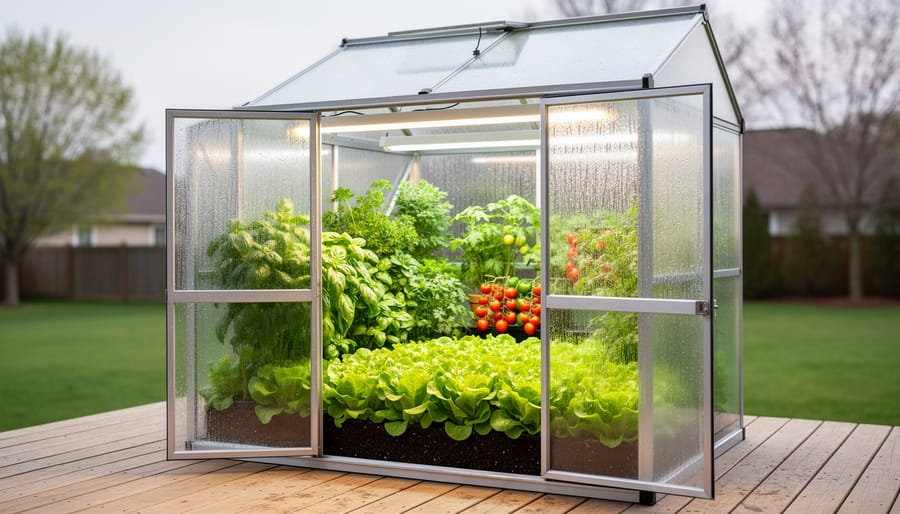
Adding supplemental lighting to your small portable greenhouse doesn’t have to be complicated or overwhelming. With just a few simple additions, you can transform what might have been a seasonal structure into a productive growing space that serves you throughout the entire year. The beauty of starting with basic LED shop lights or clip-on fixtures is that you can begin small, learn what works for your specific plants and space, and expand from there as your confidence grows.
Remember, you don’t need a perfect setup from day one. Even a modest lighting system that adds a few extra hours of light can make a noticeable difference in seedling growth, extend your harvest window, or help those winter herbs thrive when natural sunlight falls short. Start by identifying your biggest growing challenge—whether that’s weak seedlings, slow winter growth, or short days limiting your season—and choose lighting that addresses that specific need. Your portable greenhouse already gives you a head start on controlling temperature and protection; supplemental lighting simply unlocks its full potential, letting you enjoy fresh greens, strong transplants, and extended harvests no matter what the calendar says.