


Power Your Shed Year-Round: Why a 7kW Solar System Changes Everything

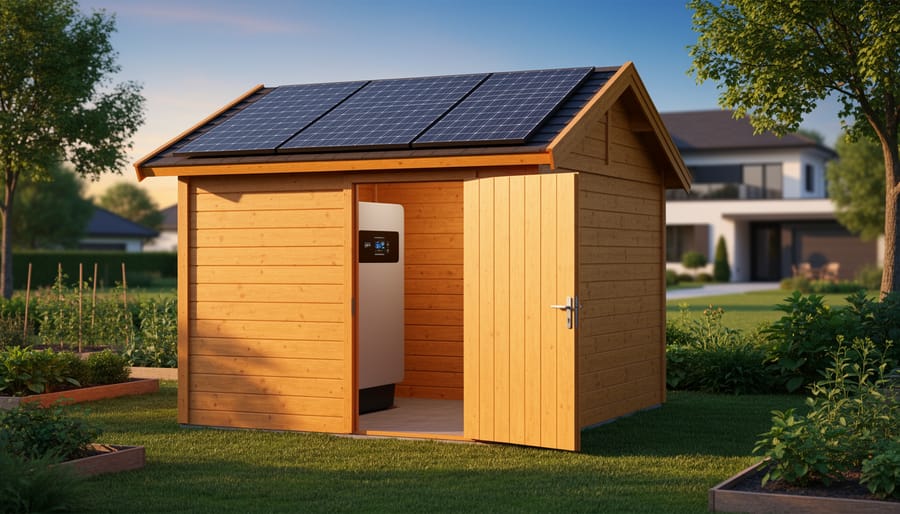
Picture this: You’ve got a beautiful shed in your backyard that’s perfect for your woodworking hobby, home office, or art studio, but it’s sitting there powerless. Running electrical lines from your house means digging trenches, hiring electricians, and dealing with permits that can easily cost thousands of dollars. A 7kW solar system with battery backup changes everything, letting you generate and store your own electricity right where you need it.\n\nThis standalone power solution gives you complete energy independence for your shed without the headaches of traditional electrical installation. You’ll get enough juice to run power tools, computers, lighting, heating, and cooling systems throughout the day and night, thanks to battery storage that keeps everything running even when the sun goes down or during cloudy weather.\n\nThe beauty of this setup lies in its flexibility. Unlike other shed electrification options that tie you to the grid, a 7kW solar system gives you true freedom to place your shed anywhere on your property. Whether you’re converting an existing shed into a functional workspace or planning a new build from scratch, this system scales perfectly to meet your power needs without ongoing electricity bills eating into your budget.\n\nUnderstanding what a 7kW system can actually power, how much it costs, and whether it’s the right fit for your specific situation will help you make a confident decision that transforms your shed from simple storage into a fully functional space.\n\n\n
 \n
\n\n\n
What Makes a 7kW Solar System Perfect for Shed Power Needs
\n\n
Real-World Power: What You Can Actually Run
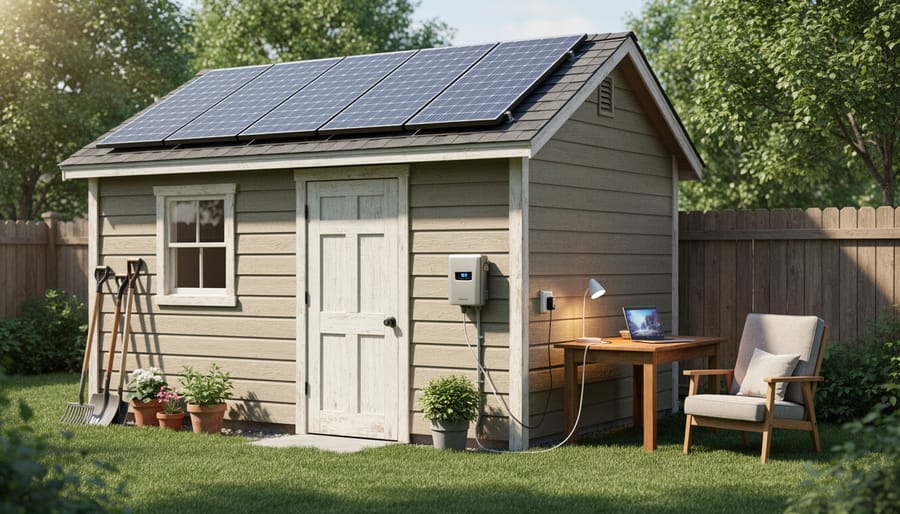
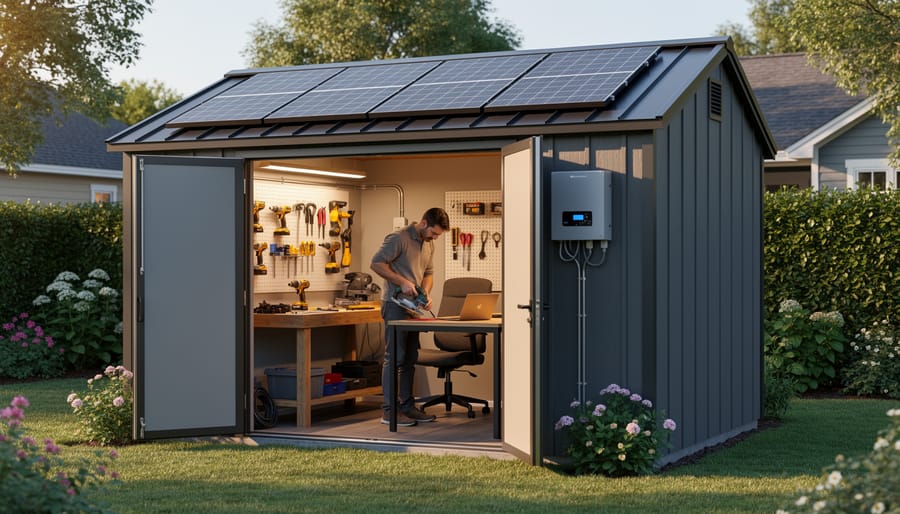
\n\nLet’s talk about what a 7kW solar system actually powers in your everyday shed life. The good news? It’s probably more than you think.\n\nPicture your typical weekend woodworking session. You can easily run a table saw (1,800 watts), shop vacuum (1,200 watts), and LED workshop lighting (200 watts) simultaneously without breaking a sweat. Throw in a radio and your phone charger, and you’re still using less than half your available power. One homeowner told us he powers his entire Saturday workshop routine, including a dust collection system, on solar alone.\n\nTurned your shed into a home office? A 7kW system handles multiple computers, monitors, a mini-fridge for drinks, a small space heater for chilly mornings, and LED lighting with plenty of capacity to spare. You’re looking at roughly 800-1,000 watts total for a comfortable workspace setup.\n\nHere’s where the battery backup really shines. During evening hours or cloudy days, you can still run essential loads. A mini-fridge draws about 100-150 watts, LED lights another 100-200 watts, and most laptops use 50-75 watts. With adequate battery storage, you’re maintaining productivity regardless of weather.\n\nEven power-hungry space heaters (1,500 watts) are manageable, though they’ll consume power faster. The key is understanding your usage patterns and prioritizing what really matters during peak demand times.\n\n
 \n
\n\n\n
Why Battery Backup Makes All the Difference
\n\nHere’s the reality: solar panels only generate power when the sun shines. Without battery backup, your shed goes dark the moment clouds roll in or the sun sets. That’s a problem if you’re running evening woodworking projects, need your home office functional during overcast days, or rely on your shed during power outages.\n\nBattery storage changes everything. It captures excess energy your panels produce during peak sunlight hours and stores it for later use. This means your shed maintains power regardless of weather conditions or time of day. You can work on that weekend project after dinner, keep your tools charging overnight, or maintain climate control for sensitive equipment around the clock.\n\nThe independence factor is huge. When storms knock out power to your main house, your shed with battery backup keeps running. Many homeowners have discovered the value of having emergency backup solutions that operate completely separate from the grid. Your shed essentially becomes a self-sufficient power hub.\n\nReal-world example: One homeowner converted their shed into a home office and found battery backup essential for maintaining productivity during the frequent afternoon thunderstorms in their area. Another uses their powered shed as a pottery studio, running a kiln that requires consistent power delivery regardless of weather conditions.\n\nBattery backup transforms your solar investment from weather-dependent to truly reliable, giving you consistent power exactly when you need it.\n\n\n
Is Your Shed Ready for Solar? Key Considerations
\n\n
Roof Space and Sun Exposure
\n\nBefore investing in a 7kw solar system, you’ll want to make sure your shed roof can actually harness the sun’s energy effectively. The good news? Most sheds can work with a bit of planning.\n\nStart by observing your roof throughout the day. Ideally, you need at least 4-6 hours of direct sunlight daily, with south-facing roofs (in the Northern Hemisphere) being optimal. A 7kw system typically requires about 350-400 square feet of roof space, so measure your shed’s roof area to confirm it’s adequate.\n\nTrees and nearby structures can be tricky, but they’re not always deal-breakers. If morning shade clears by midday, you might still get sufficient sun exposure. Consider trimming overhanging branches that block light during peak sun hours (usually 10am-2pm). Some homeowners have found success installing panels on adjustable ground mounts near their shed when roof space is limited or shaded.\n\nOne DIY enthusiast shared that repositioning just two panels to an unshaded section of his property increased his system’s efficiency by 20 percent. Walk around your property at different times of day to identify the sunniest spots—sometimes the best location isn’t where you initially expected.\n\n
Structural Requirements
\n\nBefore installing solar panels on your shed roof, it’s essential to understand whether your structure can safely handle the additional weight. A typical 7kw solar system adds approximately 3-4 pounds per square foot to your roof, which translates to roughly 600-800 pounds total when you factor in panels, mounting equipment, and battery storage.\n\nMost modern sheds with proper construction can support this load, but older structures or those built with minimal framing may need reinforcement. Start by examining your shed’s roof trusses and rafters. If they’re spaced 24 inches apart or more, you might want to add additional support beams. Look for signs of existing stress like sagging, cracks, or water damage before proceeding.\n\nA practical solution many homeowners choose is reinforcing the roof structure with additional cross-bracing or sister joists alongside existing rafters. This relatively simple upgrade typically costs $300-600 and provides peace of mind. If you’re uncertain about your shed’s capacity, consider consulting a structural engineer or experienced contractor. They can assess your specific situation and recommend cost-effective reinforcement options. Remember, investing in proper structural support now prevents costly repairs or safety issues down the road, ensuring your solar investment remains secure for decades.\n\n
Local Regulations and Permits
\n\nBefore you move forward with your 7kW solar system, take a few minutes to check your local building codes and permit requirements. Most areas require permits for solar installations, especially when batteries are involved, but the process is typically straightforward. Your solar installer will usually handle the paperwork as part of their service, which takes the headache out of it for you.\n\nIf you’re part of a homeowners association, give your HOA guidelines a quick review too. Many HOAs have become solar-friendly in recent years, but it’s worth confirming any restrictions on panel placement or visibility. Think of this as doing your homework upfront so there are no surprises down the road. Most homeowners find the approval process smoother than expected, and it’s a small step toward enjoying reliable power in your shed for years to come.\n\n\n
The Complete System: What’s Included Beyond Just Panels
\n\n
Solar Panels
\n\nA 7kW solar system typically requires between 17 to 21 solar panels, depending on each panel’s wattage output (usually 300-400 watts per panel). Think of these panels as your shed’s personal power plant, quietly converting sunlight into usable electricity throughout the day.\n\nModern solar panels are remarkably durable, designed to withstand harsh weather conditions including hail, heavy snow, and strong winds. Most manufacturers offer warranties of 25 years, though the panels often continue producing power well beyond that timeframe. You’ll see only a gradual decline in efficiency over the decades, typically around 0.5% per year.\n\nThe panels themselves require minimal maintenance. A quick rinse with water once or twice a year to remove dust and debris is usually sufficient. Many homeowners report that their panels basically take care of themselves, especially in areas with regular rainfall. This makes them an ideal solution for powering a shed workshop or office space without the hassle of trenching cables from your main house.\n\n
Battery Storage Unit
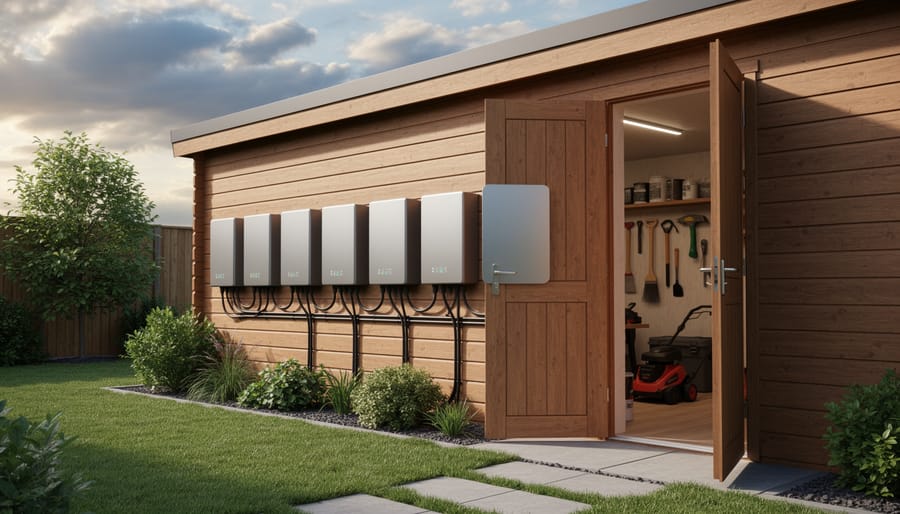
\n\nThink of your battery storage unit as the safety net that catches all that solar energy your panels collect during sunny days. This is where the real magic happens for shed owners—it stores electricity so you have power exactly when you need it, even at night or during cloudy stretches.\n\nFor a 7kw solar system, you’ll typically want a battery with 10-15 kWh of storage capacity. That’s enough to run your shed workshop through an evening project session, keep your hobby space powered on overcast days, or maintain your garden office during a brief outage. One homeowner told us she uses her battery backup to run power tools in her craft shed without worrying about draining power during peak afternoon work sessions.\n\nThe beauty of battery backup is its reliability. When the sun’s blazing, your panels generate power while simultaneously topping up your battery. Then, when you’re working after sunset or the weather turns grey, your battery seamlessly kicks in. You won’t notice any interruption—it’s completely automatic. For shed applications where running underground electrical lines would cost thousands, this self-contained power solution gives you true independence and peace of mind.\n\n
 \n
\n\n\n
Inverter and Charge Controller
\n\nThink of the inverter and charge controller as the brains of your solar setup—they’re what make everything work together smoothly and safely. The charge controller manages the power flowing from your solar panels to your batteries, preventing overcharging that could damage your investment. It’s like a smart traffic cop directing energy exactly where it needs to go. The inverter then converts the stored battery power from DC (direct current) to AC (alternating current)—the type of electricity your tools, lights, and appliances actually use. For a 7kw system, you’ll want reliable components that can handle your peak power needs. Many homeowners find these work quietly in the background, requiring minimal attention once installed. One shed owner shared how his system seamlessly powers his woodworking shop daily, with the charge controller automatically adjusting to changing weather conditions without any intervention needed.\n\n\n
Installation Options: DIY or Professional?
\n\n
What DIY Enthusiasts Need to Know
\n\nInstalling a 7kw solar system isn’t rocket science, but it does require comfort with electrical work and roof mounting. You’ll need basic carpentry skills, electrical knowledge (especially for DC systems), and the ability to follow detailed instructions carefully. Most DIY enthusiasts successfully handle the physical installation—mounting panels, securing batteries, and running conduit—but many choose to have a licensed electrician handle the final connections to ensure everything meets code.\n\nThe biggest challenges? Understanding inverter settings, properly sizing wire gauges, and ensuring waterproof connections. Working on roofs also requires safety equipment and awareness. A complete solar installation guide walks you through these steps in detail.\n\nDIY makes sense when you have electrical experience and want to save on labor costs, which typically run $2,000-$4,000 for professional installation. However, consider hiring help if you’re unfamiliar with electrical systems or local permits seem complicated. Many homeowners split the difference—doing the mounting and wiring themselves, then bringing in a pro for inspection and final hookup. This approach saves money while ensuring safety and compliance.\n\n
Benefits of Professional Installation
\n\nWhile DIY projects can be rewarding, professional installation of your 7kw solar system with battery backup offers significant advantages that protect your investment and ensure peace of mind.\n\nLicensed installers bring expertise in electrical safety considerations, ensuring your system meets all local building codes and electrical standards. This matters tremendously when you’re dealing with high-voltage equipment. Professional teams handle all permitting requirements, which can be surprisingly complex depending on your location. Without proper permits, you might face fines or issues when selling your home.\n\nPerhaps most valuable are the warranties. Most solar equipment manufacturers require professional installation to validate their warranties, typically covering 10-25 years on panels and 5-10 years on batteries. Installers also provide workmanship warranties protecting against installation errors.\n\nReal homeowners consistently report that professional installation saved them from costly mistakes. As shed owner Tom shared, “I almost wired my system incorrectly. The professionals caught issues I never would have spotted.” Professional installers optimize panel placement and battery positioning for maximum efficiency, ensuring your system delivers the reliable power your shed needs for years to come.\n\n\n
Real Shed Owners Share Their Experience
\n\nThere’s nothing quite like hearing from people who’ve already made the leap to solar-powered sheds. Their experiences can help you picture what’s possible and avoid common pitfalls along the way.\n\nMeet James from Colorado, who transformed his backyard shed into a fully functional woodworking shop. “I was tired of running extension cords from my garage and dealing with tripped breakers every time I fired up my table saw,” he shares. His 7kw system with battery backup now powers his power tools, dust collection system, and LED lighting without a hitch. The battery backup proved invaluable during a winter power outage when he could continue working on a client project while his house sat dark. “The independence is worth every penny,” James says. “I wish I’d done it three years ago.”\n\nThen there’s Maria, an artist in Oregon who converted her shed into a painting studio. She needed consistent lighting for color accuracy and climate control to protect her canvases. “I was skeptical about whether solar could handle my needs, especially during our gray winters,” she admits. But her system keeps her space comfortable year-round, running her heaters, dehumidifier, and professional lighting setup. The battery storage means she can work into the evening without worrying about depleting her power. “My energy bills haven’t budged, and I have a dedicated creative space that feels completely separate from home distractions.”\n\nFinally, there’s the Henderson family in Texas, who use their solar shed as a home office and guest room combo. “We needed reliable power for video calls, computers, and a mini-split AC unit in the Texas heat,” explains Mr. Henderson. Their system handles it all seamlessly, and they’ve even added a small refrigerator. The investment paid for itself faster than expected thanks to local incentives and the value it added to their property.\n\n\n
Investment Breakdown: What to Expect Cost-Wise
\n\n
Long-Term Savings and Energy Independence
\n\nHere’s the financial picture that makes shed owners smile: a 7kw solar system with battery backup means you’ll never need extension cords snaking across your yard or pay thousands for professional trenching to run power lines from your main house. Many homeowners spend $3,000-$8,000 just to have electricians dig trenches and install underground wiring to their shed. With solar, you skip that expense entirely while gaining true energy independence.\n\nBeyond avoiding installation costs, you’re generating free power for decades. Sarah from Oregon shared her experience: “I was quoted $5,500 to run electricity to my workshop shed. Instead, I invested in solar and now my power tools run without touching my house electricity bill.” For a detailed breakdown of ongoing savings, check out our solar system cost analysis.\n\nThe real value shows up during power outages too. While your neighbors lose power, your shed stays operational, protecting refrigerated items, security systems, or ongoing projects. This off-grid capability transforms your shed from a dependent structure into a self-sufficient space that actually adds property value and functionality.\n\n\n
Maintaining Your Solar Battery System
\n\nGood news – keeping your 7kw solar system running smoothly is surprisingly straightforward. Think of it like caring for your shed itself: a little attention goes a long way.\n\nStart with quarterly visual inspections of your solar panels. Brush off leaves, pollen, and debris with a soft broom or rinse with a garden hose. Clean panels work more efficiently, and this simple 15-minute task can maintain optimal power generation. One shed owner in Colorado shared that after clearing accumulated pine needles, his system’s output jumped back up by 12%.\n\nCheck your battery connections twice a year, looking for any corrosion or loose terminals. A quick wipe with a dry cloth and tightening any connections takes just minutes but prevents bigger headaches down the road.\n\nMost modern battery systems include monitoring apps that alert you to issues before they become problems. Get familiar with your app’s dashboard – it’s like having a friendly helper keeping watch 24/7. If you notice unusual patterns or drops in performance, a quick call to your installer usually solves things remotely.\n\nKeep the area around your battery unit clear and well-ventilated. Batteries perform best in moderate temperatures, so if your shed gets extremely hot or cold, consider adding basic insulation around the battery cabinet.\n\nThe reality? Most homeowners spend less than two hours per year on maintenance. Your system is designed to work quietly in the background, giving you reliable power without constant fussing. Set seasonal reminders on your phone, and you’re all set.\n\n\nAdding a 7kW solar system with battery backup to your shed isn’t just about electricity—it’s about transforming how you use your outdoor space. Imagine working on projects late into the evening, running power tools without worry, or converting that dusty storage area into a comfortable year-round retreat. The independence you gain from self-sufficient power means no more extension cords snaking across your yard or settling for limited shed functionality.\n\nWhether you’re setting up a workshop, home office, or creative studio, this investment opens doors that simply weren’t possible before. You’re not tied to your home’s electrical panel, and you’re protected during power outages while reducing your environmental footprint.\n\nThe beauty of this solution lies in its versatility. One homeowner might use it for weekend woodworking, while another powers their remote work setup or charges electric tools. Your shed becomes a true extension of your living space rather than just a place to store lawn equipment.\n\nReady to explore your options? Start by assessing your power needs and consulting with solar professionals who can design a system tailored to your specific situation. The lifestyle upgrade waiting in your backyard might be closer than you think.