


Why Your Shed Delivery Might Cost Extra (Limited Access Fees Explained)

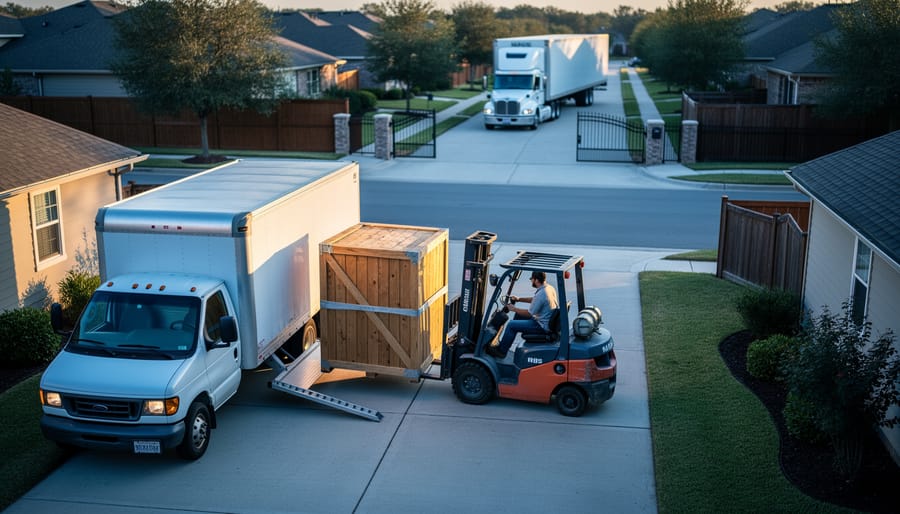
You’re shopping for the perfect storage shed online, and just as you’re about to complete your purchase, a curious charge appears: “limited access fee.” If you’re like most homeowners, this shipping term might leave you scratching your head and wondering whether it applies to your property.
Limited access in LTL (Less Than Truckload) shipping refers to any delivery location where standard 53-foot commercial trucks can’t easily navigate, turn around, or unload. Think residential driveways, rural properties without paved roads, gated communities, or homes tucked away on narrow streets. What seems like a perfectly normal driveway to you might actually present significant challenges for a commercial freight carrier trying to deliver your new shed.
The reality is straightforward: if your property isn’t a commercial business with loading docks and wide-open parking areas designed for big rigs, there’s a good chance you’ll be classified as limited access. This classification isn’t meant to penalize you, but rather reflects the extra time, smaller delivery vehicles, and specialized equipment freight companies need to safely deliver your shed to properties that weren’t designed with commercial deliveries in mind.
Understanding whether your location qualifies as limited access before finalizing your shed purchase helps you avoid surprise fees and plan appropriately for delivery day. The good news? Once you know what limited access means and how it applies to your situation, you can make informed decisions about delivery options and ensure your new storage solution arrives smoothly at your doorstep.
What Does LTL Mean for Your Shed Delivery?
When you order a shed, gazebo, or larger outdoor structure, it typically ships via LTL—short for Less-Than-Truckload shipping. Think of it this way: your shed shares space on a big freight truck with other shipments heading in the same direction, which keeps costs down compared to reserving an entire truck just for your delivery.
Unlike the small packages that arrive via UPS or FedEx, sheds are too large and heavy for standard parcel services. LTL carriers use semi-trucks with lift gates and pallet jacks to handle these bigger items. The entire shed delivery process is designed around commercial freight standards, which is why understanding terms like “limited access” becomes important.
Here’s where it gets practical: LTL carriers assume they’re delivering to commercial locations with loading docks, forklifts, and easy truck access. When your delivery doesn’t meet these standard conditions—like most home deliveries—it’s considered limited access. This distinction can affect delivery timing, costs, and what you need to prepare on delivery day. Knowing whether your property qualifies as limited access helps you avoid surprise fees and ensures a smoother delivery experience.
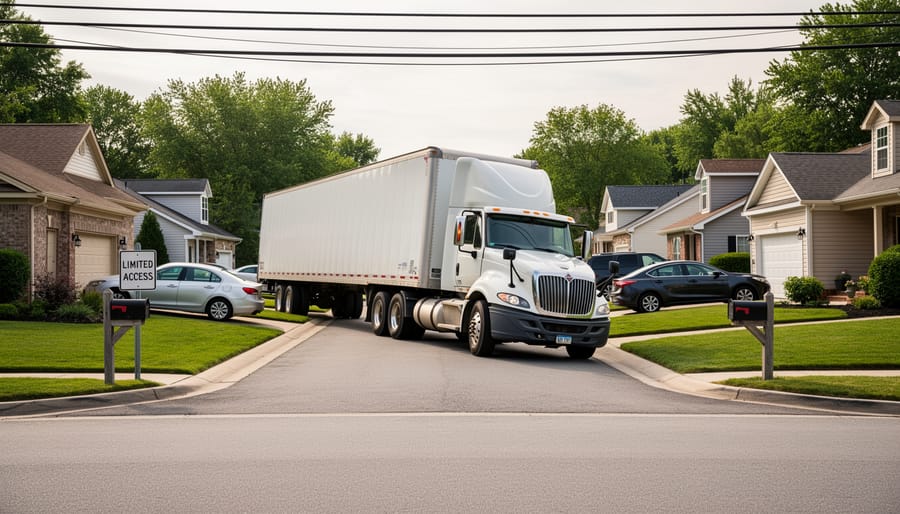
Limited Access Defined: When Your Home Doesn’t Fit the ‘Standard’ Delivery Model
Residential Deliveries (Yes, Your Home Counts)
Here’s a reality check that surprises many first-time shed buyers: if you’re ordering your storage building delivered to your home, there’s a good chance the carrier will classify it as limited access, even if you live in a regular suburban neighborhood.
Why does your residential address trigger these fees? LTL carriers are set up to deliver to commercial locations with loading docks, forklifts, and warehouse equipment. Your driveway doesn’t have those features, which means the driver needs extra time and different equipment to unload safely. There’s also the matter of space—residential streets with parked cars, narrow driveways, and overhead tree branches create maneuvering challenges that don’t exist at business loading zones.
Think of it from the carrier’s perspective: a delivery to a distribution center might take 15 minutes with a loading dock. That same delivery to your home could take an hour or more, involving careful navigation through your neighborhood and manual unloading without proper equipment.
The good news? This isn’t necessarily a roadblock to getting your shed delivered. Many homeowners successfully receive their buildings at residential addresses every day. Understanding that this fee may apply simply helps you budget accurately and prepare your property for delivery. When you know what to expect, you can plan ahead and ensure the delivery goes smoothly.
Rural and Remote Locations
In shipping terms, a location is considered “rural” or “remote” when it sits far from established delivery routes and major transportation hubs. If your property is more than a certain distance from interstate highways or main trucking corridors—typically 5 to 10 miles depending on the carrier—there’s a good chance it falls into this category. Population density matters too. Homes in sparsely populated areas where carriers don’t make regular stops often trigger limited access fees.
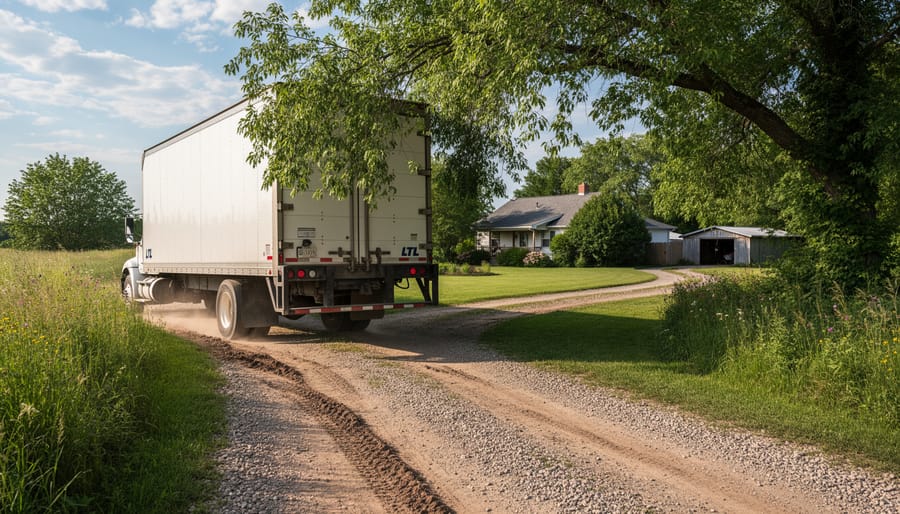
Think about countryside properties where your nearest neighbor is a mile away, working farms accessed by gravel roads, or that peaceful homestead outside city limits where you finally have room for that storage shed you’ve been wanting. These idyllic settings are wonderful for peaceful living but can present challenges for large freight deliveries. The delivery driver may need to travel significantly off their regular route, navigate unpaved roads, or deal with the uncertainty of finding your location without the convenience of nearby landmarks or regular street signage.
Here’s a practical example: If you live on a county road several miles from the nearest town, and the UPS truck only comes by once a week, your property likely qualifies as rural for LTL shipping purposes. The same goes for properties accessed through private driveways that branch off secondary roads. Understanding these rural property considerations helps you anticipate potential delivery fees and plan accordingly when ordering your shed.
Access Road and Driveway Restrictions
Sometimes the road to your property itself creates delivery challenges that qualify as limited access. Large LTL freight trucks typically measure 53 feet long and require wide turning radiuses, stable ground, and plenty of overhead clearance to navigate safely.
If your driveway is particularly narrow—say, less than 12 feet wide—or features sharp turns that a full-sized truck can’t maneuver, carriers may flag your delivery as limited access. Unpaved or gravel driveways can also be problematic, especially after rain when the ground becomes soft and unstable. A loaded freight truck can weigh over 40,000 pounds, and drivers won’t risk getting stuck in mud or damaging your property.
Overhead obstacles present another common issue. Low-hanging tree branches, power lines, or decorative archways that sit below 14 feet can prevent trucks from entering your property safely. Similarly, if your home sits at the end of a steep incline or decline, drivers may determine it’s unsafe to navigate with a heavy load.
Weight-restricted bridges along your access route also qualify. Many older or smaller bridges in rural areas have posted weight limits that freight trucks exceed, forcing carriers to use alternative delivery methods.
Here’s the good news: identifying these issues upfront helps you plan accordingly. When requesting your shipping quote, mention any potential access concerns. Take a walk around your property and snap photos of your driveway width, road conditions, and overhead clearance. This information helps carriers determine the best delivery approach and prevents surprise fees. Many homeowners successfully arrange to meet their delivery at a nearby accessible location, like a church parking lot or community center, making the process smoother for everyone involved.
Other Common Limited Access Situations for Shed Buyers
Locations Requiring Appointments or Special Arrangements
Some properties require special coordination that shipping companies classify as limited access, even if they’re technically accessible. Gated communities are a common example—while the roads are perfectly fine, drivers need gate codes or security clearance to enter. You’ll want to provide access codes ahead of time and confirm someone will be available to grant entry on delivery day.
Homeowner associations and certain neighborhoods may require advance notice before large deliveries arrive. This 24 to 48-hour notification period helps coordinate parking and ensures your shed delivery doesn’t conflict with neighborhood events or parking restrictions. Check with your HOA beforehand to understand their requirements and share this information with your delivery company.
Properties with strict delivery time windows also fall into this category. Maybe your job site only accepts deliveries between 9 AM and noon, or perhaps you need the shed to arrive when you’re home to oversee placement. These scheduling constraints require extra coordination from the shipping company, which may trigger limited access fees.
The good news? A quick phone call to your delivery coordinator can usually solve these issues. Share your property details upfront, provide necessary access codes or contacts, and discuss your availability. Most carriers appreciate this proactive approach and can work with you to ensure a smooth delivery experience without unexpected hiccups.
Areas Without Commercial Loading Equipment
Most homes and residential properties don’t have the commercial equipment needed to unload heavy freight shipments. If you’re expecting a storage shed delivery and don’t have a loading dock, forklift, or pallet jack on hand, your location will likely be classified as limited access for LTL shipping purposes.
Here’s where this matters: when your shed arrives on a large freight truck, someone needs to safely remove it from the vehicle. Commercial businesses typically have forklifts or dock-leveling equipment to handle this, but residential driveways don’t. That’s where liftgate service comes in.
A liftgate is essentially a hydraulic platform attached to the back of the delivery truck that lowers your shed gently to ground level. Think of it as an elevator for your freight. While incredibly helpful, this service does add to your delivery cost since it requires special equipment and extra time from the driver.
The good news? Most shed suppliers expect residential deliveries to need liftgate service and can arrange this ahead of time. When getting your shipping quote, simply mention that you don’t have unloading equipment available. Being upfront about your situation helps ensure smooth delivery and prevents surprise fees or delivery delays on the big day.
Churches, Schools, and Other Non-Standard Addresses
Beyond residential homes, several other property types often trigger limited access fees when ordering your shed. Churches, schools, hospitals, nursing homes, and government facilities typically fall into this category. Why? These locations usually require special scheduling for deliveries, have specific access protocols, or restricted entry points that complicate the delivery process.
If you’re planning to place a storage shed at any institutional property, mention this upfront when getting your quote. Many of these facilities have designated delivery hours, require advance security clearance, or have parking restrictions that extend delivery time. A straightforward conversation with your delivery team can help you understand exactly what to expect and avoid surprise charges. The good news is that with proper planning and communication, deliveries to these locations go smoothly—you’ll just want to coordinate with the facility’s administration ahead of time to ensure everyone’s on the same page about access requirements and timing.
How Limited Access Affects Your Shed Delivery Cost and Timeline
When your delivery address is flagged as limited access, you’ll typically see this reflected in two main ways: additional fees and extended delivery times.
The most immediate impact is the surcharge. Limited access fees generally range from $75 to $300 or more, depending on your carrier and the specific challenges your location presents. For a shed delivery, this might mean paying an extra $150 on top of your standard shipping cost. If your property requires multiple limited access classifications—say, both residential delivery and a location beyond a certain distance from major highways—these fees can stack up quickly.
Delivery timelines also tend to stretch longer with limited access designations. While standard commercial deliveries might arrive within 5-7 business days, limited access locations often add 3-5 extra days to that window. Why? Carriers need to coordinate specialized equipment, plan routes more carefully, and sometimes schedule deliveries during specific timeframes when smaller trucks are available.
Here’s what you can realistically expect during the delivery process itself. Your carrier will likely contact you in advance to confirm details and discuss any access concerns. Be prepared to provide specific directions, especially if GPS systems don’t work well for your address. One homeowner shared that her rural shed delivery went smoothly because she proactively sent photos of her driveway and clear landmarks to help the driver navigate.
You’ll also want to ensure the delivery path is completely clear. Limited access deliveries often mean tighter maneuvering space, so removing obstacles like parked cars, low-hanging branches, or lawn decorations becomes even more critical. The driver may also request that you’re available during delivery to guide them or quickly address any unexpected challenges.
Understanding these practical realities helps you budget appropriately and plan your schedule, turning what could be a stressful surprise into a manageable part of your shed-buying journey.
Smart Ways to Navigate Limited Access Delivery Fees
Questions to Ask Before You Order
Before ordering a shed or other large item, protect yourself from surprise fees by getting clear answers upfront. Start by asking the retailer directly: “Will my delivery be considered limited access?” Describe your property honestly, including whether you’re on a residential street, have a long driveway, or live in a rural area.
Next, ask what specific fees apply if your location qualifies as limited access. Request a breakdown showing the base shipping cost versus any additional charges. Some retailers include limited access fees in their quotes, while others add them later.
Find out exactly what’s included in the delivery service. Will the driver bring your shed to your driveway, or just to the curb? Does the price cover a liftgate service if you don’t have a loading dock? Understanding these details prevents frustrating surprises on delivery day.
Finally, ask about alternative delivery options. Can you pick up the item at a nearby terminal to avoid fees? Is there a local dealer who handles their own deliveries? Sometimes a little flexibility saves significant money and hassle, making your shed purchase smoother from start to finish.
Alternative Delivery Options Worth Considering
If your delivery location is flagged for limited access fees, don’t worry—you have several practical options that can help you avoid or reduce these extra costs.
One of the most straightforward alternatives is arranging for freight terminal pickup. Instead of having the driver deliver to your home, you can pick up your shed from the closest freight terminal or distribution center. This completely eliminates limited access fees since you’re meeting the carrier on their turf. You’ll need a suitable vehicle and trailer, but many homeowners find this option saves them $100-$300 or more. Just confirm the terminal’s hours and whether you’ll need to arrange your own loading equipment.
Another popular solution is meeting the truck at an accessible location nearby. If your property has a long driveway or difficult access, consider having the delivery made to a neighbor with better road access, a nearby church parking lot, or even a local business that might allow you to use their space temporarily. Most carriers are happy to deliver to an alternate address if it has proper truck access—just coordinate this ahead of time and arrange to move your shed the short distance to your property.
You can also hire your own final-mile delivery service. Local moving companies, equipment haulers, or even individuals with flatbed trucks can often transport your shed from a terminal or accessible meeting point to your exact location for less than the limited access fee. This gives you more control over timing and placement too.
The key is communicating with your carrier early in the process to explore what works best for your situation.
Preparing Your Property for Shed Delivery
Taking a few proactive steps before your shed arrives can make the difference between a smooth delivery and an unexpected headache. Start by measuring your access routes—this means driveways, gates, and any pathways the delivery truck will need to navigate. A standard semi-truck needs at least 12 feet of width and 14 feet of clearance height. If you’re uncertain about whether your property qualifies as limited access, grab a measuring tape and check these dimensions yourself.
Next, walk the delivery route as if you were driving a large truck. Look for overhanging tree branches, low-hanging power lines, or narrow turns that might pose challenges. Clear away any obstacles like vehicles, trash bins, or decorative planters that could block the path. If you have a gravel driveway, make sure it’s firm enough to support heavy equipment—soft or muddy surfaces can create problems.
Communication is key when preparing your property for delivery. Contact your delivery team ahead of time to discuss any special circumstances. Maybe you have a steep incline, a tight cul-de-sac, or a homeowners association with specific delivery time restrictions. The more information you provide upfront, the better prepared everyone will be.
Sarah from Georgia learned this lesson firsthand: “I assumed my suburban driveway was fine, but I didn’t mention the decorative gate at the entrance. The delivery team had to park on the street and use smaller equipment, which added fees I wasn’t expecting. Now I always communicate every detail, no matter how small it seems.”
By taking these simple preparation steps, you’ll help ensure your shed arrives safely and efficiently, avoiding surprise charges or delivery delays.
Understanding limited access for LTL shipping doesn’t have to feel overwhelming. Now that you know what qualifies as limited access and how it might apply to your property, you’re already ahead of the game. Being informed means you can budget accurately from the start and avoid those unexpected fees that catch so many homeowners off guard.
The good news? A quick conversation with your shed provider can clear up any questions before you finalize your order. Ask directly whether your delivery location falls into the limited access category and what preparations you can make to streamline the process. Simple steps like clearing the delivery path, confirming truck accessibility, and understanding your driver’s needs can make delivery day smooth and stress-free.
Remember, a little extra planning for delivery is a small price to pay for the storage shed that will serve your family for years to come. Whether you’re finally organizing that cluttered garage, creating a workshop space, or adding valuable storage to your property, the right shed is worth every bit of preparation. With clear communication and proper planning, you’ll be enjoying your new storage solution before you know it.
Looking for a storage sheds?
Browse our full range of storage sheds from authorized dealer brands. Free shipping to the continental US.