


Why Metal Shed Doors Fail (And How to Stop Break-Ins Before They Happen)

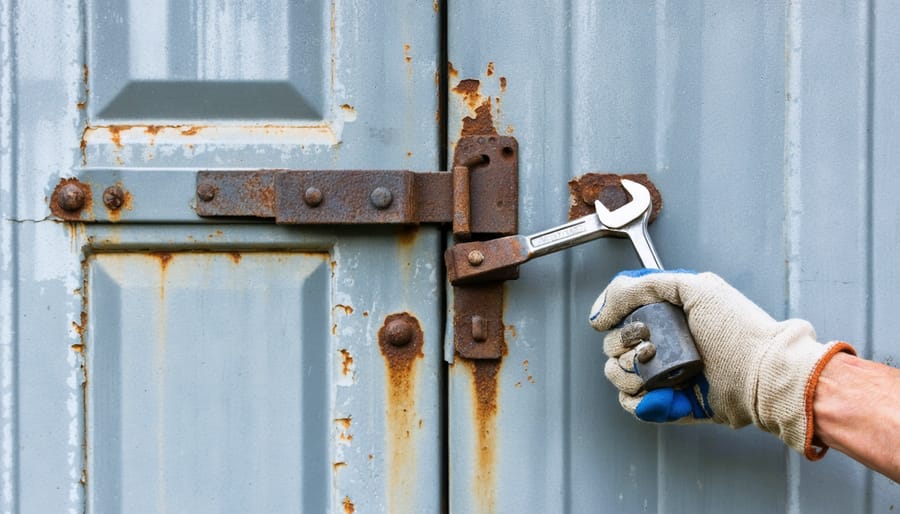
Inspect your metal shed door monthly for rust spots, loose hinges, and misalignment to catch problems before they become expensive repairs. Apply a rust-inhibiting primer to any bare metal you discover, followed by weather-resistant paint designed specifically for exterior metal surfaces. Tighten all hinge bolts and spray penetrating oil on moving parts to prevent squeaking and sticking that makes your door difficult to operate.
Replace worn weatherstripping around the door frame to block moisture infiltration, which accelerates rust formation and compromises your shed’s contents. Check that your lock mechanism engages smoothly—a sticky or loose lock signals it’s time for replacement before a break-in occurs. Install a hasp and padlock if your current locking system feels flimsy, giving you an immediate security upgrade for less than twenty dollars.
Metal shed doors face constant assault from rain, humidity, and temperature swings that cause the metal to expand and contract. Without regular attention, surface rust becomes structural damage, hinges seize completely, and security weaknesses invite theft. The good news? Most shed door problems are preventable with simple maintenance routines you can complete in under an hour. Whether you’re troubleshooting current issues or protecting a new investment, understanding how to maintain and secure your metal shed door saves you money and protects your valuable equipment for years to come.
The Real Problem With Metal Shed Doors
Rust: The Silent Door Destroyer
Rust is more than just an eyesore—it’s actively eating away at your shed door’s integrity. When rust takes hold, it weakens the metal structure and creates a domino effect of problems that can leave your belongings vulnerable and your door barely functional.
The most common victims are hinges and locks. Sarah from Michigan learned this the hard way when her shed door literally fell off one winter morning. “The hinges looked fine from the outside,” she recalls, “but rust had completely eaten through the screws underneath.” Once rust penetrates hinge mechanisms, they become stiff, noisy, and eventually fail altogether. Locks fare even worse—rust can jam the mechanism or weaken the mounting points until a simple kick compromises your security.
Door edges are particularly susceptible since they face constant moisture exposure. Small rust spots quickly spread beneath paint, creating weak points that eventually crack or crumble. A homeowner in Oregon discovered thieves had simply pried his door open where rust had thinned the metal by the lock plate.
The frustrating part? Rust often does its worst damage where you can’t see it—inside hollow door frames, behind hardware, and along bottom edges. By the time surface rust appears, internal deterioration may already be significant.

When Metal Warps and Gaps Appear
Metal shed doors face a constant battle with Mother Nature, and temperature changes are one of their biggest challenges. As temperatures rise and fall throughout the day and across seasons, your metal door naturally expands when it’s hot and contracts when it’s cold. This ongoing cycle might seem minor, but over time it creates noticeable gaps around the door frame.
These gaps are more than just an eyesore. They become entry points for moisture, which speeds up rust formation and can damage items stored inside your shed. You might notice rain seeping in during storms or condensation building up along the edges. Even worse, gaps compromise your shed’s security by making the door easier to pry open or manipulate.
The problem becomes especially noticeable during extreme weather swings. A door that closes perfectly snug in winter might leave visible gaps by mid-summer. Homeowner Sarah from Ohio shares her experience: “I kept finding puddles inside my shed after every rain until I realized my metal door had warped just enough to leave a quarter-inch gap at the bottom.”
The good news? Recognizing this issue early means you can take preventive steps before serious damage occurs.
Essential Maintenance That Stops Problems Before They Start
The 15-Minute Seasonal Inspection
Making quarterly inspections part of your seasonal shed maintenance routine takes just 15 minutes and can save you from costly repairs down the road. Here’s your quick checklist to keep those metal doors in top shape.
Start by examining the door surface closely for early rust signs. Look for small brown spots, bubbling paint, or discoloration, especially along edges and seams where moisture tends to collect. These are your early warning signals that need immediate attention before they spread.
Next, test all hardware components. Give hinges a gentle shake to check for looseness, and listen for any squeaking that indicates they need lubrication. Try the latch mechanism several times to ensure it catches properly and releases smoothly.
Check door alignment by slowly opening and closing it. Does it drag on the ground? Does it stick at certain points? These issues often indicate loose hinges or settling foundations that need quick adjustments.
Finally, inspect weather stripping for cracks or gaps, and look at the door frame for any separation from the shed structure. Catching these small problems early means simple fixes today instead of major headaches tomorrow.
Rust Prevention and Treatment
Keeping your metal shed door rust-free starts with simple prevention. After installation, apply a protective coating like rust-inhibiting primer followed by exterior-grade metal paint. This creates a barrier against moisture, the main culprit behind rust formation. Reapply every 2-3 years for best results.
If you spot early-stage rust (those telltale orange spots), don’t panic! You can tackle this easily. First, use a wire brush or medium-grit sandpaper to remove loose rust until you reach clean metal. Wipe the area with a damp cloth and let it dry completely. Next, apply a rust converter product—these work like magic by chemically transforming rust into a stable surface. Popular options include Rust-Oleum Rust Reformer or Loctite Extend Rust Neutralizer. Once dry, cover with primer and matching paint.
For ongoing protection, consider these practical tips to prevent rust on metal sheds: keep hinges and moving parts lubricated with WD-40, ensure proper drainage around your shed to avoid water pooling, and quickly touch up any chips or scratches in the paint. One homeowner shared how addressing small rust spots immediately saved her from replacing an entire door panel later—proof that a little maintenance goes a long way!

Keeping Hinges and Hardware Working Smoothly
A little preventive maintenance goes a long way in keeping your metal shed door operating smoothly for years to come. Start by lubricating hinges every six months with a silicone-based spray lubricant or light machine oil. Simply wipe away any dirt or debris first, then apply the lubricant to the hinge pin and moving parts. You’ll notice an immediate improvement in how effortlessly your door swings open.
Next, grab a wrench and check all bolts and screws quarterly. Vibrations from opening and closing can loosen hardware over time, which puts extra stress on your door frame. Tighten any loose fasteners, but be careful not to overtighten, which can strip threads or crack mounting points.
Keep an eye out for signs of wear like cracked washers, bent hinges, or stripped screws. Replacing these inexpensive parts before they fail completely saves you from dealing with a door that won’t close properly or poses a security risk. Most hardware stores carry standard replacement parts, or you can order exact matches from your shed manufacturer.
One homeowner shared how replacing two worn hinges cost just fifteen dollars but prevented her shed door from sagging and creating a gap that invited pests inside. That small investment protected her stored garden equipment and gave her peace of mind.
Security Upgrades That Actually Work
Better Locks for Metal Doors
Standard residential locks often fail on metal shed doors because they’re simply not designed to handle outdoor exposure and the unique challenges metal presents. You’ll want to choose locks specifically built for exterior use and compatible with metal construction.
Hasp and padlock combinations remain the gold standard for metal shed security. Look for hasps made from hardened steel with tamper-resistant bolts that go completely through the door and frame. Pair these with a weatherproof padlock rated for outdoor use—shrouded shackle models offer extra protection against bolt cutters. Many homeowners report that this setup provides peace of mind while remaining budget-friendly and easy to install yourself.
For a cleaner look, consider heavy-duty deadbolts designed for metal doors. These require proper drilling and reinforcement plates on both sides of the door, but they integrate seamlessly and can’t be pried off like external hasps. Make sure any deadbolt you choose has at least a one-inch throw and weatherproof components.
If you’re storing high-value equipment, upgrade to disc locks or closed-shackle padlocks. These specialized options resist picking and cutting attempts far better than standard locks. One DIY enthusiast shared that switching to a disc lock system stopped repeated break-in attempts at her property.
Whatever lock type you choose, ensure all mounting hardware penetrates through the metal with backing plates or reinforcement—surface-mounted locks create weak points that determined thieves can exploit.

Reinforcing Weak Points
Even the sturdiest metal shed door can benefit from targeted reinforcement, especially if you’ve noticed any vulnerability around the frame or hinges. Let’s look at some practical upgrades that make a real difference.
Start with the door frame itself. Adding metal security plates around the lock area creates a solid barrier against forced entry. These plates, typically 16-gauge steel or thicker, mount over existing hardware and distribute stress across a wider area. You can find affordable options at most hardware stores, and installation takes just 20-30 minutes with a drill and appropriate screws.
Hinge areas deserve special attention since they’re common weak points. Reinforce them by replacing standard screws with longer, heavy-duty versions that penetrate deeper into the frame. Security hinges with non-removable pins prevent doors from being lifted off when closed. For extra protection, consider adding hinge bolts on the opposite side—these simple devices slide into the frame, preventing the door from being pried open even if hinges are compromised.
Don’t overlook gaps between the door and frame. These seemingly minor spaces provide leverage points for prying. Install metal weatherstripping or door sweep attachments to eliminate gaps while improving weather resistance. For larger gaps, adjustable strike plates let you fine-tune the fit.
One homeowner shared that adding corner braces to her aging shed door frame completely eliminated the wobble she’d dealt with for years, giving her genuine peace of mind.
Smart Security on a Budget
You don’t need to break the bank to significantly boost your shed’s security. Some of the most effective deterrents are surprisingly affordable and easy to install yourself. Motion-sensor lights are a game-changer – they startle potential intruders and alert you to any nighttime activity around your shed. You can find solar-powered options for under $30 that require no wiring whatsoever.
Battery-operated door alarms are another budget-friendly solution, typically costing $10-20 per unit. These simple devices emit a loud sound when the door is opened, which can scare off thieves and notify you if someone’s tampering with your belongings. One homeowner shared that adding a visible alarm to his metal shed door stopped attempted break-ins completely – sometimes the visible presence alone does the trick.
Consider making your shed more visible from your house by trimming back overgrown bushes or relocating items that create hiding spots. Thieves prefer working unobserved, so increased visibility is a powerful deterrent. Adding a simple “24-Hour Surveillance” sign, even without cameras, can make opportunistic criminals think twice. These small investments work hand-in-hand with your metal door’s physical security features to create multiple layers of protection without the premium price tag.
When to Repair vs. Replace Your Metal Shed Door
Making the right choice between repairing and replacing your metal shed door can save you money and headaches down the road. Let’s break down when each option makes sense.
Generally speaking, repairs are your best bet when damage is limited to surface issues. Minor rust spots, small dents, loose hinges, or a misaligned latch can typically be fixed for under $50 in materials and a few hours of your time. If your door is still structurally sound and functions smoothly after addressing these issues, repair is the economical choice.
However, replacement becomes necessary when structural integrity is compromised. Here are the telltale signs: extensive rust that has eaten through the metal in multiple spots, severe warping that prevents proper closing, cracks or holes larger than a quarter, or frame damage that affects the door’s stability. If your door has reached this point, repairs often become temporary Band-Aid solutions that don’t address underlying problems.
Cost is another crucial factor. When repair costs exceed 50-60% of a replacement door’s price, replacement usually offers better long-term value. A quality metal replacement door typically ranges from $150 to $400, depending on size and features. If you’re looking at multiple repair attempts or constantly battling recurring issues, that’s money better invested in a new door.
Consider the door’s age too. If your metal door is over 15 years old and showing multiple issues, replacement might prevent future problems. Regular monitoring shed condition helps you catch problems early when repairs are still viable.
Real homeowner insight: “I spent six months patching rust spots before accepting my door needed replacement. Wish I’d replaced it sooner and saved the hassle,” shares Mark from Ohio.
Keeping your metal shed door in great shape doesn’t have to be complicated or break the bank. With just a few proactive steps throughout the year, you can prevent most common problems before they start. The key is consistency—even spending 15 minutes every few months inspecting hinges, lubricating moving parts, and checking for early signs of rust can save you from costly repairs down the road.
Why not start today? Pick one simple task from what we’ve covered—maybe spraying some lubricant on those squeaky hinges or tightening a few loose screws. That small action puts you on the path to a secure, smoothly functioning shed that protects your belongings for years to come.
There’s genuine peace of mind in knowing your tools, equipment, and seasonal items are safe behind a well-maintained door. And if you’ve discovered your current shed door is beyond repair, Storage Sheds Outlet offers quality metal shed options designed with durability and security in mind. Whatever route you choose, you’re now equipped with the knowledge to keep your shed door working perfectly.