


Why Light Gauge Steel Framing Could Save Your Shed Project (Or Break It)

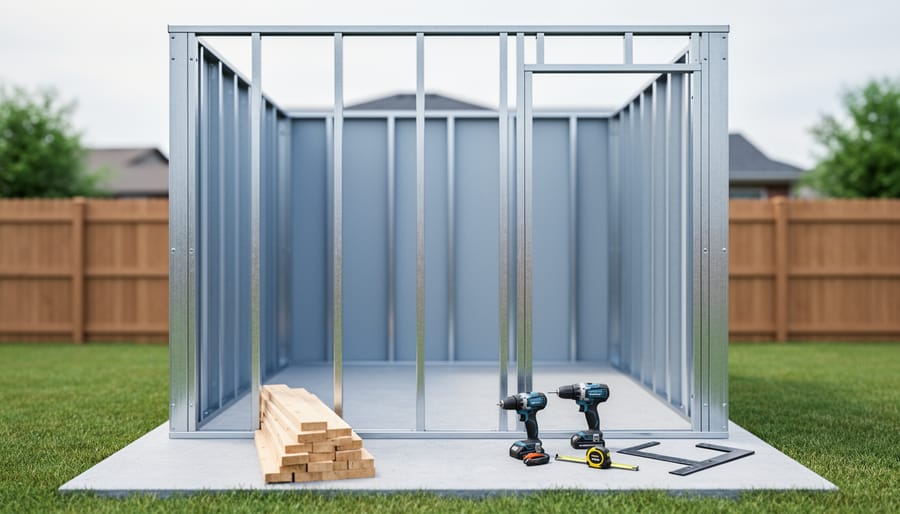
Light gauge steel framing has transformed how homeowners build sheds and outdoor structures, offering a modern alternative to traditional wood construction. If you’re weighing your options for an upcoming project, understanding both sides of this material will save you time, money, and potential headaches down the road.
Steel framing delivers exceptional strength-to-weight ratios, meaning your shed structure can withstand heavy snow loads and high winds while using less material than comparable wood frames. The precision-cut components arrive ready to assemble, eliminating the warping, twisting, and shrinking that plague lumber. You’ll never worry about termites, rot, or mold compromising your investment, which is why steel-framed structures often last 50 years or more with minimal maintenance.
However, steel framing does come with trade-offs worth considering. The upfront cost typically runs 15-30% higher than wood, and cutting or modifying steel requires specialized tools most DIY enthusiasts don’t have in their garage. Thermal bridging can create energy efficiency challenges in climate-controlled structures, and working with metal in cold weather presents unique handling difficulties.
The good news? You don’t have to choose one material exclusively. Many savvy homeowners are discovering that mixing steel and wood components based on each material’s strengths offers the best of both worlds. When choosing framing materials, understanding these advantages and disadvantages helps you create a structure that matches your budget, skill level, and long-term goals perfectly.
What Is Light Gauge Steel Framing? (The Basics You Need to Know)
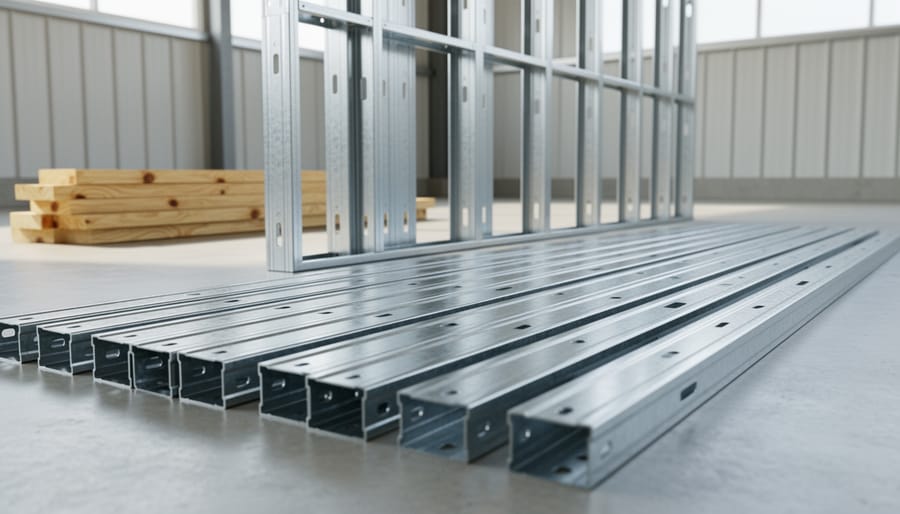
If you’re exploring building materials for your next outdoor project, you’ve probably come across the term “light gauge steel framing” and wondered what makes it different from traditional wood. Simply put, light gauge steel framing uses thin, cold-formed steel studs and tracks instead of dimensional lumber like 2x4s or 2x6s. Think of it as the metal cousin of wood framing, engineered to provide similar structural support but with some distinct characteristics.
The steel used in these frames is relatively thin, typically ranging from 18 to 25 gauge thickness, which is where the “light gauge” name comes from. Don’t let the word “light” fool you though. These steel components are incredibly strong for their weight and won’t warp, rot, or attract termites like wood can over time.
In shed construction and outdoor building projects, light gauge steel framing has become increasingly popular among homeowners who want a low-maintenance alternative. You’ll find it used in everything from backyard storage sheds and workshops to gazebos and pool houses. The framing pieces connect using screws rather than nails, creating precise, straight walls that stay that way for decades.
The real difference between steel and wood framing comes down to how each material behaves. Wood expands and contracts with moisture changes, can develop cracks, and may attract pests. Steel frames maintain their shape regardless of weather conditions and require virtually no ongoing maintenance. However, steel does conduct temperature more readily than wood, which is something to consider depending on your climate and intended use.
The Winning Advantages of Light Gauge Steel Framing
Strength That Stands Up to Mother Nature
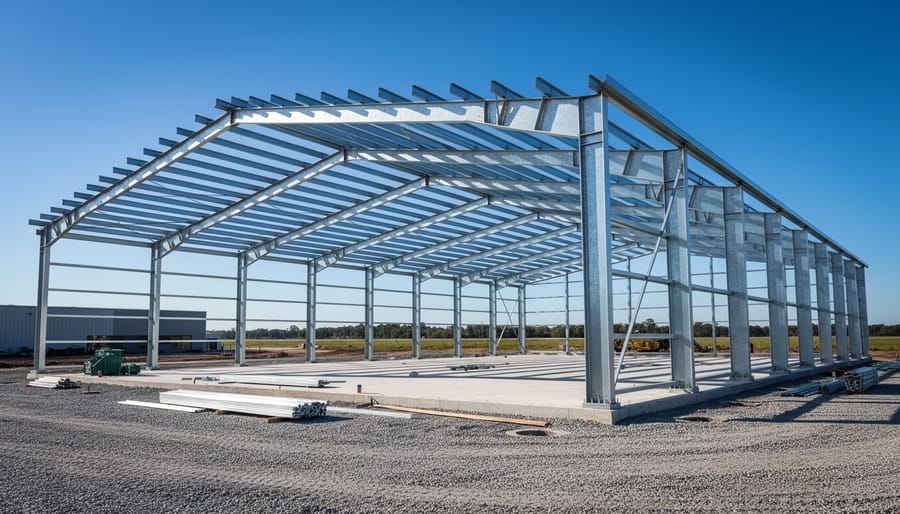
When it comes to standing up to nature’s fury, light gauge steel framing truly shines. Unlike wood that can warp, split, or rot over time, steel maintains its structural integrity year after year. This means your shed keeps its square shape and sturdy framework, even as seasons change and weather takes its toll.
Steel-framed sheds have proven themselves in extreme weather conditions time and again. Take the example of homeowners in the Midwest who’ve reported their steel-framed structures remaining perfectly intact after severe thunderstorms that damaged nearby wooden sheds. In areas prone to heavy snowfall, the superior load-bearing capacity of steel prevents the sagging or collapse that sometimes affects wood frames under substantial weight.
The secret lies in steel’s consistent strength-to-weight ratio. Every piece performs exactly as engineered, with no weak spots from knots or grain irregularities. This reliability gives you peace of mind knowing your storage investment can weather whatever Mother Nature brings. Whether facing high winds, heavy precipitation, or temperature swings, steel framing provides dependable protection for your belongings without the ongoing maintenance concerns that come with traditional materials.
Termites and Rot Don’t Stand a Chance
Here’s one of steel framing’s biggest wins: it’s completely immune to the problems that plague wood structures. Termites simply can’t eat steel, which means you’ll never face the costly damage and treatment expenses that wooden sheds often require. This alone can save homeowners thousands of dollars over the life of their structure.
Steel also won’t rot, warp, or absorb moisture like wood does. If you’ve ever dealt with a wooden shed that developed soft spots in the floor or walls after a few rainy seasons, you know how frustrating moisture damage can be. Steel framing stays structurally sound regardless of humidity levels or weather exposure.
Mold and mildew won’t take hold on steel surfaces either, creating a healthier environment inside your shed. This is especially valuable if you’re storing items sensitive to mold or using your structure as a workshop space. The result? Minimal maintenance requirements and a structure that looks and performs like new for decades, not just years.
Fire Resistance for Peace of Mind
One of steel’s standout features is its complete non-combustibility, giving you genuine peace of mind for your shed. Unlike wood framing that can ignite and fuel a fire, steel simply won’t burn. This makes it an excellent choice if you live in wildfire-prone areas where ember storms can threaten structures. Many homeowners have found steel framing particularly reassuring when storing flammable items like gasoline for lawn equipment, paint cans, or propane tanks. In these situations, steel framing acts as an extra safety barrier, reducing fire risk from both external threats and potential accidents inside your shed. While proper ventilation and storage practices remain essential, the fire-resistant nature of steel framing provides a foundation of protection that wood simply cannot match. For families prioritizing safety alongside functionality, this advantage often becomes a deciding factor in material selection.
Dimensional Consistency That Makes Building Easier
If you’ve ever sorted through a stack of lumber, you know the frustration of finding twisted, warped, or bowed boards. Here’s where steel framing really shines for DIYers: every single stud arrives perfectly straight and uniform. No more holding each board up to check if it’s usable, and no more waste from pieces that just won’t work.
This consistency makes your building process significantly smoother. Walls go up straighter with less fiddling and adjustment. When you’re framing windows or doors, the precise dimensions mean better alignment and easier installations. One homeowner building their first shed told us they spent half the time on framing compared to a previous wood project, simply because they weren’t constantly compensating for warped materials.
For those tackling their first steel framing project, this predictability offers real peace of mind. You can trust that the measurements you plan will match what you actually build, reducing the guesswork that often challenges beginners working with traditional lumber.
Lightweight Yet Strong
One of the standout benefits of light gauge steel framing is how it balances strength with portability. Steel studs typically weigh about one-third to one-half as much as comparable wood framing members, making them significantly easier to carry and maneuver on your job site. This is especially helpful if you’re tackling a DIY shed project in your backyard where navigating tight spaces matters.
Despite being lightweight, steel offers an impressive strength-to-weight ratio that wood simply can’t match. This means your shed frame can support substantial loads without requiring bulky, heavy materials. For homeowners, this translates to easier delivery and less physical strain during construction. You won’t need heavy equipment to move materials around, and installation becomes more manageable even for weekend builders.
The lightweight nature also reduces stress on your shed’s foundation, which can be a real problem-solver if you’re building on softer ground or want to minimize site preparation costs. Many DIY enthusiasts appreciate how this characteristic makes steel framing a practical choice for projects where ease of handling is just as important as structural integrity.
The Real Drawbacks You Should Consider
Higher Upfront Costs (But Is It Worth It?)
Let’s be honest: steel framing will likely cost you more upfront than traditional wood framing. You might see initial material costs running 15-30% higher, depending on your location and project size. That’s a real consideration for any budget-conscious homeowner.
But here’s where it gets interesting. Think of steel framing as an investment rather than just an expense. While you’re paying more today, you’re potentially saving on future repairs, pest treatments, and structural issues that often plague wood structures. Many homeowners who’ve made the switch report that the peace of mind alone justifies the difference.
Want to bridge the cost gap? Consider a mixed-gauge approach. Use heavier gauge steel for load-bearing walls and corners where strength matters most, then switch to lighter gauge material for non-structural sections. This smart strategy can trim 20-40% off your steel framing costs while maintaining structural integrity where it counts. It’s about being strategic with your investment, getting the durability benefits of steel without breaking the bank on every single stud.
Specialized Tools and Skills Required
Working with light gauge steel framing requires different tools than traditional wood construction, which is an important consideration if you’re planning a DIY shed project. You’ll need metal cutting tools like a circular saw with a metal-cutting blade or tin snips for precise cuts. Self-tapping metal screws or specialized fasteners replace your standard nails, and a screw gun becomes essential equipment.
Here’s the real consideration for homeowners: while the techniques aren’t overly complicated, there’s definitely a learning curve. If you’re comfortable tackling weekend projects and willing to watch a few tutorials, you can absolutely learn the basics. However, many DIY enthusiasts find that hiring a contractor experienced with steel framing for at least the initial framing stage makes sense, especially for larger structures. This ensures proper connections and structural integrity while potentially saving you time and frustration. Think of it as an investment in peace of mind—you’ll know your shed’s framework is solid from the start, which matters when you’re storing valuable equipment or creating a functional workspace.
Thermal Bridging Can Drive Up Energy Costs
Here’s a challenge you’ll want to understand before choosing steel framing for your climate-controlled shed: steel is an excellent conductor of heat and cold. Think of it like this – when you touch a metal pole in winter, it feels much colder than touching wood, right? The same principle applies to your shed’s framing.
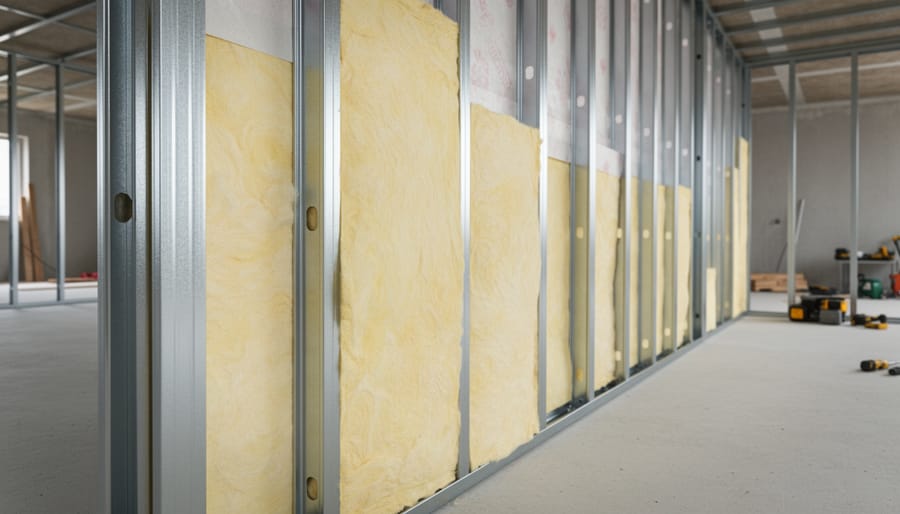
Steel studs can create what builders call thermal bridges – pathways that allow heat to escape in winter and sneak in during summer. This means your heating or cooling system has to work harder to maintain comfortable temperatures, driving up your energy bills month after month.
Sarah, a homeowner in Minnesota, learned this firsthand when her workshop shed felt drafty despite having wall insulation. The culprit? Heat was escaping through the unprotected steel framing itself.
The good news is this issue is completely manageable with proper insulation strategies. Continuous exterior insulation, thermal breaks, and spray foam techniques can dramatically reduce thermal bridging. If you’re planning a climate-controlled shed, factor these solutions into your budget from the start. The upfront investment pays off through lower energy costs and year-round comfort.
Limited Modification Flexibility Later
If you’re someone who loves customizing your space or anticipates future renovations, steel framing presents some challenges worth considering. Unlike wood, which you can easily cut with a handsaw or drill through with basic tools, steel requires specialized equipment like metal-cutting blades and high-quality drill bits. This means simple projects like adding new electrical outlets, running additional plumbing, or installing extra shelving become more complex and time-consuming.
Many DIY enthusiasts find that modifications they’d tackle themselves with wood framing now require calling in professionals with the right tools and expertise. Steel’s durability, which is normally a benefit, works against you here. One homeowner shared that adding a window to their steel-framed shed required renting a metal-cutting saw and purchasing expensive blades, turning a weekend project into a multi-day headache.
Before choosing steel, think honestly about your future plans. Will you want to expand your structure? Add windows or doors later? Reconfigure interior spaces? If flexibility matters to your long-term vision, this limitation deserves serious consideration in your decision-making process.
Mixed-Gauge Framing: The Smart Way to Balance Cost and Strength
Here’s a cost-saving strategy that many experienced builders swear by: you don’t need to use the same gauge steel throughout your entire shed frame. Mixed-gauge framing is simply the practice of using heavier, stronger steel where your structure needs it most, and lighter gauge material everywhere else. Think of it like building a house—you wouldn’t use the same lumber for decorative trim as you would for floor joists, right?
The beauty of this approach is that it lets you maintain structural integrity while keeping your budget in check. Heavier gauge steel costs more per linear foot, so using it strategically rather than everywhere can save you hundreds of dollars on a typical shed project without compromising safety or durability.
So where should you invest in heavier gauge steel? Start with your corner posts—these anchor your entire structure and bear significant loads. Most builders recommend 14-gauge or 12-gauge steel for corners on sheds larger than 10×12 feet. Load-bearing walls, especially those supporting roof trusses or heavy equipment storage, also deserve the stronger material. Door frames are another critical spot, since they’ll endure constant stress from opening, closing, and potential impacts.
For the rest of your frame—like interior non-load-bearing studs, wall girts between corners, and upper sections of walls—16-gauge or even 18-gauge steel works perfectly well. One DIY enthusiast from Colorado shared that he used 14-gauge for his corners and door openings but switched to 16-gauge for the remaining wall studs on his 12×16 workshop. “I saved about $300 on materials, and my building inspector had zero concerns,” he reported.
When planning your mixed-gauge approach, sketch out your shed design and mark the high-stress areas in one color and standard areas in another. This visual guide makes ordering materials straightforward and helps during construction so you don’t accidentally mix up your steel.
The key is understanding that not every component faces the same demands. By matching your steel gauge to actual structural requirements rather than using one-size-fits-all thinking, you’re building smarter, not cheaper. It’s problem-solving at its best—getting professional-grade strength exactly where you need it while being financially sensible everywhere else.
Is Light Gauge Steel Right for Your Shed Project?
Deciding whether light gauge steel framing is the right choice for your shed comes down to evaluating your unique situation honestly. Let’s walk through some key questions that’ll help you make the best decision.
First, consider your budget. Steel framing typically costs 15-30% more upfront than wood, but if you’re in a humid climate or near the coast, those long-term savings from avoiding rot and termite damage might balance things out within just a few years. One homeowner in coastal Florida told us their steel-framed shed looked brand new after five years, while their neighbor’s wooden shed needed significant repairs.
Location matters tremendously. Do you live in an area with high moisture, termites, or extreme weather? Steel shines in these conditions. However, if you’re in a mild, dry climate where wood naturally thrives, the premium for steel might not deliver enough value.
Think about your intended use too. Planning to store expensive equipment, use it as a workshop, or need climate control? Steel’s durability and superior insulation compatibility make it ideal. For simple garden tool storage, wood might serve you just fine.
Your DIY skill level plays a crucial role as well. Steel framing requires different tools and techniques than traditional carpentry. If you’re comfortable with basic construction but haven’t worked with metal, expect a learning curve. Some DIYers love the challenge, while others prefer sticking with familiar materials.
Finally, ask yourself about timeline and help availability. Steel components often arrive pre-cut and ready to assemble, potentially speeding up your project. Do you have access to someone experienced with steel framing, or are you going solo?
There’s no universal right answer, but honestly answering these questions will point you in the right direction.
Choosing the right framing for your storage shed or outdoor structure doesn’t have to be an all-or-nothing decision. As we’ve explored, light gauge steel framing brings impressive advantages like corrosion resistance, precision engineering, and lightweight handling, while heavier gauge steel offers unmatched strength for demanding applications. The beauty is that you don’t have to choose just one approach.
Mixed-gauge strategies give you the flexibility to optimize both performance and budget. By using heavier gauge steel where you need it most—like corner posts and load-bearing elements—and lighter gauge for less critical areas, you get durability where it counts without unnecessary expense. Many homeowners find this balanced approach solves their storage challenges perfectly.
The key is matching your choice to your specific needs. Consider your local climate, what you’ll be storing, and your long-term plans for the structure. An informed decision today means years of reliable service ahead.
Ready to explore your options? Storage Sheds Outlet offers a range of steel-framed storage solutions designed with these principles in mind, helping you find the perfect balance of strength, affordability, and lasting value for your property.
Looking for a storage sheds?
Browse our full range of storage sheds from authorized dealer brands. Free shipping to the continental US.