


Site-Built vs. Prefab Barns: Which Construction Method Actually Saves You Time and Money

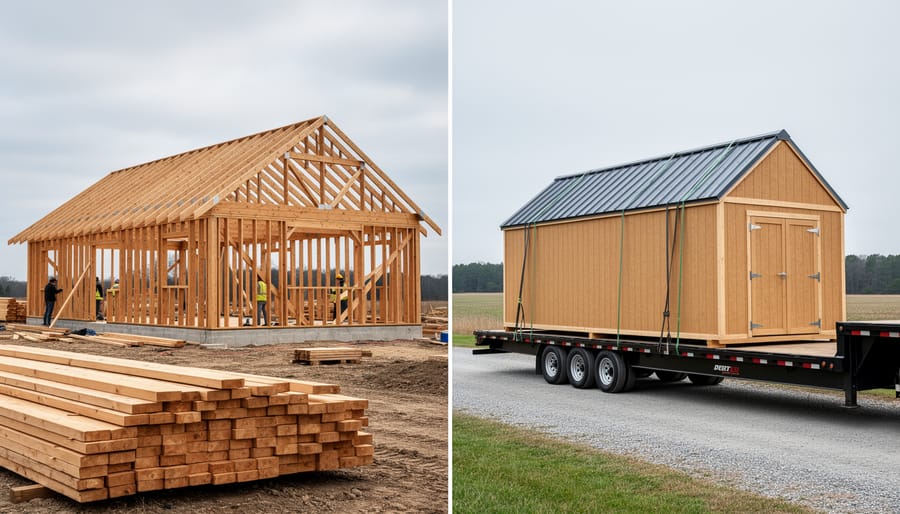
You need a barn. Maybe your mowers, ATVs, and tools have outgrown the corner of the carport. Maybe the old shed out back has finally seen its last winter. Either way, you’re standing at a fork in the road, and the signpost reads: build it on-site, or have it delivered prebuilt.
It’s a bigger decision than most people realize. The choice between site-built and prefab affects your timeline, your budget, and the kind of headaches you’ll deal with along the way. And the honest answer depends on more than just the sticker price.
Before we get into the details, it helps to know what separates the two approaches. Shed builders who specialize in prefab construction work in a controlled environment, assemble the structure off-site, and deliver it finished. Site-built barns, on the other hand, are framed and finished right where they’ll sit, usually by a general contractor or carpentry crew. Same end product on paper. Very different experience getting there.
Let’s break down what each method really costs you in time, money, and hassle.
What “Site-Built” Actually Involves
A site-built barn means your property becomes a job site. Materials get delivered to your land. A crew shows up, frames the floor, builds the walls, sets the roof, and finishes out the siding, trim, and doors over a stretch of days or weeks.
That sounds straightforward, but the hidden variables add up fast.
Weather is the big one. A week of rain can stall framing for days. Wet lumber sits under tarps. Crews get rescheduled. What was supposed to be a two-week project stretches into a month.
Then there’s the labor. Carpenters don’t work for free, and every day your site sits unfinished is a day you’re paying for in some form. Either in extended labor costs, in material exposure, or in the simple frustration of living next to a half-finished building.
You also become a project manager whether you wanted to or not. Someone has to coordinate deliveries, handle permit runs, and make sure the site is prepped. If you’re hiring a general contractor, that coordination is baked into their fee. If you’re doing it yourself, it’s your evenings and weekends gone.
What “Prefab” Actually Involves
Prefab barns flip the script. The structure is built in a dedicated facility, loaded onto a trailer, hauled to your property, and set in place, often in a single afternoon.
The advantages start with consistency. Inside a shop, the weather doesn’t matter. Lumber stays dry. Tools stay organized. Crews work from the same jigs and setups day after day, which tends to produce tighter, more predictable construction.
Delivery day is where the time savings really show. A finished barn rolls onto your lot, gets maneuvered into position, and is set down on your prepared site. You’re not watching a frame go up over three weeks. You’re watching a completed building arrive in a few hours.
There’s a tradeoff, of course. Prefab barns have to be small enough to move down a road. That means width is limited by trailer and transport rules, usually around 14 feet wide without a special permit. If you want a 30-foot-wide clear-span building, prefab isn’t your answer. You’d be looking at site-built or a modular multi-section build.
For most residential and rural storage needs, though, prefab sizes cover the range. Popular configurations like 10×20, 12×32, and lofted barns hit the sweet spot for everything from riding mowers to feed storage to seasonal equipment.
The Real Cost Comparison
Here’s where people get tripped up. They look at the square-foot price of a site-built barn and compare it to the square-foot price of a prefab barn, then pick the lower number. That’s only part of the picture.
With site-built, you’re paying for:
- Labor at hourly or project rates
- Material delivery fees
- Permit costs and inspection scheduling
- Site prep, including grading and foundation work
- Your own time managing the project
- Potential weather delays and the labor that goes with them
With prefab, you’re paying for:
- The finished building, delivered
- Delivery and set-up (which some builders include at no charge within a certain radius)
- Site prep, which you still handle, but only once
- Permit fees, if your area requires them
The prefab model consolidates costs. You’re buying a product, not a process. That tends to make budgeting easier because the number you’re quoted is closer to the number you actually pay.
Site-built can come in cheaper on paper if you’re sourcing your own materials, doing some of the work yourself, and the weather cooperates. But that’s a lot of ifs. For buyers who aren’t interested in playing contractor, prefab usually wins on total cost of ownership when you factor in time and hassle.
Time: The Factor Most People Underestimate
Time is the quiet budget killer in construction. Every week a project runs is a week you’re storing equipment somewhere else, working around a job site, or paying for a temporary solution.
A site-built barn can take anywhere from two to six weeks from start to finish, depending on crew availability, weather, inspections, and material lead times. That’s not a knock on site-built. It’s just the nature of building from scratch in an uncontrolled environment.
A prefab barn, once ordered, typically arrives in a few weeks. The build time happens off your radar. What you experience is the delivery, which is measured in hours, not weeks.
If you’re storing expensive equipment under a tarp because your old shed collapsed in March, that difference matters. Every week of delay is another week of exposure, another week of risk.
Quality: It’s Not as Simple as You’d Think
There’s a lingering assumption that prefab means flimsy. That’s outdated thinking, and it’s worth pushing back on.
Modern prefab barns are built to the same engineering standards as site-built structures. Many meet IBC standards as Minor Storage Facilities. They use pressure-treated floor joists, galvanized nails, hurricane straps, and engineered truss connectors. The same components you’d find in a site-built barn, assembled in a setting that allows for more consistency.
Site-built has its own quality advantages. You can customize on the fly. You can adjust for unusual terrain. You can build to dimensions that transport rules won’t allow for prefab. If you need a 40-foot run with a specific interior layout, site-built gives you that flexibility.
But flexibility cuts both ways. The more you customize on site, the more chances there are for cost overruns, delays, and quality slips. A tired crew on day nine doesn’t build the same as a fresh crew on day one. In a shop setting, the work happens under steadier conditions.
When Site-Built Makes Sense
Site-built isn’t the wrong choice. It’s the right choice for specific situations.
If you need a building wider than transport limits allow, site-built is your path. If you’re building on a slope that can’t accommodate a delivered structure, site-built lets you adapt. If you want a fully custom interior with permanent partitions, plumbing, or electrical, site-built gives you that freedom.
Site-built also makes sense if you have the time, the skills, and the inclination to manage the project yourself. For people who enjoy the build process and have the bandwidth, it can be rewarding and cost-effective.
When Prefab Makes Sense
Prefab is the better fit for most standard storage needs. If you’re looking for a durable building to house mowers, tools, feed, ATVs, or seasonal equipment, and you don’t need to go wider than transport allows, prefab delivers the same end result with less of your time invested.
It’s also the stronger fit for buyers who want a clear price up front, a predictable delivery window, and a finished product without managing a construction project. For rural property owners, homesteaders, and anyone who values their weekends, that combination is hard to beat.
A Note on Site Prep
Neither method skips site prep. Whether you build on-site or have a barn delivered, you need a level spot. That might mean grading, adding gravel, or building a pad. Some buyers do this themselves. Others hire it out. Either way, factor it into your plan.
The difference is that with prefab, site prep is the only on-site work you’ll do. With site-built, it’s the first of many steps.
The Bottom Line
The choice between site-built and prefab comes down to what you’re really buying. Site-built buys you flexibility and customization at the cost of time, coordination, and uncertainty. Prefab buys you speed, predictability, and a finished product with less of your involvement.
For most people who need a storage barn, the math favors prefab. You get a durable, engineered structure delivered to your property without turning your land into a job site for a month. You know what it costs before it arrives. You know when it’s coming. And you get your weekends back.
If you’re leaning toward prefab, look for builders who back their work with a real warranty, use pressure-treated materials throughout, and include delivery and set-up so you’re not surprised by add-on fees. The right builder makes the process simple from the first call to the day the barn rolls onto your property.