


Why Your Perfect Shed Spot Might Be Against the Law (And How to Find the Right One)

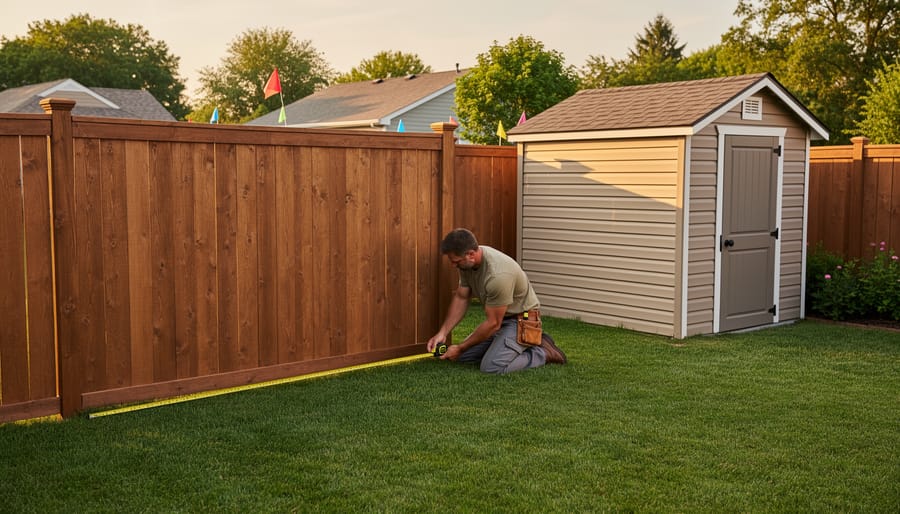
Picture this: You’ve just ordered your dream shed, only to receive a citation from your local municipality because it sits three feet too close to your property line. This scenario plays out more often than you’d think, and it’s entirely preventable when you understand setback requirements.
Setbacks are the mandatory distances your shed must maintain from property boundaries, and they exist for important reasons—fire safety, utility access, neighbor relations, and community aesthetics. Most homeowners don’t realize that even a small storage shed typically requires specific placement guidelines, and ignoring these rules can result in fines, forced relocation, or even complete removal of your structure.
The good news? Navigating setback requirements doesn’t have to be complicated. Local zoning ordinances determine these distances, and they vary significantly from one municipality to another. Some areas require just a few feet of clearance, while others mandate ten feet or more. The size of your shed, its intended use, and whether it includes electrical or plumbing also influence where you can legally place it.
Before you break ground or lay that foundation, investing thirty minutes to understand your specific requirements will save you thousands of dollars in potential corrections. This guide walks you through everything you need to know—from finding your local regulations to measuring accurately and securing necessary permits. Let’s ensure your shed project starts on solid legal ground.
What Exactly Are Setbacks and Why Do They Exist?
If you’re planning to add a shed to your backyard, you’ll quickly encounter the term “setback” in your research. Don’t worry—it’s simpler than it sounds! A setback is just the minimum distance required between your shed and your property lines. Think of it as an invisible boundary that keeps your structure a safe distance from where your property ends and your neighbor’s begins.
These requirements aren’t just bureaucratic red tape. They serve several practical purposes that protect both you and your community. Fire safety is a big one—setbacks help prevent flames from spreading between properties during a fire emergency. They also maintain good neighbor relations by ensuring your shed doesn’t loom right over the fence line, blocking someone’s view or sunlight. Utility access matters too, as workers need space to reach underground lines, water mains, and electrical equipment without trespassing or damaging structures. And yes, setbacks even help preserve property values by maintaining a sense of openness and preventing overcrowded lots.
Most municipalities distinguish between three types of setbacks. Front setbacks measure the distance from the street-facing property line to your shed. These are typically the largest, often 20-30 feet, to maintain curb appeal and sightlines. Side setbacks run along the left and right boundaries of your property, commonly requiring 5-10 feet of clearance. Rear setbacks apply to the back property line, where your backyard meets what’s behind you, usually requiring 5-15 feet.
Here’s a simple example: If your side setback is 5 feet and you place your shed exactly on the property line, you’re in violation. Move it 5 feet inward from that line, and you’re compliant. Easy enough, right? Understanding these basics now can save you from headaches later, including potential fines or even having to relocate or remove your shed entirely.
Understanding Easements and How They Affect Your Shed Placement
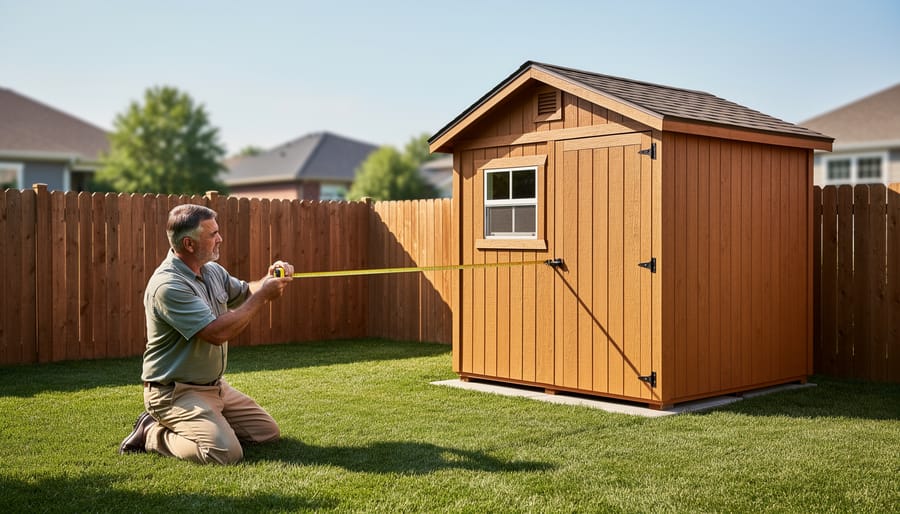
Before you finalize your shed placement, there’s another important property consideration beyond setbacks: easements. An easement is a legal right that allows someone else—typically utility companies, municipalities, or neighbors—to access or use a specific portion of your property for a designated purpose. Even though you own the land, easements can significantly restrict where you can build permanent structures like sheds.
The most common type is a utility easement, which gives power, gas, water, or telecommunications companies the right to install, maintain, and repair their infrastructure on your property. If your shed sits on a utility easement and the company needs access to underground lines, you’ll be responsible for moving it at your own expense. Drainage easements are equally important—these allow water to flow across your property or give municipalities access to maintain drainage systems. Building on these areas can cause flooding issues and violate local codes. Access easements provide passage to landlocked properties or shared driveways, and blocking these can create legal headaches with neighbors or other property owners.
Sarah from Oregon learned this lesson the hard way. She carefully measured her property setbacks and built a beautiful 10×12 shed in her backyard, only to receive a notice from the city three months later. Her shed sat directly on a drainage easement that she hadn’t checked. The relocation cost her over $800 in moving expenses and contractor fees—money she could have saved with a simple easement review beforehand.
You can find easement information on your property deed, survey documents, or by requesting records from your local planning department. Taking this extra step during your planning phase protects your investment and prevents costly surprises down the road.
Standard Setback Requirements for Sheds, Carports, and Gazebos
Typical Setback Distances for Garden Sheds
Most municipalities require garden sheds to sit 3-5 feet away from side and rear property lines, though these distances can vary significantly depending on your location. Front yard setbacks are typically more restrictive, often requiring 10-25 feet from the street to maintain neighborhood aesthetics and sight lines.
Here’s the good news: smaller sheds often benefit from relaxed requirements. Many jurisdictions treat structures under 100-120 square feet as minor accessory buildings, sometimes allowing them to be placed closer to property lines or even directly against them in certain cases. One homeowner shared how her 8×10 shed qualified for reduced setbacks, letting her maximize usable yard space while staying compliant.
Shed height can also influence setback distances. Taller structures may need to sit further from property lines to prevent overshadowing neighboring properties or creating privacy concerns. Some areas use a sliding scale where larger or taller sheds require proportionally greater setbacks.
Remember that corner lots often face stricter rules since they have two street-facing sides. Before finalizing your shed placement, check if your property has any easements for utilities, as these create additional no-build zones that function similarly to setbacks but serve different purposes.
Carport Setback Considerations
If you’re considering a carport instead of a shed, it’s important to know that municipalities typically apply stricter setback requirements to these structures. Why? Carports are generally larger, more visible, and have a greater potential impact on your neighbors’ views and property enjoyment.
While a small garden shed might slide by with a five-foot setback from your side property line, carports often require ten to fifteen feet or more. The reasoning is straightforward: a carport tall enough to accommodate vehicles creates more shade, visual obstruction, and perceived encroachment than a compact storage shed.
Front yard setbacks deserve special attention with carports. Since they’re frequently positioned where they’re visible from the street, many zoning codes require carports to align with your home’s front setback or sit even farther back. Some neighborhoods prohibit front-yard carports entirely to maintain curb appeal.
Here’s a real-world example: Sarah from Oregon planned to build a carport along her side yard, assuming the same setbacks as her tool shed. A quick call to her local planning department revealed she needed an additional eight feet of clearance—saving her from an expensive repositioning project. Before investing in materials, always verify carport-specific regulations with your local zoning office, as assumptions can lead to costly corrections.
Special Rules for Gazebos and Pergolas
Here’s some good news if you’re considering a gazebo or pergola instead of a traditional shed: many municipalities treat open-air structures more leniently than fully enclosed buildings. Because these decorative structures typically lack walls and roofs, or have only partial coverage, local codes often classify them differently.
The key distinction usually comes down to whether your structure is permanently anchored to the ground. A gazebo bolted to a concrete foundation will likely face the same setback requirements as any permanent building. However, a freestanding pergola that simply rests on the ground might be considered a temporary installation with more relaxed placement rules.
Sarah, a homeowner from Oregon, learned this firsthand when planning her backyard retreat. “I wanted to put a pergola near my property line for afternoon shade,” she explains. “My neighbor’s solid shed needed a 5-foot setback, but my open pergola only required 3 feet because it had no roof coverage and wasn’t permanently attached.”
Before you start building, check whether your structure requires a building permit. Some jurisdictions exempt structures under a certain square footage or those without foundations from strict setback rules. Others still apply standard setbacks regardless of the structure’s openness. Your local planning department can clarify how your specific design will be classified, potentially saving you from repositioning your beautiful new outdoor feature later.
How to Find Your Property’s Specific Setback Requirements
Start with Your Local Zoning Office
Your local zoning office is your first and best resource for accurate setback information. Start by visiting your municipal planning department’s website or giving them a call directly. Most homeowners find the staff incredibly helpful once they know what to ask for.
Before you reach out, gather some key details to make the conversation efficient. Have your property address handy, along with your parcel number if you know it. You can usually find this on your property tax statement or deed. If you don’t have it, don’t worry—the zoning office can look it up with just your address.
When you contact them, request specific documents that spell out your requirements. Ask for a copy of the zoning map showing your property’s zone designation, and request the actual zoning ordinance text for that zone. These documents will clearly outline setback requirements for accessory structures like sheds.
Many municipalities now offer downloadable versions of these documents online, which can save you a trip. However, if you’re uncertain about interpreting the information, an in-person visit often works best. Staff members can walk you through the regulations and even mark up a site map showing exactly where you can place your shed. This small time investment upfront can save you from expensive mistakes down the road and give you complete confidence in your shed placement plans.
Check Your Property Survey and Title Documents
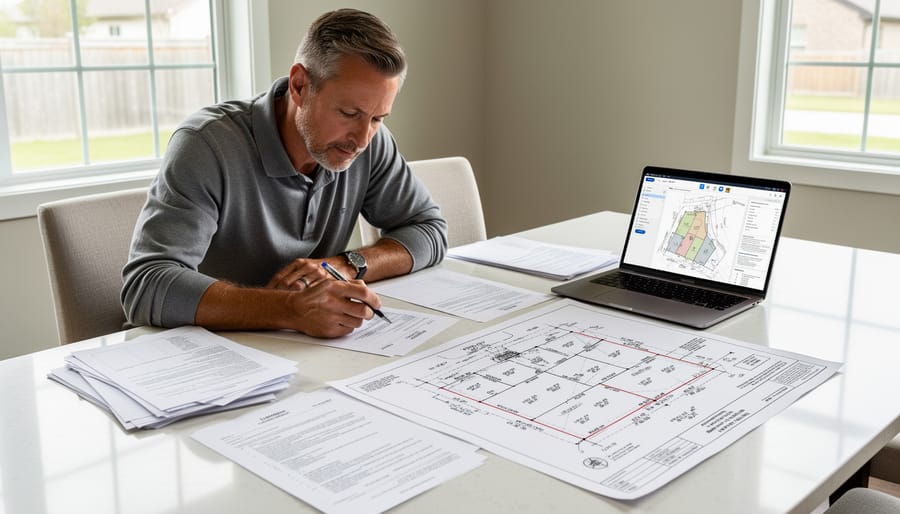
Before you grab your measuring tape, take time to review your property survey and title documents—these are your roadmap to understanding where you can legally place your shed. Your property survey shows exact boundary lines, dimensions, and any recorded easements that might restrict building locations.
Start by checking the paperwork you received when you purchased your home. Look for a plot plan or survey drawing that shows your property boundaries marked with pins, stakes, or other physical markers. These boundary markers are crucial reference points when measuring setbacks later.
Pay special attention to any easements noted on your documents. Easements are designated areas where utility companies, neighbors, or municipalities have legal access rights. You cannot build a shed in these zones, even if they’re technically on your property. Common easements include underground utility lines, drainage areas, and access paths.
If you can’t locate your survey or if your property has changed significantly since purchase (like a fence installation or landscaping project), consider requesting an updated survey from a licensed surveyor. While this involves an upfront cost of a few hundred dollars, it’s a smart investment that prevents expensive mistakes down the road. One homeowner shared how spending $350 on an updated survey saved him from building his shed partially on a drainage easement—a mistake that would have cost thousands to correct.
Online Resources and Tools
Finding your local setback requirements has never been easier, thanks to modern technology. Many municipalities now provide digital access to zoning information and property records through online portals, saving you a trip to city hall. Start by searching your city or county name plus “GIS mapping” or “property viewer” to access interactive maps that often display property lines, setback requirements, and existing structures right on your screen. These Geographic Information System (GIS) tools let you zoom into your exact property and see the required distances from your boundaries.
Most local government websites also feature dedicated zoning portals where you can search by address to find applicable regulations, setback measurements, and permit requirements specific to your lot. Some even offer downloadable property reports showing everything you need to know before placing your shed. If you’re having trouble navigating these resources, don’t hesitate to call your local planning department—they’re there to help homeowners like you succeed with projects while staying compliant with local codes.
What Happens When Setback Rules Vary (And They Often Do)
Here’s where things get interesting—and sometimes a bit tricky. Setback requirements aren’t one-size-fits-all, and you’ll often find variations that might seem confusing at first.
Location makes a big difference. Urban properties typically face stricter setback rules than suburban ones, while rural areas often enjoy more relaxed regulations. A homeowner in a densely populated city neighborhood might need to keep their shed 10 feet from property lines, while someone with acreage in the countryside could have requirements as minimal as 3 feet. The reasoning is simple: tighter quarters mean greater concern about fire safety, property values, and neighbor relations.
Then there’s the HOA factor. If you live in a community with a homeowners association, you’re dealing with two sets of rules. Your municipality might say 5 feet is fine, but your HOA could require 15 feet—or even dictate specific shed styles, colors, and sizes. Always check both. When requirements conflict, the stricter rule wins. One homeowner I spoke with discovered this the hard way after building a perfectly code-compliant shed, only to receive a violation notice from their HOA demanding relocation.
Grandfather clauses can work in your favor if you’re working with an existing shed. Many jurisdictions allow structures built before current regulations to remain in place, even if they wouldn’t meet today’s standards. However, this protection often disappears if you make substantial modifications or try to replace the structure entirely.
When facing conflicting requirements, document everything. Get written confirmation from your building department about what takes precedence. A quick phone call now can save you from expensive corrections later, keeping your project on track and your budget intact.
Simple Steps to Measure and Mark Your Setback Boundaries
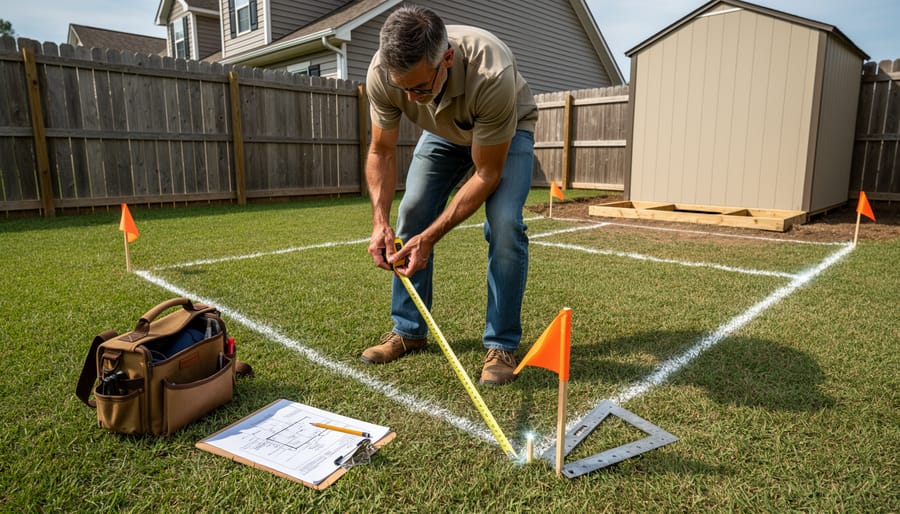
Once you know your property’s setback requirements, it’s time to translate those measurements into clear boundaries on your actual lot. The good news? You don’t need expensive equipment—just a few basic tools and about 30 minutes of your time.
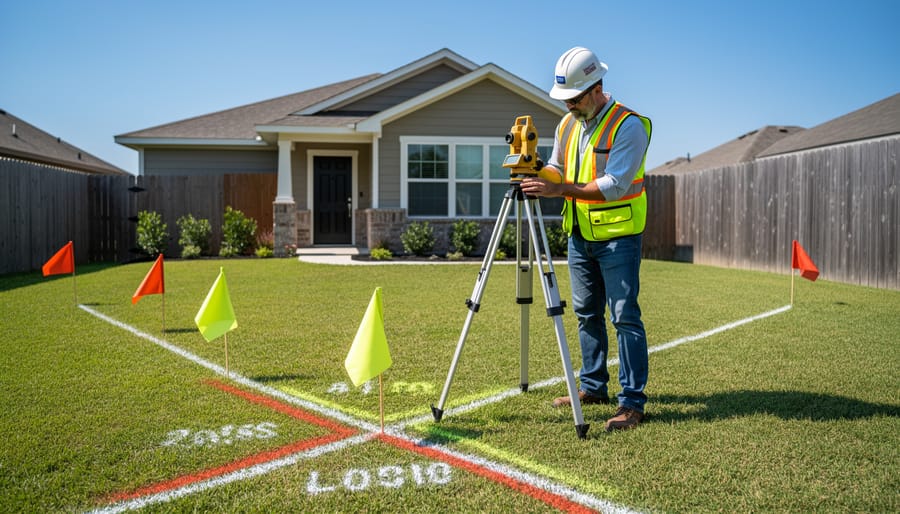
Start by gathering a measuring tape (at least 100 feet works best), wooden or plastic stakes, bright-colored string or twine, and spray paint designed for marking grass. Begin at one corner of your property line. If you’re unsure exactly where your property line sits, check your survey plat or contact a surveyor—this step is crucial since all setback measurements start from the actual boundary, not where you think it might be.
Measure inward from your property line according to your required setback distance. For example, if you need a 5-foot side setback, measure exactly 5 feet from the property line and drive a stake into the ground. Repeat this process at multiple points along each property line to create your setback boundary.
Connect the stakes with brightly colored string to visualize your “buildable zone.” This creates a clear perimeter showing exactly where your shed can legally go. For an even clearer picture, use spray paint to mark the actual footprint of your planned shed within this zone, accounting for its specific dimensions.
Take photos from different angles and walk around inside your marked area. Does it feel right? Will you have comfortable access? One homeowner shared, “Marking everything out first helped me realize my original spot would block our garden view—we adjusted before buying and couldn’t be happier.”
This simple visualization prevents costly mistakes and gives you confidence moving forward.
When You Can Request a Variance or Exception
Sometimes, despite your best efforts, meeting setback requirements just isn’t possible. Maybe your lot is unusually narrow, or perhaps there’s a unique landscape feature that limits your options. This is when requesting a variance or exception might be your best path forward.
A variance is essentially official permission to deviate from standard zoning rules. However, it’s important to understand that variances aren’t granted simply because following the rules is inconvenient. Most jurisdictions require you to demonstrate genuine hardship. Valid grounds typically include situations where strict compliance would make reasonable use of your property impossible, or where unusual lot characteristics create practical difficulties that neighbors don’t face.
For example, if your property has a steep slope on one side and wetlands on another, leaving only one buildable area that’s slightly too close to a property line, that could constitute valid hardship. Simply wanting your shed in a more convenient location usually won’t qualify.
The variance application process generally involves submitting detailed plans, paying application fees (typically ranging from $200 to $1,000 depending on your location), and attending a public hearing before your local zoning board. Your neighbors will likely be notified and may have the opportunity to voice concerns. This is why maintaining good relationships with those living nearby can be helpful—their support or opposition can influence the decision.
Expect the process to take anywhere from four to twelve weeks, though timelines vary widely by jurisdiction. Be realistic about your chances: approval isn’t guaranteed, and some communities have strict policies against granting variances. Before investing time and money in the application, consider consulting with your zoning office to gauge whether your situation might qualify.
The Real Cost of Getting It Wrong
Nobody wants to think about what could go wrong, but understanding the real consequences of ignoring setback requirements can save you significant headaches and expense down the road.
First, let’s talk money. Municipal fines for setback violations can range from a few hundred to several thousand dollars, depending on your location. But that’s just the beginning. Many homeowners have been forced to relocate or completely remove sheds that violate setback rules—an expensive prospect when you consider the cost of professional movers, potential structural modifications, or purchasing an entirely new foundation.
Take Mark from Ohio, who shared his experience: “I built what I thought was the perfect shed in my backyard corner, only to discover during a routine property inspection that I was 18 inches too close to my property line. The city gave me 30 days to move it or face daily fines. Moving it cost me nearly as much as the original installation, plus I had to redo all my landscaping around it. I wish I’d spent the extra hour researching setbacks before I started.”
Insurance complications add another layer of concern. Some homeowner policies won’t cover structures that violate local codes, leaving you vulnerable if damage occurs. Additionally, setback violations can derail property sales, as they often surface during title searches or home inspections, potentially scaring off buyers or reducing your home’s value.
The good news? Every one of these problems is completely preventable with proper planning and a quick call to your local building department before you break ground.
Understanding setback requirements might feel overwhelming at first, but here’s the good news: investing a little time upfront to get these details right saves you from major headaches down the road. Think of setback compliance not as red tape, but as protection for your investment and your relationship with neighbors.
Once you’ve measured your property, checked local regulations, and found the perfect spot for your shed, you can move forward with confidence. No worrying about enforcement officers knocking on your door, no costly relocations, and no disputes that could sour neighborhood relationships.
Many homeowners who took the time to verify their setback requirements before installation share how relieved they felt knowing everything was above board. One DIY enthusiast put it perfectly: “Spending an afternoon at the planning office meant I could enjoy my new shed without looking over my shoulder.”
Your shed represents an investment in your home’s functionality and value. By respecting setback rules, you’re ensuring that investment pays off for years to come. Soon enough, you’ll be enjoying your beautifully organized outdoor space with complete peace of mind, knowing you did things the right way from the start.