


How Wind-Resistant Does Your Pergola Really Need to Be?

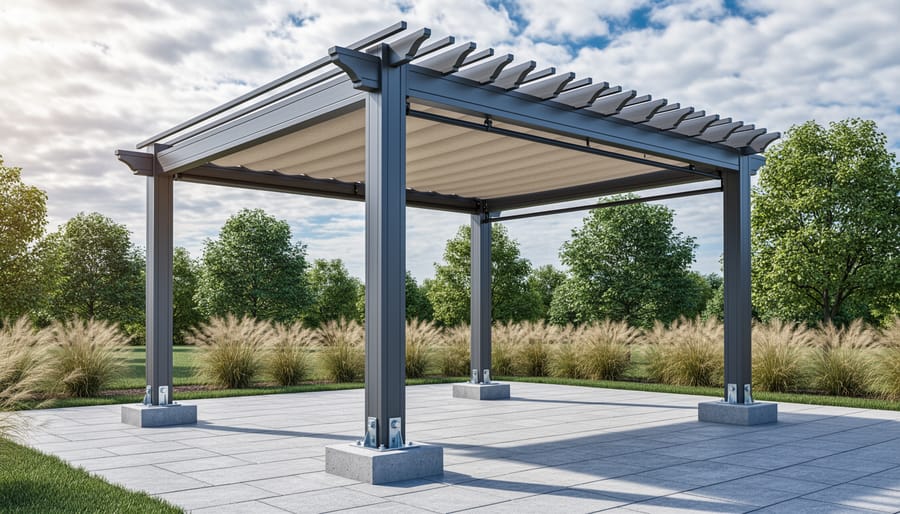
Check your pergola’s wind rating before purchasing—most quality structures should withstand winds of 60-100 mph, with ratings clearly marked in the product specifications. If the manufacturer doesn’t provide this information upfront, that’s a red flag about the structure’s durability.
Anchor your pergola with ground stakes or concrete footings that penetrate at least 24 inches deep, especially if you live in areas prone to storms or gusty conditions. Many homeowners who’ve lost their pergolas to wind later discovered the factory-provided anchors were insufficient for their local climate.
Choose aluminum or steel frames over wood when wind resistance is your priority—metal structures flex without breaking and return to their original shape, while wooden posts can crack or split under sustained wind pressure. Sarah from Colorado shared that her aluminum pergola survived 80 mph winds that damaged her neighbor’s wooden structure.
Install retractable or removable canopy options rather than fixed fabric roofs, giving you control during severe weather warnings. Similar to choosing the right gazebo designs for your space, pergola wind resistance depends on matching the structure to your environment.
Verify the total snow load capacity if you experience winter weather—structures rated for higher snow loads typically feature reinforced frames that also handle wind better. A pergola rated for 30 pounds per square foot of snow load will have the structural integrity to resist significant wind forces year-round, protecting your investment and ensuring your outdoor space remains safe and functional.
Understanding Wind Resistance Ratings for Pergolas
What the Numbers Actually Mean
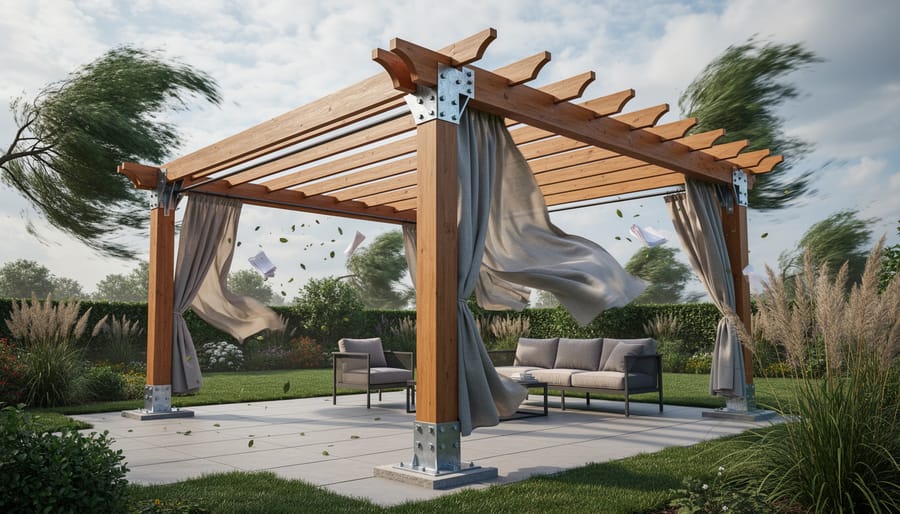
When you see a pergola rated for “60 mph winds” or “90 mph winds,” what does that really mean for your backyard? Let’s translate those numbers into real-world weather you’ve probably experienced.
Wind speeds around 25-35 mph represent a typical breezy day where small branches sway and you notice resistance when walking. Most basic pergolas should handle this without issue. At 40-50 mph, you’re looking at strong winds that bend trees and make walking difficult—this is where quality construction starts to matter. Many mid-range pergolas are tested to withstand these conditions.
Once you reach 60-70 mph, you’re in severe thunderstorm territory. Trees can lose large branches, and lightweight outdoor furniture becomes airborne. A pergola rated for these speeds offers solid protection for most homeowners in areas with occasional storms.
At 90 mph and above, you’re dealing with hurricane-force winds or tornado conditions. Pergolas rated this high are engineered for coastal regions or areas prone to severe weather events. These structures typically feature reinforced anchoring systems and heavier-gauge materials.
Here’s the practical takeaway: if you live somewhere with occasional strong storms, look for ratings between 60-80 mph. Coastal homeowners or those in hurricane zones should aim for 90+ mph ratings. Consider your area’s typical weather patterns over the past decade—including that one memorable storm—and choose a rating that exceeds your worst-case scenario by at least 10-20 mph for peace of mind.
Industry Standards vs. Real-World Performance
When manufacturers advertise wind resistance ratings, they’re typically based on controlled laboratory testing that doesn’t always reflect what happens in your backyard. A pergola rated for 70 mph winds, for example, was likely tested as a standalone structure on level ground, without accounting for real-world factors like nearby trees, buildings, or uneven terrain that can create unpredictable wind patterns.
Here’s the reality check: testing conditions assume proper installation on a solid foundation with all fasteners correctly secured. Many homeowners discover their pergola’s actual performance falls short simply because installation wasn’t quite perfect or the anchoring system wasn’t suitable for their soil type.
One homeowner in Florida shared how their “hurricane-rated” pergola held up beautifully during a tropical storm, but only because they’d gone beyond the basic installation instructions and added extra ground anchors. The manufacturer’s rating gave them a baseline, but understanding their specific exposure level made the real difference.
The lesson? Use manufacturer ratings as a starting point, not a guarantee. Consider your property’s unique characteristics, potential installation variables, and local weather patterns when evaluating whether a pergola will truly perform as advertised in your specific situation.
The Three Factors That Make Pergolas Wind-Resistant
Material Matters: Metal vs. Wood vs. Vinyl
Choosing the right material for your pergola can make all the difference when those gusty days arrive. Let’s break down how each option performs when the wind picks up.
Metal pergolas, particularly those made from aluminum or powder-coated steel, typically offer the best wind resistance among outdoor structures. Their strength-to-weight ratio is impressive, and proper anchoring can help them withstand winds up to 100 mph. The downside? They can be pricier upfront and may feel less traditional aesthetically. One homeowner in coastal Florida shared that her aluminum pergola survived Hurricane Ian with only minor adjustments needed to the fabric canopy.
Wood pergolas bring classic beauty and can be surprisingly sturdy when constructed from pressure-treated lumber or cedar with proper bracing. They generally handle moderate winds well, though they require more maintenance over time. The key is using thicker posts (at least 6×6 inches) and secure ground anchoring. Real-world feedback suggests wood pergolas perform best in areas with occasional strong winds rather than consistent coastal gusts.
Vinyl pergolas offer low maintenance appeal but tend to be the most vulnerable in high-wind situations. While quality vinyl can handle everyday breezes, strong storms may cause cracking or warping. They work wonderfully in sheltered backyards or regions with milder weather patterns. The trade-off is clear: minimal upkeep versus reduced wind tolerance compared to metal or wood alternatives.
Design Features That Fight the Wind
The secret to a wind-resistant pergola lies in smart structural choices that work with nature, not against it. Think of it like this: a pergola that catches the wind like a sail will struggle, but one designed to let wind flow through stays firmly planted.
Post thickness makes a real difference. Most homeowners find that 6×6 inch posts provide excellent stability for standard pergolas, while larger structures benefit from even beefier supports. The connection points between beams and posts are equally critical—metal brackets and through-bolts create stronger joints than simple wood screws alone.
Here’s where design gets interesting: open-slat roofs actually outperform solid ones in windy conditions. The gaps between slats allow wind to pass through rather than creating lift that could stress the entire structure. Louvered roofs offer a clever middle ground, giving you adjustable coverage while maintaining that wind-friendly flow-through design.
One homeowner in coastal Florida shared that switching from a solid canopy to an open-slat design eliminated the swaying issues she’d experienced during summer storms. The pergola stood strong through several tropical systems.
The spacing between your roof slats matters too. Wider gaps mean better wind flow, though you’ll sacrifice some shade. Most wind-resistant designs strike a balance with 2-4 inch spacing between slats.
The Foundation That Holds Everything Together
Even the strongest pergola is only as secure as what’s holding it down. Think of your foundation as the invisible hero of wind resistance—it’s doing the heavy lifting when gusts push against your structure.
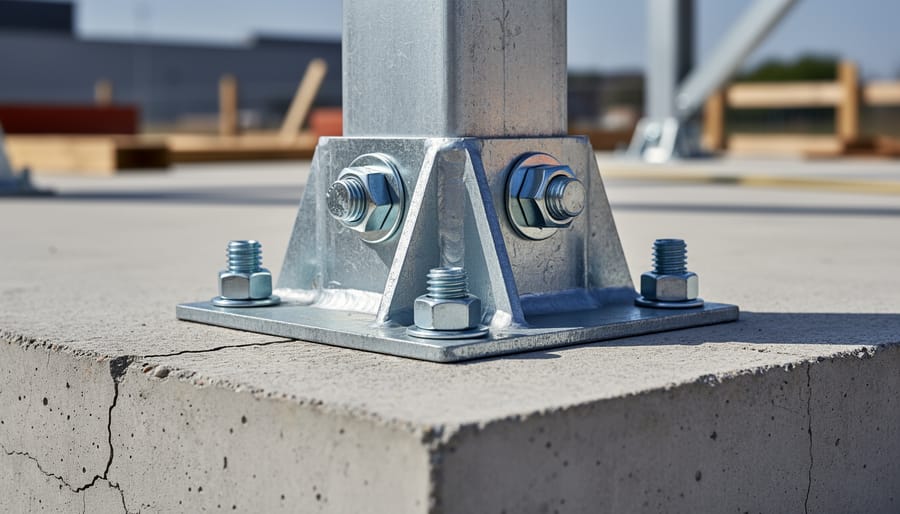
For most backyard installations, you have several anchoring options. Concrete footings are the gold standard, extending below the frost line to prevent shifting. Post anchors bolted into concrete slabs work well for existing patios, while ground anchors or auger-style systems offer decent stability in softer soil conditions.
Here’s what many homeowners don’t realize: improper installation is the leading cause of wind damage, not faulty design. A pergola rated for 100 mph winds will fail at 40 mph if the posts aren’t properly secured. Professional installation ensures anchors are sized correctly, posts are plumb, and everything meets local building codes. If you’re going the DIY route, don’t skip the permit process—inspectors often catch installation issues that could save your structure during the next big storm.
Snow and Combined Weather Loads: Why Wind Isn’t the Only Story
When Snow Meets Wind: The Compound Effect
Here’s something many homeowners don’t realize until it’s too late: wind and snow together create a challenge that’s far greater than either one alone. Think of it this way – a pergola might handle 70 mph winds on a clear day just fine, but add heavy wet snow to those same winds, and you’re looking at a completely different situation.
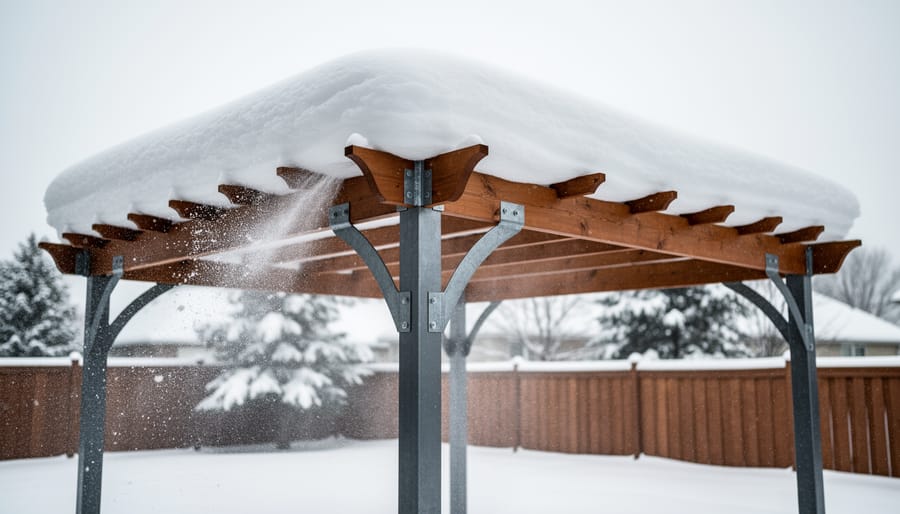
When wind meets snow, your pergola faces what engineers call compound loading. The snow adds substantial weight from above while wind pushes horizontally against the structure. This dual stress can overwhelm even well-built pergolas that would otherwise survive each condition separately. Wet snow is particularly troublesome because it clings to surfaces, creating larger wind-catching profiles and adding pounds that quickly multiply across your pergola’s span.
Regional considerations matter tremendously here. If you live in areas like the Northeast, Pacific Northwest, or upper Midwest where winter storms bring both elements simultaneously, choosing a pergola rated for these combined conditions isn’t optional – it’s essential. Look for manufacturers who specifically address compound weather loading in their specifications, not just individual wind or snow ratings. Your investment deserves protection against the real-world weather patterns in your area, not just ideal testing conditions.
Weight Ratings You Should Know
While wind ratings tell part of the story, weight capacity matters just as much for year-round pergola durability. Snow load ratings indicate how much weight from accumulated snow your pergola can safely support, measured in pounds per square foot.
If you live in northern climates or areas with heavy snowfall, look for pergolas rated for at least 30-40 pounds per square foot. For example, a homeowner in Michigan shared that their pergola survived a particularly brutal winter because they’d chosen a model rated for 50 pounds per square foot—well above their region’s typical snowfall.
Southern and coastal homeowners can typically opt for lower ratings, around 15-20 pounds per square foot, since snow isn’t a primary concern. However, don’t ignore this specification entirely. Even in warmer climates, unexpected weather events happen, and a sturdy pergola provides peace of mind.
The good news? Pergolas designed with higher snow load ratings often perform better in wind conditions too. The reinforced framework and quality materials required to support heavy snow naturally create a more robust structure overall. When comparing options, consider both your local climate patterns and those occasional extreme weather events that might test your pergola’s limits.
Choosing the Right Wind Rating for Your Location
Regional Weather Considerations
Where you live makes a huge difference in how you should approach pergola wind resistance. Let’s break down what matters most for your specific location.
If you’re in a coastal area, you’re dealing with strong, sustained winds often accompanied by salt air. Prioritize pergolas with wind ratings of at least 100 mph and materials like powder-coated aluminum or marine-grade treated wood that resist corrosion. One homeowner in Florida shared that her aluminum pergola survived two hurricanes because she invested in proper anchoring and removable shade features.
For those living on open plains, consistent winds are your main challenge. You’ll want sturdy anchoring systems, perhaps ground sleeves sunk deep into concrete, and a design that allows wind to pass through rather than catch like a sail. Louvered roofs work beautifully here since you can adjust them based on conditions.
Mountain residents face variable winds that can gust unexpectedly. Look for structures rated for your elevation’s typical wind speeds, plus a safety margin. The combination of wind and potential snow load means you’ll want to consider overall weather ratings, not just wind specifications. Some mountain homeowners opt for gazebo options with removable panels for harsh seasons.
Sheltered locations near fences or buildings can usually work with standard ratings around 60-75 mph, but don’t skip proper installation. Even protected spots experience occasional strong gusts that can exploit weak anchoring points.
Your Yard’s Microclimate Matters
Understanding your property’s unique microclimate is just as important as checking general wind ratings. Two homes just a few miles apart can experience dramatically different wind conditions based on their specific surroundings.
If your backyard is surrounded by mature trees or tall fencing, you’ll likely enjoy natural windbreaks that significantly reduce wind speed before it reaches your pergola. On the flip side, homes on hilltops or open fields face much stronger gusts with nothing to slow them down. Sarah from Colorado learned this firsthand when her neighbor’s pergola remained perfectly stable during a windstorm while hers suffered damage, despite both structures having identical ratings. The difference? Her neighbor’s yard had a row of evergreens acting as a buffer.
Buildings matter too. A pergola tucked between your house and garage gets far more protection than one standing alone in the center of your yard. Similarly, coastal properties or those near large bodies of water often experience more intense, sustained winds than inland locations.
Before purchasing, spend time observing your yard during windy days. Notice where leaves accumulate, which areas feel calmer, and where wind seems to funnel through. These observations will help you choose the right location and determine whether you need extra reinforcement measures for your specific situation.
Making Your Existing Pergola More Wind-Resistant
Reinforcement Options That Actually Work
Whether you’re strengthening an existing pergola or planning ahead, several practical upgrades can dramatically improve wind resistance without breaking the bank.
Start with the foundation. Adding heavy-duty anchor bolts or upgrading to concrete footings provides essential stability. For existing pergolas, retrofit hurricane ties or L-brackets at every beam connection—these simple metal connectors make a huge difference during strong gusts.
Consider diagonal knee bracing between posts and beams. This classic carpentry technique distributes wind loads more effectively and adds a decorative architectural element. Many homeowners find the X-pattern bracing actually enhances their pergola’s visual appeal while solving stability concerns.
For roof areas, adding cross-bracing between rafters prevents twisting and racking. If you have lattice panels, secure them with screws rather than staples, and consider hurricane clips designed specifically for outdoor structures.
Professional options include installing tensioned cable systems that run through posts and beams, creating an internal support network. Some pergola owners successfully add removable fabric panels with wind-release mechanisms—they provide shade during calm weather but safely detach during storms.
The best part? Most reinforcements can be completed over a weekend with basic tools. Real-world feedback shows that pergolas with even modest upgrades withstand conditions far beyond their original specifications, giving you lasting peace of mind.
When to Remove Accessories During Severe Weather
Think of your pergola accessories like outdoor furniture during a storm—they need to come inside when conditions get rough. Fabric curtains, retractable canopies, and decorative drapes can transform your pergola into a cozy retreat, but they also act like sails when strong winds arrive, dramatically increasing the load on your structure.
As a general rule, remove all fabric accessories when winds are forecasted to exceed 25-30 mph. Sarah from coastal Virginia learned this the hard way: “I left our beautiful outdoor curtains up during a surprise windstorm, and they pulled one of the mounting brackets right out of the beam.” Now she checks the weekend weather forecast every Thursday and takes down her curtains if anything looks questionable.
Lightweight decorative elements like hanging plants, string lights (if loosely draped), and wind chimes should also be secured or removed before severe weather. The few minutes spent taking down accessories can prevent damage that takes hours and significant expense to repair. Store removed items in your garage or shed where they’ll stay dry and ready for reinstallation when calmer weather returns.
Choosing a wind-resistant pergola doesn’t have to be overwhelming when you understand the basics. The most important takeaway is this: match your pergola to your local conditions rather than simply buying the strongest option available or underestimating what Mother Nature might throw your way. A homeowner in coastal Florida faces very different wind challenges than someone in suburban Ohio, and your investment should reflect those realities.
Remember that the product itself is only part of the equation. Even the most robust pergola won’t survive poor installation. Proper anchoring, appropriate footings for your soil type, and following manufacturer guidelines make all the difference between a structure that lasts decades and one that becomes a safety hazard during the first major storm. Many homeowners have shared stories of budget-friendly pergolas withstanding severe weather simply because they took installation seriously.
Take time to research your area’s typical wind speeds, consult local building codes, and consider factors like your property’s exposure to open areas or natural windbreaks. When designing your outdoor living spaces, balance aesthetics with practicality.
The good news? Armed with the right information about wind ratings, materials, and installation techniques, you can confidently select a pergola that protects your investment while creating the backyard retreat you’ve envisioned. Making an informed decision now means enjoying your outdoor space worry-free for years to come.