


Your Shed Could Save Your Family During an Emergency (Here’s How)

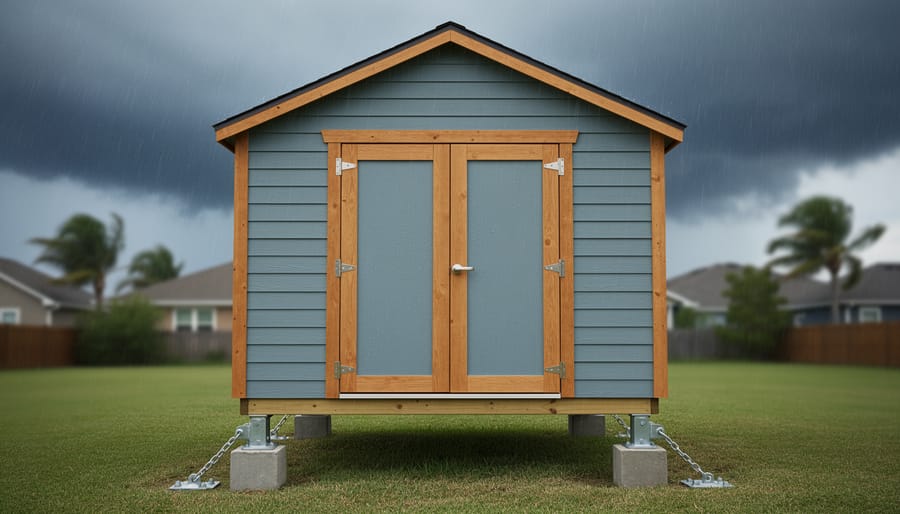
When disaster strikes, your shed could mean the difference between chaos and preparedness—but only if it meets the right standards. FEMA’s emergency shelter guidelines weren’t written with backyard sheds in mind, yet these same principles can transform your storage structure into a critical component of your family’s emergency plan.
Most homeowners don’t realize their shed fails basic emergency preparedness criteria until it’s too late. A shed damaged by the very disaster you’re preparing for becomes useless exactly when you need it most. FEMA emphasizes structural integrity, weatherproofing, and strategic location—factors that directly determine whether your emergency supplies remain accessible and protected during hurricanes, floods, tornadoes, or severe storms.
The good news? You don’t need to rebuild from scratch. Understanding which FEMA guidelines apply to residential structures helps you assess your current shed’s readiness and identify specific upgrades that matter. From anchoring systems that prevent wind damage to elevation strategies that protect against flooding, small modifications can dramatically improve your shed’s emergency performance.
This guide translates FEMA’s technical requirements into practical steps you can take this weekend. Whether you’re evaluating an existing shed, planning a new build, or choosing between models, you’ll learn exactly what makes a shed truly emergency-ready. We’ll cover everything from foundation requirements and wind ratings to proper supply storage and accessibility planning—ensuring your shed becomes an asset, not a liability, when emergencies hit your community.
Why FEMA Takes Emergency Shelters Seriously (And You Should Too)
What Qualifies as an Emergency Shelter According to FEMA
FEMA establishes clear criteria for what makes a structure suitable as an emergency shelter, and understanding these guidelines helps you evaluate your property’s preparedness options. According to FEMA standards, an emergency shelter must provide adequate protection from environmental hazards including wind, rain, extreme temperatures, and other weather-related threats. This means the structure needs solid walls, a secure roof system, and properly sealed openings to keep occupants safe and dry.
Structural integrity is another critical requirement. FEMA specifies that emergency shelters must be able to withstand the specific hazards common to your region, whether that’s high winds, flooding, or seismic activity. The building should have a sound foundation, stable framing, and construction that meets local building codes. While your backyard shed likely wasn’t designed as a shelter, these same principles apply when considering emergency storage solutions.
Safety features round out FEMA’s requirements, including adequate ventilation, accessible exits, and protection from fire hazards. The space should also allow for safe movement and basic human needs. These guidelines help you think practically about how your outdoor structures can support your family’s emergency preparedness plan, whether that means storing critical supplies or providing temporary protection during specific emergency scenarios.
When Your Shed Becomes More Than Storage
When disaster strikes, your shed can transform from simple storage into a lifeline. During Hurricane Harvey, Texas homeowner Maria Rodriguez relied on her reinforced shed to protect emergency supplies when her home flooded. “We stored water, batteries, and medical kits on elevated shelving,” she recalls. “While our garage flooded, the shed stayed dry and became our supply station.”
In California’s wildfire zones, sheds serve as critical storage for evacuation essentials. James Chen keeps go-bags, important documents in waterproof containers, and backup power supplies in his shed. “Having everything organized in one secure location meant we could evacuate in minutes,” he shares.
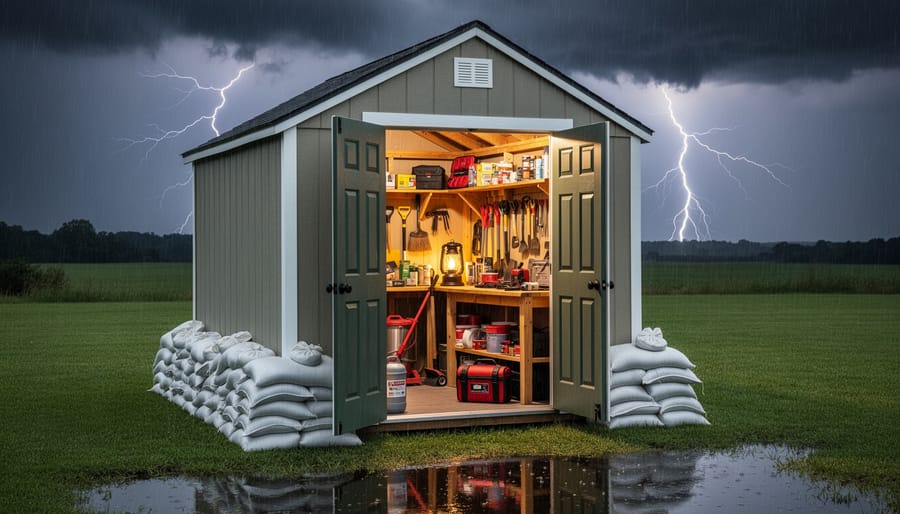
During severe storms in the Midwest, families like the Thompsons have used properly anchored sheds as protected spaces for generators and fuel supplies, keeping these hazardous items safely away from living areas. Their shed’s strategic placement and secure construction aligned with their emergency preparedness plan.
These real experiences highlight how a well-maintained shed, properly secured and stocked, becomes more than storage. It’s a practical component of family safety when emergencies demand quick access to essential supplies.
The Core FEMA Guidelines That Apply to Your Backyard Shed
Structural Strength: Can Your Shed Withstand an Emergency?
When disaster strikes, your shed’s ability to withstand extreme conditions depends heavily on its structural design and materials. FEMA emphasizes that emergency structures must resist high winds, heavy precipitation, and debris impact—standards that apply whether you’re sheltering supplies or people.
Wind resistance starts with proper anchoring. Your shed needs a solid foundation that extends below the frost line in cold climates, typically 12-18 inches deep. Ground anchors or concrete footings prevent uplift during high winds. For reference, FEMA recommends structures withstand winds of at least 90 mph in moderate zones, and up to 150 mph in hurricane-prone areas.
Material choice significantly impacts performance under stress. Metal sheds excel in wind resistance and fire safety, though they require insulation in extreme temperatures. Wood sheds offer superior customization and natural insulation, but need regular weatherproofing and pest treatment to maintain integrity. Vinyl sheds resist moisture and rot but may crack under impact or extreme cold.
Real-world experience shows that reinforcement makes the difference. Sarah from coastal Georgia shared how adding diagonal bracing and hurricane straps to her wood shed helped it survive a category 2 hurricane while neighboring unreinforced structures sustained damage.
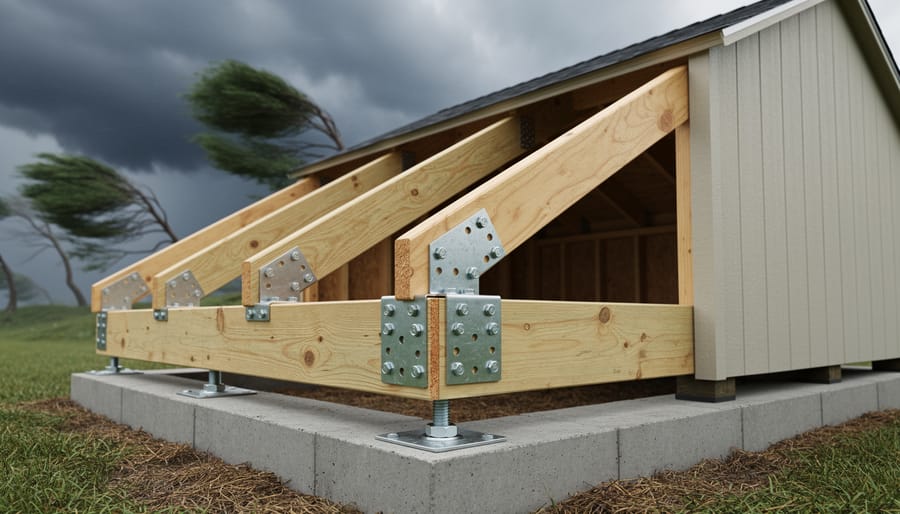
Consider retrofitting existing sheds with metal corner brackets, additional roof trusses, and storm-rated doors. These upgrades transform a basic storage space into a reliable emergency resource that protects your preparedness supplies when you need them most.
Protection from Elements and Environmental Hazards
When disaster strikes, FEMA emphasizes that emergency shelters must protect occupants from rain, wind, extreme temperatures, and environmental hazards. If you’re considering your shed as an emergency supply storage location or temporary shelter space, understanding these protection standards is essential.
Start with a solid foundation that elevates your structure at least six inches above ground level to prevent flooding damage. This simple step protects emergency supplies from water intrusion during heavy storms. FEMA guidelines stress the importance of weatherproofing your shed to ensure it remains dry and functional when you need it most.
Insulation plays a dual role in emergency preparedness. It maintains stable interior temperatures to protect temperature-sensitive supplies like medications, batteries, and canned goods. Even basic insulation in walls and roofing can make a significant difference during extreme weather events.
Inspect your shed’s exterior regularly for gaps, cracks, or damaged sealants. Pay special attention to roof integrity, as water infiltration is the primary threat to stored emergency supplies. Consider installing proper gutters and drainage systems to direct water away from your foundation. Position your shed away from large trees to minimize debris hazards during windstorms, and ensure the surrounding area has proper grading to prevent water pooling.
Safety Features You Can’t Ignore
When storing emergency supplies or using your shed during a crisis, safety should be your top priority. FEMA guidelines emphasize three critical areas that can make the difference between a secure shelter and a dangerous situation.
First, ensure your shed has at least two accessible emergency exits. During an earthquake or severe storm, one exit might become blocked, so having an alternative escape route is essential. Clear pathways to both exits regularly and make sure doors swing outward for easier evacuation.
Proper ventilation is equally important, especially if you’re storing fuel, paint, or other chemicals. FEMA recommends installing ventilation systems that provide adequate airflow without compromising structural integrity. Simple solutions like adding vented panels or small exhaust fans can prevent dangerous fumes from accumulating.
Speaking of hazardous materials, secure all chemicals, fuels, and sharp tools in locked cabinets mounted to your shed’s walls. During emergencies, items can shift and topple, creating additional hazards. One homeowner shared how securing her gardening supplies prevented a serious accident when a tornado warning had her family sheltering nearby.
Remember, your shed should enhance your emergency preparedness, not create new risks. Taking these simple precautions today means one less worry when disaster strikes tomorrow.
Upgrading Your Shed for Emergency Readiness
Reinforcing Your Existing Shed Structure
When emergency situations arise, your shed can become a critical asset for storing supplies or even providing temporary shelter—but only if it’s structurally sound. Reinforcing your shed structure doesn’t require professional carpentry skills, and most improvements can be completed in a weekend.
Start with the foundation. Metal sheds benefit from concrete anchor bolts every 4-6 feet along the base. For wooden sheds, hurricane ties connecting the wall studs to the floor joists add substantial resistance against high winds. Check your local building codes, as FEMA recommends anchoring capable of withstanding winds up to 90 mph in most regions.
Next, address internal bracing. Add diagonal corner braces inside wooden sheds using 2×4 lumber, creating triangular support patterns. Metal sheds should have additional cross-bracing installed between wall panels. One homeowner in Florida shared that adding simple X-pattern bracing helped her shed survive a tropical storm when neighboring unbraced structures didn’t.
For doors and windows, reinforce with plywood backing and install heavy-duty barrel bolts top and bottom. Replace standard hinges with heavy-duty strap hinges, and consider adding a horizontal brace bar across doors. Windows should have plywood covers pre-cut and ready to install when severe weather threatens.
Materials matter: use galvanized hardware for metal sheds and pressure-treated lumber for wooden structures. These targeted improvements transform your shed from vulnerable storage into dependable emergency infrastructure.
Emergency Supply Storage Best Practices
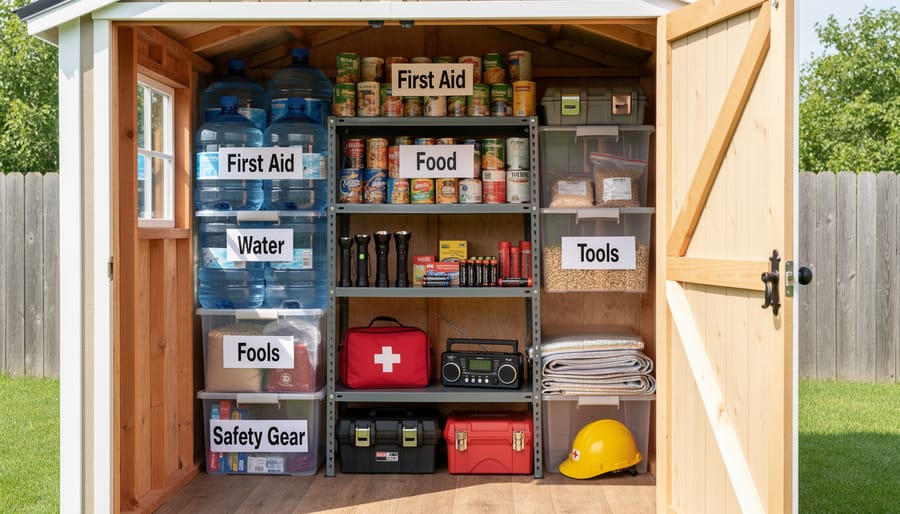
Organizing emergency supplies in your shed requires thoughtful planning to ensure everything remains accessible and usable when you need it most. Start by designating specific zones within your shed: store water containers on sturdy, low shelves to prevent tipping, keeping at least one gallon per person per day for three days. Place non-perishable foods in sealed, rodent-proof containers elevated off the floor to protect against pests and moisture.
Your first aid kit should be prominently positioned near the entrance in a clearly marked, waterproof container. Essential tools like flashlights, batteries, and manual can openers deserve their own dedicated spot where family members can quickly locate them.
Temperature control is critical for supply longevity. Extreme heat can degrade medications and food, so consider insulating your shed or choosing climate-stable storage locations. If you’re safely storing hazardous materials like generators or fuel, keep them separate from food and water supplies in well-ventilated areas.
Protect against moisture by using raised platforms or pallets, and install weatherstripping around doors. Check supplies every six months, rotating items before expiration dates. Label everything clearly with purchase dates and contents, making inventory checks quick and stress-free.
Creating Emergency Access and Communication Points
Making your shed accessible during emergencies means thinking ahead about lighting, exits, and communication. Start with lighting that won’t fail when you need it most. Solar-powered motion lights are a game-changer because they work even during power outages. Mount them above your shed door and near pathways leading to it. Inside, keep battery-powered lanterns or solar rechargeable lights within easy reach of the entrance.
Multiple exit routes can be lifesaving in true emergencies. While your shed likely has one door, consider adding a side window that opens fully or installing a second smaller door if your shed design allows. Mark these exits clearly with glow-in-the-dark tape so they’re visible even in complete darkness.
Create a weatherproof emergency information sheet laminated or placed in a clear plastic sleeve and mount it inside the shed near the entrance. Include emergency contact numbers, your address for directing first responders, and a basic inventory of emergency supplies stored inside. One homeowner shared that during a severe storm, having this information readily visible helped her quickly guide family members to essential supplies without confusion. Update this sheet seasonally to keep information current and legible.
Choosing a New Shed with Emergency Preparedness in Mind
Material Matters: Which Shed Types Hold Up Best
When extreme weather strikes, not all sheds respond equally. Understanding how different materials perform during emergencies can help you make a choice that keeps your supplies safe when it matters most.
Metal sheds offer exceptional wind resistance and won’t rot or deteriorate from moisture exposure. During hurricanes or severe storms, properly anchored metal structures can withstand winds up to 100 mph. They’re fire-resistant and require minimal maintenance, making them reliable for long-term emergency preparedness. However, they can dent from flying debris and may develop condensation issues without proper ventilation.
Wood sheds provide excellent insulation and can be reinforced to meet emergency standards. They’re sturdy enough to handle heavy snow loads and can be customized with additional bracing for high-wind areas. The downside? Wood requires regular treatment to prevent rot and pest damage, which could compromise structural integrity during extended emergencies. One homeowner in Florida shared how her pressure-treated wood shed survived Hurricane Ian after she added metal hurricane straps to the frame.
Vinyl or resin sheds are increasingly popular as weather-resistant storage solutions. They won’t rust, rot, or require painting, and they handle temperature fluctuations well. While lighter than metal or wood, quality vinyl sheds with reinforced floors and proper anchoring systems perform admirably in moderate weather events. They’re less suitable for extreme wind zones but excel in areas with heavy rainfall or humidity.
For true emergency preparedness, focus on proper installation and anchoring regardless of material. Each type has its place depending on your climate, budget, and specific emergency risks.
Size and Layout Considerations for Dual-Purpose Use
When planning a dual-purpose shed, think about flexibility from the start. A minimum size of 10×12 feet gives you enough room to store garden tools and lawn equipment while leaving floor space for emergency supplies or even temporary shelter if needed. For families, a 12×16 or larger shed offers even better versatility.
Consider an L-shaped layout where one side holds everyday storage with shelving and hooks, while the other side remains open for emergency items like water containers, first-aid kits, and camping gear. One homeowner in Florida shared how her 12×14 shed became invaluable during a hurricane evacuation, with half dedicated to year-round gardening supplies and half stocked with emergency provisions that were easy to access when time mattered most.
Position windows and doors strategically for multiple exits, meeting FEMA’s recommendation for safe evacuation routes. Include at least 3-4 feet of clear walkway through the center, making supplies accessible from both ends. Raised flooring helps protect emergency provisions from flooding, a concern FEMA highlights repeatedly. Adding interior wall space for mounted shelving maximizes vertical storage without sacrificing precious floor area.
Remember, the best dual-purpose shed grows with your needs. Start with a flexible framework that lets you adjust storage zones as seasons and circumstances change.
Your Shed Security Checklist: Before Disaster Strikes
Ready to make sure your shed is truly prepared when disaster strikes? Here’s your practical checklist to keep your emergency shelter ready year-round.
Physical Security Check (Monthly)
Start by walking around your shed. Look for gaps in the foundation, loose siding, or damaged roofing that could let water in during storms. Check that all locks work smoothly and door hinges are secure. Weather-stripping should fit snugly without gaps. If you spot any issues, add them to your weekend project list. One homeowner in Florida shared how replacing worn weather-stripping before hurricane season kept their emergency supplies completely dry during a tropical storm.
Inventory Management (Quarterly)
Create a simple spreadsheet or use your phone to track what’s stored in your shed. Check expiration dates on water, batteries, and any stored medications. Rotate supplies so older items get used first. Keep a printed copy of your inventory list inside the shed in a waterproof bag, just in case your phone dies during an emergency. This might seem tedious, but it’s so much easier than discovering expired supplies when you actually need them.
Year-Round Maintenance Schedule
Spring: Deep clean and inspect for winter damage. Test all flashlights and battery-powered equipment.
Summer: Check ventilation to prevent moisture buildup. Verify pest control measures are working.
Fall: Prepare for cold weather. Ensure heating sources (if applicable) are safe and functional. Restock before winter storms.
Winter: After major storms, inspect for damage immediately. Clear snow from exits and ensure paths remain accessible.
Set calendar reminders so these tasks become automatic. Emergency preparedness isn’t a one-time project—it’s an ongoing commitment to your family’s safety.
Being prepared for emergencies isn’t about living in fear—it’s about gaining peace of mind knowing you’ve taken practical steps to protect your family and belongings. Whether you’re weathering a severe storm or facing an unexpected crisis, having a properly equipped shed following FEMA guidelines means one less thing to worry about when it matters most.
You don’t need to overhaul everything overnight. Start small today. Maybe that means adding anchor straps to your existing shed this weekend, or reorganizing your emergency supplies so they’re easier to access. Perhaps it’s finally choosing that new storage building you’ve been considering, this time with preparedness features in mind. Each step, no matter how modest, strengthens your readiness.
Remember Sarah’s story? Her anchored shed survived the storm while others didn’t, and those stored supplies made all the difference during recovery. Your shed can be more than just storage—it can be a cornerstone of your family’s emergency plan.
Take that first step today. You’re not just investing in a structure; you’re investing in protecting what matters most: your home, your belongings, and your family’s security.