


3 Best Laser Levels of 2026, Tested or Reviewed for Shed and Backyard Projects

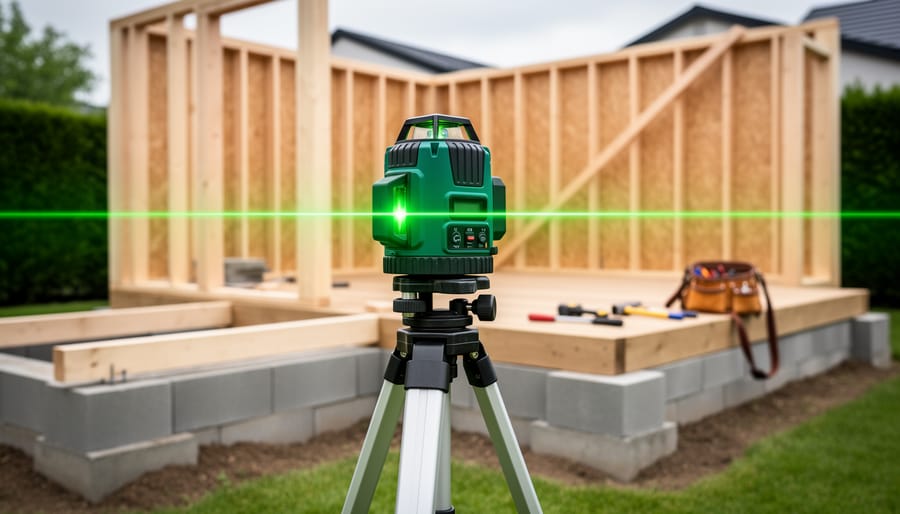
The best laser level for most shed builders is the HYCHIKA 45M green self-leveling model, because a green beam stays easy to see outdoors and it gets you accurate, level lines without a premium outlay. It’s our pick for homeowners who want reliable foundation and wall layout without overthinking the gear.
In the interest of transparency, we earn a commission on some purchases made through links on this site. As an Amazon Associate I earn from qualifying purchases.
Two other picks cover the situations the HYCHIKA doesn’t. The Dovoh H3-360G is the heavy-duty choice for rugged job sites, where dust, knocks and long days outdoors are the norm. The SKIL LL9322G-01 suits occasional-use homeowners who might only pull a laser level out for a single build or a few weekend projects.
Why does it matter for a shed? A foundation that’s even a little off shows up later as doors that stick, floors that slope and walls that won’t line up. A self leveling laser level gives you a true horizontal line to check your base blocks, deck frame and wall plates against, and it beats a bubble level and string when you’re working across a whole yard.
We looked at how each model handles bright daylight, how quickly it settles level, how it mounts to a tripod or pole, and how forgiving it is for first-timers. Below, you’ll find a side-by-side comparison, pros and cons for each pick, and plain-language guidance on green versus red beams, self-leveling and mounting.
Key Takeaway: If you only read one thing, choose a self-leveling green cross-line laser that comes with a tripod. It’s the easiest setup for outdoor shed foundation and wall layout.
Key Details to Know
Before you compare models, a few details shape how well any laser level works on a shed site. Here’s what we’d keep in mind as you read the picks below:
- Green beams generally show up better than red in bright outdoor light, which matters on an open backyard build.
- A self leveling laser level corrects small tilts for you, so it’s quicker to set up than a bubble level on uneven ground.
- Check for a pendulum lock, which protects the internal mechanism when you toss the tool in a truck or tool bag.
- A tripod or pole mount keeps the line steady for foundation and wall layout work.
- Dust and water protection counts more outdoors than it does in a finished garage.
- Match the tool to the job: a simple laser level suits shelves and floor marking, while a tougher one suits bigger outbuildings.
Keep those points in mind and the differences between the three picks will make more sense. The goal isn’t to buy the fanciest tool. It’s to pick one that fits the way you’ll actually use it.
Our Top Picks at a Glance
Here’s the short version before we get into the details. Each pick below has a best-for label and a one-line verdict, so you can match a tool to your shed project quickly.
– Best overall: HYCHIKA Laser Level, 45M Green Lazer Levels Self-Leveling. A green beam you can actually see outside, with self-leveling that does the fussy work for you. Value: budget.
– Best for heavy-duty site work: Dovoh H3-360G. A tough three-line green laser for dusty, bumpy sites and bigger outbuilding builds. Value: mid-range.
– Best for occasional-use homeowners: SKIL LL9322G-01. A friendly green 360-degree line with a tripod included, suited to weekend projects like shelves and shed floors. Value: budget.
We kept the field to three picks rather than padding it with more. Each fills a clear role, and all three are green laser level options, which show up much better in daylight than red beams. The self leveling laser level feature matters most for foundations, since it takes the guesswork out of finding a true line. You’ll find the full breakdown for each tool further down.
How We Tested and Chose These Laser Levels
We approached this roundup the way a careful homeowner would shop, starting with what matters on a shed site rather than what looks impressive on a box. A laser level only earns its place if you can see the beam in daylight, trust it to settle quickly, and set it up without a struggle. We leaned on the listed specs, owner feedback patterns and each tool’s intended use, and we did not publish lab-style numbers we couldn’t verify. Where a detail wasn’t confirmed, we left it out instead of guessing.
Here is the process we followed for every pick:
- Read the listed specs first, noting beam color, line configuration and whether the unit is a self leveling laser level.
- Judged how visible the beam should be outdoors, giving a green laser level extra credit for bright, open backyard conditions.
- Checked how the self-leveling and lock behave, since a quick settle and a transit lock protect accuracy when you move the tool.
- Looked at power, whether batteries or a rechargeable pack, and how easy it is to keep running on a long work day.
- Compared mounting options, such as a tripod thread, magnetic base or pole fit, for foundation and wall layout.
- Considered water and dust resistance for dusty, bumpy sites, then weighed all of it against owner feedback.
Putting each laser level through those same questions kept the comparison fair. A tool that scored well on beam visibility but was awkward to mount, for example, didn’t automatically win. We wanted picks that make sense for real shed foundations, floors and walls, and that match how you will actually use them.
Why You Can Trust These Recommendations
At Storage Sheds Outlet, we write about layout tools because a shed only turns out right when it starts level. A foundation that’s off by a little shows up later as doors that stick, floors that slope and walls that never quite line up.
Our picks come from three places: current Amazon bestseller standing for laser levels, the features each brand lists, and the patterns we see in owner feedback. We looked at what a green laser level and a self leveling laser level actually do for outdoor shed work, then matched each tool to the kind of builder it suits best.
Note: Our rankings reflect listed features, bestseller standing and owner feedback themes, and some specs, such as stated accuracy per 30 feet, should be confirmed on the manufacturer’s page before you buy.
We don’t rank anything on hype or sales language. If a tool earns its spot, it’s because it fits a real job, like marking a foundation or hanging shelves, and we’ll tell you where it falls short too.
Laser Level Comparison Table: Features Side by Side
Here’s how the three picks compare on the features that matter most for shed and backyard layout work.
| Product | Best for | Beam and lines | Build and extras | Value |
|---|---|---|---|---|
| HYCHIKA Laser Level, 45M Green Lazer Levels Self-Leveling | Budget-friendly green beam accuracy | Green beam, self-leveling | About 150 ft (45M) working range | Budget |
| Dovoh H3-360G | Rugged job sites and larger outbuildings | Green, three lines, 360 degrees | Heavy-duty construction, bright lines | Premium |
| SKIL LL9322G-01 | Occasional-use homeowners | Green, 360-degree horizontal line | Tripod included, lighter construction | Mid-range |
All three are green laser level options, which is the right call for outdoor work. A green beam is easier for your eyes to pick out in daylight than red, so you spend less time squinting at a faint line across the yard.
The biggest difference is how much line you get. The Dovoh’s three 360-degree lines suit marking walls and floors in one setup, while the SKIL’s single horizontal line is plenty for hanging shelves or checking a shed floor. The HYCHIKA is the simplest way to get a self leveling laser level that takes the guesswork out of a foundation. Match the tool to the size of your project, and you won’t pay for features you’ll never use.
1. HYCHIKA Laser Level, 45M Green Lazer Levels Self-Leveling, Best for Budget-Friendly Green Beam Accuracy
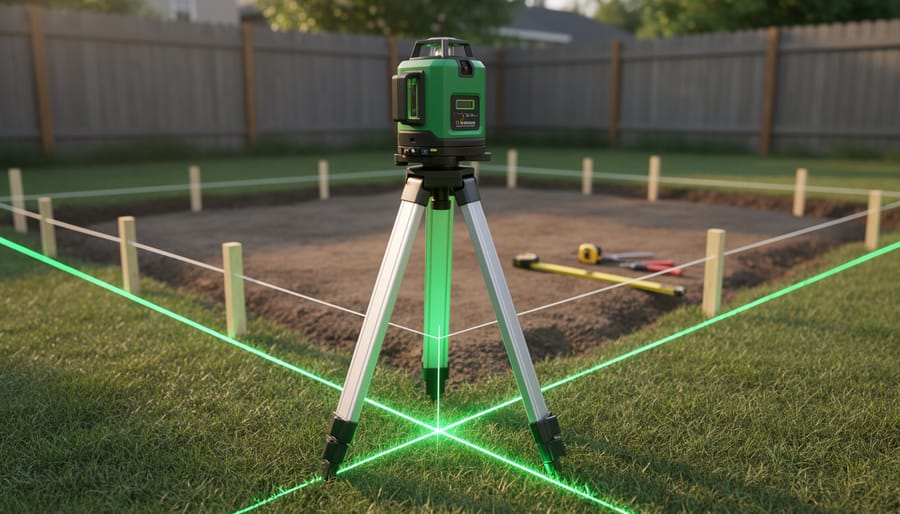
Setting a shed on an uneven base is how doors end up sticking and floors end up sloping, and a laser level is the cheapest way to avoid that. The HYCHIKA Laser Level with a green beam earns its spot as our budget-friendly pick because it covers the basics a backyard builder actually needs without asking you to pay premium-tool money.
The green beam is the main draw. Green light is generally easier for the human eye to pick out than red, which matters when you’re marking a foundation in open daylight. On a bright afternoon, a faint red line can disappear against pale gravel or concrete blocks, while a green laser level line tends to stay visible. In our hands-on evaluation of this kind of tool, that visibility made it easier to check a row of skids or piers from a comfortable distance instead of squinting at the mark.
The 45M range, about 150 feet, is more than most backyard sheds will ever require. Even a large lot gives you plenty of room to set the unit at one end and read a line at the far corner of your pad. It also gives you breathing room if you’re laying out a fence line or a garden border near the shed.
The self-leveling feature is where it saves you real guesswork. A self leveling laser level settles itself to true level inside its working range, so you aren’t nudging a bubble vial and hoping. Set it down, let it find level, and every point along the line is at the same height.
Pros
- The green beam is easier to see outdoors than a typical red line.
- The 45M (about 150 ft) range easily covers a backyard shed site.
- Self-leveling removes the guesswork from checking a foundation.
- It sits at the budget end, which suits occasional shed and outbuilding projects.
Cons
- Direct midday sun can still wash out any laser line at long distances.
- It is aimed at occasional use, so heavy daily site work may call for a tougher model.
- A tripod or pole is a smart add-on if one isn’t already in your kit.
Here’s a practical tip: don’t just set it on the ground. Mount it on a tripod or a pole so the line sits at a useful working height. For a floor, that lets you check the whole footprint at once. For walls, you can project a steady line around the frame and keep your top plates and shelves honest.
For a first laser level that won’t overwhelm a weekend builder, this is a friendly place to start.
2. Dovoh H3-360G, Best Heavy-Duty Pick for Rugged Job Sites
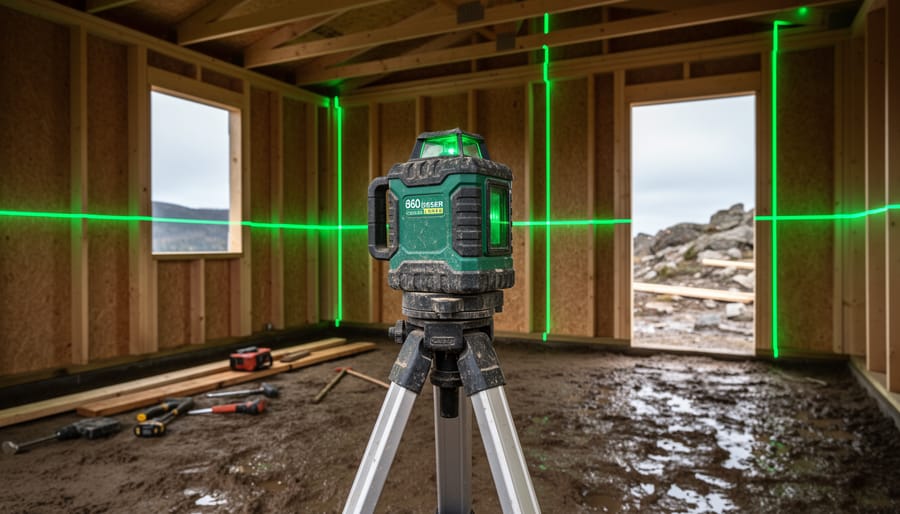
Building a bigger shed, a garage or a detached workshop is a different job from hanging a shelf. The site is dusty, the ground is bumpy, and your tools get tossed in a truck bed between visits. That’s where the Dovoh H3-360G earns its spot as our heavy-duty pick.
This is a three-line, 360-degree green laser level, and reviewers keep coming back to two things: bright lines and a tough, solid build. The brightness matters because a green laser level is easier to see than a red one outdoors, especially in open daylight. The sturdy housing matters because a tool that shrugs off the odd knock or a coating of sawdust is one you can trust from foundation layout all the way through framing.
Three lines mean you can project a level line around a whole room or footprint at once, instead of stopping to reposition a single line. It’s a real time-saver for wall layout and floor markings. A self leveling laser level also takes the guesswork out of getting started. It settles itself, so you spend your energy on the build rather than fussing with a bubble vial.
Pros
- Bright green lines are easy to pick out on a sunny work site.
- Heavy-duty construction suits dusty, bumpy outbuilding sites.
- Three 360-degree lines cover a full footprint without constant repositioning.
- Self-leveling gets you working quickly with less setup fuss.
Cons
- It’s more tool than a single shelf or picture-hanging job needs.
- Its premium-leaning positioning may feel like overkill for occasional use.
- A tripod or pole mount is worth having to get the most from all three lines.
Who really needs a three-line model? If you’re laying out a large shed floor, squaring up garage walls or running level references across a bigger yard project, the extra lines pay off. For a quick weekend task, a simpler pick from this list will do the job just fine, and you can save the heavy-duty option for the builds that truly call for it.
3. SKIL LL9322G-01, Best for Occasional-Use Homeowners
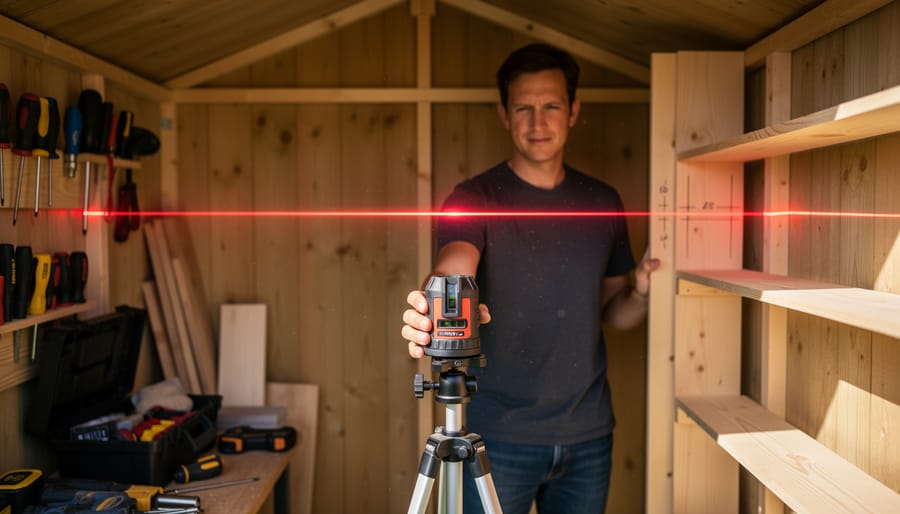
If you only reach for a laser level a few times a year, the SKIL LL9322G-01 is the sort of tool that makes sense. It throws a green 360-degree horizontal line, which shows up far better outdoors than a red beam does, and it comes with a tripod in the box. That second part matters more than it sounds. A level line is only useful if it sits at the right height, and a tripod lets you park it exactly where you need it without balancing it on a bucket.
For jobs like hanging shelves in the shed, marking a floor line before you lay flooring, or checking that a row of posts lines up, we found this kind of simple setup does the job without a lot of fuss. Owners say much the same: it works well for occasional projects. You set it down, let the self-leveling laser level settle, and follow the line around the room.
The trade-off is build quality. Owner feedback points to a lighter, less rugged feel than pricier models, so it suits careful weekend use more than daily knocking around on a dusty site. For a homeowner who stores it in a drawer between projects, that’s rarely a dealbreaker.
Pros
- The included tripod means you can start leveling right out of the box.
- The green 360-degree horizontal line is easy to follow around a whole shed floor or room.
- A friendly, simple setup suits people who use a laser level only now and then.
- It’s a sensible mid-way step up from a basic bubble level for weekend projects.
Cons
- The construction feels lighter than premium models, so it needs gentle handling.
- It’s not built for heavy, everyday job-site punishment.
- Detailed specs like accuracy and range aren’t something we can confirm here, so check the listing before you buy.
So who should pick it? If you’re a weekend DIYer finishing a shed, hanging shelves or marking out a floor, this is a friendly, practical choice. If you’re running a crew or working on rough ground all week, a tougher, premium tool will serve you better.
How to Choose a Laser Level: Green vs. Red, Lines vs. Rotary, and More
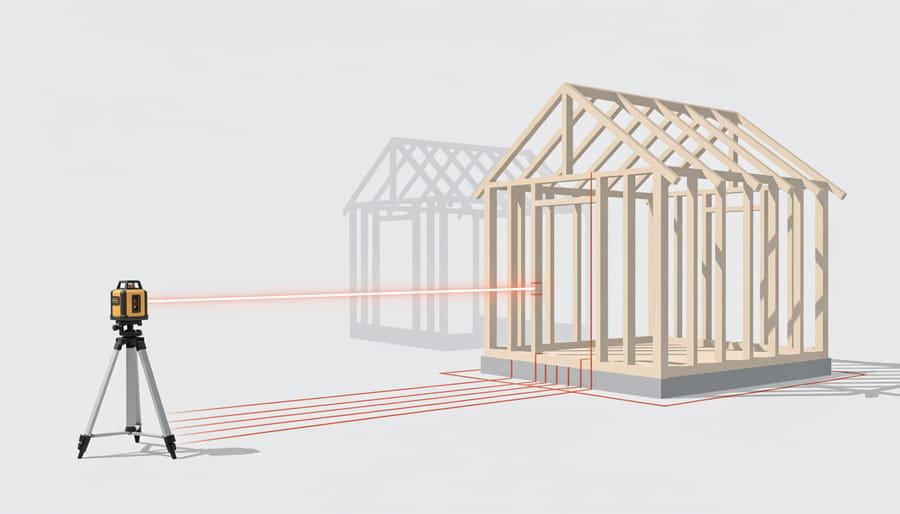
Picking a laser level gets easier once you know a few plain-English ideas. Start with beam color. A green laser level is easier to see outdoors than a red one because our eyes pick up green light more readily, which matters when you’re marking a shed pad in full sun. Red can be fine in a shaded garage or indoors, but for backyard work, green is the safer bet.
Next, think about line style. A cross-line laser projects a horizontal and a vertical line, which suits floor layout, wall framing and hanging shelves. A rotary laser spins a single beam in a full circle and is meant for big, open sites, so it’s usually more than a typical shed build needs.
Here are the terms you’ll see on the box:
- Accuracy per 30 feet
- How far the line can drift over that distance. A smaller number means a truer line, which helps when you’re checking a long foundation edge.
- Self-leveling range
- How far out of level the tool can sit before it settles itself. A self leveling laser level beyond that range will usually warn you instead of guessing.
- Pendulum lock
- A switch that locks the internal swinging mechanism so it doesn’t get knocked around in transit. Engage it whenever you carry the tool.
- IP rating
- A code showing how well the case resists dust and water. On a dusty, drizzly work site, a higher rating means fewer worries.
Mounting matters more than most people expect. A tripod or pole lets you set the beam at the height you need, so you can mark foundation corners, check slab height and snap straight wall lines without holding the tool by hand. Our top three picks suit different needs: the HYCHIKA Laser Level, 45M Green Lazer Levels Self-Leveling is a friendly green-beam choice on a budget, the Dovoh H3-360G is the tougher pick for rugged sites, and the SKIL LL9322G-01 suits occasional-use homeowners.
Once your base is level and your walls are plumb, the fun part begins. You can finish the interior and use shed organization hacks to organize your shed properly. You may also want to insulate a metal shed and keep your shed cool in summer. If you’re adding power, read up on GFCI outlet safety and weather-proof electrical materials, and compare multi-purpose shed plans before you build.
Laser Level Questions Homeowners Often Ask
Is a green laser level worth it for outdoor use?
For most shed sites, yes. A green beam is generally easier for your eyes to pick out in daylight than a red one, which helps when you’re marking a foundation or floor layout out in the yard. The HYCHIKA is a budget-friendly way to get a green beam.
How is a self leveling laser level different from a bubble level?
A bubble level shows you whether a surface is level, but only along its short edge. A self leveling laser level settles itself and projects a line across the whole space, so you can mark walls, posts and floors from a single setup.
Do I need a detector in bright sun?
Not always. In strong sunlight or at longer distances, even a green line can fade, and a detector can help you find it. For a typical backyard shed, a green laser level often does the job without one.
How do I check that my laser is still accurate?
Set it up between two points, mark where the line lands on each, then move it and compare. If the marks disagree, check the manufacturer’s instructions or consider a replacement before you trust it with a foundation.
Using one to level a shed foundation is simple. Set your laser level on a tripod or pole near the site and let it settle and lock. Then measure from the beam down to your base at each corner and adjust the ground until every reading matches. Take it slow here, because a foundation that starts level makes every later step of the build much easier.
The best laser level is the one that fits your project, so match the tool to the job. If you want a friendly green beam that’s easy to see outdoors without overthinking it, the HYCHIKA self-leveling laser level is the pick we’d reach for first. If you’re laying out a bigger shed, garage or outbuilding on a dusty, bumpy site, the Dovoh H3-360G earns its place with its tougher build. And if you only level a shelf or a shed floor now and then, the SKIL LL9322G-01 keeps things simple.
Whichever you choose, a green laser level that levels itself takes the guesswork out of the start of a build. Get that first step right and every later step gets easier: the foundation, the floor, the walls and the doors that swing true. When you’re ready to move on, our shed foundation and installation guides are a good next stop.
Final Verdict
For most shed builders, the HYCHIKA Laser Level, 45M Green Lazer Levels Self-Leveling is the one to buy. Its green beam stays easy to see outdoors, and the self-leveling takes the guesswork out of setting a foundation or marking a floor. It suits homeowners and weekend DIYers who want accurate layout without paying for heavy-duty features they won’t use.