


How to Choose the Right 4×4 Shed Foundation: A Complete Buying Guide


A 4×4 shed foundation is most commonly built using either concrete blocks, gravel pads, or skid foundations, with gravel pads being the most popular choice for small sheds because they’re affordable (typically $50-$150 for materials), drain well, and require no special tools or expertise to install in a weekend afternoon.
If you’ve just ordered a compact shed or you’re sizing up your backyard right now, you’re probably wondering whether you really need a formal foundation or if setting it directly on the ground will work. The short answer: skip the shortcut. Even a small 4×4 shed holds hundreds of pounds of equipment, tools, or seasonal decorations, and without a proper base, you’ll face sagging floors, stuck doors, and moisture damage within the first year.
The good news? Foundation options for a 4×4 shed are straightforward, budget-friendly, and genuinely doable as a DIY project. You don’t need a contractor or a concrete truck in most cases. What you do need is a clear understanding of which foundation type matches your shed’s purpose, your soil conditions, and how permanent you want the structure to be. A she shed meant for weekend retreats has different needs than a utilitarian tool storage box.
This guide walks you through the four main foundation types, compares them side by side on cost and difficulty, and gives you scenario-based recommendations so you can choose confidently. We’ll also flag the common mistakes that trip up first-time shed owners, saving you from costly do-overs and frustration down the line.
Key Takeaway: For most 4×4 shed owners, concrete pavers offer the best balance of affordability ($80-120), ease of installation, and long-term performance. They work across various conditions and don’t require specialized skills or permanent commitment.
Why Foundation Choice Matters for Your 4×4 Shed

Many homeowners mistakenly believe their compact 4×4 shed doesn’t require a proper foundation. After all, it’s just 16 square feet, how much trouble could it cause sitting directly on the ground? Unfortunately, skipping or skimping on foundation work for even the smallest sheds creates problems that quickly outweigh any time or money saved upfront.
A proper foundation prevents your shed from settling unevenly into the soil, which causes doors to stick, floors to slope, and walls to rack out of square. Soft or wet ground will shift under your shed’s weight, especially after heavy rain or freeze-thaw cycles. Even a slight tilt can make your shed difficult to use and accelerate wear on hinges, latches, and corner joints.
Warning: Installing your shed without an adequate foundation may void your manufacturer’s warranty and expose contents to ground moisture that causes rust, rot, and mold.
Beyond structural concerns, an appropriate foundation creates a critical moisture barrier between the ground and your shed floor. Soil naturally holds moisture, and direct contact allows water vapor to wick into untreated wood floors, damaging stored items and promoting decay. The level base benefits extend beyond moisture protection, a stable, even surface also makes it easier to install shelving, stack items safely, and move around inside without tripping hazards.
Most importantly, the right foundation extends your shed’s lifespan significantly. A $100 gravel pad or $200 in concrete pavers protects a $1,000+ investment by keeping wood components off the ground and maintaining proper drainage. Whether you’re storing garden tools, creating a she shed retreat, or housing outdoor equipment, foundation quality directly determines how many years of trouble-free service you’ll get from your 4×4 structure.
What to Consider Before Choosing Your 4×4 Shed Foundation
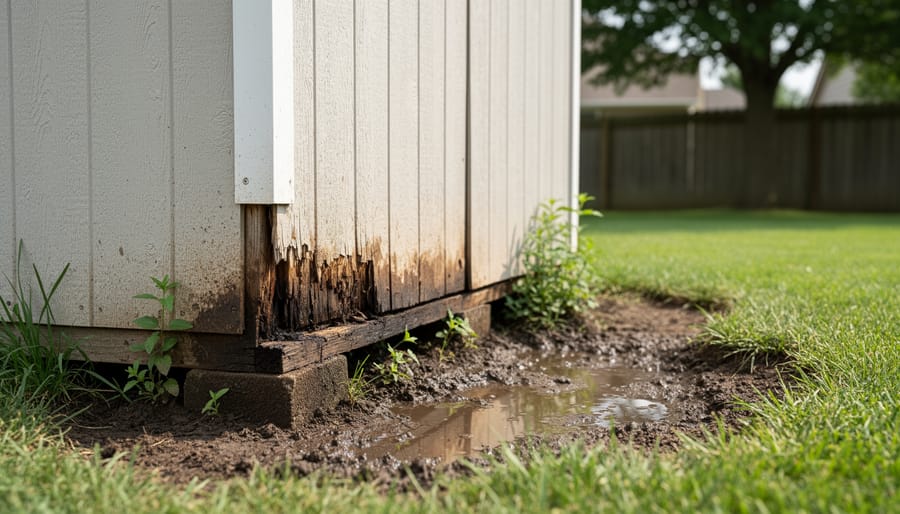
Before you commit to any foundation type, take time to evaluate your specific situation. Rushing this decision often leads to costly fixes later, so working through these factors upfront will save you both time and money.
Ground Conditions and Soil Type
Your soil composition determines which foundations will work and which won’t. Clay soil expands and contracts with moisture changes, creating movement that can crack concrete slabs. Sandy soil drains well but may shift under weight. Rocky terrain makes digging difficult but provides excellent stability once level. Walk your site after heavy rain, if water pools or the ground stays soggy, you’ll need a foundation with superior drainage like gravel or elevated blocks.
Local Climate and Frost Depth
Cold-climate buyers can’t ignore frost depth. When ground freezes and thaws, it heaves upward, potentially lifting your shed off its foundation or cracking concrete. Check your area’s frost line depth (the point below which ground doesn’t freeze). Foundations must sit below this line or use frost-resistant methods. In warm climates, focus instead on drainage and ventilation to prevent moisture buildup.
Budget Reality Check
Foundation costs for a 4×4 shed range from around $50 for basic gravel or wood skids up to $300-500 for a poured concrete slab. Consider both materials and labor if you’re hiring help. A tight budget doesn’t mean skipping the foundation, it means choosing a simpler option done properly rather than a complex one done poorly.
Shed Weight and Construction
A lightweight resin or metal shed storage structure needs less support than a heavy wooden shed with solid walls and roof. Check your shed’s specifications for weight, or estimate based on materials. Heavier sheds require more substantial foundations with better load distribution.
Intended Use and Access
Before finalizing your foundation choice, consider:
- Will you need to move heavy equipment in and out regularly?
- Are you storing temperature-sensitive items requiring ventilation underneath?
- Do you need a smooth, level floor for workbench activities?
- Will the shed house electrical components requiring code-compliant installation?
- Do local regulations specify foundation requirements for accessory structures?
Your answers directly influence whether you need a permanent slab, adjustable piers, or a simple gravel base.
Permanence vs. Portability
Decide if you might relocate the shed later. Poured concrete commits you to that spot permanently. Pier blocks, skids, or gravel pads allow future moves with reasonable effort. Renters and those planning landscape changes benefit from portable options.
Local Building Codes
Don’t assume your small 4×4 shed avoids regulations. Many municipalities require setbacks from property lines, and building permits may be required even for small structures. Some HOAs restrict shed placement or appearance. A quick call to your local building department prevents future headaches.
Your DIY Skill Level
Be honest about your abilities. Mixing and pouring concrete demands experience most beginners lack. Gravel pads and pier blocks suit first-time installers, while wood skids require basic carpentry skills. Matching foundation complexity to your skillset ensures proper installation.

Types of 4×4 Shed Foundations Compared
Gravel Pad Foundation
A gravel pad foundation ranks among the most budget-friendly options for 4×4 sheds, typically costing $50, $150 depending on gravel type and depth. You’ll excavate 4-6 inches below ground level, line the area with landscape fabric to prevent weed growth, then fill with crushed stone or pea gravel compacted in layers.
The main advantage is excellent drainage. Water flows freely through gravel rather than pooling under your shed, protecting wooden floors from rot and metal bases from rust. Compacted gravel also distributes weight evenly, preventing settling if done correctly.
This foundation works best on naturally level or gently sloped ground. You can adjust minor unevenness by adding or removing gravel during compaction, but significant slopes require terracing first. Installation takes a weekend for most DIYers with basic tools: a shovel, rake, hand tamper, and level.
The trade-off is less permanence than concrete. Gravel can shift over time, especially in freeze-thaw climates, requiring occasional releveling. For temporary sheds or renters who may relocate, that’s actually a benefit since you can easily remove the gravel and restore the ground.
Concrete Pavers or Blocks
Concrete pavers offer an excellent middle-ground foundation for 4×4 sheds, combining affordability with solid performance. You’ll arrange 12-inch square pavers in a grid pattern, typically nine pavers (three rows of three) provide adequate support for a 48-inch footprint, though you can add more for heavier storage loads.
Space your pavers 12 to 16 inches apart on center, ensuring they align with your shed’s floor joists or frame members. This spacing promotes natural drainage while preventing water accumulation beneath the structure. Before placing pavers, excavate 2 to 3 inches of soil and create a level base using compacted gravel or sand, this preparation prevents settling and keeps pavers stable.
Installation requires minimal tools and no mixing concrete, making this a genuinely beginner-friendly option. You can complete the project in an afternoon using a level, rake, and tamper. Each paver sits independently, so you can adjust individual blocks if settling occurs later.
The main advantage? Excellent drainage. Water flows freely between pavers rather than pooling underneath your shed. Pavers also allow easy releveling, just add or remove base material beneath individual blocks. For around $40 to $80 in materials, you’ll have a durable foundation that protects your investment without breaking the budget.
Solid Concrete Slab
A poured concrete slab offers the most permanent and stable foundation for your 4×4 shed, though it comes with higher upfront costs and more intensive installation requirements. This option makes the most sense when you’re planning a long-term structure, need a completely level floor inside your shed, or want to store heavy equipment that demands maximum weight distribution.
For a 4×4 shed, plan on a slab thickness of at least 4 inches, with 6 inches preferable if you’ll be storing riding mowers or other heavy items. The preparation process involves excavating 6-8 inches below ground level, installing a gravel base for drainage, adding rebar or wire mesh for reinforcement, and building forms to contain the pour. Proper curing takes about 28 days to reach full strength, though you can typically place your shed after 7 days.
The investment pays off in durability. A properly installed concrete slab can last 50 years or more without settling, provides excellent moisture protection, and creates a perfectly flat surface that prevents door misalignment and structural stress. Expect to pay $300-600 for materials and tools if DIYing, or $500-1,000 for professional installation. This option isn’t ideal if you might relocate your shed later, as concrete foundations are essentially permanent fixtures.
Pressure-Treated Wood Skids
Pressure-treated wood skids offer one of the simplest, most economical foundation solutions for a 4×4 shed, especially if you value portability or plan to relocate the structure later. This method uses two or three parallel runs of 4×4 or 6×6 pressure-treated lumber laid directly on leveled ground to support the shed floor.
For a 4×4 shed, position two skids approximately 3 feet apart, running perpendicular to the floor joists if your shed has them. Clear the ground of vegetation and debris, then excavate shallow trenches 2-3 inches deep to embed the skids slightly, preventing them from shifting. Lay landscape fabric beneath each skid to suppress weeds and add a thin gravel layer for drainage, this keeps the wood from sitting in direct contact with wet soil, extending its lifespan despite the pressure treatment.
The beauty of skid foundations lies in their flexibility. You can level uneven ground by shimming under the low spots or adjusting the trench depth, and if you ever need to move the shed, simply lift or drag it to a new location without demolishing a permanent base. Expect to spend $40, $80 on lumber, making this the most budget-friendly foundation that still provides decent moisture protection and stability for lightweight storage needs.
Foundation Kits and Pre-Made Systems
Foundation kits offer an off-the-shelf solution that eliminates much of the guesswork in preparing ground support for your 4×4 shed. These pre-engineered systems typically consist of interlocking plastic grids, composite panels, or modular blocks that you lay directly on leveled ground. The grids create a stable, ventilated base while allowing water to drain through, making them particularly appealing for locations with drainage concerns.
Plastic foundation grids, often made from recycled materials, lock together like puzzle pieces to form a firm platform. You fill the grid cells with gravel for stability, and the system distributes your shed’s weight evenly across a larger area. Installation usually takes a few hours, requires minimal tools, and needs no curing time. Composite systems work similarly but may incorporate reinforced edges or built-in leveling features.
For those planning decorative she sheds, specialized foundation kits sometimes include aesthetic touches like bordered edging or compatibility with landscaping features. If you’re converting your shed into a retreat space, check out our art studio tips for ideas that pair well with these foundations.
The convenience comes at a price premium, kits typically cost two to three times more than DIY gravel pads. However, they save labor time and reduce the risk of installation errors. For buyers with limited DIY experience or those who value speed over budget savings, foundation kits provide a reliable middle ground between basic options and permanent concrete slabs.
Deck Blocks and Pier Systems
Deck blocks offer an excellent solution when you’re working with slightly uneven terrain that would make other foundation types difficult. These heavy-duty plastic or concrete blocks feature built-in post holders and adjustable feet, letting you fine-tune the level without extensive excavation.
For a 4×4 shed, place blocks at each corner plus one in the center, five blocks total. This configuration distributes the weight evenly and prevents sagging over time. The adjustability shines on slopes up to 6 inches of grade change, where you’d otherwise need significant grading work.
This option works best when you want easy installation without mixing concrete, need to work around tree roots or rocks, or plan to potentially relocate the shed later. Deck blocks drain well since they elevate the structure, though they’re not ideal for extremely soft soil or areas with deep frost penetration.
Our Top Foundation Recommendations for 4×4 Sheds

After comparing all foundation options, here are our scenario-based recommendations to help you make the best choice for your specific situation.
Best for Tight Budgets: Pressure-Treated Wood Skids
If you’re working with limited funds, wood skids offer the most economical solution at $30-60 for materials. Two or three 4×4 treated lumber skids provide adequate support for your shed while requiring minimal tools and expertise. This option works particularly well if you’re comfortable with basic carpentry and have reasonably level ground to start with.
Best for DIY Beginners: Concrete Pavers
New to shed installation? Concrete pavers are your safest bet. They’re impossible to mess up seriously, require no mixing or special tools, and you can adjust them if something isn’t quite right. Expect to spend $80-120 for enough pavers to support a 4×4 structure. Simply level the ground, add a thin gravel base, and arrange the pavers in a grid pattern.
Best for Uneven Ground: Adjustable Deck Blocks
Dealing with a slope or bumpy terrain? Deck blocks with built-in adjustability solve this problem without extensive excavation. At $100-150 for materials, they let you create a level platform by simply turning adjustment screws. This saves hours of digging compared to forcing the ground flat.
Best for She Sheds and Aesthetic Appeal: Foundation Kits
When your 4×4 structure doubles as one of those eye-catching statement shed designs appearance matters. Composite foundation kits ($150-250) sit flush with decorative landscaping and won’t detract from your shed’s curb appeal. Many she shed foundation systems include edging options that integrate seamlessly with surrounding gardens.
Best for Maximum Durability: Concrete Slab
Planning to keep your shed for decades? A 4-inch concrete slab ($200-400 including materials and rental equipment) provides unmatched longevity and pest resistance. Yes, it costs more upfront, but you’ll never worry about rot, settling, or moisture issues.
Best All-Around Value: Concrete Pavers
For the typical homeowner, concrete pavers strike the ideal balance. They cost less than half what you’d spend on a slab, install in an afternoon, provide excellent drainage, and last 20+ years with minimal maintenance.
Common Mistakes to Avoid When Installing a 4×4 Shed Foundation
Even experienced DIYers stumble when installing shed foundations, and these missteps can cost you time, money, and structural integrity down the road. Understanding what not to do is just as important as following best practices.
The most common mistakes homeowners make include:
- Skipping site preparation, vegetation, roots, and topsoil left in place will decompose and cause settling
- Ignoring water drainage, without proper grading or drainage routes, water pools beneath your shed and invites rot
- Eyeballing level instead of measuring, even a small shed needs accurate leveling or doors won’t close and floors will slope
- Using regular lumber instead of pressure-treated wood, untreated wood in ground contact deteriorates within months
- Neglecting local building codes, some municipalities require permits or specific setbacks even for small structures
- Placing foundations too close to property lines, violating setback requirements can force costly relocation
- Underestimating frost heave, shallow foundations in cold climates shift dramatically during freeze-thaw cycles
Another frequent error is rushing the compaction process when using gravel or crushed stone. Many people dump material and immediately place their shed, but proper tamping in layers prevents future settling. Take the extra hour to compact in two-inch lifts.
Don’t assume a small 4×4 footprint means foundation quality doesn’t matter. Your shed’s contents, the structure itself, and your investment all depend on a stable base. Cutting corners on a $50 foundation rarely makes sense when it jeopardizes a $500 shed and everything stored inside. Most foundation problems reveal themselves within the first year, well after you’ve moved belongings in and considered the project complete.
Frequently Asked Questions About 4×4 Shed Foundations
Most homeowners have similar questions when planning their 4×4 shed foundation. Here are clear answers to help you move forward with confidence.
Do I need a permit for a 4×4 shed foundation?
Requirements vary by location, but many jurisdictions don’t require permits for sheds under 120 square feet (a 4×4 shed is only 16 square feet). Always check with your local building department first, as some areas have restrictions based on setback distances or permanent foundations rather than size alone.
How deep should my 4×4 shed foundation be?
For gravel pads, dig 4-6 inches deep and fill with compacted gravel. Concrete slabs typically need 4 inches of thickness with proper ground preparation beneath. In areas with frost, any permanent foundation should extend below the frost line, usually 12-48 inches depending on your climate.
Can I install a 4×4 shed foundation on a slope?
Yes, but you’ll need to level the area first or use adjustable solutions like deck blocks or pier systems that compensate for uneven terrain. Avoid placing sheds on slopes steeper than 10 degrees without significant grading work.
How much does each foundation type cost?
Gravel pads run $50-100, concrete pavers cost $75-150, wood skids are $40-80, deck blocks range from $60-120, foundation kits cost $100-300, and poured concrete slabs typically run $200-400 for a 4×4 footprint including materials and labor if you hire out.
How long does installation take?
Simple solutions like wood skids or deck blocks can be completed in 2-4 hours. Gravel pads and paver foundations typically take 4-6 hours including site preparation. Concrete slabs require the most time, a full day for pouring plus several days for curing before you can place your shed.
Can I move my shed later if needed?
Wood skid foundations and deck block systems allow easy relocation, you can lift and move the entire structure. Gravel pads and paver foundations make moving more difficult but still possible. Poured concrete slabs are permanent, and moving means leaving the foundation behind.
One question that comes up frequently concerns shed warranties. Some manufacturers specify foundation requirements to maintain warranty coverage, particularly for resin or vinyl sheds that need perfectly level surfaces. Review your shed’s documentation before choosing a foundation, as using an inadequate base could void protection against defects. When in doubt, contact the manufacturer directly, they’ll tell you exactly what foundation types they approve.
The good news is that most quality sheds work fine with any properly installed, level foundation appropriate for your site conditions. Your choice should balance practical factors like budget, soil type, and intended permanence rather than worry excessively about invalidating coverage.
Choosing the right foundation for your 4×4 shed isn’t about finding the perfect solution, it’s about finding the perfect solution for your situation. Your ground conditions, budget, climate, and how you’ll use the shed all play important roles in this decision. A she shed focused on aesthetics might benefit from a decorative foundation kit, while a utility storage unit could thrive on gravel pads or skids. The foundation types we’ve covered give you a solid framework to evaluate what works best for your property and goals.
Don’t shortcut the installation process. Proper ground preparation, accurate leveling, and attention to drainage will protect your investment for years to come. Whether you’re planning a workshop shed setup or a quiet garden retreat, the foundation is where success starts.
Storage Sheds Outlet offers foundation solutions and expert guidance for she sheds and all outdoor storage structures, helping you move from planning to installation with confidence.