


The Framing Material That Makes or Breaks Your Greenhouse

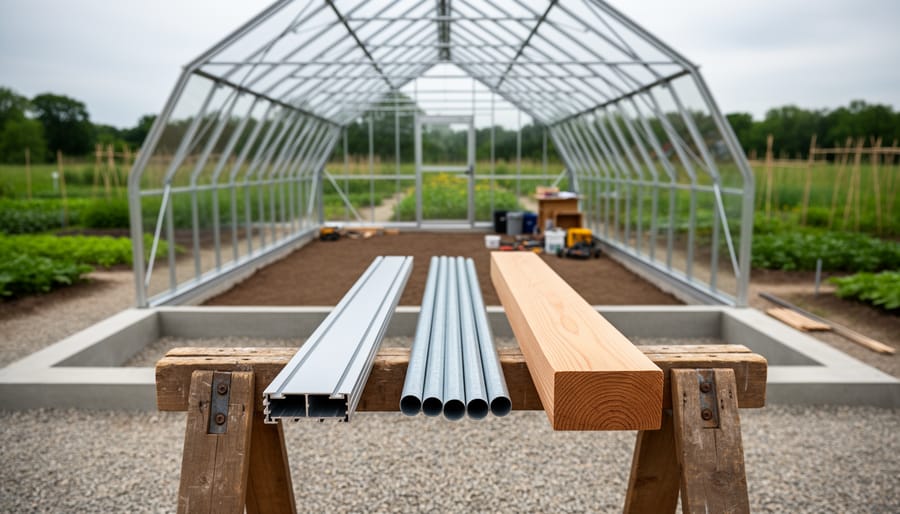
Choose your greenhouse frame material based on your local climate and budget—aluminum works best for coastal areas with high humidity, while galvanized steel handles heavy snow loads in northern regions, and wood offers natural insulation for year-round growing in moderate climates. Match your frame selection to your foundation type early in the planning process, since heavier steel frames require concrete footings, whereas lightweight aluminum can sit on gravel beds or wooden platforms. Consider the lifespan you need from your investment: powder-coated aluminum lasts 20-25 years with minimal maintenance, galvanized steel provides 15-20 years of durability, and cedar or redwood frames need regular treatment but offer 10-15 years of service. Calculate the total cost beyond the initial purchase by factoring in maintenance requirements—aluminum frames need virtually no upkeep, steel requires occasional rust inspections and touch-ups, and wood demands annual sealing or staining to prevent rot and insect damage.
The frame material you select impacts everything from how you’ll anchor your structure to which glazing options work best with your design. Most greenhouse kits pair specific frame materials with compatible covering materials, so understanding these relationships now saves you from costly mismatches later. Your frame choice also determines wind resistance capabilities, heating efficiency during winter months, and whether you can easily expand or modify your greenhouse as your gardening ambitions grow. Making an informed decision about framing material means looking beyond price tags to consider how each option performs in your specific growing environment and aligns with your long-term gardening goals.
Why Your Framing Material Choice Matters More Than You Think
When most people start planning their greenhouse project, they focus on size and aesthetics, thinking the frame is just the skeleton that holds everything together. Here’s the truth: your framing material choice affects nearly every aspect of your greenhouse’s performance, from how well your plants thrive to whether your structure survives the next windstorm.
Think of your greenhouse frame as the foundation of your entire growing system. The material you choose directly impacts how much natural light reaches your plants—and we’re talking about differences that can affect growth rates by 10-15%. Aluminum frames, for instance, have slender profiles that maximize light transmission, while thicker wooden frames might shade portions of your growing space during critical morning and evening hours.
But light transmission is just the beginning. Your frame material determines structural integrity during heavy snow loads, how well your greenhouse withstands wind gusts, and even its resistance to rust, rot, and general wear over the years. One homeowner in Colorado learned this the hard way when her budget wood-framed greenhouse collapsed under unexpected spring snow, destroying an entire season’s seedlings.
Note: Your framing material choice directly determines how deep your foundation needs to be and what type of anchoring system you’ll require—heavier materials need more substantial support.
Here’s what many first-time buyers don’t realize: the frame material impacts your total project cost beyond the kit price. Steel frames might seem economical upfront, but they require specific foundation types and anchoring methods that add to your budget. Similarly, some materials need ongoing maintenance treatments, while others are virtually maintenance-free.
The bottom line? Your framing material isn’t just holding up glazing panels—it’s determining your greenhouse’s lifespan, maintenance schedule, energy efficiency, and ultimately, your gardening success. Choose wisely from the start, and you’ll save yourself headaches and expenses down the road.
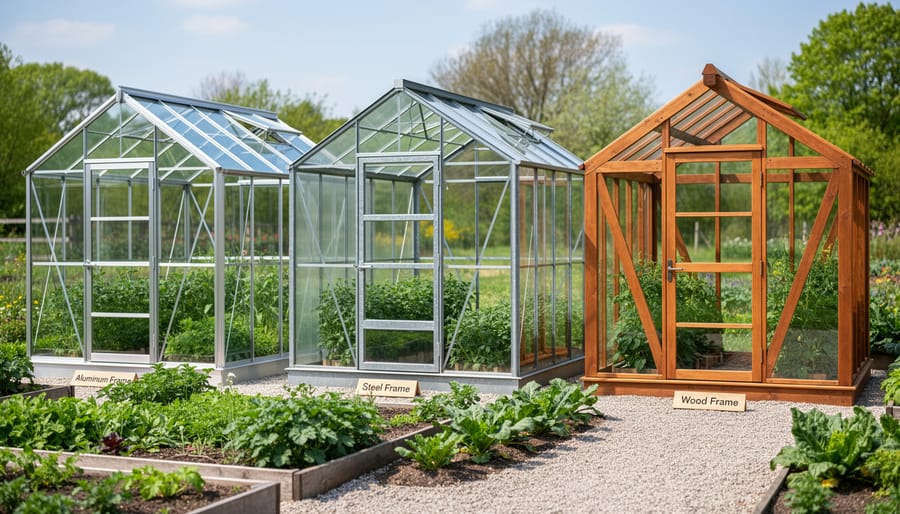
The Four Main Greenhouse Framing Materials Explained
Aluminum Framing: The Lightweight Champion
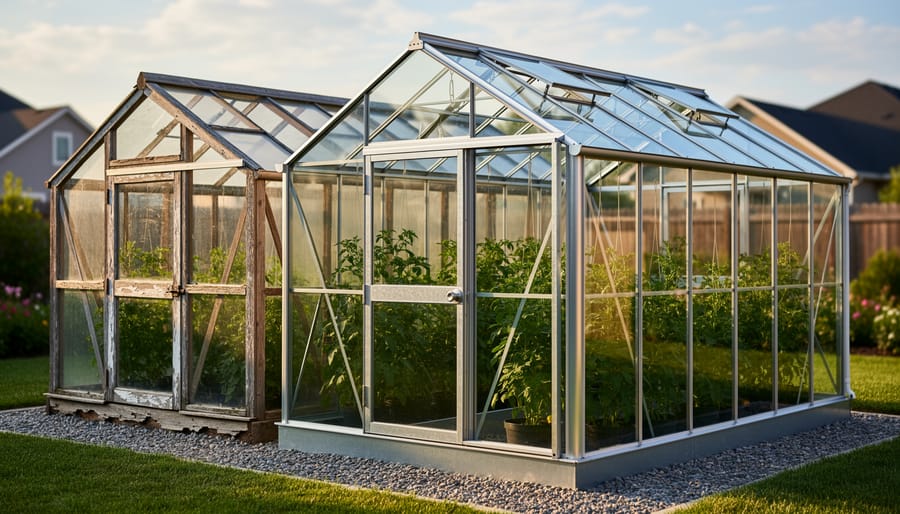
If you’re looking for a greenhouse frame that won’t weigh you down—literally or figuratively—aluminum deserves serious consideration. This material has become the go-to choice for many DIY greenhouse enthusiasts, and once you understand its benefits, you’ll see why it’s earned its reputation as a lightweight champion.
One of aluminum’s standout features is its natural resistance to rust and corrosion. Unlike steel, which requires regular maintenance and protective coatings, aluminum develops a protective oxide layer that shields it from the elements. This means less time scraping and repainting, and more time enjoying your greenhouse gardening.
The lightweight nature of aluminum creates a domino effect of advantages throughout your project. Because aluminum frames weigh significantly less than wood or steel alternatives, you won’t need an elaborate or expensive foundation. Many homeowners successfully install aluminum greenhouses on simple gravel beds or basic concrete pads, saving hundreds of dollars on site preparation. This characteristic makes aluminum particularly appealing for DIY projects—you can handle and position the frame components without assistance or heavy equipment.
Pros
- Naturally rust-resistant with minimal maintenance required
- Lightweight design reduces foundation costs and simplifies installation
- Excellent for DIY projects with easy-to-assemble kit options
- Long lifespan with consistent performance over decades
Cons
- Less insulation value compared to wood framing
- Can be more expensive upfront than basic wood options
- May require additional bracing in high-wind areas due to lighter weight
Consider Sarah from Oregon, who installed her 8×10 aluminum greenhouse kit in a single weekend with just her spouse helping. She particularly appreciated how the pre-drilled frames and lightweight pieces made assembly straightforward, even without prior construction experience. Aluminum truly shines in scenarios where ease of installation, low maintenance, and durability intersect with practical budget considerations.
Galvanized Steel: Built to Last Decades
When you’re planning a greenhouse that needs to withstand heavy snow loads or support glass panels, galvanized steel emerges as the heavyweight champion of framing materials. This powerhouse option offers exceptional structural integrity that can support your growing ambitions for years to come.
Steel framing provides unmatched strength-to-weight ratios, making it ideal for greenhouses that require extra support. If you’re considering a four-season greenhouse in an area with harsh winters, steel can handle substantial snow accumulation without buckling. The material also excels at supporting heavier glazing options like tempered glass or insulated polycarbonate panels, giving you more flexibility in design choices.
The hot-dip galvanization process creates a zinc coating that bonds metallurgically to the steel, providing maintenance-free longevity for decades even in humid greenhouse environments. This protective layer resists rust and corrosion remarkably well, meaning you won’t be repainting or replacing frame sections every few years.
However, steel’s strength comes with practical considerations. The weight of steel framing demands more substantial foundations than lighter materials. You’ll need properly engineered concrete footings or a reinforced foundation to support the structure safely. Additionally, secure anchoring becomes critical, especially in wind-prone areas where the frame’s strength could work against you if not properly secured.
One greenhouse owner in Colorado shared that despite initial foundation costs, her steel-framed structure survived a severe hailstorm that damaged nearby wooden greenhouses. The investment in proper groundwork paid off when extreme weather hit, proving that steel’s durability extends beyond just the frame itself.
Wood Framing: The Classic Natural Choice
There’s something wonderfully classic about a wooden greenhouse. If you’ve ever stepped inside one, you know that warm, natural aesthetic that makes you feel connected to both the structure and the garden inside. Beyond looks, wood offers genuine practical benefits that make it worth considering for your backyard project.
Wood is a natural insulator, which means it doesn’t conduct heat and cold the way metal does. This thermal advantage helps stabilize your greenhouse’s interior temperature, reducing those dramatic swings that can stress your plants. Cedar and redwood are particularly popular choices because they naturally resist rot and insect damage without chemical treatments.
Pros
- Excellent natural insulation properties keep temperatures more stable.
- Beautiful traditional aesthetic that complements most garden styles.
- Easy to customize and modify with standard carpentry tools.
- Cedar and redwood varieties offer natural rot resistance.
Cons
- Requires regular treatment and maintenance to prevent decay.
- More vulnerable to moisture damage than metal or PVC alternatives.
- Heavier than other materials, requiring more robust foundations.
- Higher initial cost compared to aluminum or PVC options.
The trade-off is maintenance. Wood needs protection from constant moisture exposure, especially if you’re in areas with extreme weather. Plan to apply sealant or paint every few years to keep your frame in top shape. Regular inspection for soft spots or splitting will help you catch problems before they become serious.
Foundation-wise, wooden frames need solid support. Because wood absorbs moisture from ground contact, your foundation should elevate the frame at least a few inches. Concrete footings, gravel beds, or pressure-treated timber bases work well. Just make sure there’s proper drainage to prevent water from pooling around your wooden structure.
PVC and Vinyl: The Budget-Friendly Option
If you’re just starting your greenhouse journey or working with a tighter budget, PVC and vinyl framing materials might be exactly what you need. These plastic-based options have become incredibly popular among hobby gardeners and weekend DIYers, and for good reason—they’re affordable, lightweight, and surprisingly easy to work with.
The biggest advantage? Cost and simplicity. PVC pipe greenhouses can often be assembled in a single afternoon with basic tools you probably already own. Many gardeners report building their first 8×10 foot greenhouse for under $200 in materials. The lightweight nature also means you won’t need an elaborate foundation—a level surface with simple ground anchors often does the trick.
However, let’s be honest about the limitations. PVC and vinyl aren’t built for expansive structures or extreme conditions. Most PVC greenhouses work best as smaller hobby structures, typically maxing out around 10×12 feet. Beyond that size, the material starts struggling with structural integrity. Durability is another consideration—while treated PVC can last 5-7 years with proper care, it won’t match the decades-long lifespan of metal or wood frames.
Wind vulnerability is the real challenge here. That lightweight advantage becomes a disadvantage during storms. One gardener shared how her PVC greenhouse sailed across the yard during unexpected high winds because she’d skipped proper anchoring. The solution? Invest in quality ground anchors, add weight to the base, and consider temporary dismantling if severe weather approaches.
For weekend gardeners wanting to extend their growing season without breaking the bank, PVC delivers excellent value—just know its limits.
Matching Your Frame to the Right Foundation and Anchoring System
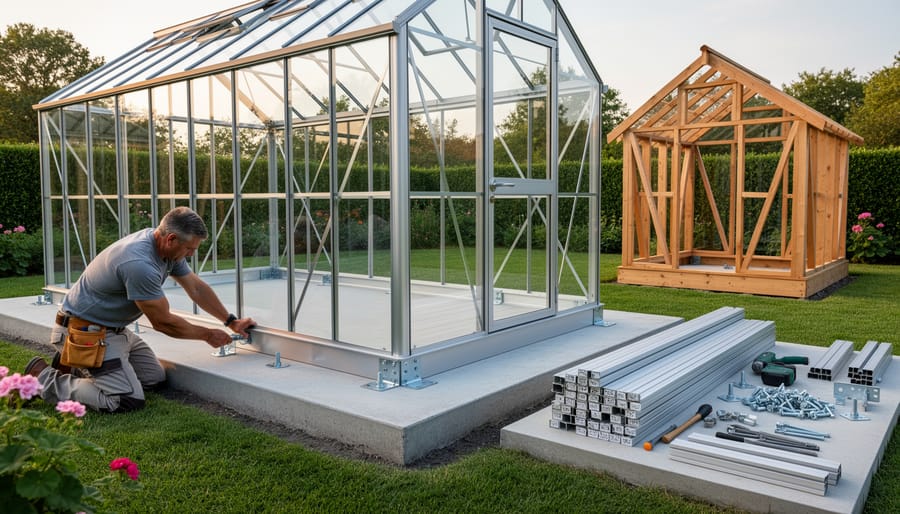
Choosing your greenhouse frame is just the beginning of the story—what happens beneath and around that frame matters just as much. Think of your foundation and anchoring system as the unsung heroes of greenhouse stability. The frame material you select directly influences how deep you’ll need to dig, what type of base you’ll require, and how you’ll secure everything against Mother Nature’s surprises.
Here’s the reality: a lightweight aluminum frame demands entirely different anchoring than a hefty galvanized steel structure. Weight distribution plays a crucial role in this equation. Aluminum greenhouses, weighing considerably less, can sometimes get by with surface-level anchoring systems like ground anchors or concrete footings that don’t require extensive excavation. However, this lighter weight also means they’re more vulnerable to wind uplift, so you’ll need robust tie-down systems to prevent your investment from becoming airborne during storms.
Steel and wood frames, being heavier, naturally resist wind better through sheer mass. But here’s the catch—that extra weight requires more substantial foundations to prevent settling and shifting over time. A concrete perimeter foundation or concrete piers typically work best for these materials, distributing the load evenly and preventing one corner from sinking while another stays put.
| Framing Material | Recommended Foundation | Anchoring Method | Installation Difficulty |
|---|---|---|---|
| Aluminum | Ground anchors or shallow footings | Auger anchors, concrete anchors | Easy to Moderate |
| Galvanized Steel | Concrete perimeter or piers | Bolted to concrete foundation | Moderate to Difficult |
| Wood | Concrete blocks or continuous footer | Bolted or embedded posts | Moderate |
| PVC | Ground stakes or rebar framework | Rebar stakes, weighted bases | Easy |
Wind load considerations become especially important if you live in areas prone to high winds or storms. Local building codes often specify minimum anchoring requirements based on expected wind speeds in your region. PVC frames, while budget-friendly, offer the least wind resistance and typically need creative solutions like sandbags or additional bracing.
One homeowner in Colorado shared that after initially installing her aluminum greenhouse with basic stakes, she upgraded to concrete anchors after a spring windstorm nearly toppled it. The lesson? Don’t skimp on anchoring, regardless of your frame choice.
What to Consider Before Choosing Your Greenhouse Frame
Choosing the right greenhouse frame isn’t just about picking a material—it’s about matching that material to your specific situation. Let’s walk through the key factors that should guide your decision.
Start with your climate. If you live in an area with heavy snowfall like Minnesota or Maine, you’ll need a frame that can handle significant weight loads. Sarah from Vermont learned this the hard way when her PVC frame collapsed under two feet of wet snow. She rebuilt with aluminum and hasn’t had issues since. Meanwhile, coastal homeowners need to consider salt air corrosion and wind resistance. Galvanized steel or powder-coated aluminum work beautifully in these environments.
Budget matters, but think long-term. While PVC pipes might cost $200 for a small greenhouse compared to $800 for an aluminum kit, consider the replacement costs. Michael in Oregon replaced his PVC frame twice in five years before investing in aluminum, ultimately spending more than if he’d chosen the durable option initially.
Your greenhouse size and purpose directly impact material choice. A small 6×8 hobby greenhouse for starting seedlings can work perfectly with wood or PVC. However, commercial growers or serious gardeners planning year-round production need the stability of steel or aluminum.
Be honest about your DIY skills. Wood frames require cutting, drilling, and treating—great for experienced DIYers but potentially frustrating for beginners. Aluminum kits with pre-drilled holes offer easier assembly with clear instructions.
Don’t overlook local building codes. Some municipalities require building permits for structures over certain sizes or mandate specific materials for wind or fire resistance. Check with your local building department before purchasing—you might save yourself from an expensive mistake or forced teardown.
Choosing the right framing material is truly the foundation of a successful greenhouse project. This single decision sets everything else in motion, from determining what type of base you’ll need to figuring out the best anchoring system for your climate. A heavy aluminum frame requires different support than lightweight PVC, while wood frames demand specific moisture management strategies. When you select your framing material thoughtfully, you’re not just buying parts—you’re investing in years of productive growing seasons and protection for your plants.
Remember, there’s no one-size-fits-all answer here. Your perfect greenhouse depends on your budget, local weather conditions, and how hands-on you want to be with maintenance. Take time to weigh the pros and cons we’ve discussed, consider your long-term goals, and don’t hesitate to reach out to other gardeners or professionals for advice. Whether you choose aluminum for its durability, wood for its natural appeal, or PVC for its affordability, making an informed choice means you’ll enjoy a greenhouse installation that serves you well for many seasons to come. Your dream growing space is within reach!