


Why Your Gazebo Size Matters More Than You Think

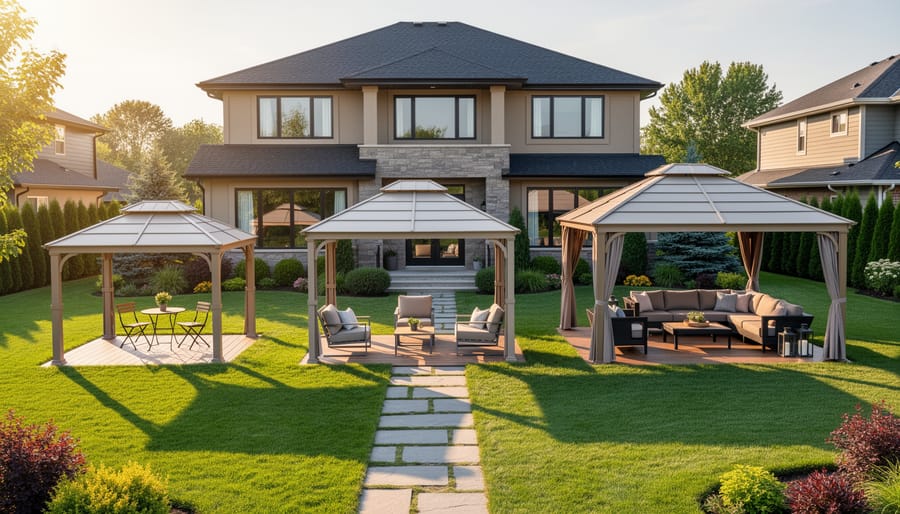
Measure your intended space before exploring gazebo options—most homeowners underestimate how much clearance they actually need around their structure. Standard gazebos typically range from 8×8 feet for intimate seating areas to 14×16 feet for full outdoor dining setups, but the right size depends on three key factors: your planned furniture layout, local setback requirements, and how the structure will visually balance with your home’s footprint.
A 10×10 gazebo comfortably seats four to six people around a small dining table, while 12×12 models accommodate six to eight guests with room for movement. If you’re planning to host larger gatherings or include features like built-in benches or a fire pit, consider 12×14 or larger options. The most common mistake isn’t choosing too small—it’s forgetting to account for walkway space, door swing clearance, and the visual weight a gazebo adds to your yard.
Calculate your needs by sketching your furniture arrangement first, then adding 2-3 feet of circulation space on all sides. This approach prevents the disappointment of a gazebo that technically fits but feels cramped in practice. Understanding these proportions now saves you from the costly error of ordering a size that looked perfect on paper but overwhelms your actual outdoor space.
Standard Gazebo Sizes: What’s Actually Available
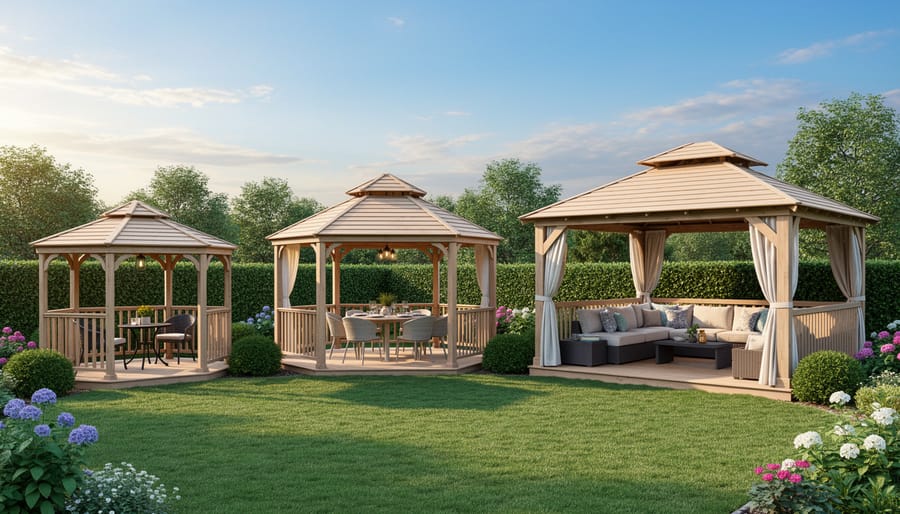
Small Gazebos (8×8 to 10×10 feet)
Small gazebos are perfect for cozy outdoor spaces and budget-minded homeowners who want to add charm without overwhelming their yard. These compact structures typically range from 8×8 to 10×10 feet, making them ideal for smaller backyards, patios, or even as a focal point in a garden corner.
What makes these sizes so practical? They’re surprisingly versatile. An 8×8 gazebo comfortably accommodates a small bistro set with two chairs and a table, perfect for morning coffee or intimate conversations. A 10×10 model offers just enough extra room for four chairs around a table, making it great for small family gatherings or quiet reading nooks.
Real-world example: Sarah from Pennsylvania turned her 10×10 gazebo into a backyard meditation space with just a cushioned bench and some hanging plants. “It’s my escape pod,” she says. “Small enough to feel cozy, but spacious enough I don’t feel cramped.”
Budget-wise, these smaller gazebos shine. They require fewer materials, which translates to lower costs and easier DIY installation if you’re handy. They’re also easier to maintain and winterize, saving you time and money year after year.
Consider this size if you have limited yard space, want a dedicated spot for two to four people, or you’re testing the waters before committing to a larger outdoor structure.
Medium Gazebos (10×12 to 12×14 feet)
Medium gazebos strike the sweet spot for most homeowners, offering enough space to truly enjoy your outdoor area without overwhelming your yard. These structures comfortably accommodate a full dining set with six to eight chairs, making them perfect for family meals and weekend gatherings with friends.
What makes this size range so popular? It’s all about flexibility. You can easily fit a cozy conversation area with a loveseat, two chairs, and a coffee table, with room left over to move around comfortably. Many homeowners tell us they appreciate having space for both dining and lounging—perhaps a small bistro set on one side and a couple of comfortable chairs on the other.
If you love entertaining, a 12×12 gazebo provides roughly 144 square feet of usable space. That’s enough room for a buffet table, seating for guests, and even a small outdoor bar cart. One homeowner shared how their 12×14 gazebo became the hub of their backyard, hosting everything from birthday parties to quiet morning coffee breaks.
These medium sizes also work well with typical suburban lot dimensions, leaving plenty of yard space for other activities while still creating a defined, inviting outdoor room you’ll actually use year-round.
Large Gazebos (14×16 feet and up)
When you’re thinking big, gazebos sized 14×16 feet and larger deliver serious versatility that transforms your outdoor living experience. These substantial structures comfortably accommodate 12-20 people, making them ideal for frequent entertainers or families who love hosting gatherings.
Homeowners often invest in large gazebos for specific purposes beyond simple seating areas. They’re perfect for outdoor kitchens with full appliances, creating a weatherproof dining pavilion, or housing a hot tub with surrounding lounge space. One homeowner shared that her 16×20 gazebo became the family’s favorite spot, housing patio furniture, a grill station, and still leaving room for the kids to play on rainy days.
Before committing to this investment, consider your property’s proportions and local building codes. Structures this size typically require permits and should account for wind resistance factors in your region. Installation costs increase significantly with size, and you’ll need adequate foundation preparation.
The investment makes sense when you have ample yard space, plan to use it year-round, and want a genuine outdoor room rather than just shade. Expect to dedicate 200-300 square feet of yard space when accounting for clearance around the structure.
How to Choose the Right Size for Your Needs
Match Size to Function
Choosing the right gazebo size starts with understanding how you’ll actually use the space. Think of your gazebo as an outdoor room—its dimensions should support your activities just as thoughtfully as your indoor spaces do.
For dining areas, start by counting chairs. A 10×10-foot gazebo comfortably fits a 48-inch round table with seating for four, leaving walkway space around the perimeter. Planning to host larger gatherings? A 12×12-foot structure accommodates a six-person rectangular table with room for a small serving cart. Remember to leave at least 24 inches between the table edge and gazebo posts so guests can pull out chairs without feeling cramped.
Hot tub enthusiasts should measure their tub and add at least three feet on all sides. Most standard hot tubs fit nicely in a 10×10 or 12×12 gazebo, giving you space to step in and out safely plus room for towel storage. One homeowner shared that adding a small side table for drinks transformed their 12×12 hot tub gazebo into a true retreat.
Creating an outdoor living room? A 12×14 or 14×14 gazebo can house a loveseat, two chairs, and a coffee table while maintaining comfortable traffic flow. For meditation or yoga spaces, even an 8×8 structure provides plenty of room for a mat and small altar.
Here’s a practical tip: arrange your furniture in your yard with the same spacing you’re considering, then walk around it. This simple test reveals whether your planned size truly supports how you’ll move and relax in the space.
Consider Your Guest Count
Planning your gatherings is one of the most practical ways to nail down the perfect gazebo size. Think about how you typically entertain and what your outdoor space really needs to handle.
For intimate moments with your partner or small family dinners, an 8×8 or 10×10 gazebo works beautifully. These cozy sizes comfortably seat 4-6 people around a dining table, creating that perfect spot for morning coffee or evening meals without overwhelming your yard.
If you regularly host friends for barbecues or birthday parties, consider stepping up to a 12×12 or 12×14 gazebo. These mid-range options accommodate 8-10 seated guests with room for a dining set and perhaps a serving cart. One homeowner shared how her 12×12 gazebo became the heart of Sunday brunches, fitting her table of eight with space to spare for mingling guests.
Party hosts and those who love larger gatherings should explore 14×14 gazebos or larger. Here’s where understanding standing versus seated capacity becomes crucial. While a 12×12 might seat 10 people comfortably, it can handle 15-20 standing guests during cocktail hour. A 16×20 gazebo truly shines for bigger events, seating 16-20 people or accommodating 30-35 standing guests.
Don’t forget to account for furniture footprints when calculating capacity. That beautiful outdoor sectional takes up considerably more space than folding chairs. Always measure your existing or planned furniture before committing to a size, leaving at least 3 feet of walking space around seating areas for comfortable movement.
Your Yard’s Size vs. Your Gazebo’s Size
The One-Third Rule
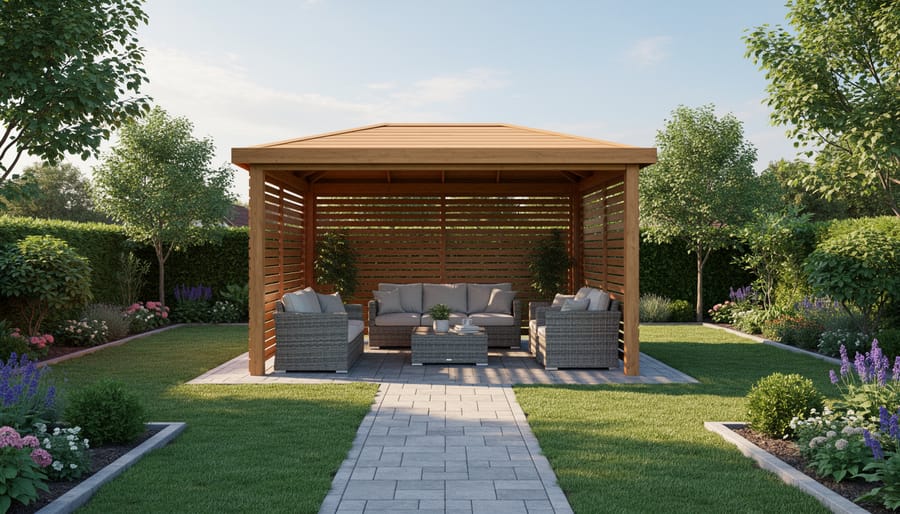
Here’s a helpful rule of thumb that takes the guesswork out of gazebo sizing: your gazebo should occupy roughly one-third or less of your outdoor space. This simple guideline prevents your structure from overwhelming a cozy yard or appearing like a tiny dot in a sprawling landscape.
Let’s look at how this works in practice. If you have a compact 300-square-foot patio, an 8×8-foot gazebo (64 square feet) sits comfortably within the one-third range, leaving plenty of room for outdoor furniture, planters, and movement. For a medium-sized 600-square-foot backyard, a 10×12-foot structure (120 square feet) creates an inviting focal point without cramping your space. Got a generous 1,200-square-foot yard? You can confidently consider a 12×16-foot or even 14×14-foot gazebo.
Homeowner Maria from Ohio shared her experience: “We almost bought a 12×12 for our small yard, but after applying the one-third rule, we went with a 10×10 instead. It’s perfect and our yard still feels spacious.”
Remember, this is a starting point rather than a strict requirement. Consider leaving walkways of at least 3-4 feet around your gazebo for comfortable access and to maintain visual balance in your outdoor living space.
Clearance and Flow Space
When choosing your gazebo size, don’t forget about the space around it. You’ll need comfortable clearance for walking, maintenance access, and visual breathing room. This often-overlooked detail can make the difference between a gazebo that feels perfectly placed and one that crowds your yard.
As a general rule, plan for at least 2-3 feet of clearance on all sides of your gazebo. This allows you to walk around the structure comfortably, perform routine maintenance like cleaning or staining, and prevents that cramped, boxed-in feeling. If your gazebo sits near a fence or property line, you’ll especially appreciate this buffer zone when it’s time to trim back vegetation or make repairs.
Think about how you’ll use the surrounding space too. Will guests need to move freely between your gazebo and other outdoor features like a pool, patio, or garden beds? Consider traffic flow patterns during gatherings. One homeowner shared that she initially planned her 12×12 gazebo to fit snugly in a corner spot, but after accounting for walkways and her nearby flower beds, she wisely downsized to a 10×10 model. The result? A space that feels open and welcoming rather than squeezed in.
When measuring your available space, subtract this clearance buffer before determining your maximum gazebo footprint. It’s a simple step that ensures your outdoor retreat feels spacious and well-integrated into your landscape.
Hidden Size Factors That Catch Homeowners Off Guard
Roof Overhang Adds to Footprint
Here’s something many first-time gazebo buyers overlook: the roof extends beyond the floor by several inches on all sides. This overhang typically ranges from 6 to 12 inches, though some ornate designs feature overhangs up to 18 inches. That means a gazebo advertised as 10×10 feet might actually need a footprint closer to 11×11 feet or even 12×12 feet when you account for the roof’s edge.
Why does this matter? If you’re planning your gazebo placement near a fence, walkway, or property line, those extra inches can make the difference between a perfect fit and an installation headache. Homeowners often tell us they measured their patio perfectly for the floor dimensions, only to realize the roof overhang bumps into tree branches or hangs over their flower beds.
Before finalizing your site, always ask the manufacturer for the total roof dimensions, not just the floor size. This simple step prevents costly surprises and ensures your gazebo sits exactly where you envisioned it.
Height Matters Too
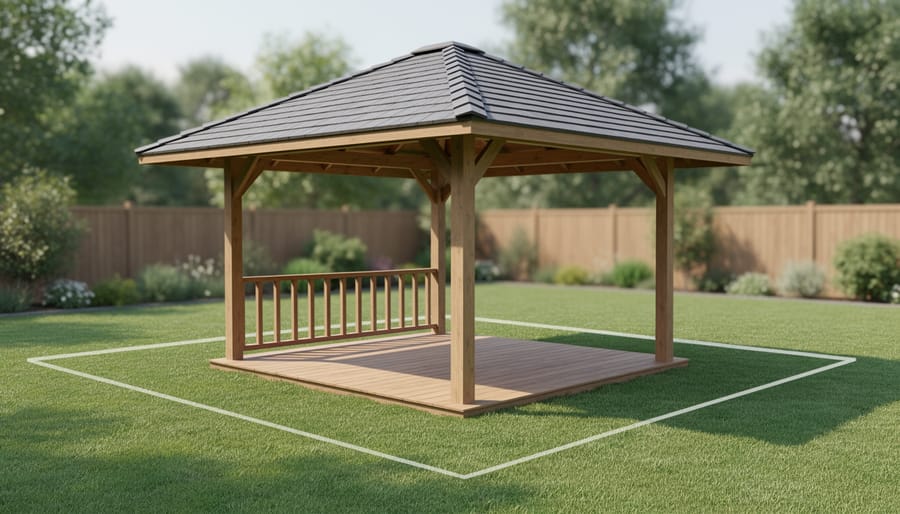
When planning your gazebo, don’t forget to look up! Standard gazebo heights typically range from 8 to 12 feet at the peak, but your specific needs might require more thought than simply going with average measurements.
Consider your tallest family members and guests first. A 6-foot-tall person standing in a gazebo with an 8-foot peak might feel cramped, especially near the edges where roof slopes reduce headroom. If you’re planning to install a ceiling fan, add at least 7 feet of clearance from the floor to the fan blades for both safety and comfort.
Window sight lines from your home matter more than most people realize. A gazebo that blocks your kitchen or living room views can create unexpected frustration. Before finalizing your purchase, use stakes and string to visualize the full height at your proposed location. Walk through your home and check the views from different rooms.
For those considering structural considerations, taller gazebos face greater wind resistance, which may influence your height decision based on your climate. The sweet spot for most homeowners is 10 feet at the peak, providing comfortable headroom without overwhelming your yard’s proportions.
Square vs. Rectangular vs. Octagonal: Shape and Size Together
Shape matters more than you might think when it comes to gazebo size. A 10×10-foot square gazebo actually provides 100 square feet of usable space, while a 10-foot diameter octagon gives you only about 78 square feet. That’s a significant difference, especially if you’re planning to fit specific furniture or host gatherings.
Square and rectangular gazebos maximize corner space, making them ideal for dining sets or outdoor living room arrangements. The straight edges fit neatly against existing structures or property lines, which homeowners often appreciate for efficient yard planning. Rectangular shapes work particularly well for elongated spaces or when you need flexible seating arrangements. For unique yard layouts, L-shaped gazebo designs can maximize corner spaces beautifully.
Octagonal gazebos, while offering less square footage in the same diameter, create a more intimate, conversational setting. The angled sides provide better wind flow and a classic, elegant appearance that many find visually appealing. They work wonderfully as focal points in garden settings where aesthetics matter as much as function.
Here’s a practical tip: When comparing shapes, always check the actual square footage, not just the listed dimensions. A 12-foot octagon might sound spacious, but it provides similar usable space to a 10×10 square. Consider how you’ll arrange furniture and move around inside before deciding. One customer shared that switching from an octagonal plan to a square one allowed them to fit their six-person dining table comfortably, something they hadn’t anticipated during initial planning.
When to Go Bigger (Or Smaller) Than You Think
Sometimes the most practical choice defies the conventional wisdom. While guidelines about space ratios and proportions matter, real-world experience shows that certain situations call for breaking the rules.
Consider Jennifer from Oregon, who initially planned a 10×10 gazebo for her backyard gatherings. “Everyone said it would be enough for our family, but I went with a 12×14 instead,” she shares. “Best decision ever. We can fit our outdoor dining table plus a side buffet setup, and guests actually have elbow room.” Her experience highlights an important truth: entertaining spaces almost always benefit from extra square footage, especially if you regularly host meals or parties.
On the flip side, going smaller than expected sometimes makes more sense. Mark in suburban Chicago downsized from his planned 12×12 to a cozy 10×10 octagonal design. “Our yard looked cramped with the larger mockup,” he explains. “The smaller gazebo actually increased our usable lawn space while still creating that perfect reading nook we wanted.”
When should you upsize? If you’re using the gazebo for dining, add 2-3 feet to your initial measurements. Planning to include a hot tub or outdoor kitchen? Go at least 20% bigger than the equipment footprint alone. For unique gazebo configurations like L-shapes or connected structures, measure twice and give yourself breathing room.
Downsize when maximizing open yard space matters more than shelter area, or when creating intimate, purposeful zones rather than multipurpose spaces.
Choosing the right gazebo size isn’t just about fitting it into your yard—it’s about creating a space that truly works for how you live and entertain. Before you make your purchase, take the time to measure your available area carefully, visualize how you’ll use the space, and consider both current needs and future possibilities. Walk through your yard with measuring tape in hand, lay out a tarp or use stakes and string to mark the footprint, and sit in that space to get a real feel for whether it will accommodate your furniture and guests comfortably.
Remember that a gazebo is an investment in your outdoor living experience. Getting the size right the first time saves you from the disappointment of a cramped space or the regret of overwhelming your landscape. If you’re still uncertain about which dimensions will work best for your specific situation, the team at Storage Sheds Outlet is here to help. With a variety of gazebo sizes available and knowledgeable staff who understand the challenges homeowners face, we can answer your sizing questions and guide you toward the perfect fit for your backyard dreams. Your ideal outdoor retreat is waiting—it just needs the right dimensions to come to life.