


Resin Storage Shed vs Wood: Which Is Right for Your Yard?

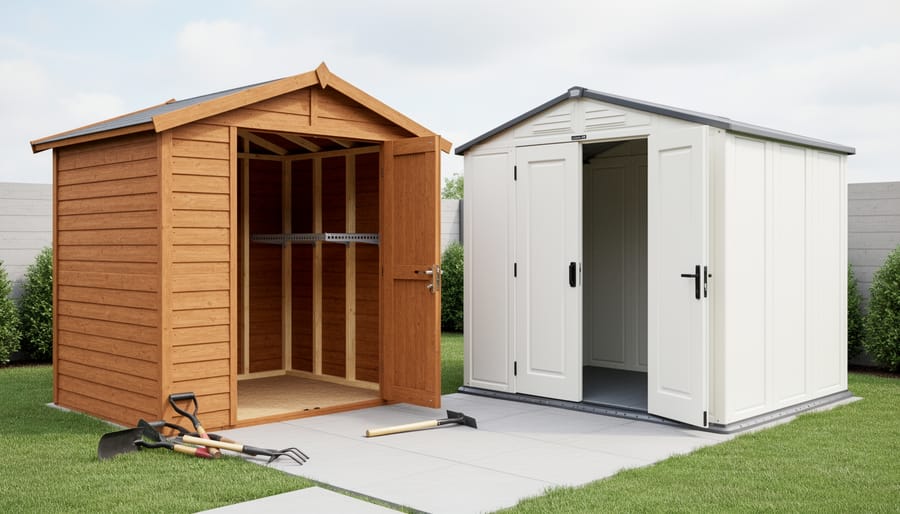
Resin sheds win for most homeowners who want a low-maintenance storage solution that won’t rot, warp, or require annual painting, while wood sheds remain the best choice for anyone prioritizing strength, customization, and a classic aesthetic. After working with both materials across dozens of installations, we’ve found that the decision comes down to three key factors: how much structural load you need to support, whether you’re willing to trade maintenance hours for upfront cost savings, and how the shed needs to blend with your property’s look.
The resin versus wood debate isn’t really about which material is superior overall. It’s about matching the right material to your specific storage needs and lifestyle. Resin sheds have evolved significantly in recent years, with reinforced floor systems and wall panels that can handle respectable weight loads, but they still can’t match the raw structural capacity of a properly framed wood shed when you’re mounting heavy shelving or hanging garden tools across every wall. We’ve watched homeowners choose resin for its install-and-forget convenience, only to wish they’d gone with wood when they needed to add custom shelving or reinforce a wall for heavier equipment.
The good news is that neither choice is wrong if you understand what you’re getting. Throughout this comparison, we’ll show you exactly how each material performs in real-world conditions, what kind of loads they can safely handle, and which option makes the most sense for your storage situation and maintenance tolerance.
Key Takeaway: Wood sheds support 50-100+ pounds per stud-mounted point, ideal for heavy equipment and loaded shelving. Resin walls max out around 15-25 pounds per anchor without reinforcement, requiring special backing or rib mounting for heavier items.
Resin vs. Wood Storage Sheds: At-a-Glance
Here’s a quick look at how resin and wood sheds stack up across the factors that matter most to homeowners. This snapshot will help you identify which material aligns with your priorities before we explore each dimension in detail.
| Feature | Resin Shed | Wood Shed |
|---|---|---|
| Durability | Rot-proof, insect-resistant, UV-stable; 10-15 year lifespan | Prone to rot and insects without treatment; 15-25+ years with proper care |
| Maintenance | Minimal, hose down occasionally, no painting or staining | Regular staining, sealing, or painting every 2-3 years |
| Cost | $500-$3,000; lower long-term upkeep costs | $800-$5,000+; ongoing treatment expenses |
| Installation | Lightweight panels, straightforward assembly, 4-8 hours typical | Heavier framing, more tools needed, often requires two people |
| Load Capacity | Limited wall strength; requires special anchors for heavy shelving | Solid studs support heavy shelves and wall-mounted equipment easily |
| Customization | Fixed colors and styles, difficult to modify or paint | Paint, stain, or alter freely; add windows, trim, custom details |
The most critical trade-off comes down to what you plan to store. Resin sheds shine when you want zero-fuss storage for lawn tools, seasonal decorations, and lighter gear. Wood sheds become the clear winner if you’re mounting heavy shelving, hanging bicycles from wall hooks, or storing equipment that demands structural support beyond what hollow resin panels can provide.
What Each Storage Shed Type Actually Is
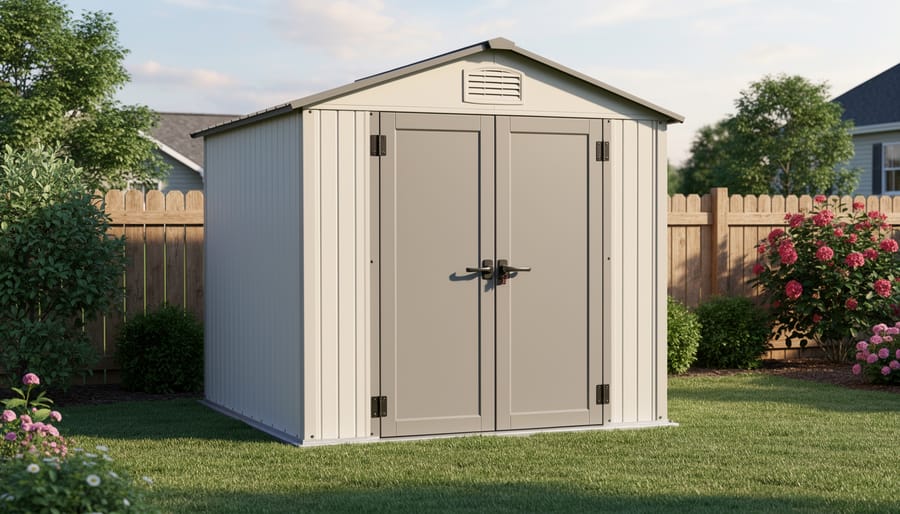
Resin and Vinyl Sheds Explained
Resin sheds are built from molded plastic panels, typically high-density polyethylene (HDPE), polypropylene, or vinyl. These materials are engineered to resist rot, rust, and insect damage, making them inherently weather-resistant without chemical treatment. The plastic is often UV-stabilized to prevent fading and brittleness from sun exposure.
Construction follows a modular approach. Manufacturers mold wall sections, roof panels, and floor pieces that homeowners assemble on-site. Panels connect through interlocking grooves, snap-fit edges, or bolt-together systems. Some models use metal reinforcement bars inside wall cavities for added rigidity, while others rely entirely on the molded plastic structure.
The assembly process typically involves sliding panels into floor channels, snapping walls together at corner joints, and securing everything with provided screws or bolts. Roof panels lock into the top of the walls, often with a tongue-and-groove design. We’ve found that most resin sheds come with pre-drilled holes and color-matched hardware, which speeds up installation considerably.
Modern resin sheds in 2026 feature reinforced corners and wall studs molded directly into panels. This internal ribbing adds strength without exposed framing, though it’s still less robust than traditional wood studs for mounting heavy shelving, a critical consideration we’ll explore in the head-to-head comparison.
Wood Sheds Explained
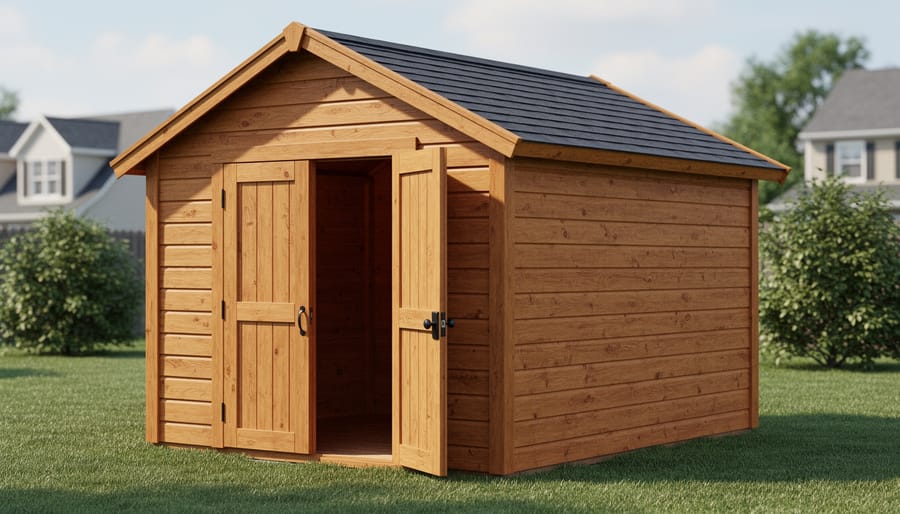
Wood sheds are built using traditional lumber framing techniques similar to house construction. They’re assembled with vertical studs, horizontal beams, and roof trusses that create a sturdy skeleton covered with wood siding. This frame-and-panel approach gives wood sheds exceptional structural strength and makes them highly adaptable to customization.
Cedar is the premium choice for wood sheds. It naturally resists rot and insects thanks to oils in the wood, and it weathers to an attractive silvery gray if left untreated. We’ve seen cedar sheds last 15-20 years with minimal maintenance, though they command the highest price.
Pine sheds cost less but require more protection. Untreated pine will rot quickly when exposed to moisture, so most manufacturers use pressure-treated pine for the framing and floor. The treatment forces preservatives deep into the wood grain, extending lifespan to 10-15 years. You’ll still need to paint or stain the exterior every few years to prevent weathering.
The framing construction gives wood sheds a major advantage over resin: those vertical studs provide solid anchor points throughout the walls. You can mount shelves, pegboards, or heavy hooks anywhere along a stud and trust it to hold substantial weight. The lumber frame also makes modifications straightforward, cutting a window, adding ventilation, or extending the structure involves familiar carpentry rather than specialized plastic welding or replacement panels.
Resin vs. Wood: Head-to-Head Comparison
Durability and Lifespan
We’ve found that resin sheds resist rot and insects far better than wood. The plastic construction means moisture can’t penetrate the walls, and termites or carpenter ants simply aren’t attracted to synthetic materials. Wood sheds, even pressure-treated or cedar options, remain vulnerable to moisture damage and insect activity without regular preventive treatment.
Warping and cracking present opposite challenges. Resin panels can become brittle in extreme cold and may crack if struck, while prolonged UV exposure sometimes causes fading or surface deterioration despite UV inhibitors. Wood naturally expands and contracts with temperature and humidity changes, leading to warping, splitting, or gaps between boards over time.
With proper care, resin sheds typically last 10 to 15 years before showing significant wear. Wood sheds can match or exceed that lifespan, but only if you maintain a consistent schedule of staining, sealing, and treating for rot and pests every few years. We’ve observed that neglected wood sheds deteriorate noticeably faster than neglected resin ones, making maintenance commitment the deciding factor in longevity. For a deeper look at how plastic holds up in real-world conditions, see our analysis of resin durability and value.
Weather Resistance
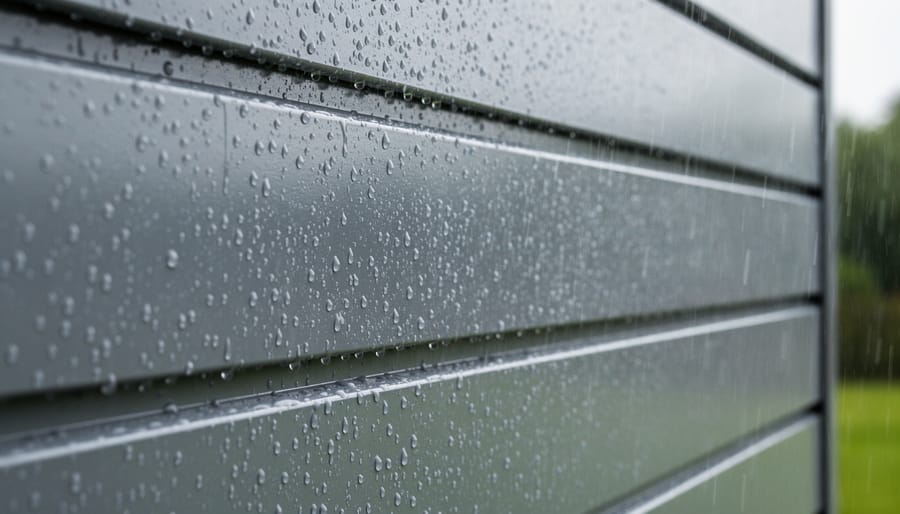
Weather resistance stands as one of the most critical factors in choosing between resin and wood sheds, especially if you live in an area with heavy rainfall, snow, or intense summer sun. Resin sheds excel here, they’re engineered to repel water completely, won’t rot or harbor mold, and the plastic shed durability means they handle moisture without any protective coatings. UV-resistant formulas prevent fading and brittleness, though lower-quality resin can still become chalky after years of direct sunlight. Temperature swings barely affect resin panels, and snow loads slide off the smooth surfaces easily.
Wood sheds face more weather challenges. Untreated wood absorbs moisture, leading to rot, warping, and insect damage within a few seasons. Cedar and pressure-treated lumber resist decay better, but they still require regular sealing or staining to maintain protection. Wood expands and contracts with humidity changes, which can cause gaps or misalignment over time. UV exposure dries out wood, creating cracks and requiring refinishing to prevent deterioration. However, properly maintained wood sheds can withstand harsh climates for decades, it’s the upkeep commitment that separates them from low-maintenance resin alternatives.
Maintenance Requirements
Resin sheds need almost no upkeep. We wash ours once or twice a year with a garden hose and mild soap to remove dirt and pollen, that’s it. No painting, no staining, no sealing. If panels get scuffed, a magic eraser or plastic cleaner brings back the finish. The main ongoing task is checking door hinges and locks for smooth operation, which takes a few minutes. Over the years, you’ll spend maybe an hour annually and no money beyond basic cleaning supplies.
Wood sheds demand consistent attention. Cedar and pressure-treated lumber need staining or sealing every two to three years to prevent moisture damage, rot, and UV fading. We’ve found this costs $50-150 in materials per treatment, plus several hours of scraping, prepping, and applying finish. Between treatments, inspect for loose boards, pest damage, and rot spots, especially around the base and roof edges. Unpainted wood grays naturally, which some homeowners like, but it still requires periodic checks and repairs. Plan on dedicating a weekend every few years to refinishing, plus seasonal inspections. Wood’s charm comes with hands-on commitment; resin trades that character for near-zero maintenance burden.
Installation and Assembly
Resin sheds arrive in pre-molded panels that snap or bolt together, making them remarkably DIY-friendly. We’ve found most homeowners can assemble a typical 8×10 resin shed in 4-6 hours with just a drill, level, and basic hand tools. The panels are lightweight enough for one person to handle, though a helper speeds things up. Instructions are usually straightforward, and you won’t need carpentry skills, just patience to align panels properly before tightening bolts. Check out our shed assembly tips for guidance on avoiding common pitfalls during setup.
Wood sheds demand more effort and skill. You’re either building from scratch with lumber (requiring saw, square, hammer, and framing knowledge) or assembling a prefab kit with pre-cut pieces. Even kits take longer, expect a full weekend for a similar-sized wood shed. Cutting, squaring corners, and ensuring structural integrity requires precision. Many homeowners hire contractors for wood sheds, adding several hundred dollars to the cost.
Both need solid foundations. Resin sheds can sit on gravel beds, concrete pavers, or treated wood frames, you just need a flat, level surface. Wood sheds typically require more robust bases like concrete slabs or reinforced skid foundations to prevent moisture wicking and structural settling. Foundation prep adds time and expense to either option, but wood’s weight and moisture sensitivity make this step more critical.
Upfront and Long-Term Costs
Resin sheds typically cost between $400 and $3,000, while wood sheds range from $800 to $5,000 for comparable sizes. The lower entry price makes resin appealing if you’re watching your budget, but the upfront difference tells only part of the story.
Over 10-15 years, maintenance costs shift the equation. Wood sheds need staining or painting every 2-3 years, figure $100-300 per treatment plus your time. That’s an extra $500-1,500 over a decade, not counting repairs for rot or warped boards. Resin sheds need occasional washing and virtually nothing else, keeping ongoing costs near zero.
Total ownership cost often lands closer than you’d expect. A $1,200 resin shed stays at roughly $1,200 after fifteen years, while a $1,500 cedar shed might reach $2,500-3,000 with upkeep. We’ve found that budget-conscious homeowners get the best value by matching shed type to how they’ll use it: if you plan to mount heavy shelving and tools, the wood shed’s structural advantage justifies its higher total cost. For lighter storage in a hands-off setup, plastic sheds value improves dramatically when you account for zero maintenance over their lifespan.
Appearance and Customization
We’ve found that wood sheds win hands-down for homeowners who care about aesthetics and personalization. Wood accepts any exterior paint or stain, letting you match your home’s trim, pick a custom color, or change the look entirely in a weekend. Cedar naturally weathers to a silver-gray patina if you prefer a rustic vibe, while pine can be painted bright white for a classic farmhouse feel or stained dark for a modern backyard office. You can add window boxes, trim details, cupolas, or decorative hardware without worrying about melting or cracking the material.
Resin sheds come in a narrower palette, typically beige, gray, brown, or taupe neutrals molded into the plastic. The color runs through the entire panel, so scratches don’t show white underneath, but you’re stuck with whatever shade you buy. Most manufacturers warn against painting resin because the plastic expands and contracts with temperature swings, causing paint to crack and peel within a season or two. We’ve seen attempts to customize resin sheds with adhesive decals or vinyl wraps, but longevity is hit-or-miss.
For traditional homes, cottages, or gardens where the shed should complement existing architecture, wood offers far more flexibility. Resin suits modern, minimalist yards where a neutral, low-profile storage box blends into the background without demanding attention.
Shelving and Wall-Mount Load Limits
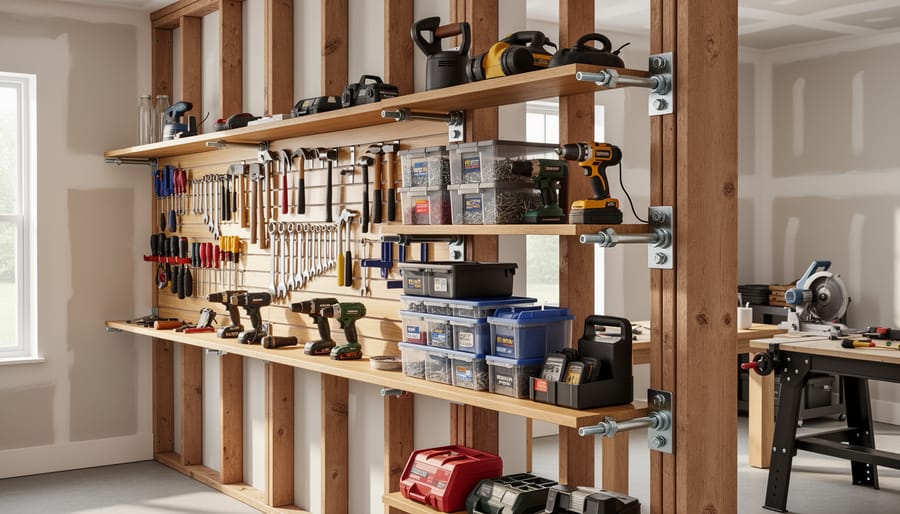
When we tested wall-mounting capabilities in both shed types, the differences became immediately clear. Wood sheds handle heavy loads far better because you’re driving screws directly into solid studs, typically supporting 50 to 100+ pounds per mounting point when anchored properly into 2×4 framing. We hung heavy power tools, yard equipment, and loaded shelves without concern. The structural integrity of wood framing means you can install substantial shelving systems and wall-mounted racks exactly where you need them.
Resin sheds require a different approach entirely. The hollow plastic walls can’t support heavy items without reinforcement, typically handling only 15 to 25 pounds per anchor point with standard hollow-wall anchors. For heavier storage, you’ll need to locate and use the internal support ribs, install backing boards, or add reinforcement panels, all of which require planning before you start mounting. We found this limitation affects real-world usability: storing riding mower accessories, heavy extension ladders, or full tool racks becomes complicated.
If you’re planning to store lawn mowers, snowblowers, or heavy seasonal equipment on wall hooks, wood gives you the flexibility to mount anywhere along the studs. With resin, you’ll need creative shed storage hacks and thoughtful vinyl shed organization strategies to work within the load limits. The hardware differs too: wood takes standard wood screws into studs, while resin demands toggle bolts, expansion anchors, or manufacturer-specific mounting systems that add cost and complexity.
Pros and Cons: Resin vs. Wood Sheds
Choosing between resin and wood sheds means weighing distinct advantages and limitations. Here’s a clear breakdown of what each material brings to the table, and where it falls short.
Resin Sheds
Pros
- Virtually maintenance-free with no painting, staining, or sealing required
- Excellent weather resistance against rot, rust, and insect damage
- Quick assembly with interlocking panels and minimal tools needed
- Lightweight construction makes relocation possible if you move or redesign your yard
Cons
- Limited wall-mount load capacity requires special anchors and reinforcement for heavy shelving
- Fewer customization options with fixed colors and no ability to paint or modify panels
- Can look less natural or traditional in yards with classic landscaping
- Vulnerable to denting or cracking from heavy impacts
For homeowners prioritizing convenience and durability in harsh climates, resin delivers. The trade-off comes when you need substantial storage capacity or want a shed that blends seamlessly with traditional home styles.
Wood Sheds
Pros
- Superior load-bearing capacity with solid studs that support heavy shelving and wall-mounted equipment
- Fully customizable with paint, stain, and structural modifications to match your vision
- Natural aesthetic complements most home exteriors and landscaping styles
- Easy to repair with standard lumber and basic carpentry skills
Cons
- Ongoing maintenance required including periodic staining, sealing, and rot prevention
- Susceptible to moisture damage, insect infestation, and warping without proper care
- More time-intensive assembly with framing, sheathing, and roofing steps
- Higher long-term costs when factoring in maintenance materials and time investment
Wood sheds reward hands-on homeowners who value structural strength and design flexibility. The commitment to regular upkeep is real, but for those storing heavy tools or seeking a traditional look, it’s worth the effort.
Who Should Choose Which Shed Type
Choosing between resin and wood ultimately comes down to how you plan to use the shed and what trade-offs matter most in your situation.
Resin sheds are your best bet if you:
- Want to minimize or eliminate annual maintenance, no painting, staining, or sealing required
- Live in a humid, coastal, or high-rainfall climate where rot and moisture are constant threats
- Plan to store lighter items like garden tools, pool supplies, patio cushions, or sports equipment
- Need quick assembly without carpentry skills or specialized tools
- Prefer a clean, modern look that won’t fade or weather over time
- Rent your home and want a storage solution you can take with you when you move
We’ve found resin sheds shine for homeowners who value convenience and durability in challenging weather. If you’re tired of re-staining your deck every spring or dealing with mildew on outdoor furniture, a resin shed delivers that same worry-free experience for storage.
Wood sheds make more sense when you:
Need serious load capacity for wall-mounted shelving, heavy power tools, or workshop equipment. Wood framing handles the weight that resin walls can’t support without extensive reinforcement. If you’re storing a riding mower, metal shelving units loaded with paint cans, or a wall-mounted bike rack, wood studs give you reliable anchor points throughout the structure.
Wood also wins if customization matters to you. You can paint it any color, add windows wherever you want them, install electrical wiring for lighting or power tools, and modify the interior layout as your needs change. For homeowners with traditional or rustic home exteriors, a cedar or pine shed blends naturally into the landscape in a way plastic never quite matches.
Choose wood if you’re comfortable with periodic maintenance and want a shed that feels like a permanent, integrated part of your property rather than a standalone storage box.
What Each Option Is
Storage sheds come in two main material categories, each with distinct construction and characteristics that affect how they perform in your yard.
Resin sheds are made from durable plastic polymers, typically high-density polyethylene (HDPE), polypropylene, or vinyl resin. These materials are molded into interlocking panels that snap or bolt together, creating a lightweight structure that resists moisture and rust. The walls are hollow or ribbed inside for strength while keeping weight manageable. Most resin sheds arrive as prefabricated kits with pre-cut panels, requiring no painting or wood treatment before assembly.
Wood sheds are constructed from natural lumber, most commonly cedar, pine, or pressure-treated timber. These sheds feature traditional stud-frame construction with vertical support beams, horizontal cross-bracing, and either plywood or tongue-and-groove board siding. The solid wood framing provides natural anchor points throughout the walls and can support significant weight from shelves and wall-mounted storage. Wood sheds arrive as cut-to-size lumber kits or fully assembled units, and they require protective finishes like paint, stain, or sealant to guard against weather and decay.
Both types sit on a level foundation, concrete, gravel, or treated wood, but their internal structure determines how you can use the interior space for storage.
Common Questions About Resin and Wood Sheds
When you’re comparing shed materials, certain questions come up again and again. We’ve gathered the most common concerns homeowners have about resin and wood sheds to help you make a confident choice.
Can you drill into resin sheds for shelves?
Yes, but you need special anchors designed for plastic walls. Standard screws pull out easily from thin resin panels, so reinforcement plates or backing boards are often necessary for heavier items.
How long do resin sheds really last?
Quality resin sheds typically last 15-20 years with minimal care, resisting rot and insect damage that plague wood. The plastic can become brittle in extreme cold over time, and UV exposure may cause fading, but the structure remains waterproof.
Are wood sheds worth the extra maintenance?
If you need serious load capacity for heavy equipment or plan extensive customization, absolutely. The trade-off is regular staining every few years and periodic repairs, but wood handles structural demands that would overwhelm resin walls.
What’s the strongest material for heavy tool storage?
Wood wins decisively for weight-bearing strength. Solid wood studs can support heavy wall-mounted cabinets, metal shelving loaded with tools, and overhead storage racks that resin simply cannot match without extensive reinforcement.
Another frequent concern involves permits. Most residential sheds under 120 square feet don’t require building permits, but local codes vary widely. Wood sheds sometimes face stricter scrutiny because they’re permanent structures, while resin sheds may qualify as temporary in some jurisdictions. Always check with your local building department before purchasing either type.
Regarding repairs, wood sheds offer a clear advantage in fixability. You can replace a damaged board, patch rot, or reinforce weak spots with basic carpentry skills and readily available lumber. Resin repairs prove trickier since you can’t simply swap out a cracked panel without ordering manufacturer-specific replacements, and color-matched parts become harder to find as models age.
Value comparisons get complicated. Resin sheds cost less upfront and save money on maintenance supplies over the years. Wood sheds demand higher initial investment and ongoing upkeep costs, but they add more to property value and last longer when properly maintained. The best value depends entirely on your timeline and whether you plan to stay in your home long-term or move within a few years.
Your choice between resin and wood ultimately comes down to what you value most. If you want weatherproof, hassle-free storage that won’t demand weekend maintenance sessions, resin delivers exactly that, especially in humid or coastal climates where wood struggles. We’ve found resin sheds handle light to moderate loads beautifully without ongoing upkeep, making them ideal for storing gardening supplies, outdoor cushions, and seasonal gear.
Wood sheds shine when you need serious load capacity. If you’re mounting heavy shelves for power tools, storing lawn equipment, or planning custom wall configurations, wood’s structural strength makes it the clear winner. You’ll invest time in sealing and staining, but you gain the flexibility to modify and personalize your shed however your needs evolve.
Before you buy, nail down your priorities. Walk through what you’ll actually store, not just now, but two years from now when you might add that table saw or snowblower. Consider your climate honestly: harsh winters and constant rain favor resin’s resilience, while wood fits homeowners who appreciate traditional aesthetics and don’t mind seasonal maintenance. Choose the shed that matches both your storage load and your lifestyle, and you’ll get years of reliable service without regrets.