


What Is a 35 PSF Snow Rating (and How Does It Protect Your Carport)?

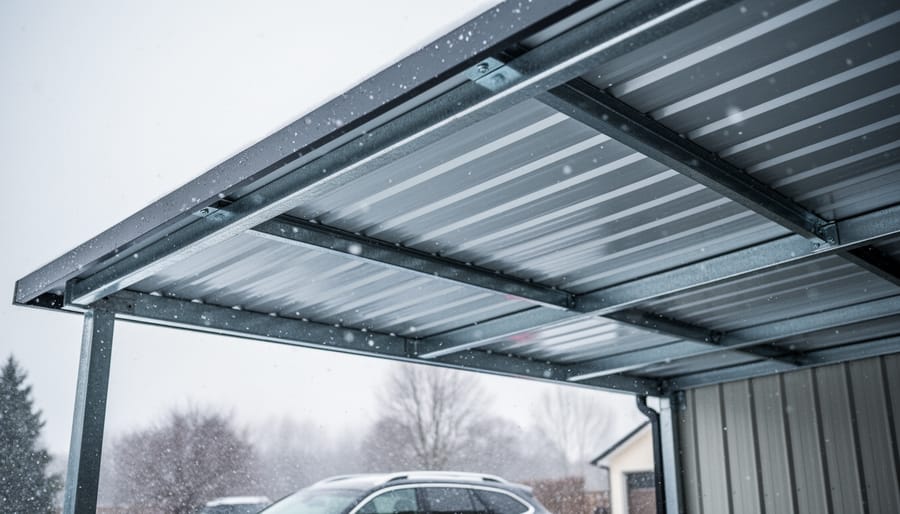
A 35 PSF snow rating means a metal structure can safely support 35 pounds of snow per square foot of roof surface before experiencing stress or potential failure. This middle-tier rating works well for regions with light to moderate snowfall, typically handling around 3 to 4 feet of fresh, powdery snow or approximately 1 to 2 feet of wet, heavy snow.
If you’re shopping for a carport or metal building, understanding this number could save you from either overpaying for capacity you don’t need or, worse, watching your investment buckle under winter weather. The challenge is that snow ratings aren’t one-size-fits-all. A 35 PSF structure might be perfect for someone in North Carolina but dangerously inadequate for a homeowner in upstate New York.
Most buyers get stuck on this decision because PSF numbers feel abstract. What does 35 pounds actually look like on your roof? How does it compare to the 20 PSF economy option or the 40 PSF heavy-duty version? And here’s the part that catches people off guard: snow rating alone doesn’t tell the whole story. You also need to factor in wind loads, roof pitch, and whether your area gets the light, fluffy stuff or dense, water-laden snow that weighs significantly more.
This guide breaks down exactly what a 35 PSF snow rating delivers in real-world terms, helps you match it to your local climate data, and walks through the decision points that determine whether this rating gives you adequate protection or leaves you exposed when the next storm rolls through.
What a 35 PSF Snow Rating Really Means
PSF stands for pounds per square foot, and it measures the amount of weight a structure can support across its surface area. A 35 PSF snow rating means your carport can safely hold 35 pounds of snow weight on every square foot of its roof without risk of structural failure.
To put that in perspective, imagine placing a 35-pound weight on every single square foot of your carport’s roof simultaneously. That’s the distributed load your structure is engineered to handle. For a typical 12×20-foot carport (240 square feet of roof area), a 35 PSF rating translates to supporting 8,400 pounds of snow total, roughly the weight of four compact cars.
- PSF (Pounds Per Square Foot)
- A measurement of distributed weight across a surface, calculated by dividing total load by the area it covers. In snow ratings, PSF tells you the maximum weight capacity per square foot of roof surface.
- Snow Load
- The actual weight of accumulated snow and ice on a structure’s roof at any given time. This load varies based on snow depth, moisture content, and whether ice has formed.
- Ground Snow Load
- The maximum expected snow weight on the ground in your geographic area, determined by historical weather data and used by building codes. Roof snow loads are calculated from this baseline number.
- Structural Capacity
- The maximum load a building or carport can support before experiencing deformation, damage, or collapse. Engineers design structures with safety margins above the rated capacity.
The 35 PSF number represents a tested and certified threshold, not a breaking point. Engineers build in safety factors, so your carport won’t suddenly fail the moment snow reaches exactly 35 pounds per square foot. However, consistently exceeding the rating shortens your structure’s lifespan and increases the risk of damage during extreme weather events. This rating tells you the carport is designed for moderate snow accumulation, sufficient for many regions but not intended for areas that regularly experience heavy, prolonged snowfall.
How Snow Load Ratings Work for Carports
Understanding the Relationship Between PSF and Actual Snow Depth
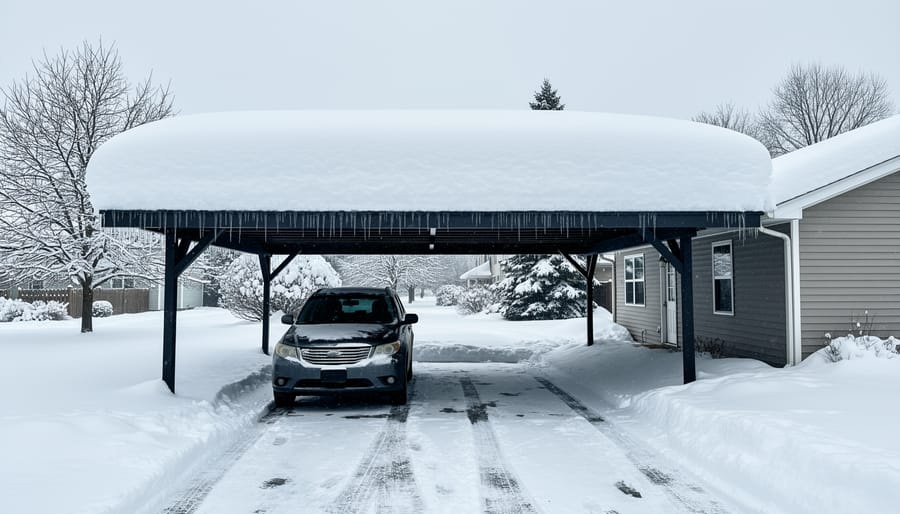
Understanding that a 35 PSF rating doesn’t directly translate to a simple “X inches of snow” makes shopping for a carport more complex than many homeowners expect. The number of inches your carport can handle depends entirely on what kind of snow lands on it.
Light, fluffy powder snow weighs roughly 3-5 pounds per cubic foot, meaning a 35 PSF carport could theoretically handle 7-12 inches of this airy snowfall. But wet, heavy snow, the kind that falls during warmer storms or after partial melting and refreezing, weighs 12-20 pounds per cubic foot or more. In that scenario, your 35 PSF rating translates to just 2-3 inches before you’re approaching the structure’s limits.
The critical variable is moisture content. Meteorologists use the snow water equivalent definition to measure how much liquid water a given snowfall contains, which directly determines its weight. Fresh powder might have a water equivalent of just 5-10%, while wet spring snow can reach 30% or higher.
This variability explains why you can’t simply say “35 PSF equals 8 inches.” The same carport that easily handles a foot of dry Rocky Mountain powder could be stressed by 4 inches of the heavy, wet stuff common in the Mid-Atlantic during March thaws. When evaluating whether 35 PSF suits your area, consider your typical snow type, not just annual snowfall totals, to make an informed decision.
Where a 35 PSF Rating Fits in the Spectrum
Snow load ratings for carports typically fall into three broad categories that correspond to regional climate patterns across the United States.
At the lower end, 20 PSF ratings serve areas with minimal or occasional snowfall. These structures handle light accumulation, think a few inches of powder that melts within days. You’ll find 20 PSF carports common in the southern states, coastal regions of California, and parts of the Southwest where snow is rare or nonexistent. A 20 PSF rating works fine in Dallas, Atlanta, or Phoenix, where winter weather rarely threatens outdoor structures.
The 35 PSF rating occupies the middle ground, designed for moderate snow regions that experience regular winter accumulation but not the extreme loads found in mountain zones. This rating accommodates roughly 12 to 18 inches of average snow, depending on moisture content. States in the mid-Atlantic, lower Midwest, and transitional zones between southern and northern climates often require 35 PSF protection. Think Virginia, North Carolina’s Piedmont region, southern Illinois, Kansas, or the lower elevations of Tennessee. These areas get consistent winter weather without the lake-effect blizzards or sustained deep snow of northern states.
Heavy snow regions demand 50 PSF and higher. These ratings become necessary in areas with frequent storms, lake-effect precipitation, or high-altitude locations where snow persists for months. Northern states like Michigan, Wisconsin, Minnesota, upstate New York, and mountainous regions throughout the Rockies and Sierra Nevada typically require 50 PSF minimum. Some mountain communities mandate ratings of 70 PSF or more based on elevation and historical snow data.
Your carport’s rating should match or exceed your area’s ground snow load, which building departments determine using decades of weather records and engineering standards. A 35 PSF carport in a 20 PSF zone wastes no money, it provides extra peace of mind. But a 20 PSF structure in a 35 PSF region risks collapse during a heavy winter storm.
Understanding MPH Wind Ratings for Complete Protection
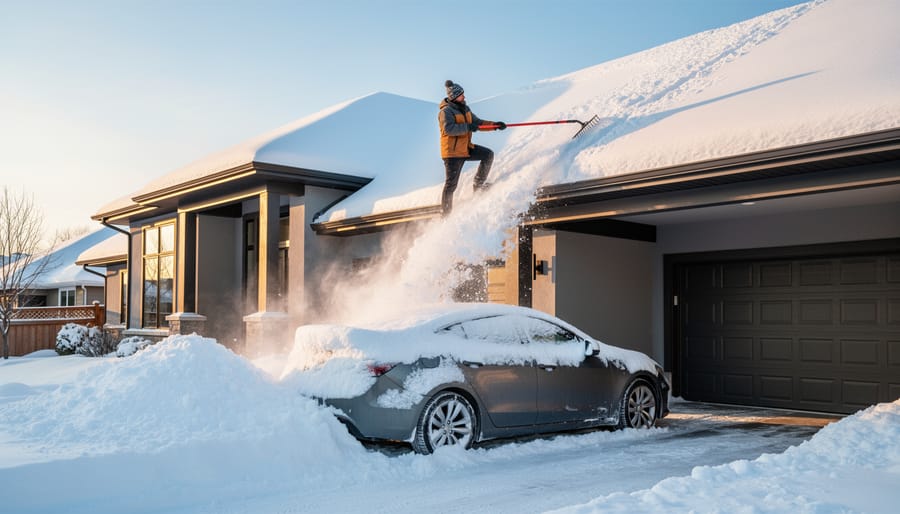
While a 35 PSF snow rating protects your carport from collapsing under heavy snow, it’s only half the story. Wind ratings tell you whether your structure can withstand the horizontal forces that hurricanes, thunderstorms, and strong winter gusts throw at it. These ratings measure the maximum sustained wind speed your carport can handle before structural damage occurs, and they’re expressed in miles per hour (MPH).
Wind certification works differently than snow loads. Engineers subject carport designs to simulated wind forces in controlled tests, examining how the frame, roof panels, and anchoring system respond to sustained pressure and sudden gusts. The rating represents the wind speed at which the structure maintains its integrity without panels tearing off, frames bending, or the entire carport lifting from its foundation.
Common wind rating tiers include:
- 70 MPH, suitable for areas with moderate winds and occasional storms, but not coastal regions
- 90 MPH, designed for regions with stronger seasonal storms and some coastal areas with lower hurricane risk
- 110+ MPH, built for high-wind zones, coastal areas, and regions prone to hurricanes or severe thunderstorms
You need both ratings working together because weather rarely arrives in isolation. A winter storm in the Midwest might dump heavy snow while winds gust above 50 MPH. A carport with excellent snow capacity but weak wind resistance could lose roof panels or collapse sideways, even if the snow load stays within limits. Conversely, a structure built for high winds but low snow loads won’t help you in Vermont.
Check your area’s typical wind patterns alongside snow expectations. Coastal homeowners should prioritize higher MPH ratings even in moderate snow zones, while inland regions might balance both ratings more evenly based on local storm history.
When a 35 PSF Snow Rating Is Right for Your Location
Finding Your Area’s Required Snow Load
Start by visiting the American Society of Civil Engineers (ASCE 7) hazard tool online, which provides ground snow load data by address. Enter your zip code or city, and the map will display your area’s design snow load in PSF, this is the baseline number your carport must meet or exceed. Print or save this result, as building officials often require it during permit applications.
Next, call your local building department to confirm the jurisdiction’s specific requirements. Some counties or municipalities enforce stricter standards than ASCE minimums, especially in areas with microclimates or elevation changes. Ask whether they require engineered stamped drawings for structures meeting certain snow ratings, and inquire if your planned carport location sits in a zone with adjusted load requirements. For example, Montana snow load guidance shows how state agencies publish region-specific tables that supplement federal maps.
Finally, review historical weather records through your county extension office or the National Weather Service. Look for patterns of heavy snow years and unusual accumulation events, these help you decide whether to add a safety margin above the minimum rating, particularly if you live near the boundary between rating zones.
What Makes a Carport Achieve a 35 PSF Rating
A carport that earns a 35 PSF snow rating doesn’t achieve this certification by accident. The rating reflects specific engineering choices and construction standards that manufacturers build into the structure from the ground up. When you’re evaluating different models, understanding these components helps you recognize quality construction and verify that a carport truly meets the 35 PSF specification it claims.
The frame gauge represents the starting point. A 35 PSF rating typically requires 12-gauge or 14-gauge steel tubing for the main frame members, with thicker gauge providing greater strength. Lighter 16-gauge or 18-gauge frames won’t achieve this rating without significant reinforcement. The truss spacing matters considerably, trusses spaced 2 to 4 feet apart can distribute snow load more effectively than wider spacing, preventing sagging or collapse under weight.
Several critical elements work together to achieve a certified 35 PSF capacity:
- Vertical leg tubing: 2.25-inch to 2.5-inch diameter steel posts provide essential vertical support
- Cross-bracing systems: Diagonal braces and horizontal girts stabilize the frame against lateral movement and distribute weight
- Roof pitch: Slopes of 3:12 to 5:12 encourage snow to slide off naturally, reducing accumulation
- Panel attachment: Properly spaced carport fasteners secure roof panels without creating weak points
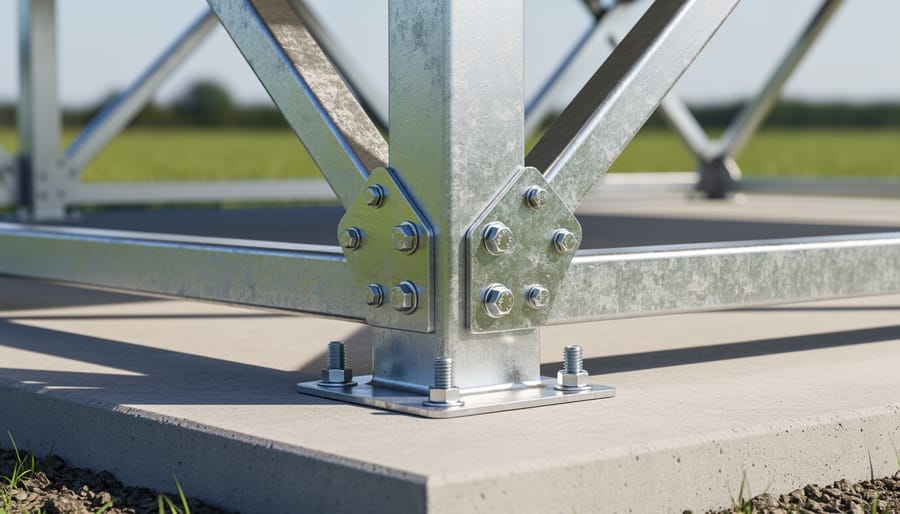
- Foundation anchoring: Mobile home anchors, concrete footings, or rebar ground anchors transfer loads safely into the ground
The anchoring system deserves special attention because even the strongest frame fails without proper ground attachment. When you anchor a carport correctly for a 35 PSF rating, you’re preventing uplift and lateral shift under combined snow and wind loads. Manufacturers specify minimum anchor sizes and spacing for each rating level.
Galvanization protects these components from rust and corrosion that would weaken the structure over time. When you choose galvanized parts you’re maintaining the structural integrity that supports the 35 PSF certification for decades rather than watching the rating deteriorate as metal corrodes.
Common Questions About 35 PSF Snow Ratings
Most homeowners have practical questions once they understand what a 35 PSF rating means. Here are the answers to the most common concerns about living with and maintaining a 35 PSF rated carport.
Can I upgrade a lower-rated carport to meet a 35 PSF standard?
Generally, no, the rating comes from the entire structural design, including frame gauge, truss spacing, and roof pitch built in from the start. Adding braces or supports after construction won’t give you a certified upgrade and may void warranties.
What happens if snow accumulation exceeds the 35 PSF rating?
The structure faces risk of bending, sagging, or collapse if the load significantly exceeds its capacity. You should remove snow before it reaches dangerous levels rather than testing the limits.
Does the 35 PSF rating decrease as my carport ages?
The rating itself doesn’t change, but rust, loose connections, or damage can reduce actual load capacity over time. Regular inspections and maintenance help preserve the original strength.
How does ice accumulation factor into the 35 PSF rating?
Ice weighs significantly more than snow per inch, about 5 pounds per square foot per inch of solid ice compared to 1-2 pounds for fresh snow. If ice forms on your roof, it counts toward the total load and adds up quickly.
Maintenance plays a bigger role than most people realize. Keeping gutters clear, tightening bolts annually, and touching up any scratches or rust spots helps your carport maintain its rated capacity. Think of the 35 PSF certification as the starting point, how well you care for the structure determines whether it performs at that level five or ten years down the road.
Pay attention after heavy storms. If you notice any sagging, unusual creaking, or visible stress on the frame, clear the snow immediately and inspect for damage. These signs mean the load is approaching or exceeding what the structure can safely handle, regardless of the rating stamped on your paperwork.
Understanding what a 35 PSF snow rating actually means puts you in control of your carport purchase instead of relying on guesswork or sales pitches. This rating gives you a measurable benchmark for protection in moderate snow regions, where winters bring regular accumulation but not the extreme loads seen in mountainous areas. Pairing that knowledge with MPH wind ratings creates a complete picture of how your structure will perform year-round, not just during snowstorms.
A 35 PSF certification isn’t just a number on a spec sheet. It represents engineered strength built into the frame gauge, roof pitch, truss spacing, and secure anchoring system. Before you buy, take thirty minutes to check your local ground snow load requirements using ASCE maps or your building department’s guidelines. Matching your carport’s rating to your actual climate ensures your investment stays standing through decades of weather instead of becoming a expensive repair project after the first heavy storm. You’re making a long-term addition to your property, so verify the numbers match your needs.