


Why Permeable Gravel Is Your Shed’s Best Foundation Friend

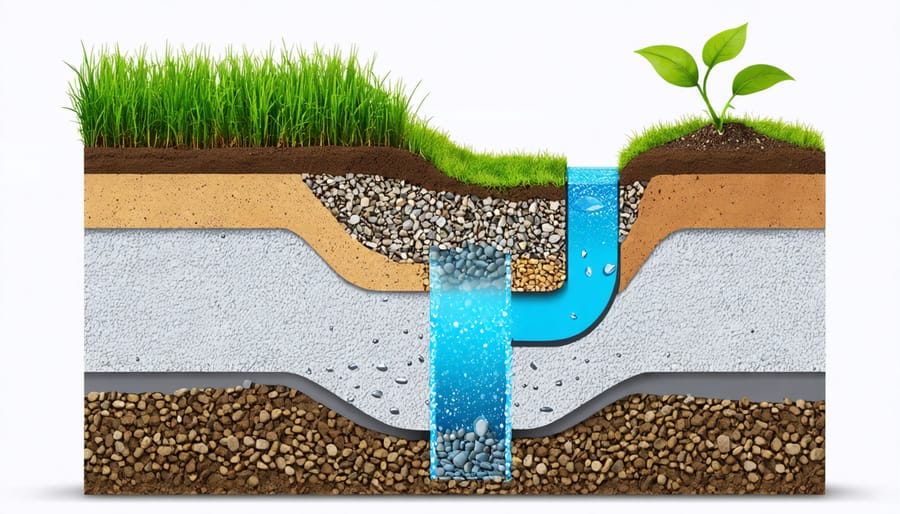
The Permeable Landscape Pavers Grid is the best pick for most people building a shed pad, because its 5 cm HDPE cells hold gravel in place across a full 1 m x 10 m roll and rate up to 8,000 lbs. That covers the typical backyard shed, garden path, or light driveway without overbuying. If you’re planning heavier loads or want recycled material, the Vodaland Permeable HexPave System is our choice, and TRUEGRID is where we’d go when long-term stability matters more than anything else.
We judged all three the way a shed owner would: how well each one confines loose stone, how it handles water moving through it, and how forgiving it is over soft or uneven ground. Loose gravel alone shifts and ruts. A cellular grid fixes that while keeping the drainage that makes gravel worth using in the first place. Poor drainage is also the quiet cause of most floor rot, which is why we tie these picks back to proper keeping water away from the base of your shed and giving your shed floor room to breathe. A good base is one layer of a watertight, weather-resistant shed and if you’d rather start from a complete system, our foundation kits are worth a look.
Key Takeaway: A cellular grid under gravel gives a shed base better drainage and stability than loose stone alone. Pick the Permeable Landscape Pavers Grid for a full pad on a budget, Vodaland HexPave for heavy loads and recycled material, and TRUEGRID if you want a premium engineered system.
Top Picks at a Glance: Which Permeable Gravel Grid Fits Your Shed
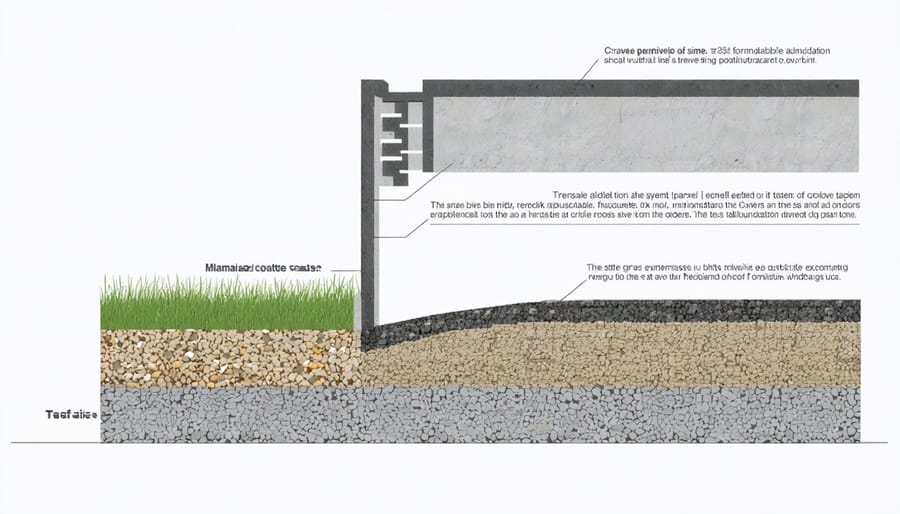
Picking a permeable gravel grid for a shed comes down to three questions: how heavy the load is, how big the pad is, and how much you want to spend. Here’s how the three systems line up.
Permeable Landscape Pavers Grid: best for a budget-friendly, large-roll pad. The 1 m x 10 m roll covers a typical shed footprint without piecing many sections together, and it’s the easiest way to stabilize gravel over soft or expansive soil.
Vodaland Permeable HexPave System: best for heavy-duty loads. Its recycled-plastic tiles suit heavier sheds or spots where equipment will roll across the base.
TRUEGRID: best premium option. It’s an engineered system aimed at buyers who want long-term stability and are willing to pay for it.
Whichever you choose, good drainage is what helps you keep water out of your shed. The full comparison below breaks down each system’s specs side by side.
How We Tested and Compared Permeable Gravel Systems
We didn’t run lab tests, and we want to be upfront about that. Our comparison rests on manufacturer specifications and listing data, read against how a typical residential shed pad behaves in practice. That means the numbers below are published claims, not independent measurements, and you should confirm them with the seller before you buy.
Here’s the order we worked through each system:
- Check the load rating first, since a shed plus its contents sets the minimum the grid must handle.
- Look at the material, comparing upgraded HDPE rolls against recycled plastic tiles and how each is likely to hold up buried under gravel.
- Compare thickness or depth, because a deeper cell holds more stone but means more excavation.
- Match size and coverage to a typical pad, noting whether the product ships as a roll or as individual tiles.
- Review application suitability, including which infill and which surfaces or soils the maker says it works over.
- Weigh cost against the area each product covers, rather than judging the sticker price alone.
For a shed specifically, the load rating matters most, but it only performs as well as what’s underneath it. Your base soil, the depth you can excavate, and which way water will drain all change the result, and good ground prep will do more for long-term stability than any single spec on a data sheet.
Why Trust Our Shed Foundation Advice
Storage Sheds Outlet focuses on one job: helping people build shed bases that stay dry, drain properly, and last. Drainage, airflow, and moisture protection come up in nearly everything we write, because those are the factors that decide whether a shed floor holds up or rots from underneath. Our picks here follow the same established shed-base practices we use elsewhere, starting from the question of what the best foundation looks like for your soil, shed weight, and climate.
We’re also upfront about what’s behind each recommendation. We tie our verdicts to verified product details rather than guesses, and we skip anything we can’t support.
Note: Products were selected for relevance to shed bases and drainage, and the specifications shown come from manufacturer listings, so confirm current details before you buy.
If water pooling near the walls is your main worry, our guide on what to put around the bottom of a shed to keep water out pairs well with any grid you choose.
1. Permeable Landscape Pavers Grid, Best Value for a Full Shed Pad
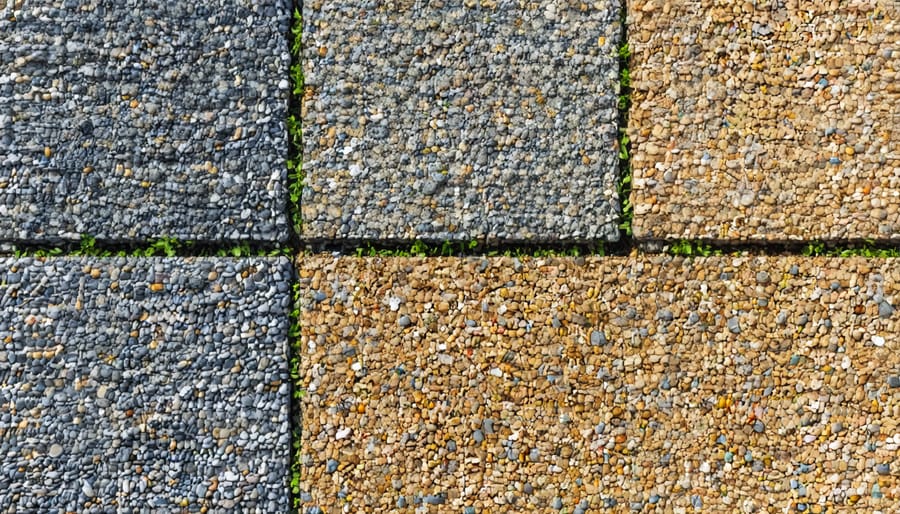
The Permeable Landscape Pavers Grid is the one we’d reach for when the goal is a full shed pad on a sensible budget. It’s a gravel cellular paving system made from upgraded HDPE, and it ships as a single roll measuring 1 m x 10 m (3.3 x 33 ft), so you get a lot of continuous coverage without piecing together dozens of small tiles. At 5 cm thick, the cells hold enough stone to lock the surface in place without demanding a deep excavation.
The load rating is the headline spec: the listing gives a heavy load resistance of 8,000 lbs / 3,600 kg. For a typical residential shed holding garden tools, a mower, and some shelving, that’s a comfortable margin. Prices change and stock moves around, so check the current listing price and availability before you plan your order.
Pros
- One 1 m x 10 m roll covers a large pad with fewer seams to align.
- The 5 cm cell depth keeps excavation modest for a standard shed base.
- It accepts sand, grass, stone, and cobblestone as fill, so you choose the finish.
- It can be laid over soft soil, expansive soils, asphalt, and concrete.
Cons
- The 8,000 lb rating sits below heavier-duty tile systems built for vehicles or equipment.
- A roll is less forgiving to cut and fit around awkward pad shapes than modular tiles.
- You still have to source and compact your own aggregate to finish the job.
Where it shines is flexibility. The listing says it works with aggregate or filler such as sand, grass, stone, and cobblestone, which means you can pack it with crushed stone for a firm base under the shed or fill it with grass if part of the pad sits at the edge of a lawn. Its ability to go over soft soil, expansive soils, asphalt, and concrete also helps when your yard isn’t ideal. A tired old concrete slab or a patch of spongy ground doesn’t automatically rule you out.
Under a typical shed, the grid does two jobs. It stabilizes the stone so it doesn’t spread or sink, and it lets rainwater drain straight through instead of pooling against the floor. That drainage pairs naturally with proper foundation ventilation since a base that sheds water and moves air is what keeps floor framing dry over the long haul. If your shed is on the heavier side or you plan to park equipment on the pad, step up to a higher-rated tile system instead.
2. Vodaland Permeable HexPave System, Best for Heavy Loads and Recycled Material
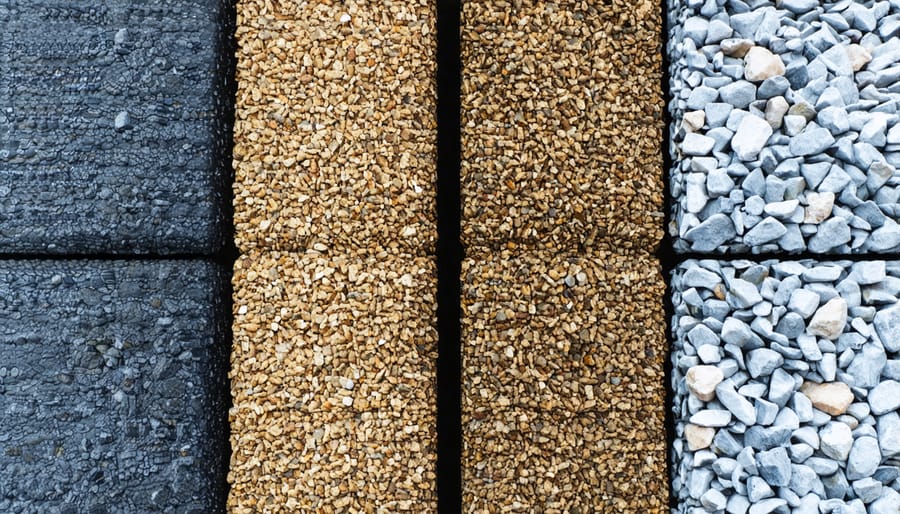
The Vodaland HexPave is the one I’d look at first for a shed that will carry real weight. It’s built from 100% recycled plastic and rated for 27,000 lbs, which is a long way above what a typical backyard shed and its contents will ever ask of it. That headroom matters if you’re parking a lawn tractor inside, rolling a heavy workbench in and out, or planning for a vehicle to cross the pad.
The tile format works differently from a rolled grid. Instead of unrolling a long sheet, you snap individual units together, so you can build an irregular footprint or add a section later without cutting a roll. The kit covers 65 square feet with 22 units, and each tile is 1 inch deep. That shallow profile is a real advantage when you can’t dig far, or when you want the finished surface to sit close to existing grade. It also means the grid is holding a thin layer of stone rather than a deep bed, so the sub-base underneath still does the heavy lifting.
That’s where a solid base comes in. Pair the tiles with compacted aggregate and a drainage plan, and you have a weather-resistant foundation system that sheds water instead of trapping it.
Pros
- The 27,000 lb load capacity gives plenty of margin for heavy sheds and equipment access.
- Recycled plastic construction suits buyers who care about material sourcing.
- Interlocking tiles let you shape the pad to fit odd footprints.
- The 1 inch depth works where excavation is limited.
Cons
- One 65 s.f. kit won’t cover a large pad without buying more.
- The shallow depth relies on a well-built sub-base beneath it.
- Tiles take more joining than simply unrolling a single sheet.
The main limit is coverage. A 65 square foot kit comfortably handles a small shed pad, but anything much larger means ordering additional kits and planning for seams. Measure your footprint first, then work out how many kits you’ll need before you commit.
3. TRUEGRID, Best Premium Option for Long-Term Stability
TRUEGRID is probably the best-known name in this group, and it turns up on nearly every permeable paver comparison page you’ll find. It’s positioned as an engineered, premium permeable paving system built to hold gravel or grass in place while water drains straight through. In our evaluation, that engineering focus is what separates it from the budget rolls: the pitch is long-term stability and a more finished result, not the lowest cost per square foot.
Because specifications and pricing change by product line and region, confirm current details with the manufacturer before you commit. I won’t quote figures here that I can’t verify.
Pros
- Engineered design aims at long-term stability under repeated loads.
- Works with both gravel and grass, so you can match the finish to your yard.
- A recognized brand makes it easier to find installation guidance and documentation.
- Suits pads where settling or shifting would be costly to fix later.
Cons
- Premium positioning generally means a higher upfront spend than basic grid rolls.
- Current specs and availability must be confirmed directly with the manufacturer.
- May be more system than a small, lightly loaded shed actually needs.
When is it worth it? A premium system makes sense if your shed will hold heavy equipment, if the pad sits on soil that moves, or if you want a pad that stays flat for years with little rework. For a modest garden shed on stable ground, a value grid usually does the job. Whichever you choose, don’t skip moisture protection beneath the floor, and a proper vapor barrier pairs well with any permeable base.
Side-by-Side Comparison Table of Permeable Gravel Systems
Here is how the three systems line up on the specs we could verify. Treat each row as a starting point and confirm current details with the maker before you order.
| Product | Material | Load rating | Thickness or depth | Coverage | Best use |
|---|---|---|---|---|---|
| Permeable Landscape Pavers Grid | Upgraded HDPE | 8,000 lbs / 3,600 kg | 5 cm | 1 m x 10 m (3.3 x 33 ft) roll | Full shed pads over soft or expansive soil, asphalt, or concrete, filled with sand, stone, or grass |
| Vodaland Permeable HexPave System | 100% recycled plastic | 27,000 lbs | 1 inch | 65 s.f. kit, 22 units | Heavier sheds and equipment access on smaller pads |
| TRUEGRID | Varies by product line | Manufacturer-confirmed | Varies | Varies | Engineered permeable paving for gravel or grass |
A few notes on reading it for a shed. Start with load rating, then check it against the shed’s weight plus everything you plan to store in it. Next, compare coverage to your pad. A single roll or one 65 s.f. kit only goes so far, and you will need extra units if your footprint is bigger, so measure before you shop.
Depth matters too. The thinner HexPave tile sits shallow, while the 5 cm grid gives you a deeper cell to hold aggregate. Whichever you choose, the grid is only part of the job. The layers beneath it decide whether the pad stays level, so plan your excavation and compaction as carefully as the grid itself. Our guide to a durable shed paver base walks through that groundwork.
Permeable Gravel Terms Every Shed Owner Should Know
A shed floor sits in the dampest spot on your property, so the vocabulary on a product page matters more than it seems. These six terms are the ones that decide whether a base drains or holds water against your floor joists.
- Permeability
- How readily water passes through a material instead of pooling on top. A permeable base lets rain soak down and away from the shed.
- Cellular gravel grid
- A honeycomb-style panel or roll that holds loose stone in place, so gravel stops spreading and sinking under load.
- Geogrid
- A rigid plastic mesh that spreads weight across a wider area. The Permeable Landscape Pavers Grid, for example, uses upgraded HDPE for this job.
- Aggregate infill
- The stone, sand, or other filler that goes inside the cells. Your choice affects both drainage and how firm the surface feels.
- Load rating
- The maximum weight a grid is rated to carry, such as the 8,000 lbs listed for that HDPE grid.
- Sub-base
- The compacted layer of soil or crushed stone beneath the grid. A weak sub-base undermines even a strong grid.
Drainage is only half the story. A floor with trapped moisture underneath rots from below, which is why airflow matters just as much, as we explain in our guide on why your shed floor needs to breathe. If you’d rather not piece a base together yourself, our foundation kits bundle the parts for you.
Buying Checklist: What to Confirm Before You Order
Before you order any grid or tile system, run through these checks so the product matches your actual shed pad:
- Shed weight plus everything you’ll store in it, compared against the system’s load rating.
- Pad dimensions measured edge to edge, compared against roll or kit coverage, with a little extra for cuts.
- Native soil type, whether soft, expansive, or compacted, since it affects how much base you need.
- Excavation depth needed for the sub-base, grid thickness, and infill layer.
- Infill material, such as sand or stone, and whether it suits the grid you chose.
- Drainage direction, so water leaves the pad instead of pooling at the shed’s edge.
Getting the numbers right here saves you from ordering a roll that falls short or a kit that can’t carry the load. A rolled grid like the Permeable Landscape Pavers Grid suits a full pad, while a tile kit works better for smaller footprints.
Once the base is sorted, consider pairing it with a complete kit from the foundation kits category so the frame and base work together. The next step is protecting the shed itself, and our guide to making your shed watertight and weather resistant covers it.
Permeable Gravel FAQs: Drainage, Installation, and Maintenance
Is permeable gravel better than regular gravel under a shed?
For most shed pads, yes. A cellular grid holds the stone in place so it can’t spread or rut, while water still drains straight through. That keeps the base firmer and the floor drier, which matters most on wet ground.
Can a gravel grid go over soil, asphalt, or concrete?
The Permeable Landscape Pavers Grid listing says it can be laid over soft soil, expansive soils, asphalt, and concrete. Check the manufacturer’s guidance for any other grid, and confirm that water has somewhere to go on a hard surface.
How much weight can a gravel grid hold?
It depends on the product. The Permeable Landscape Pavers Grid lists a heavy load resistance of 8,000 lbs (3,600 kg), and the Vodaland HexPave is rated at 27,000 lbs. Compare your shed’s weight plus its contents against the rating, with a safety margin.
Does permeable gravel need maintenance?
Very little. Keep the surface clear of leaves and silt so water keeps draining, and top up any infill that settles or washes out.
The right base depth depends on your soil and the system you choose, so follow the manufacturer’s instructions rather than a rule of thumb. The Permeable Landscape Pavers Grid, for example, is a 5 cm thick roll that gets filled with aggregate, while the HexPave tiles are shallower at 1 inch. On soft or poorly draining ground, a compacted sub-base beneath the grid gives you the most dependable result.
A cellular gravel grid is the better shed base than loose gravel alone, because it keeps stone in place while still letting water drain straight through. Of the three systems we compared, the Permeable Landscape Pavers Grid is the practical pick for a full pad, the Vodaland HexPave suits heavier loads and recycled-material buyers, and TRUEGRID is the premium route when long-term stability matters most.
The choice comes down to fit. Check the load rating against your shed plus everything you’ll store in it, and make sure the roll or kit coverage actually matches your pad dimensions before you order. A system that’s slightly undersized or underrated creates the very problems you’re trying to avoid.
Once you’ve settled on a grid, the next step is the frame that sits on top of it. Browse our foundation kits to pair your permeable base with a complete, level foundation.