Comments Off on Perfect Shed Size for Your Riding Mower (Expert Storage Tips)
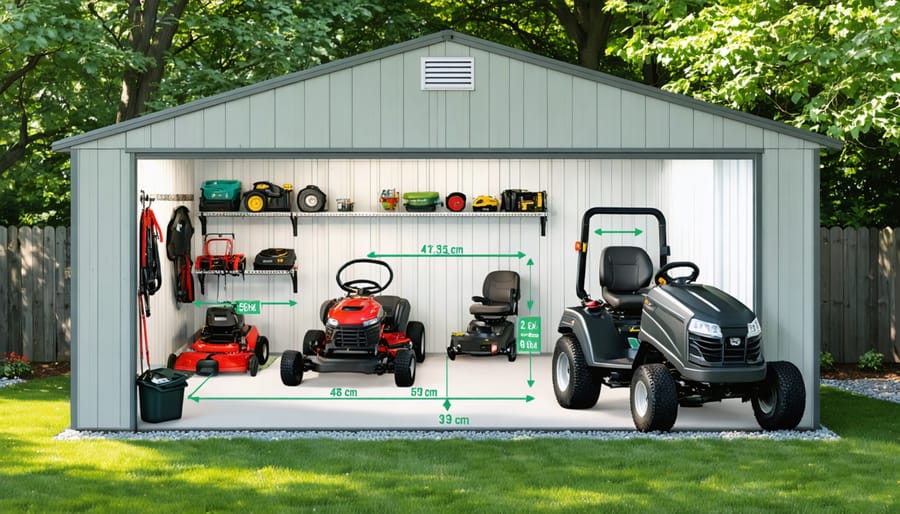
Choosing the right shed size for your riding mower starts with measuring your equipment’s exact dimensions, then adding 30% extra space for maintenance access and additional storage needs. A standard riding mower requires a minimum shed size of 10′ x 12′, allowing comfortable clearance for the average 48-inch deck width and 70-inch length. Factor in vertical space requirements of at least 7 feet to accommodate the mower’s steering wheel height and potential shelf storage above. Consider future-proofing your investment by selecting a shed that’s slightly larger than your current needs – accommodating attachments, tools, and seasonal equipment can transform your simple mower storage into a comprehensive lawn care hub. Whether you’re protecting a basic riding mower or a premium lawn tractor, proper sizing ensures easy access, protected equipment, and organized storage that maximizes your property’s functionality.
Standard Riding Mower Dimensions You Need to Know
Common Riding Mower Types and Their Measurements
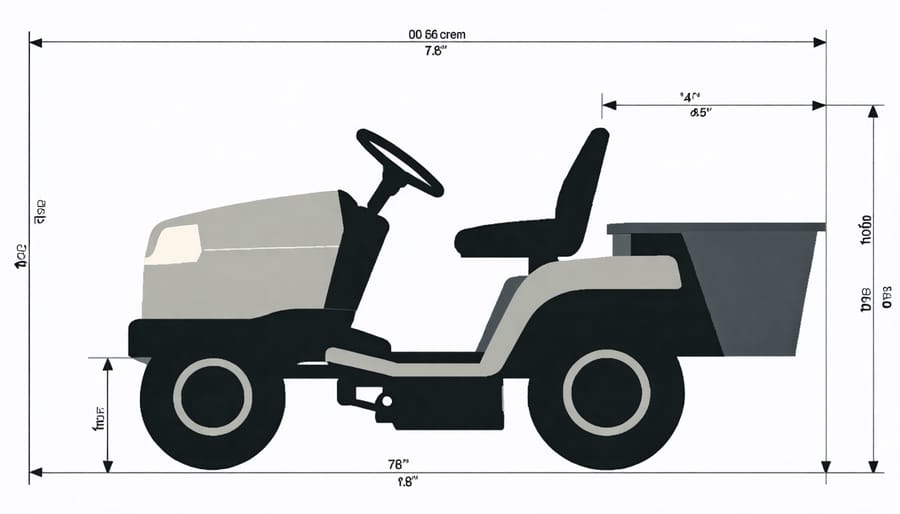
Riding mowers come in several categories, each with distinct dimensions that affect your shed size requirements. Standard lawn tractors, the most common type, typically measure 70-75 inches long, 40-50 inches wide, and 42-46 inches high. These versatile machines are perfect for suburban yards and require minimal additional clearance for storage.
Zero-turn mowers, known for their superior maneuverability, generally measure 60-72 inches in length, 45-55 inches in width, and around 40-45 inches in height. Their compact design makes them easier to store, though you’ll want extra space for their wider turning radius when moving in and out of the shed.
Rear-engine riding mowers, a smaller option ideal for modest properties, usually measure 55-65 inches long, 35-45 inches wide, and 38-42 inches high. These space-saving models are perfect for those with limited storage capacity.
Garden tractors, the largest category, typically measure 75-85 inches long, 45-55 inches wide, and 45-50 inches high. These heavy-duty machines often come with attachments, so factor in additional storage space for implements and accessories.
Remember to add at least 24 inches of clearance on each side of your mower for comfortable access and maintenance.
Diagram showing common riding mower dimensions with measurements labeled
Extra Space Requirements for Movement
When planning your shed layout, remember to leave at least 3-4 feet of clearance space around your riding mower. This extra room isn’t just for parking convenience – it’s essential for routine maintenance tasks like checking oil levels, changing blades, or cleaning the deck. Consider adding an extra 2 feet in front of the mower for easy entry and exit, especially if you’re storing other equipment nearby. Many homeowners find that a comfortable working space makes maintenance tasks more manageable and helps prevent accidental dings or scratches on both the mower and shed walls. If you’re planning to store seasonal attachments like snow blowers or baggers, factor in an additional 2-3 feet of space to accommodate these accessories and allow for easy installation and removal.
Recommended Shed Sizes for Single Mower Storage
Minimum Shed Dimensions
For a standard riding lawn mower, you’ll need a minimum shed space of 8 feet by 10 feet to comfortably store and access your equipment. This provides enough room to park the mower and still walk around it for maintenance. Most residential riding mowers measure between 5 to 6 feet in length and 3 to 4 feet in width, so the extra space ensures you can easily maneuver in and out of the shed.
Keep in mind that door width is crucial – aim for at least a 4-foot-wide door to prevent scratches and awkward angles when parking. As for height, a minimum interior clearance of 6 feet will accommodate most riding mowers with their roll bars or sunshades attached.
For zero-turn mowers, which typically have a wider cutting deck, consider adding an extra foot to both the width and length dimensions. Remember to factor in space for the mower’s turning radius when planning your shed size – you’ll want enough room to make a comfortable approach to your storage spot without having to make tight, difficult turns.
Ideal Shed Dimensions
For a comfortable storage solution, aim for a shed that’s at least 10′ x 12′ when housing a standard riding mower. This size provides enough space to park your mower and still maintain easy access from all sides. If you’re working with a larger zero-turn mower, consider bumping up to a 12′ x 14′ dimension to ensure adequate clearance for the wider turning radius.
Remember to add an extra 3-4 feet of width to your planned dimensions if you want to store additional equipment like trimmers, blowers, or fuel cans alongside your mower. A 12′ x 16′ shed offers excellent versatility, allowing you to create designated zones for your mower and other garden tools while maintaining comfortable walking space.
For maximum functionality, an ideal height clearance of 7-8 feet accommodates most riding mowers with their roll bars extended. Don’t forget to account for the door opening – a double door system of at least 6 feet wide ensures stress-free mower access and prevents accidental bumps or scratches during entry and exit.
These dimensions not only accommodate your equipment but also provide the breathing room needed for basic maintenance tasks and seasonal organization.
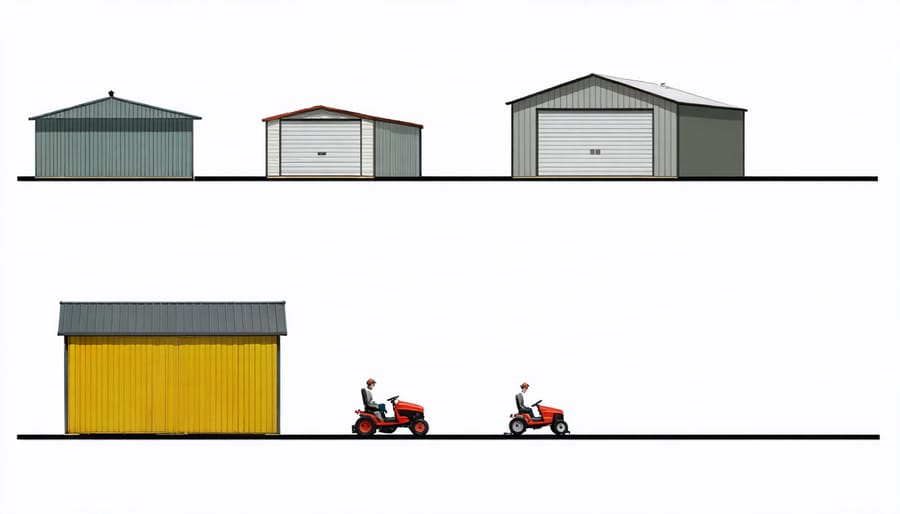
Visual comparison of different shed sizes with a riding mower for scale
Standard mower: 10′ x 12′ minimum
Zero-turn mower: 12′ x 14′ recommended
Height clearance: 7-8 feet for extended roll bars
Door width: Minimum 6 feet (double doors preferred)
Extra width for tool storage: Add 3-4 feet to base dimensions
Multi-Purpose Storage Planning
Common Storage Combinations
When it comes to outdoor storage planning, many homeowners find success with specific equipment combinations. A popular setup includes a riding mower alongside basic lawn care tools, which typically requires a 10′ x 12′ shed. This arrangement leaves enough room for your mower plus essential items like a wheelbarrow, rake, and trimmer.
For those who maintain larger properties, a 12′ x 16′ shed comfortably houses a riding mower, push mower, and garden tractor, with space for seasonal decorations and sports equipment. Many homeowners also successfully store their riding mower with a snow blower and basic workshop tools in a 10′ x 14′ shed.
A practical combination we often see is a riding mower paired with bicycles and patio furniture during off-seasons. This setup works well in a 12′ x 12′ shed, allowing for seasonal rotation of equipment. For minimal storage needs, an 8′ x 12′ shed can accommodate a compact riding mower and basic gardening tools, though you’ll need to be strategic with your organization.
Remember to include about 3 feet of clearance around your mower for easy access and maintenance, regardless of which combination you choose.
Smart Storage Solutions
Maximizing your shed’s storage potential is crucial for protecting your riding mower and maintaining an organized space. Start by implementing vertical storage solutions along the walls using heavy-duty hooks and shelving systems. These additions create valuable space for smaller tools while keeping your mower accessible.
Consider installing a pegboard system for frequently used items and implement garden storage solutions that include wall-mounted tool racks. A corner workbench can serve multiple purposes without compromising the space needed for your mower.
Install motion-sensor lighting to improve visibility and safety when accessing your equipment. Adding rubber floor mats beneath your mower’s parking spot helps protect the shed floor and makes cleanup easier. Consider incorporating sliding doors or fold-down shelves that can be tucked away when maneuvering your mower.
Keep seasonal items in labeled, weather-resistant containers on upper shelves, and position your mower near the entrance for easy access. Remember to leave at least two feet of clearance around your mower for comfortable movement and maintenance access. This thoughtful organization will help maintain your equipment’s condition while maximizing every square inch of your shed space.
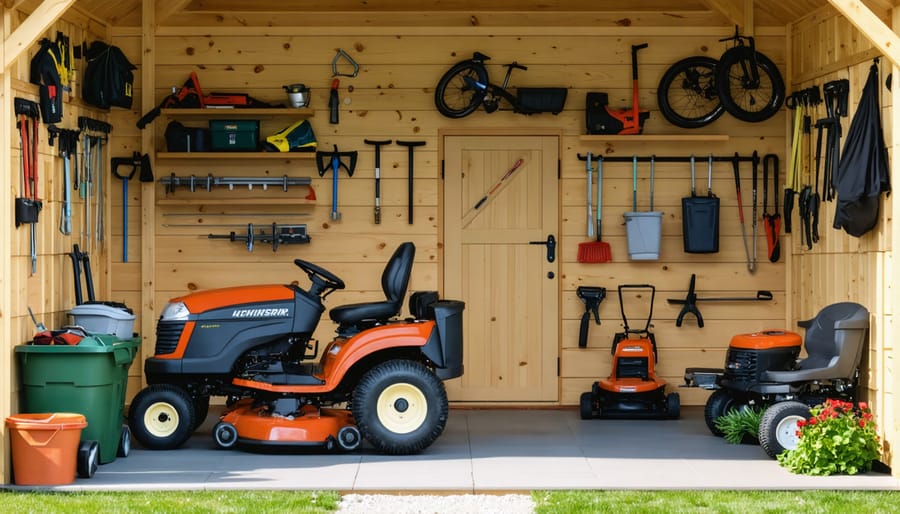
Well-organized shed interior showing proper storage of riding mower and equipment
Wall-mounted pegboards for hand tools keep wrenches, screwdrivers, and small equipment within easy reach while freeing up floor space
Overhead ceiling racks for seasonal items such as snow blades or leaf collectors that aren’t needed year-round
Magnetic tool strips mounted along walls hold metal tools securely and make it easy to grab what you need at a glance
Corner shelving units maximize awkward spaces that would otherwise go unused
Fold-down workbenches provide a maintenance surface when needed and tuck away flat against the wall
Vertical lawn tool organizers keep rakes, shovels, and trimmers off the floor and prevent trip hazards
Key Features for Your Mower Shed
Door Size and Placement
A properly sized door is crucial for easy access to your riding mower. The standard door width should be at least 48 inches to accommodate most residential riding mowers comfortably. This extra width gives you a safety margin when driving in and out, preventing accidental bumps or scratches.
For height, aim for a minimum of 72 inches (6 feet) to ensure adequate clearance for both the mower and yourself. If your mower has a roll bar or sunshade, consider adding an extra 12 inches to the door height.
Single vs. Double Door Configurations
Double doors are often the best choice, as they provide maximum accessibility and make maneuvering easier. A pair of 30-inch doors creates a 60-inch opening, giving you plenty of room to navigate without precision driving. Single doors can work for smaller riding mowers, but you’ll need a minimum 48-inch width, and the opening feels noticeably tighter.
The trade-off: double doors require more exterior clearance for the swing arc, while a single wide door needs a stronger frame and better bracing to prevent sagging over time.
Door Type Considerations
Swing-out doors are the most common and affordable option. They’re reliable and easy to install, but they demand clear space in front of the shed. Plan for at least 4-5 feet of clearance beyond the door for a full swing.
Sliding barn-style doors save that exterior space since they track along the shed wall. They’re excellent for tight yards or when the shed sits close to a fence or property line. The downside is they typically cost more and require wider shed walls to accommodate the track system.
Roll-up doors, similar to garage doors, maximize both interior and exterior space. They’re ideal for larger sheds (10×12 and up) and provide the widest possible opening relative to wall space. However, they add to the overall shed cost and require at least 12-18 inches of interior ceiling clearance for the rolled-up door.
Your door choice directly impacts shed size requirements. If you’re using swing-out doors and have limited yard space, you might need to position the shed farther from boundaries, effectively requiring more total footprint area. Sliding or roll-up doors can help you fit a functional shed into a smaller available space.
Door Placement Strategy
When positioning the door, place it on the gable end (the wider side) of the shed if possible. This configuration gives you the most straightforward approach angle and reduces the risk of tight turns. Consider adding a small ramp at the entrance. It should extend about 18-24 inches out from the door and be sturdy enough to support your mower’s weight.
Remember to factor in the door swing area when planning your shed’s placement. You’ll need enough clearance outside the shed for the doors to open fully without hitting obstacles like fences, trees, or garden beds.
Flooring and Ramp Requirements
A solid foundation is crucial for your riding mower shed, starting with proper site preparation. The flooring should be level, sturdy, and able to support both your shed and mower’s combined weight. Concrete slabs or pressure-treated wood platforms make excellent choices, with concrete being the most durable option for long-term use.
For the ramp, plan on a minimum width of 48 inches to accommodate your mower’s wheels with some margin for error. The ramp’s slope shouldn’t exceed a 15-degree angle to ensure safe entry and exit. A 1:4 ratio (rising 1 foot for every 4 feet of length) works well for most riding mowers. Consider adding non-slip strips or textured paint to prevent slipping in wet conditions.
The threshold between the ramp and shed floor should be smooth to prevent catching the mower’s deck. Installing rubber transition strips can help bridge any small gaps and protect both your equipment and flooring. Remember to factor in drainage – the floor should have a slight slope away from the shed to prevent water accumulation.
Choosing the right size shed for your riding mower is a crucial decision that impacts both your storage capabilities and long-term satisfaction. Remember that a minimum 10′ x 12′ shed will accommodate most standard riding mowers, while a 12′ x 16′ space offers additional room for equipment and supplies. When making your final decision, consider not just your current needs but potential future purchases and storage requirements.
For the best results, add an extra 3-4 feet of width and length to your basic measurements to ensure comfortable access and movement around your mower. Don’t forget to factor in space for ramps, doorway clearance, and any additional garden tools or equipment you plan to store.
Before making your purchase, we recommend measuring your mower’s dimensions carefully, planning your layout on paper, and considering local building codes and permits. Whether you choose a single-purpose shed or a larger multi-functional space, ensuring proper ventilation and moisture control will help protect your investment for years to come.
By following these guidelines and planning ahead, you’ll create an efficient, accessible storage solution that keeps your riding mower protected and ready for use whenever you need it.