


Why Your Carport Might Collapse This Winter (And How Certifications Protect You)

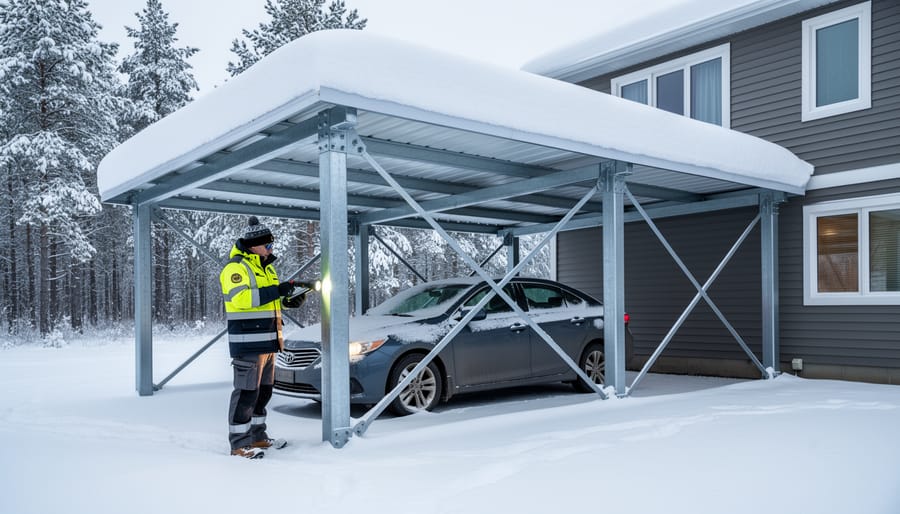
Check your local building codes before shopping for a carport—many municipalities in snow-prone regions require specific certifications based on snow load capacity, and purchasing a non-compliant structure means costly modifications or complete replacement. Contact your building department or visit their website to ask about three key requirements: minimum snow load ratings (typically measured in pounds per square foot), whether engineer-stamped drawings are mandatory, and if you need special wind resistance certifications for your zip code.
Calculate your area’s ground snow load using your county’s building code tables or NOAA data—this number determines which carport certification level you need. Most snowy regions fall into categories requiring 20-40 PSF (pounds per square foot) ratings, though mountain areas may demand 50+ PSF. Compare this requirement against manufacturer specifications, which must explicitly state their certified snow load capacity.
Request certification documentation before finalizing any purchase. Legitimate manufacturers provide engineer-sealed documents proving their carports meet specific snow load standards through independent testing. These certificates aren’t just bureaucratic paperwork—they’re your protection against structural failure during heavy snowfall and your proof of compliance if building inspectors come calling.
Understand that certified carports typically cost 15-30% more than non-certified alternatives, but this investment prevents roof collapse, protects your vehicle from winter damage, and avoids permit violations that can result in fines or forced removal. Sarah from Minnesota learned this lesson the hard way when her uncertified carport buckled under 18 inches of wet snow, damaging both the structure and her car underneath.
What Happens When Snow Piles Up on Your Carport
Snow might look light and fluffy when it’s falling, but once it starts accumulating on your carport roof, the weight adds up faster than most homeowners realize. Understanding what’s happening above your vehicle can help you appreciate why proper snow load ratings matter so much.
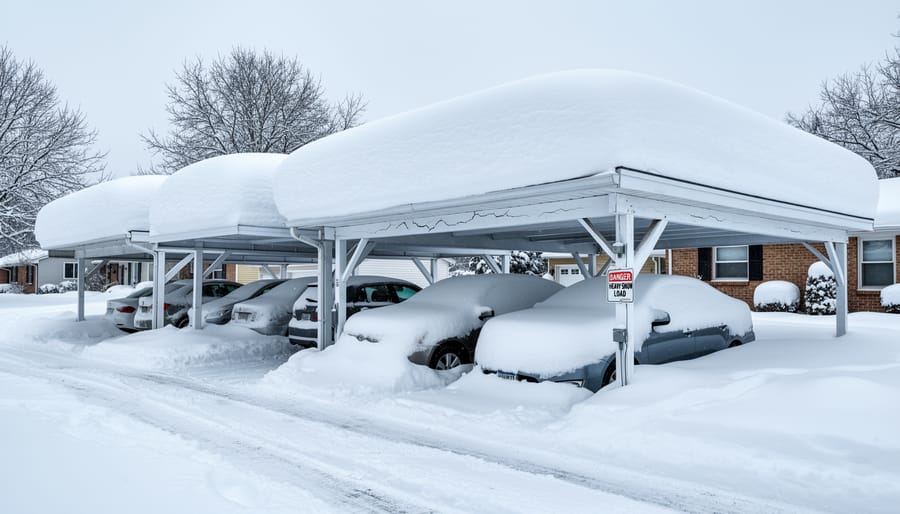
Here’s the eye-opening reality: a single foot of light, fluffy snow covering a standard 12×20 foot carport weighs roughly 1,200 pounds. That’s like parking a grand piano on your roof. But when that snow gets wet and heavy, the same amount can weigh up to 5,000 pounds – about the same as a compact car sitting overhead. Now imagine what happens during a heavy winter with multiple snowfalls before any melting occurs.
Snow accumulates in layers, and each storm adds to the previous one. A typical winter storm might drop 6 to 12 inches, but in snow-prone regions, homeowners often see 2 to 3 feet pile up over several weeks. The danger multiplies when temperatures fluctuate, causing snow to partially melt during the day and refreeze at night, creating dense ice layers that weigh even more than the original snow.
Real-world carport failures tell a sobering story. In regions unprepared for heavy snowfall, improperly rated carports have collapsed under loads they were never designed to handle. One homeowner in the Midwest watched their carport buckle after just 18 inches of wet snow – the structure was only rated for light residential use and couldn’t handle the approximately 3,000-pound load.
The problem isn’t just the total weight; it’s also how snow distributes unevenly. Wind can push snow into drifts on one side of your carport, creating stress concentrations that exceed the roof’s capacity in specific areas. This uneven loading often causes failures even when the total snow amount seems manageable. Understanding these risks is the first step toward choosing a carport that will protect your vehicles safely through winter’s worst conditions.
Understanding Wind and Snow Load Certifications
What Snow Load Ratings Actually Mean
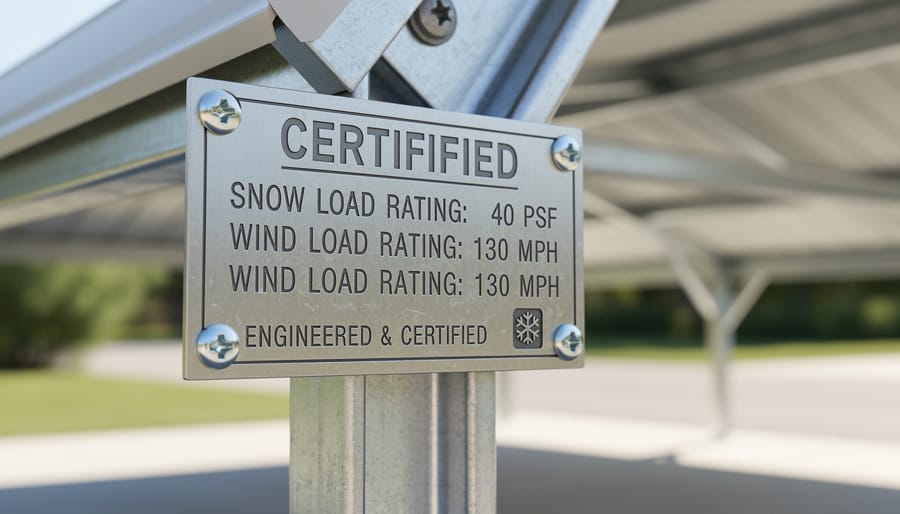
When you’re shopping for a carport, you’ll see PSF ratings everywhere—but what does “30 PSF” actually mean for your driveway? PSF stands for pounds per square foot, and it tells you how much snow weight your carport can safely handle per square foot of roof surface.
Think of it this way: imagine placing weights evenly across your carport roof. A 20 PSF rating means the structure can support 20 pounds on every square foot before reaching its design limit. This doesn’t mean it’ll instantly collapse at 21 PSF, but you don’t want to test those boundaries with your vehicle underneath.
Common snow load ratings break down like this. A 20 PSF rating works for areas with light, occasional snowfall—think regions where a few inches might stick around for a day or two. This is your baseline for mild winter climates. A 30 PSF rating handles moderate snow accumulation, suitable for areas expecting regular winter storms that drop 6-12 inches at a time. If you’re in serious snow country, you’ll want 35-40 PSF or higher, designed for heavy, wet snow that piles up and sticks around for weeks.
Here’s a helpful comparison: fresh, fluffy snow weighs about 3-5 pounds per square foot per inch of depth. Wet, heavy snow? That jumps to 12-20 pounds per square foot per inch. So six inches of wet snow on a 20 PSF carport could push your structure to its limits.
The practical question is: what rating do you need? Check your local building department’s snow load requirements—they’ve already done the math based on historical weather data for your exact area. Most municipalities require structures to meet minimum snow load ratings, and choosing a carport below that threshold could mean failed inspections or, worse, a collapsed roof during the next big storm.
Wind Load Ratings Explained Simply
When shopping for a carport that will handle snowy conditions, you’ll notice wind load ratings displayed in miles per hour. These numbers aren’t just technical specs—they’re your carport’s defense against one of winter’s sneakiest threats.
Think about what happens during a snowstorm. Strong winds don’t just push against your carport’s sides; they actually create an upward lifting force on the roof. It’s similar to how airplane wings work. Wind flowing over and under your carport’s roof creates pressure differences that can literally try to peel it off like a lid from a jar. This is especially dangerous when snow adds extra weight on top, creating stress from multiple directions at once.
Most residential carports come rated between 90 to 130 mph, which sounds impressive until you understand the difference between sustained winds and gusts. Sustained wind speed is the average speed measured over one minute, while wind gusts are those sudden, brief bursts that can be 30-50% stronger. A carport rated for “90 mph winds” typically means sustained winds, not gusts. During winter storms, it’s those powerful gusts that cause most damage, especially when they catch snow-covered surfaces.
Here’s a practical example: Sarah from Minnesota learned this the hard way when her 90 mph-rated carport collapsed during a winter storm. The weather report showed sustained winds of only 60 mph, but gusts reached 95 mph. The combination of wind gusts hitting the snow-laden roof created forces her carport couldn’t handle.
When evaluating wind ratings, look for certifications that specify whether they account for gusts, not just sustained winds. In snowy regions where winter storms are common, investing in higher wind ratings provides crucial protection for both your carport and whatever you’re storing underneath.
When Certifications Are Actually Required
Building Permits and Local Code Requirements
Before you invest in a carport for your snowy climate, it’s essential to understand that local building codes often have the final say on what you can install. Here’s the good news: navigating these requirements doesn’t have to be overwhelming.
Most municipalities require building permits for carport installations, especially when dealing with snow loads. The permit process ensures your structure meets safety standards specific to your area’s winter conditions. Snow-heavy regions typically have stricter requirements because carports must withstand significant weight from accumulated snow and ice.
To find your local requirements, start by contacting your city or county building department. Many now have online resources where you can search permit requirements by project type. When you call or visit, ask specifically about snow load certifications and whether your carport needs an engineer’s stamp of approval. Some areas require structures to handle specific snow weights, measured in pounds per square foot.
A homeowner in Colorado shared how checking local codes early saved her from a costly mistake. She discovered her county required carports to withstand 50 pounds per square foot of snow load, information that helped her choose the right model from the start.
Don’t forget about setback requirements, which dictate how far your carport must sit from property lines. Height restrictions may also apply. Getting this information upfront prevents delays and ensures your carport installation goes smoothly from day one.
HOA and Property Rules
Before investing in a carport for snow country, check your homeowner association bylaws and property covenants. Many neighborhoods have specific requirements that can save you headaches down the road.
HOAs often regulate carport appearance, placement, and construction standards. Some communities require architectural review board approval before installation, while others mandate certified structures that meet specific aesthetic guidelines. These rules exist to maintain property values and neighborhood consistency, so understanding them upfront is crucial.
Sarah from Colorado learned this the hard way. “I ordered a budget carport without checking our HOA rules,” she shares. “Turns out our community requires engineer-certified structures with specific roof pitches for snow load. I had to return it and start over.”
Property covenants may specify setback distances from property lines, height restrictions, or material requirements. Some neighborhoods prohibit portable carports entirely, requiring permanent installations with certified engineering stamps.
Contact your HOA management or review your CC&Rs (Covenants, Conditions, and Restrictions) before shopping. If certified structures are mandatory, factor this into your budget from the start. Many manufacturers can provide certification documentation upon request, but it’s easier to verify requirements first than retrofit compliance later.
Insurance and Warranty Considerations
Choosing a certified carport can have significant implications for your wallet beyond the initial purchase price. Many homeowners discover too late that their insurance company requires proper certifications for coverage, especially in snow-prone regions where structural failures can cause substantial damage.
Here’s what you need to know: Most homeowner’s insurance policies include provisions about permanent or semi-permanent structures on your property. If your carport collapses under snow load and damages your vehicle or home, your insurer will likely investigate whether the structure met local building codes and carried appropriate certifications. Without proper documentation, your claim could be denied, leaving you responsible for all repair costs. One homeowner in Colorado learned this the hard way when his uncertified carport buckled under heavy spring snow, damaging two vehicles. His insurance refused the $18,000 claim because the structure lacked engineer certification.
Manufacturer warranties present another consideration. Certified carports typically come with comprehensive warranties covering structural integrity and snow load performance. These warranties often become void if you skip required permits or modify the structure without approval. Before purchasing, ask your insurance agent specifically about certification requirements for your area. Document this conversation in writing.
Additionally, liability concerns arise if your carport fails and injures someone or damages neighboring property. Certified structures demonstrate you took reasonable precautions, which can provide important legal protection. The small upfront investment in proper certification often prevents devastating financial consequences down the road.
How to Know What Your Property Needs
Finding Your Area’s Snow and Wind Zone
Knowing your area’s snow and wind zone is easier than you might think, and it’s the first step toward choosing a carport that’ll stand strong through winter storms. Let’s walk through exactly how to find this information.
Start with the National Oceanic and Atmospheric Administration (NOAA) website, which offers detailed climate maps showing snow load zones across the United States. Simply enter your zip code or city name to see your region’s typical snowfall patterns and ground snow load measurements. These maps use color-coded zones that tell you how much snow weight your carport needs to support.
Your local building department is another goldmine of information. Give them a quick call or visit their website—most now have downloadable zone maps specific to your county or municipality. The staff there deal with these questions daily and can tell you exactly what certifications you’ll need. Many homeowners are surprised to discover their building department has simplified guides that break down requirements by neighborhood.
Don’t forget to check your area’s historical weather data. Look at the past decade’s winter storms to understand your real-world conditions. Sarah from Vermont shared with us: “The maps showed one thing, but talking to my building inspector revealed our hillside gets significantly more snow accumulation than the valley below. That conversation saved me from undersizing my carport.”
If you’re in a borderline zone, always round up to the higher rating. The modest additional cost provides invaluable peace of mind when those heavy, wet snowfalls arrive.
Special Considerations for High-Risk Areas
If you live in a mountain region, coastal area prone to nor’easters, or anywhere that experiences extreme winter conditions, your carport needs go beyond standard requirements. These high-risk zones typically demand higher engineering certifications and more robust anchoring systems to handle intense snow loads, high winds, and potentially corrosive environments.
Mountain communities often require engineered certifications that account for ground snow loads exceeding 50 pounds per square foot. In these areas, you’ll likely need additional structural support, such as extra trusses or reinforced framing, along with deeper ground anchoring to prevent shifting on slopes. Sarah from Colorado shares her experience: “Our building inspector required an engineer’s stamp for our carport at 8,500 feet elevation. The extra anchoring cost more upfront, but it’s held up beautifully through three heavy snow seasons.”
Coastal regions present unique challenges with salt air corrosion combined with heavy, wet snow. Look for galvanized or powder-coated steel frames with enhanced rust protection, and verify that your certification addresses both wind and snow loads simultaneously.
Before purchasing, contact your local building department to understand specific requirements for your microclimate. Some jurisdictions maintain detailed maps showing varying certification levels needed within the same county based on elevation or proximity to water.
What to Look for When Shopping for a Certified Carport
Shopping for a certified carport designed to handle snow loads doesn’t have to feel overwhelming. Start by checking your local building codes to understand the minimum snow load certification required in your area. Many counties and municipalities make this information available online, or you can call your local building department for specific requirements.
When comparing carports, pay close attention to the snow load rating clearly stated in the product specifications. Look for certifications from recognized engineering standards organizations, which indicate the structure has been tested to withstand specific snow weights. A carport rated for 35 pounds per square foot might work fine in moderate climates, but areas with heavy snowfall may require ratings of 50 pounds per square foot or higher.
Material quality matters significantly in snowy conditions. Heavy-gauge steel frames resist bending under weight better than thinner materials. Check the thickness specifications, and don’t hesitate to ask the supplier about the gauge of steel used in the framework. Powder-coated finishes provide better rust resistance when exposed to moisture from melting snow.
Consider the roof style carefully. Vertical roof designs allow snow to slide off more easily than flat or slightly angled roofs, reducing accumulation and stress on the structure. This practical feature can make a real difference during heavy snowfall.
Request documentation before purchasing. Reputable suppliers provide certification papers, engineering stamps, and installation manuals with your carport. These documents prove invaluable when applying for permits or if your insurance company requests verification.
One satisfied customer from Montana shared how having proper certification documentation made her permit approval process seamless: “I brought the engineering certificate to the county office, and they approved everything within a week. No questions asked.”
Finally, verify the warranty coverage. Quality manufacturers stand behind their certified products with warranties that specifically address structural integrity. This protection gives you peace of mind that your investment will withstand harsh winter conditions for years to come.
Real Stories: When Certifications Made the Difference
Nothing brings home the value of certifications quite like hearing from homeowners who’ve lived through major snow events. These real experiences show why choosing a certified carport matters when winter weather strikes.
The Johnson family from Minnesota learned this lesson firsthand during the record-breaking snowfall of 2023. “Our neighbor and I both installed carports the same year,” shares Mike Johnson. “Mine was certified for our local snow load requirements, and his wasn’t because he wanted to save a few hundred dollars. After 36 inches fell in three days, his carport completely collapsed onto his truck. Meanwhile, mine didn’t even buckle. The certification cost me $400 more upfront, but it saved me thousands in vehicle damage and replacement costs.”
Sarah Chen from Colorado had a similar experience. “When I was shopping for carports, the seller really emphasized getting one with the proper wind and snow load certifications for our area. I’m so glad I listened. During last winter’s ice storm, the weight was incredible. My certified carport held strong while two uncertified structures on my street failed. One even damaged a car parked underneath.”
These stories aren’t isolated incidents. Insurance adjusters consistently report that certified structures fare dramatically better in severe weather. What really stands out is the peace of mind these homeowners describe. As Mike puts it, “Now when I see heavy snow in the forecast, I don’t worry about my carport at all. I know it’s engineered to handle whatever winter throws at it.”
The small investment in certification pays dividends not just financially, but in the confidence that your vehicle protection will actually protect your vehicle when you need it most.
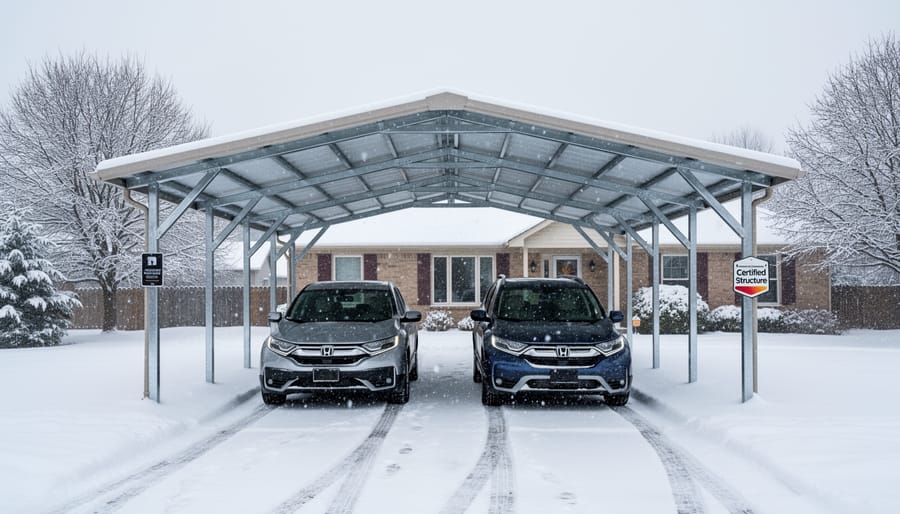
Choosing the right carport for snowy conditions doesn’t have to be overwhelming when you understand the certification landscape. The key takeaway is simple: proper certifications aren’t just bureaucratic paperwork—they’re your assurance that your carport will safely handle snow loads, protect your vehicles, and meet local requirements that keep your family and property secure.
Before making your purchase, take three essential steps. First, contact your local building department to confirm specific certification requirements for your area. Second, ask potential suppliers for documentation proving their carports meet those standards. Finally, factor in not just the upfront cost but the long-term peace of mind that comes with certified structures designed for your climate.
Remember, the homeowner who invests a little extra time verifying certifications upfront avoids costly repairs, potential safety hazards, and compliance headaches down the road. Think of it as insurance for your investment—one that protects both your vehicles and your loved ones during harsh winter weather.
Ready to make an informed decision? Armed with this knowledge about snow load ratings, engineering certifications, and local requirements, you’re now equipped to ask the right questions and choose a carport that truly delivers on durability and safety for years to come.
Looking for a carports?
Browse our full range of carports from authorized dealer brands. Free shipping to the continental US.