


Why Your Greenhouse Glass Keeps Dripping (And How Anti-Condensation Coating Fixes It)

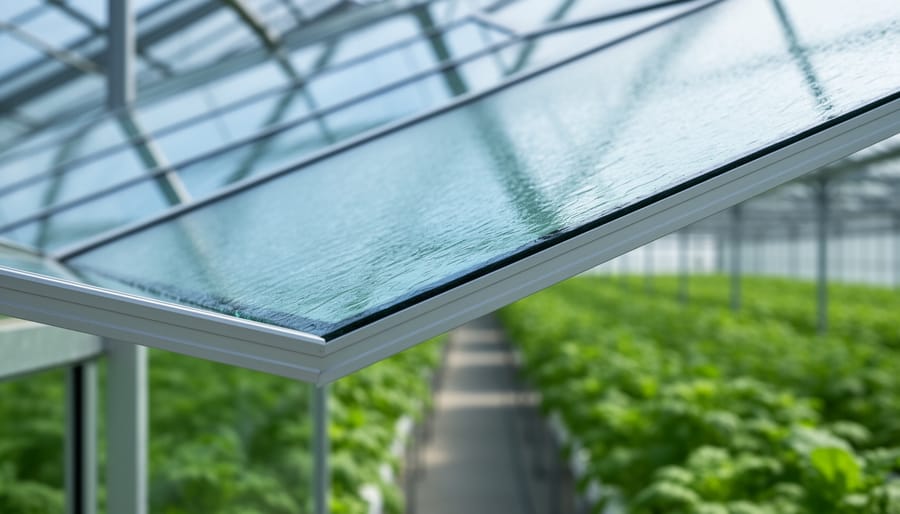
Waking up to find your greenhouse windows dripping with moisture and your precious plants struggling with fungal diseases is frustrating. That persistent condensation isn’t just an annoyance—it’s blocking vital sunlight, creating the perfect environment for mold and mildew, and potentially ruining your entire growing season. Anti-condensation coating offers a straightforward solution that transforms how water behaves on your greenhouse surfaces.
These specialized coatings work by changing the surface tension of your greenhouse glazing. Instead of forming those light-blocking droplets, water spreads into an ultra-thin, transparent film that lets sunlight pass through while draining away naturally. Think of it as giving your greenhouse a permanent non-stick surface for water.
The benefits go beyond just clearer visibility. You’ll see improved light transmission by up to 10%, better temperature regulation since that water film distributes heat more evenly, and significantly reduced disease pressure on your plants. Many greenhouse owners report fewer fungal issues and healthier crops within weeks of application.
Whether you’re managing a small backyard greenhouse or a larger growing operation, understanding how these coatings work and how to apply them properly can save you from constant maintenance headaches. The good news? Most anti-condensation products are surprisingly easy to apply yourself, delivering professional results without the professional price tag.
The Real Problem: What Condensation Does to Your Greenhouse
If you’ve spent any time in a greenhouse, you’ve probably noticed that familiar fog creeping across the glazing panels on cool mornings. This condensation happens when warm, moisture-laden air inside your greenhouse meets the cooler surface of the glass or polycarbonate panels. The water vapor immediately cools down and transforms into tiny droplets that cling to the ceiling and walls.
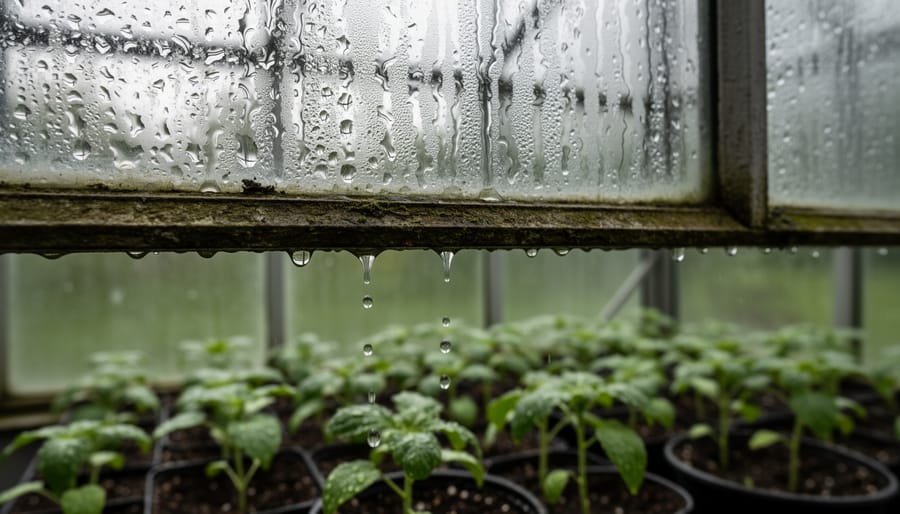
Now, you might think a little moisture is harmless, but here’s where things get tricky for your plants. Those droplets don’t just sit there looking pretty. They gather together, form larger drops, and eventually plummet down onto your seedlings and mature plants below. Imagine tending to your delicate tomato seedlings or young lettuce plants, only to have cold water constantly dripping on their leaves throughout the day.
This creates a perfect storm for disease. Fungal infections and bacterial problems absolutely thrive in these wet conditions. Botrytis, powdery mildew, and damping-off disease are just waiting for this kind of opportunity. One greenhouse owner we spoke with mentioned losing an entire tray of pepper seedlings to damping-off before realizing the constant dripping was the culprit.
But there’s another hidden problem that many greenhouse gardeners don’t immediately connect to condensation: reduced light transmission. Those countless water droplets act like tiny mirrors, scattering and reflecting light that should be reaching your plants. Studies show that condensation can reduce light levels by up to 30 percent. For plants that need every ray of sunshine during shorter winter days, this is a serious setback.
And let’s not forget the time factor. Constantly wiping down panels or watching your plants struggle gets old fast. The frustration of maintaining a greenhouse that always seems to be fighting against you rather than working with you is something many growers know all too well.
How Anti-Condensation Coating Actually Works
If you’ve ever noticed water droplets clinging to the inside of your greenhouse roof before plopping down onto your precious plants below, you’ve experienced the condensation problem firsthand. Anti-condensation coating offers an elegantly simple solution by completely changing how water behaves on treated surfaces.
Here’s the science made simple: normally, water molecules are attracted to each other more strongly than they’re attracted to smooth surfaces like glass or polycarbonate. This causes them to bunch together into individual droplets that eventually grow heavy enough to drip. Think of how raindrops bead up on a freshly waxed car.
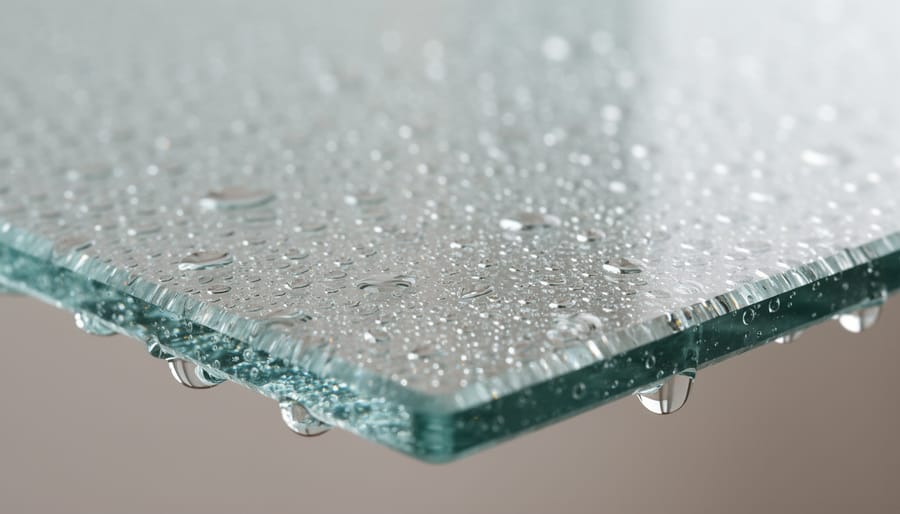
Anti-condensation coating flips this behavior on its head. The coating creates a surface that water molecules actually prefer to stick to rather than clumping together. Instead of forming distinct droplets, the moisture spreads out into an ultra-thin, continuous sheet across the entire surface. You won’t even notice it’s there because it’s practically invisible.
This thin water film then flows smoothly down to the edges of your greenhouse panels thanks to gravity, where it harmlessly drips to the ground or into your gutter system. The key difference? The water travels as a controlled sheet along predictable paths rather than random dripping that can damage plants and create an unpleasant working environment.
The coating essentially makes your greenhouse surface “hydrophilic,” which simply means water-loving. Many greenhouse owners who’ve applied this coating report the difference is noticeable within the first foggy morning. Instead of dealing with constant dripping, they see clear panels with water quietly running down the sides, keeping their growing space drier and their plants healthier.
Real Benefits You’ll Notice Immediately
Healthier Plants, Less Disease
One of the most significant advantages of anti-condensation coating is its impact on plant health. When water droplets form on greenhouse surfaces and drip onto your plants, they create the perfect breeding ground for fungal diseases like powdery mildew, botrytis, and damping-off. These conditions thrive in damp environments, and those constant drips from above can quickly turn a thriving greenhouse into a battle zone.
By preventing condensation from forming into droplets, the coating allows moisture to spread into a thin film that evaporates harmlessly rather than falling onto delicate foliage. This simple change makes a remarkable difference, especially for seedlings and young plants that are particularly vulnerable to water damage and disease pressure.
You’ll also notice fewer problems with water spotting on tender leaves and flowers. Those unsightly marks that appear when cold water hits warm plant tissue become a thing of the past. Many greenhouse owners report spending significantly less time managing disease problems and more time enjoying healthy, vigorous growth after applying these coatings to their structures.
More Light Gets Through
Here’s the real game-changer: when condensation forms on your greenhouse glass, it blocks a surprising amount of sunlight from reaching your plants. Studies show that condensation can reduce light levels by 10-15%, which might not sound like much, but it makes a significant difference to plant health and growth rates.
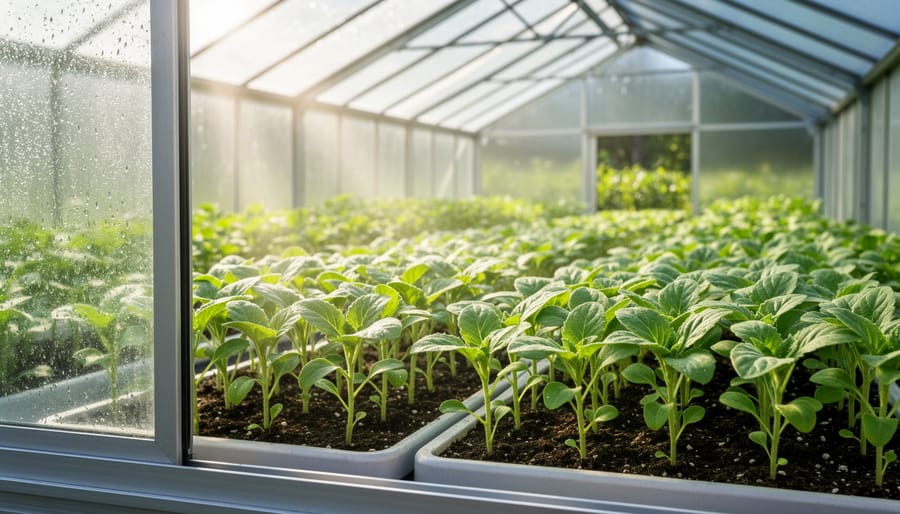
Anti-condensation coating tackles this problem head-on. By preventing those tiny water droplets from forming, the coating keeps your glass clear and maximizes light transmission. This means your tomatoes, peppers, and seedlings receive the full spectrum of light they need for photosynthesis, especially during those crucial winter months when every ray counts.
Many greenhouse owners report noticeably stronger plant growth after applying these coatings. One gardener from Oregon shared that her winter lettuce crop grew 20% faster compared to previous years, simply because her plants were finally getting adequate light. The coating essentially gives your plants the best possible growing conditions without you having to do anything except apply it once at the start of the season.
Less Time Spent Cleaning
If you’ve ever spent your mornings wiping down foggy greenhouse panels before you can even check on your plants, you’ll appreciate this benefit immediately. Anti-condensation coatings dramatically cut down the time you spend on cleaning and maintenance. Instead of constantly battling water droplets that attract dirt and grime, the coating keeps surfaces clearer for longer periods.
Sarah, a tomato enthusiast from Oregon, shared that she used to wipe down her greenhouse glass twice weekly during peak growing season. After applying an anti-condensation coating, she now does a thorough cleaning just once a month. That’s roughly seven hours saved every month during her busiest gardening period.
The coating works by spreading moisture into an even, transparent film rather than individual droplets that collect dust and debris. This means fewer streaks, less buildup, and ultimately less scrubbing on your part. You’ll spend more time enjoying your garden and less time maintaining the structure around it. For weekend gardeners juggling work and family commitments, this time savings can make greenhouse ownership genuinely manageable rather than feeling like another demanding chore on an already full schedule.
Choosing the Right Anti-Condensation Coating for Your Greenhouse
Glass vs. Polycarbonate vs. Plastic Glazing
Not all anti-condensation coatings work equally well across different greenhouse glazing materials, so choosing the right product for your specific setup makes a real difference in performance.
Glass greenhouses typically work best with hydrophilic coatings that spread condensation into a thin film rather than droplets. These water-based solutions bond well to glass surfaces and maintain their effectiveness for several growing seasons. The smooth surface of glass allows for even application and excellent coating adhesion.
For polycarbonate panels, you’ll want to select coatings specifically formulated for plastic surfaces. Regular glass coatings often struggle to adhere properly to polycarbonate, leading to patchy coverage and premature wear. Look for products labeled as compatible with polycarbonate or multi-surface formulas that explicitly mention plastic materials.
Standard plastic glazing presents unique challenges since it expands and contracts more than glass with temperature changes. This movement can cause some coatings to crack or peel. Flexible anti-condensation formulas designed for plastic film or rigid plastic panels accommodate this movement while maintaining their water-spreading properties.
Why does compatibility matter so much? Using the wrong coating wastes your time and money when it washes off prematurely or fails to prevent condensation effectively. Even worse, some incompatible products can damage certain plastics or leave permanent streaking on your glazing. Always check the manufacturer’s recommendations for your specific material, and when in doubt, test a small area first before treating your entire greenhouse.
What to Look for on the Label
Choosing the right anti-condensation coating doesn’t have to be overwhelming. Here’s a practical checklist to help you make a confident decision when reading product labels.
First, check the longevity claims. Quality coatings should last at least 3-5 years, though some premium options promise up to 10 years of protection. Remember, longer-lasting products often save you money and effort in the long run, even if they cost a bit more upfront.
UV resistance is another crucial feature. Your greenhouse coating faces intense sunlight daily, so look for products specifically mentioning UV stabilizers or protection. Without this, your coating could break down prematurely, leaving you back at square one with condensation issues.
Pay close attention to the application method. Some coatings require professional equipment or multiple coats, while others offer simple spray-on or brush-on application perfect for weekend DIY projects. Consider your skill level and available time honestly. There’s no shame in choosing a user-friendly product that you’ll actually apply correctly rather than struggling with something more complex.
Finally, review the warranty information carefully. A solid warranty demonstrates the manufacturer’s confidence in their product. Look for guarantees that cover performance, not just manufacturing defects. Some companies even offer satisfaction guarantees, giving you peace of mind that your investment is protected.
One greenhouse owner shared: “Reading the fine print saved me from buying a coating that needed reapplication every six months. The slightly pricier option with a five-year guarantee was worth every penny.”
Applying Anti-Condensation Coating: A Step-by-Step Walkthrough
Applying anti-condensation coating is easier than you might think, and with a bit of care, you’ll achieve professional-looking results. Let me walk you through the process so you can tackle this weekend project with confidence.
Start with proper surface preparation, which honestly makes all the difference. Your greenhouse panels need to be completely clean and dry before you begin. Use a mild detergent solution and a soft cloth to remove dirt, algae, and any residue. Rinse thoroughly with clean water and let everything dry completely. I can’t stress this enough—applying coating to damp or dirty surfaces is the number one mistake that leads to poor adhesion and disappointing results.
Check the weather forecast before you start. You’ll want a dry day with temperatures between 50-77°F for optimal application. Avoid windy days that might blow dust onto wet coating.
When you’re ready to apply, shake or stir the coating thoroughly according to the manufacturer’s instructions. Most products come ready to use, but some may require dilution. For application, you have several options. A paint roller works beautifully for larger flat panels, giving you even coverage quickly. For detailed areas or smaller sections, a quality paintbrush does the trick. Some homeowners prefer using a pump sprayer for speed, though this requires more careful masking of areas you don’t want coated.
Apply the coating in thin, even layers rather than one thick coat. This prevents drips and ensures better adhesion. Work systematically across each panel, maintaining a wet edge to avoid overlap marks. Most coatings require two layers for maximum effectiveness, with drying time between coats typically ranging from 2-4 hours.
Common pitfalls to avoid include applying coating in direct sunlight, which causes it to dry too quickly and potentially crack. Also, don’t rush the drying process between coats. Sarah from Minnesota learned this the hard way: “I got impatient and applied the second coat too soon. It looked streaky and I had to start over.”
Once applied, most coatings need 24-48 hours to cure fully before your greenhouse experiences its first condensation test.
What to Expect: Longevity and Maintenance
Understanding how long your anti-condensation coating will last helps you plan your maintenance budget and keep your greenhouse in top condition year-round. Most quality anti-condensation coatings last between one to three seasons, depending on the product formulation and your local climate conditions.
Sarah from Portland shares her experience: “I applied anti-condensation coating to my 10×12 greenhouse in early spring. The difference was immediate, with virtually no drips on my seedlings. By the second winter, I noticed condensation returning, so I knew it was time to reapply. The peace of mind was absolutely worth the annual application.”
Several factors affect coating longevity. UV exposure, temperature fluctuations, and cleaning frequency all play a role in how long the coating remains effective. Greenhouses in harsh climates with extreme weather may need more frequent applications than those in milder regions.
To maximize your coating’s lifespan, gentle care makes all the difference. Clean your greenhouse panels with a soft cloth and mild soapy water rather than harsh chemicals or abrasive scrubbers. Avoid high-pressure washers, which can strip the coating prematurely. Regular greenhouse maintenance checks help you spot areas where the coating might be wearing thin before condensation becomes problematic again.
Mark, a retired gardener in Ohio, notes: “I’ve been using anti-condensation coating for five years now. I mark my calendar each fall for reapplication, and I’ve never had condensation issues since starting this routine. It’s become as automatic as fertilizing my plants.”
Most homeowners find that scheduling reapplication as part of their seasonal routine keeps condensation at bay. Watch for water droplets forming or streaking as your signal that it’s time for a fresh coat.
Investing in anti-condensation coating for your greenhouse isn’t just about reducing water droplets—it’s about creating a healthier growing environment with significantly less daily maintenance. If you’ve been spending precious time wiping down panels or worrying about fungal diseases damaging your plants, this solution addresses those frustrations directly. The coating pays for itself through reduced plant loss, lower disease management costs, and the time you’ll save on greenhouse upkeep.
Many greenhouse owners who’ve made the switch report noticing improvements within days of application. One enthusiast shared how her seedlings, which previously struggled with damping-off disease, now thrive without constant monitoring. Another mentioned finally enjoying his greenhouse hobby again instead of dreading the cleanup routine.
Whether you choose a DIY application or hire a professional, anti-condensation coating is a smart, practical investment that delivers real results. Your plants will benefit from better light transmission and reduced moisture stress, while you’ll enjoy more time actually gardening rather than managing condensation problems. For anyone serious about greenhouse growing, this simple upgrade makes all the difference in creating the optimal environment your plants deserve.
Looking for a greenhouses?
Browse our full range of greenhouses from authorized dealer brands. Free shipping to the continental US.