


How to Choose the Best 6×8 Greenhouse Kit: A Buying Guide for 2026

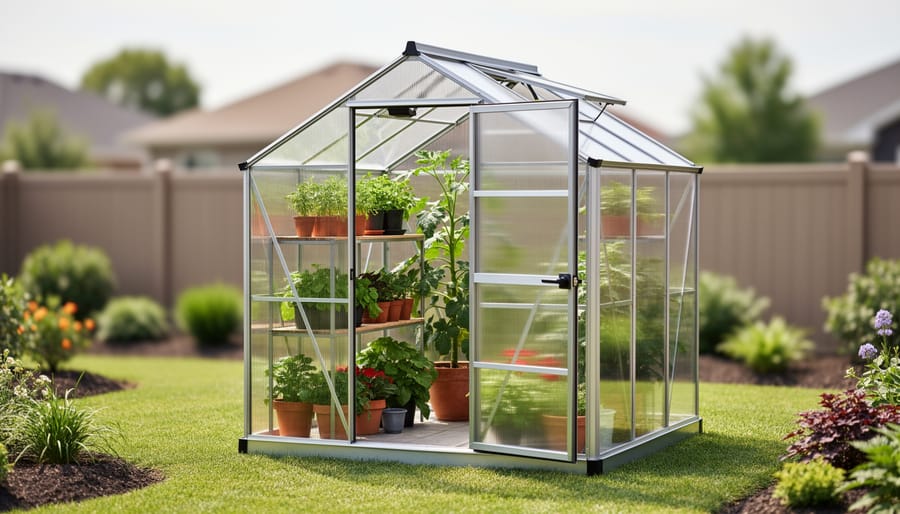
A 6×8 greenhouse kit gives you 48 square feet of growing space, enough for two long raised beds, tiered shelving along the walls, and room to move comfortably while tending plants. This compact footprint fits neatly into most suburban yards without overwhelming your landscape, yet provides serious year-round gardening potential for vegetables, seedlings, or ornamental plants.
Most homeowners choosing this size can install their kit in a weekend with basic tools and one helper. The key decision isn’t whether a 6×8 works, it’s which material and glazing combination matches your climate and budget. Polycarbonate panels offer the best balance of insulation, durability, and cost for most climates, while glass provides premium clarity at a higher price point. Aluminum frames require zero maintenance but cost more upfront, whereas powder-coated steel offers excellent value if you’re willing to inspect for rust every few years.
The right kit depends on three factors: your lowest winter temperatures, how much you want to spend, and your DIY confidence level. A well-chosen 6×8 greenhouse in 2026 typically runs between $600 and $2,400, depending on materials and features like vents, anchoring systems, and panel thickness.
This guide walks you through material and glazing options, compares the main kit types available, recommends specific models for different needs, and helps you avoid the most common buying mistakes. You’ll know exactly which 6×8 greenhouse kit suits your situation and how to set it up for success from day one.
Key Takeaway: A 6×8 greenhouse offers the ideal balance for most homeowners, enough space for serious gardening projects while remaining manageable to maintain, affordable to purchase, and easy to fit into typical yard layouts without dominating outdoor living areas.
What Makes 6×8 Greenhouses Perfect for Home Gardens
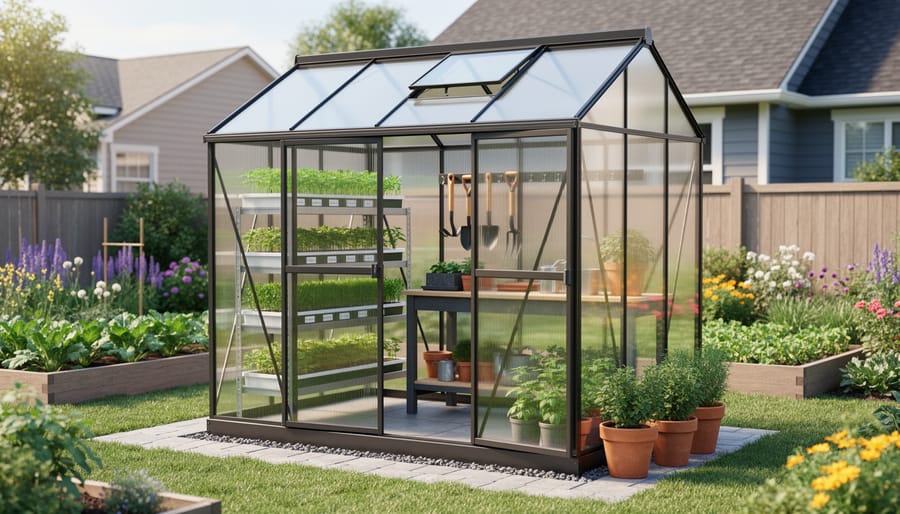
The 6×8 greenhouse sits in a sweet spot that homeowners consistently find practical. With 48 square feet of growing space, you get enough room to cultivate a serious collection of plants without overwhelming your yard or your schedule. Most suburban and urban lots accommodate a 6×8 footprint easily, often tucked along a fence line, beside a garage, or in a sunny corner that otherwise goes unused.
This size proves particularly forgiving for beginners. You can walk comfortably down the center with growing benches on both sides, reaching everything without strain. Temperature and humidity stay more consistent than in larger structures, so you won’t battle the hot spots and cold corners that plague bigger greenhouses. Heating and cooling costs remain reasonable because you’re only conditioning 48 square feet instead of 100 or more.
The real-world applications match what most gardeners actually need. Sarah, a hobbyist in Ohio, uses her 6×8 kit to start tomatoes and peppers in March, giving her a six-week jump on the outdoor season. Others dedicate the space to herbs and salad greens year-round, cutting grocery bills while enjoying fresh basil in January. The perfect greenhouse size for extending growing seasons doesn’t need to be massive, it just needs to be functional.
Price represents another practical advantage. Most 6×8 kits run $400 to $1,200 depending on materials, compared to $2,000-plus for larger models. You’re investing in a genuine greenhouse experience without the commitment of a major backyard renovation.
Key Factors When Choosing Your 6×8 Greenhouse Kit
Frame Material Considerations
Your greenhouse frame is the backbone of the entire structure, and getting it right means years of trouble-free growing. Here’s what you need to know about each option.
Aluminum frames dominate the 6×8 kit market for good reason. They resist rust, require virtually zero maintenance, and stand up to decades of weather exposure without warping or rotting. You’ll never paint an aluminum frame. The lightweight construction makes assembly easier, but the trade-off is a modern industrial look that doesn’t suit every backyard aesthetic. Expect to pay mid-range prices, typically $600-$1,200 for quality aluminum kits.
Galvanized steel offers maximum strength and wind resistance. These frames handle heavy snow loads better than aluminum and cost slightly less upfront. The catch? Steel is heavier to work with during assembly, and once the galvanized coating chips or scratches, rust can start creeping in within five to ten years in humid climates. Regular inspection and touch-up paint extend the lifespan considerably.
Wood frames create that classic garden charm and blend beautifully with traditional landscaping. Cedar and redwood resist rot naturally, but all wood requires periodic sealing or staining, plan on maintenance every two to three years. Wood also expands and contracts with moisture, which can affect glazing seals over time. These kits typically cost more and suit gardeners who value aesthetics over convenience.
Vinyl frames need almost no maintenance and won’t rust or rot, making them appealing for coastal areas. However, vinyl can become brittle in extreme cold and may crack after years of UV exposure. Your frame material choices ultimately depend on your climate, maintenance tolerance, and how long you plan to keep the greenhouse.
Glazing Options Explained
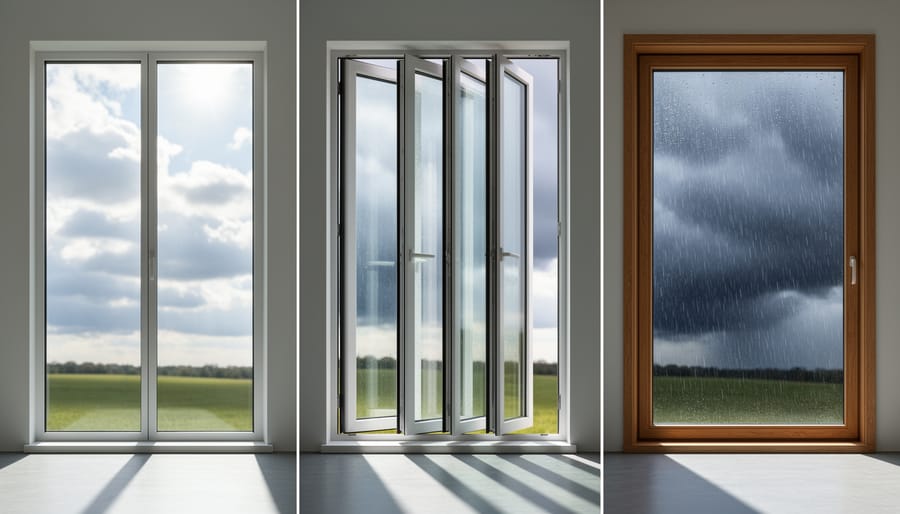
Your glazing choice affects everything from heat retention to maintenance demands, so understanding each option helps you pick what actually works for your situation.
Polycarbonate panels dominate 6×8 kits for good reason. Twin-wall or multi-wall panels trap air between layers, delivering excellent insulation (R-value around 1.7 to 2.0) while letting roughly 80-90% of light through. They resist impact far better than glass, won’t shatter if a branch falls, and typically last 10-15 years before needing replacement. Most mid-range kits use 4mm or 6mm twin-wall polycarbonate. The trade-off is eventual yellowing and slight haziness compared to glass clarity.
Glass offers unmatched light transmission (around 90%) and never yellows, which explains its appeal for serious growers. Single-pane glass provides minimal insulation (R-value near 0.9), though double-pane units improve that considerably. Glass kits cost more upfront and require careful handling during assembly since panes break if dropped. Expect glass to outlast polycarbonate by decades if properly maintained, making it a long-term investment despite the higher price.
Acrylic sits between polycarbonate and glass. It transmits light nearly as well as glass (around 92%), resists yellowing better than polycarbonate, and weighs less than glass. However, it scratches more easily than either alternative and costs 15-20% more than comparable polycarbonate kits, which limits its popularity in the 6×8 size range.
Polyethylene film covers budget hoop-house kits. It’s cheap and easy to replace (typically every 3-5 years), but offers poor insulation and tears relatively easily. For a detailed breakdown of how each material performs in different climates, check our greenhouse glazing guide. Most 6×8 shoppers skip polyethylene unless budget is the only consideration.
Types of 6×8 Greenhouse Kits Compared
Understanding the different types of 6×8 greenhouse kits helps you match your choice to your gardening goals and budget. Each category offers distinct advantages, and knowing what to expect from each will prevent buyer’s remorse down the road.
Aluminum-Frame Polycarbonate Kits represent the most popular choice for year-round gardeners. These kits combine rust-proof aluminum framing with twin-wall or multi-wall polycarbonate panels that provide excellent insulation. You’ll get superior heat retention compared to single-layer options, making them ideal if you plan to grow through winter or live in areas with temperature swings. Most homeowners find assembly straightforward with pre-drilled frames and snap-in panels. Expect to invest between $800 and $2,500 depending on panel thickness and frame quality. The polycarbonate diffuses light evenly, reducing plant burn while maintaining around 80-90% light transmission. These kits hold up well in wind and snow, and the panels typically carry 10-year warranties against yellowing.
Wood-Frame Glass Kits appeal to gardeners who prioritize aesthetics and maximum light transmission. Cedar or redwood frames offer natural beauty that blends into garden settings, while glass panels allow 95% light transmission for light-hungry crops. These kits shine for ornamental gardening, starting delicate seedlings, or when the greenhouse doubles as a focal point in your yard. The trade-off comes in maintenance, wood requires periodic sealing or staining, and fragility, since glass panels can crack from hail or impact. Price ranges from $1,200 to $3,500, reflecting the premium materials. Installation demands more care to ensure panels seat properly and frames stay square. If you’re seeking a traditional greenhouse look and don’t mind occasional upkeep, wood and glass delivers unmatched charm.
Here’s how the main types stack up:
| Kit Type | Materials | Best Use Case | Typical Price Range | Maintenance |
|---|---|---|---|---|
| Aluminum-Polycarbonate | Aluminum frame, twin-wall polycarbonate | Year-round growing, cold climates | $800, $2,500 | Low |
| Wood-Glass | Cedar/redwood frame, tempered glass | Display gardens, maximum light | $1,200, $3,500 | Medium |
| Polyethylene Hoop House | PVC/metal hoops, polyethylene film | Season extension, budget gardening | $150, $500 | Medium-High |
| Vinyl-Frame | Vinyl-coated steel, polycarbonate/acrylic | Low maintenance, coastal areas | $900, $2,200 | Very Low |
Budget Polyethylene Hoop Houses serve gardeners who need temporary or seasonal protection without major investment. These kits use curved metal or PVC pipe frames covered with UV-treated polyethylene film. They’re lightweight, easy to assemble in an afternoon, and surprisingly effective for extending spring and fall growing seasons. The film typically lasts 3-5 years before needing replacement, and strong winds can stress the structure. At $150 to $500, they’re accessible for beginners testing greenhouse gardening or anyone needing short-term crop protection. Don’t expect them to handle heavy snow loads or provide serious winter growing capability, but for three-season use, they deliver solid value.
Vinyl-Frame Models offer a middle ground with minimal maintenance demands. Vinyl-coated steel frames resist rust and corrosion without the upkeep wood requires, making them smart for coastal regions or humid climates. Paired with polycarbonate or acrylic glazing, these kits perform well in moderate climates and provide decent insulation. They’re especially appealing if you want a set-it-and-forget-it option. Pricing falls between $900 and $2,200, and durability rivals aluminum while requiring virtually no maintenance beyond occasional cleaning.
Your choice ultimately depends on whether you prioritize longevity, appearance, climate performance, or budget. Most serious gardeners gravitate toward aluminum-polycarbonate for its balance of durability and insulation, while those seeking beauty choose wood-glass despite the extra care it demands.
Our Top Recommendations for Different Needs
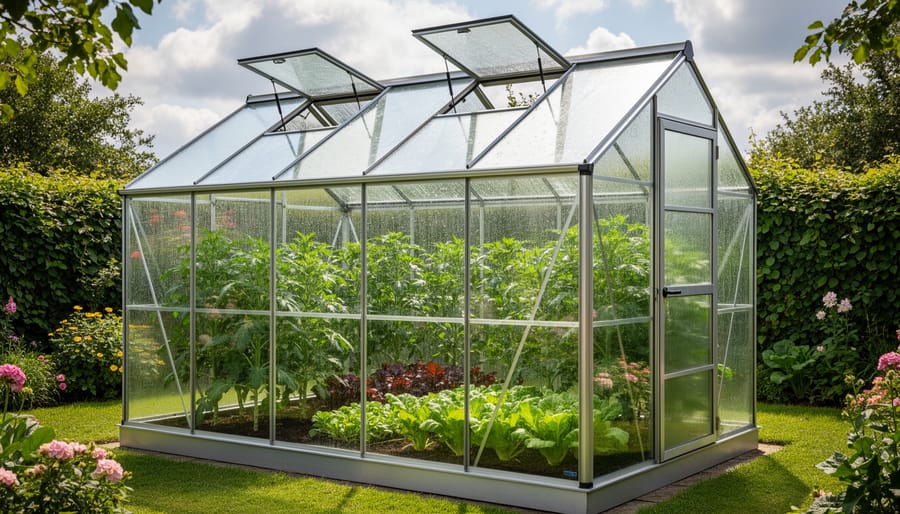
Finding the right 6×8 greenhouse kit depends on matching features to your specific situation. Here’s how different homeowners successfully use various kit types.
Best for Beginners: Palram Hybrid Series
New greenhouse owners often thrive with aluminum-frame polycarbonate kits that forgive installation errors and require minimal upkeep. Sarah from Oregon started her first greenhouse last spring with a polycarbonate model and appreciates that she doesn’t worry about broken panels when tools accidentally bump the walls. The twin-wall panels retain heat well enough for three-season growing without complicated heating systems, and the pre-cut frame pieces snap together logically even for first-timers.
Best for Year-Round Growing: Grandio Elite
Serious growers who want fresh vegetables in January need 8mm or 10mm polycarbonate with reinforced framing. Tom in Minnesota runs his insulated 6×8 kit through brutal winters, adding only a small electric heater to maintain 50°F for lettuce and herbs. The thicker glazing and robust frame withstand heavy snow loads that would crush lighter structures.
Best Budget Option: Clear Polyethylene Hoop House
Gardeners on tight budgets can start with a basic hoop frame and polyethylene cover for under $200. Maria in Texas uses hers primarily for spring seedlings and fall crop protection, replacing the plastic cover every two years as expected. She’s extended her tomato harvest by six weeks each fall, making the modest investment worthwhile despite the temporary nature of the materials.
- Best for Harsh Climates: Galvanized steel frame with tempered glass, handles extreme winds and heavy snow while providing superior insulation
- Best for Aesthetics: Cedar frame with glass panels, complements upscale landscaping and adds property value despite higher maintenance needs
- Best for Hot Climates: Aluminum frame with shade cloth compatibility, includes roof vents and side panels that roll up for maximum airflow
Jennifer in Arizona specifically sought a kit with excellent ventilation after her first greenhouse overheated and killed seedlings. Her current aluminum model features automatic roof vents that open at 75°F, plus removable side panels she takes off entirely during summer months. The design lets her grow cool-season crops during the mild desert winter without creating an oven come April.
Match your choice to what matters most in your situation. A beginner prioritizing ease of use makes different decisions than an experienced gardener chasing year-round harvests or someone wanting a structure that enhances curb appeal.
Common Mistakes to Avoid When Buying
Most homeowners trip over predictable hurdles when selecting their first 6×8 greenhouse kit, and these mistakes can cost hundreds in fixes or turn your purchase into a frustration. Here’s what to watch for before you buy.
Matching Glazing to Your Climate
Opting for single-layer polycarbonate in Minnesota winters or glass in hail-prone regions sets you up for disappointment. Your glazing choice must suit your temperature extremes and weather patterns. Twin-wall polycarbonate works well in cold climates for insulation, while tempered glass handles heat better in mild zones. Don’t pick glazing based solely on appearance or initial cost, think about how it’ll perform year-round where you live.
Skipping Foundation Planning
Many buyers assume a 6×8 kit can sit directly on grass or dirt. That oversight leads to settling, warping frames, and water intrusion within months. Every greenhouse needs a level, stable base, whether that’s a gravel pad, concrete slab, or ground anchors depends on your kit type and soil conditions.
Warning: Poor foundation preparation is the costliest mistake, often requiring you to disassemble and rebuild the entire structure once problems emerge.
Understanding anchoring and base basics before assembly saves major headaches.
Underestimating Ventilation Needs
A 6×8 greenhouse heats up fast on sunny days. Kits with just one roof vent rarely provide adequate airflow. Look for models offering both roof vents and side louvers, or plan to add automatic vent openers. Stagnant air invites disease and kills plants faster than most beginners expect.
Ignoring Assembly Reality
“Easy assembly” claims can be misleading. Read reviews about actual build times and difficulty. Some kits require two people and a full weekend, plus tools you might not own. If you’re not handy, factor professional installation into your budget rather than discovering mid-build that you’re in over your head.
Price-Only Shopping
The cheapest 6×8 kit often uses flimsy materials that degrade within two seasons. Thin frames bend in wind, cheap glazing cracks in cold, and poor hardware rusts quickly. Spending $200 more upfront for quality materials typically means five extra years of use, calculate cost per year, not just the sticker price.
Installation and Setup Tips
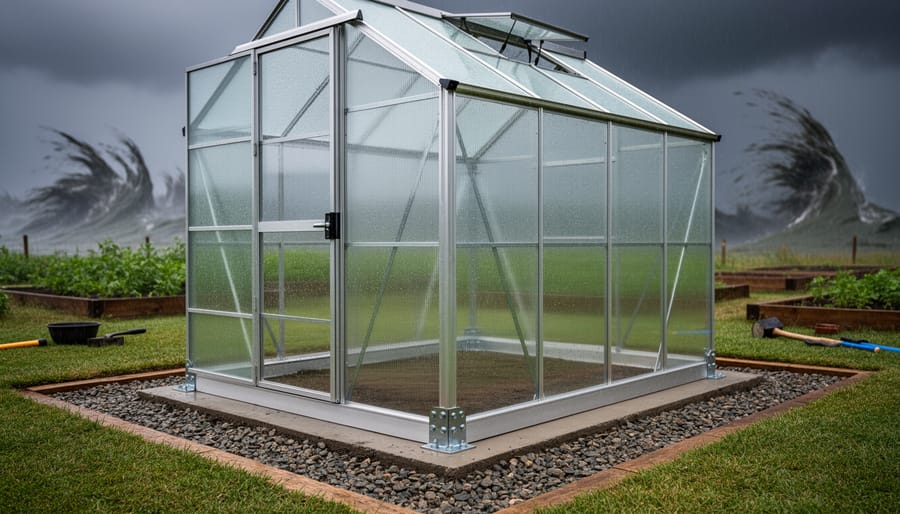
Getting your 6×8 greenhouse properly set up makes all the difference between years of trouble-free growing and constant frustration with wobbly frames or poor drainage.
Start by choosing a level spot with full sun exposure and good drainage. Clear the area of grass, rocks, and debris, then decide on your foundation. A four-inch gravel base works well for most kits and handles drainage beautifully. For permanent installations or windy areas, concrete footings or pavers offer rock-solid stability. Many homeowners use ground anchor kits that screw into the soil, quick to install and surprisingly secure in moderate climates.
Leveling cannot be skipped. Even a slight tilt causes doors to jam, panels to gap, and water to pool. Use a long level across multiple directions and adjust your base material until everything reads true. This step alone prevents most post-installation headaches.
Most kits take one or two people a full weekend to assemble a 6×8 greenhouse, though complex glass models may need more time. Before you start, download and print your assembly instructions PDF working from a phone screen outdoors gets old fast. Gather basic tools: drill with bits, adjustable wrench, level, rubber mallet, measuring tape, and safety glasses.
Consider professional installation if you’re uncomfortable with DIY projects, have a concrete foundation planned, or chose a high-end glass kit. The investment typically runs $300 to $800 but guarantees proper setup and often includes warranty protection that self-installation might void.
Secure your greenhouse against wind from day one. Use all provided anchor points and add extra tie-downs in exposed locations. A properly anchored, level greenhouse on solid footing will serve you reliably for decades.
Frequently Asked Questions
Starting a greenhouse project brings up practical questions that deserve straightforward answers. Here are the most common concerns homeowners have when buying a 6×8 greenhouse kit.
Do I need a permit for a 6×8 greenhouse?
Requirements vary by location, but many areas don’t require permits for temporary structures under 120 square feet that aren’t permanently anchored. Always check with your local building department and homeowners association before purchasing, as some municipalities classify greenhouses as accessory structures requiring approval.
How much does shipping typically cost?
Shipping for 6×8 kits ranges from $150 to $400 depending on your location and the kit’s weight. Polycarbonate kits with aluminum frames usually cost less to ship than glass or wood models, and some retailers offer free shipping promotions during off-peak seasons.
Can I relocate my greenhouse later?
Yes, most 6×8 kits can be disassembled and moved, though polycarbonate panels may crack during removal if you’re not careful. Plan to replace some fasteners and potentially a few panels, and expect the move to take nearly as long as the original installation.
What’s the typical lifespan of different materials?
Aluminum frames last 20-plus years with minimal upkeep, while treated wood frames need regular maintenance but can last 15-20 years. Polycarbonate glazing holds up for 10-15 years before yellowing, glass lasts indefinitely if not broken, and polyethylene film needs replacement every 3-5 years.
Regular maintenance keeps your greenhouse performing well regardless of material choice. For polycarbonate panels, wash them twice yearly with mild soap and water, avoiding abrasive cleaners that scratch the surface. Glass requires similar cleaning but tolerates stronger products. Polyethylene film should be inspected each season for tears or UV damage. Check frame joints and hardware annually, tightening bolts and treating wood frames with weatherproof sealant as needed.
Orientation matters more than many first-time buyers realize. Position your greenhouse with the longest side facing south to maximize winter sun exposure, especially in northern climates where light is limited during colder months. This setup also helps with temperature regulation, though you’ll want to ensure your ventilation system can handle the increased heat during summer afternoons.
Choosing the right 6×8 greenhouse kit comes down to matching your materials, glazing, and features to your specific climate, budget, and gardening goals. The compact 48-square-foot footprint fits comfortably in most yards while providing ample space for serious growing, and the wide range of options means there’s a kit for every situation, from budget-conscious beginners to year-round gardening enthusiasts.
Don’t rush the decision. Take time to honestly assess your local weather conditions, your comfort level with DIY assembly, and what you’ll actually grow. A polycarbonate kit with a sturdy aluminum frame might cost more upfront, but it’ll serve you reliably for decades in harsh climates. Conversely, a polyethylene hoop house could be perfect if you’re testing the waters or focusing on seasonal use.
Remember that proper site preparation and installation make all the difference. A level foundation and secure anchoring protect your investment and ensure your greenhouse performs as intended from day one.
Once you’ve chosen wisely and set up correctly, you’ll discover what thousands of home gardeners already know: there’s genuine satisfaction in stepping into your own greenhouse on a cold morning, surrounded by thriving plants. Your 6×8 greenhouse will become your favorite outdoor space.